
Serling Tso — the Great Lake That Outgrew Them All
色林万里接天碧,鹤影翩翩落草原 Sèlín wànlǐ jiē tiān bì, hè yǐng piānpiān luò cǎoyuán – Serling’s waters stretch ten thousand li to meet the blue sky; crane shadows flutter down upon the grassland
色林错 Sèlín Cuò Serling Tso is the giant of the plateau: a shallow, pale-blue inland sea at about 4,530 meters that has quietly grown decade by decade until it passed every other lake in the region, now rimming more than two hundred kilometers of shore through the empty grasslands north of 申扎县 Shēnzhā Xiàn Xainza. There is no town at the lake and no gate – the water simply appears at the end of a county road, a horizon of blue where you expected steppe.
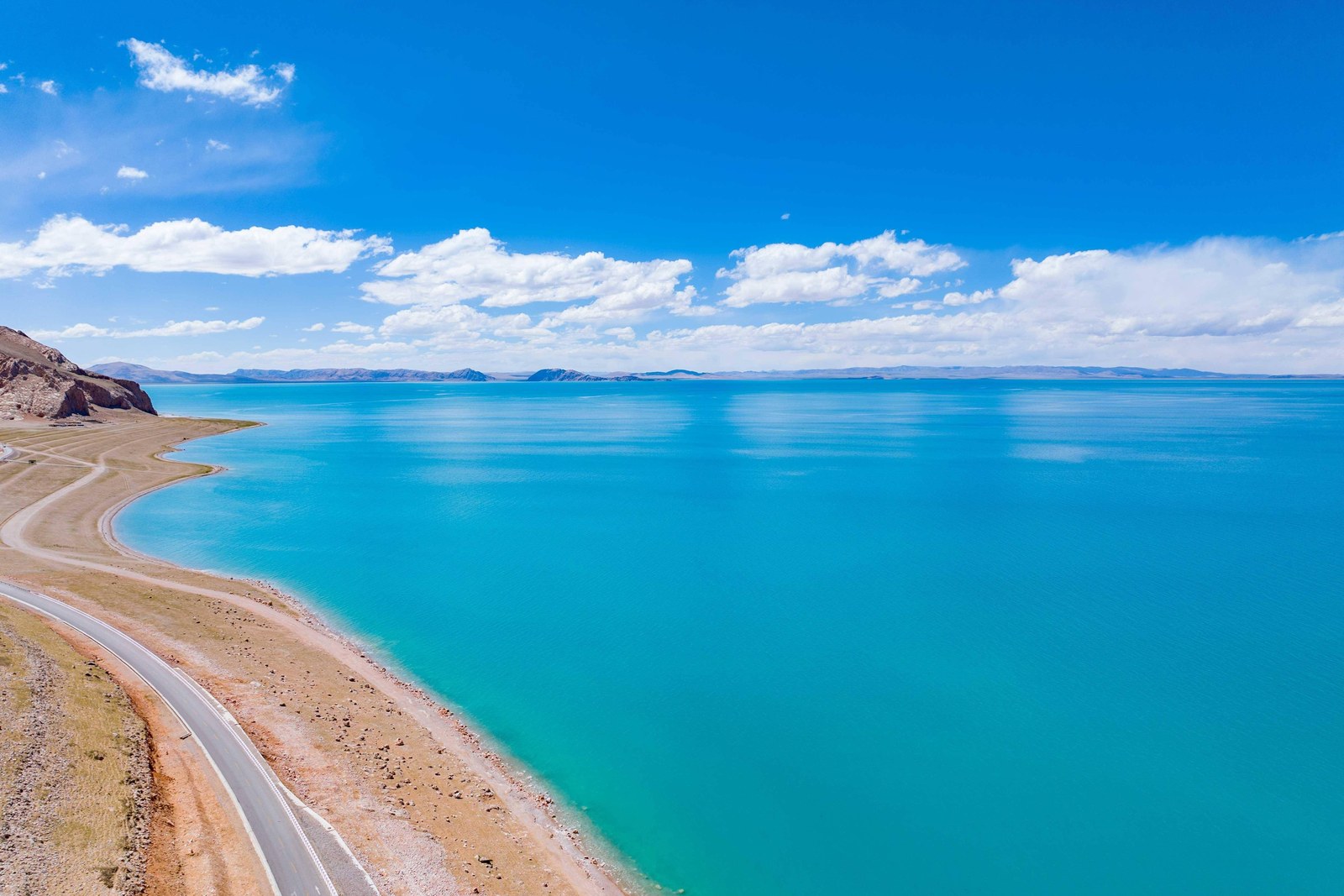
The lake and its neighboring marshes form the heart of a national nature reserve, and the birds are the reason naturalists come: 黑颈鹤 hēijǐng hè black-necked cranes nest here in summer in one of the densest colonies on the plateau, dancing in the wet meadows with their chicks, while bar-headed geese, ruddy shelducks and gulls crowd the shallows. Farther out, 羌塘 Qiāngtáng Changtang wildlife – kiang, wild ass, and the wolves that hunt them – patrols shores where people are still the rarest sight.
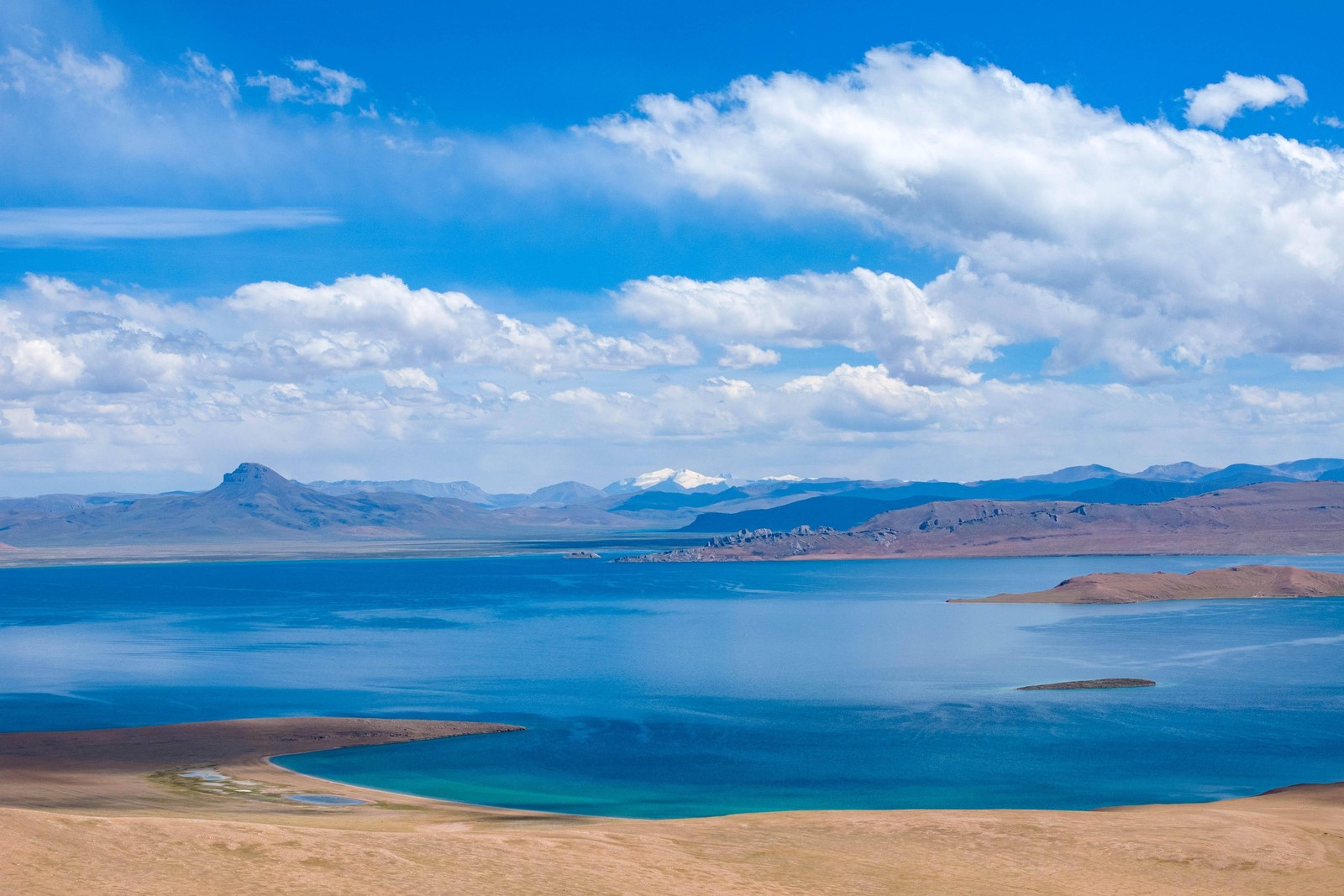
Driving the lakeshore roads is the visit itself. The eastern and southern edges carry rough tracks between the highway towns and the water; each bend opens a new composition of blue water, pale beach and brown grass, and the lake is so large that it makes its own weather, clouds standing over the water on days when the grassland sky is clear. Stop often: the shore changes every few kilometers, and the best views are unmarked.
What Serling Tso offers is the experience of remoteness with a destination at the end of it. Come self-sufficient – fuel, food, water, a full tank and a spare plan – and the lake repays the preparation with solitude that has almost disappeared from the traveled world: a shore where your footprints are the day’s only ones, cranes calling over the marsh at dawn, and a horizon of water so wide it reads as sea. This is the Changtang’s open secret – the largest lake, the fewest people.
Practicalities
- The lake edges lie north of Xainza county town, about three hours from Nagqu town; county roads follow the eastern and southern shores.
- There are no facilities, gates or fuel at the water – carry everything, fill up in Xainza, and tell someone your route.
- Bird season runs May to September, with cranes nesting through the summer; distances are best covered from the road or with a local guide.
- Weather changes fast at 4,500 meters; afternoon wind and squalls are routine, so keep the day flexible.
Words and Names
色林错 Sèlín Cuò Serling Tso, the largest lake of the region; 黑颈鹤 hēijǐng hè the black-necked crane, the reserve’s signature breeder; 申扎县 Shēnzhā Xiàn Xainza county, the gateway town; 羌塘 Qiāngtáng the Changtang, the vast northern plateau; 藏野驴 Zàng yě lǘ kiang, the wild ass of the open grassland. Beyond the great lake, the same 那曲市 Nàqū Shì Nagqu keeps more places worth the detour: 纳木错 Nàmù Cuò the heavenly lake and its Elephant Gate, 萨普神山 Sàpǔ Shénshān the glacier peaks of Biru, 当惹雍错 Dāngrě Yōngcuò the Bon holy lake of Nyima, or 那曲赛马节 Nàqū Sàimǎjié the August gathering of the grassland capital – four more doors into the same Nagqu. Once the shore is behind you, our Nagqu food map fills the table.
flowcloud would say Serling Tso is the plateau’s slow giant – growing a little every year, in no hurry to be famous. All checked November 2026.
Getting there: The lake edges lie north of Xainza county town – about three hours from Nagqu town – with county roads along the eastern and southern shores and no facilities at the water. Come with a full tank and a half day to spare. All checked November 2026.