
山城巷 Shānchéng Xiàng, Shancheng Lane, climbs the cliff above the Yangtze in the south-west quarter of 渝中区 Yúzhōng Qū, Yuzhong District, the core section of one of the numbered 山城步道 Shānchéng Bùdào, Shancheng footpaths, the hillside walking system of the old city, known locally as the Third Footpath. Chongqing is a municipality of southwest China, and Yuzhong is its central district on the peninsula where the Yangtze meets the Jialing River – a city so steep that its walking routes are numbered like bus lines, which is the whole point of this place. Here the footpath is infrastructure rather than attraction. The walk runs roughly 1.7 kilometres, according to local guides, from the entrance beside 234 中兴路 Zhōngxīng Lù, Zhongxing Road, along a boardwalk hung on the old city wall, to 领事巷 Lǐngshì Xiàng, Consulate Lane, at the top.
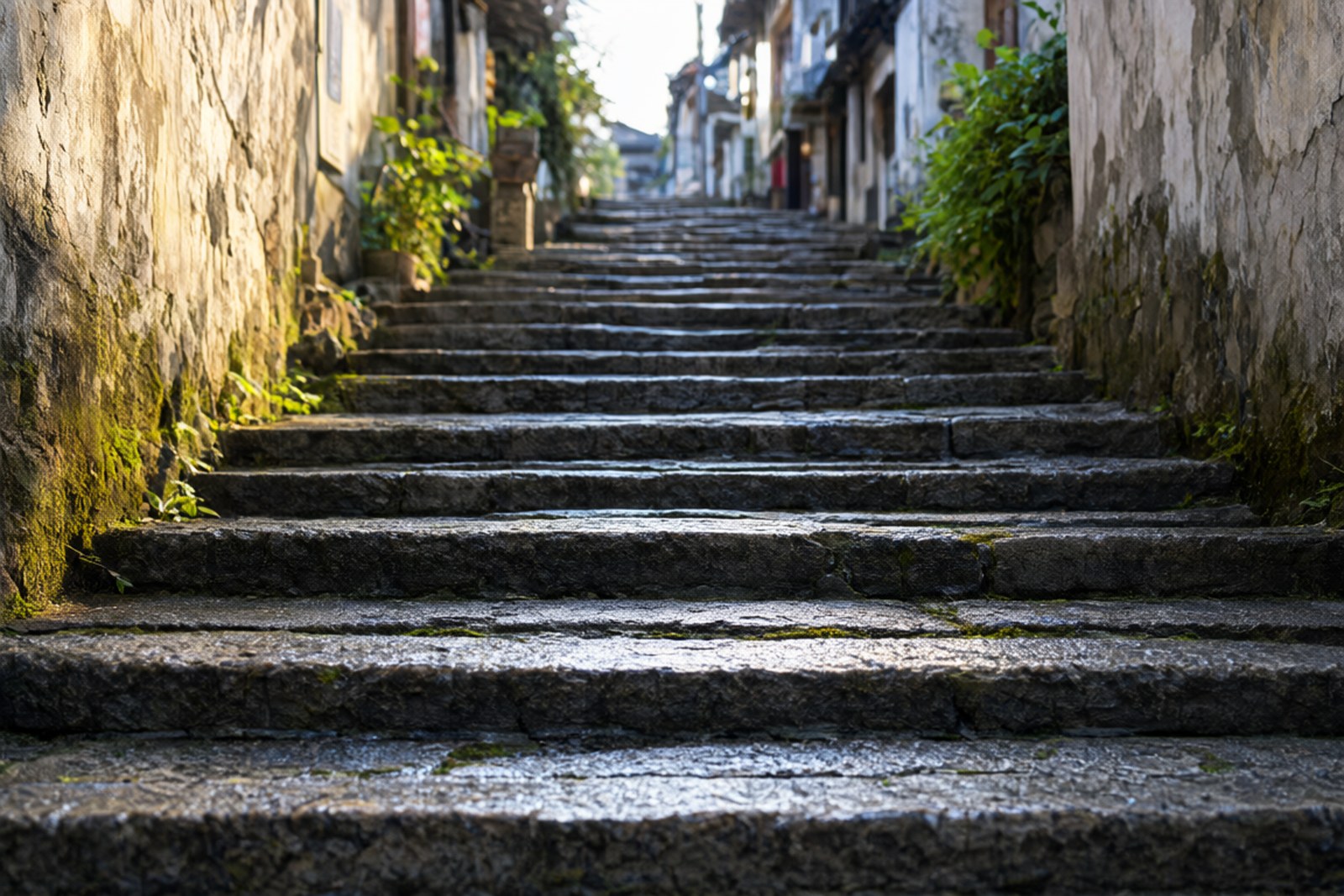
The soul of the route is the stretch the guides call the highlight without needing a reason: the suspended boardwalk built along the line of the old city wall, cantilevered over the cliff with the Yangtze running below and the bridges drawn across it. Stone steps give way to a timber-and-steel walkway pinned to the rock, the guardrail close on the cliff side and the whole river open on the other, and for a few hundred metres the walk is pure ledge – the city’s old defensive line repurposed as a balcony. The gradient is real; local guides count the steps in the hundreds. The platform consensus on direction is firm and correct: start at Consulate Lane on the ridge and walk down, letting the river come up to meet you.
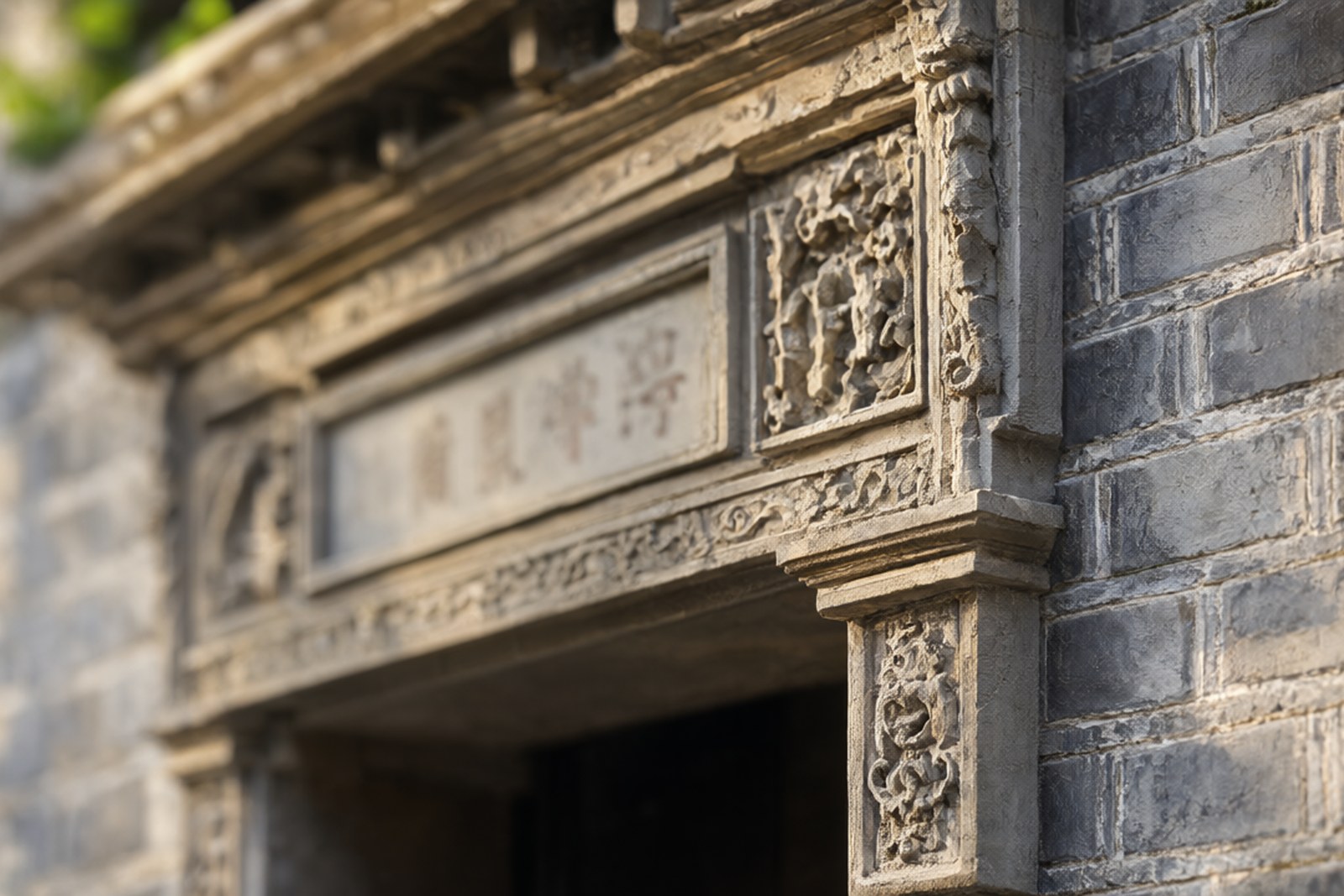
The lane is stitched with small sights, none of them fenced. 厚庐 Hòu Lú, the Hou mansion, is a 1930s shikumen-style stone-gate house whose carved lintel and grey brick survive mid-lane – local accounts describe it as one of the grand courtyards of its day. 仁爱堂 Rén’ài Táng, Ren’ai Tang, is a century-old former French missionary compound kept deliberately as romantic ruin: broken arches, a bell-tower stump, wild figs in the masonry, with no founding year on record. There is a small lane library, a red-lantern stairway that photographs the lane’s postcard, and covered-bowl teahouses where 5 to 15 yuan buys a seat for the afternoon. Most importantly, people still live along the lane – buying vegetables, airing quilts, taking the evening air – and the polite habit is to walk it as a guest rather than a consumer.
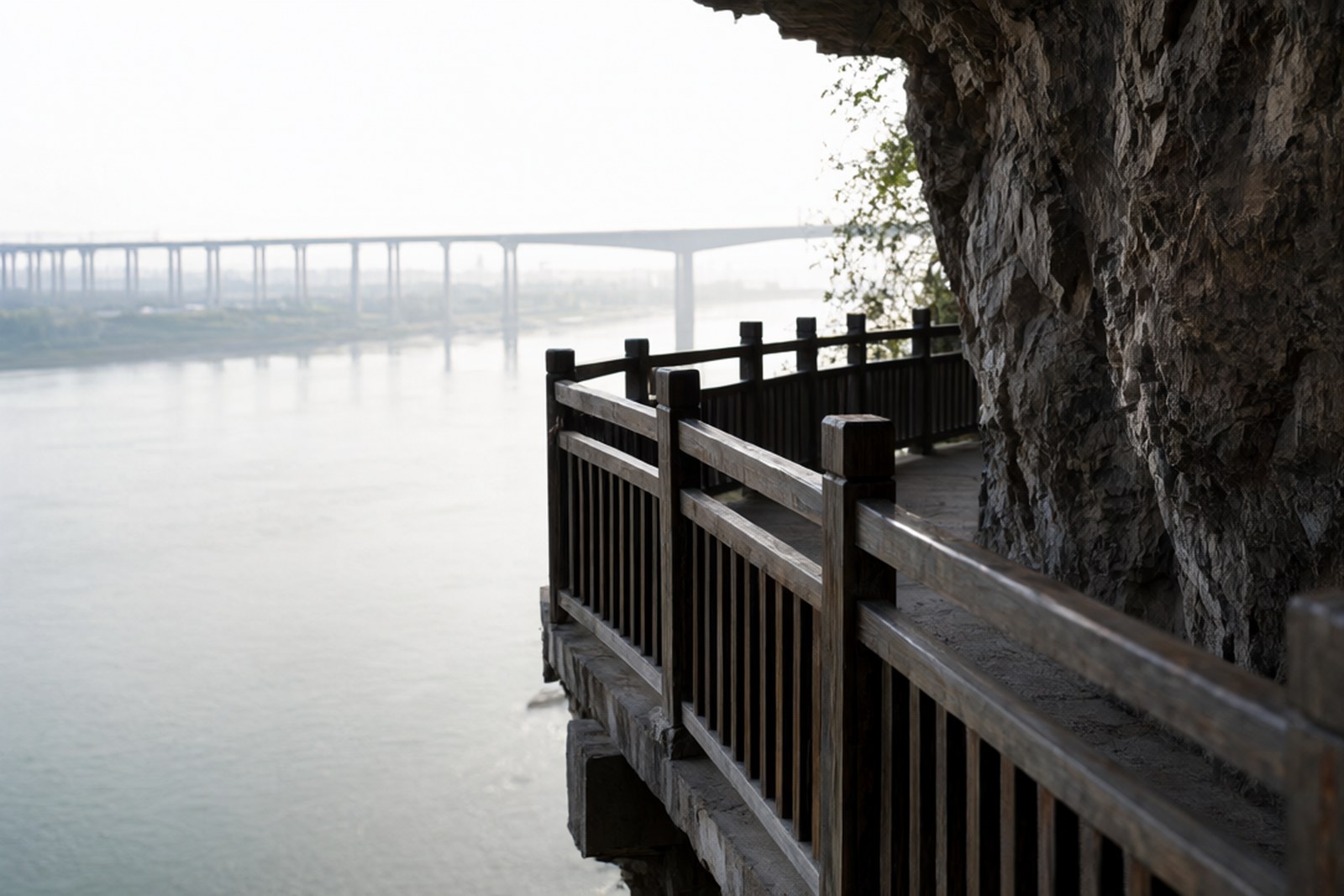
The honest contrast is with the site’s most famous cliff-side stack: Hongya Cave you look at, Shancheng Lane you walk – and the walk is the attraction, which is why the polished stilt-house spectacle across the water appears here only as the thing this lane never became, its architecture the subject of another article entirely. The lane’s claim is quieter: it is still lived in, its shops are for residents first, its steps cost real effort, and its rewards – the boardwalk, the ruins, the tea – arrive at walking pace or not at all. Enter about four in the afternoon for the full rhythm, which collects the lane in daylight, the river at sunset and the red lanterns after they come on around seven, when the cliff edge turns into a line of small lights above the water.
Timing and shoe choice are the only real preparations. Early morning, around eight or nine, is the quiet hour, when the lane belongs to residents and the light comes down the slope sideways. Flat shoes are not a suggestion – the steps are old, uneven and slick after rain, and the boardwalk deserves a slow hand on the rail in wet weather. The lower exit on Zhongxing Road puts you within walking distance of 十八梯 Shíbātī, Shibati, the eighteen-steps quarter, and a short reach of Jiaochangkou’s metro interchange, so the walk drops you back into the transit net exactly where the peninsula begins. Give it two unhurried hours, teahouse stop included, and it becomes what the numbering already says it is: a bus route for people who prefer the vertical.
Practicalities
Tickets. There is no ticket and no reservation: the lane and the footpath are a free public walking route, open to anyone who can climb a step. The teahouses and small shops along the way are charged on their own terms, and a covered-bowl tea runs about 5 to 15 yuan. As of October 2026, subject to change.
Opening hours. The lane is an open residential street and can be walked around the clock; only the shops and teahouses keep hours, roughly 10 am to 10 pm by platform listing. The red lanterns along the cliff stretch come on around 19:00, and the boardwalk view is best just before they do.
Closing day. There is no fixed closing day. The one routine caution is weather rather than calendar: rain leaves the stone steps slick and the boardwalk slow going, so take the wet sections carefully or wait the shower out at a teahouse.
Getting there. Metro lines 1 or 2 to 较场口 Jiàochǎngkǒu, Jiaochangkou, exit 5, then follow 中兴路 Zhōngxīng Lù, Zhongxing Road, to the entrance beside number 234; the easier direction is to navigate to Consulate Lane at the top and walk down. Drivers can use the parking near the lane’s lower end, quoted around 3 yuan an hour by platform snapshot, though the metro is simpler.
flowcloud would say that Shancheng Lane is the bus route the peninsula never paved, a numbered footpath that still does its daily job one stone step at a time, and that a city which numbers its stairs is a city that expects you to walk.
Getting there: Shancheng Lane is the core section of the Third Footpath of Chongqing’s Shancheng footpath system, running roughly 1.7 kilometres by local guides’ measure above the Yangtze in Yuzhong District, Chongqing, a municipality of southwest China; the route links the Zhongxing Road entrance with Consulate Lane past the 1930s Hou mansion, the former French missionary compound of Ren’ai Tang and a cliffside boardwalk on the line of the old city wall; it is free, open around the clock with no fixed closing day, best entered about 16:00 for lane, sunset and the 19:00 lanterns, and reached by metro lines 1 or 2 to Jiaochangkou exit 5 (checked October 2026, subject to change).