
Shanghai Grand View Garden: The Dream-of-the-Red-Chamber Garden on Dianshan Lake, Its Happy Red Court, Bamboo Courtyard Mornings and the Novel Built in Timber and Tile in Qingpu District, Shanghai
纸上庭院落湖滨,潇湘竹影记红楼。Zhǐ shàng tíngyuàn luò húbīn, Xiāoxiāng zhú yǐng jì hónglóu – Courtyards that lived on paper have settled by the lake; the bamboo shadows of Xiaoxiang remember the red mansion.
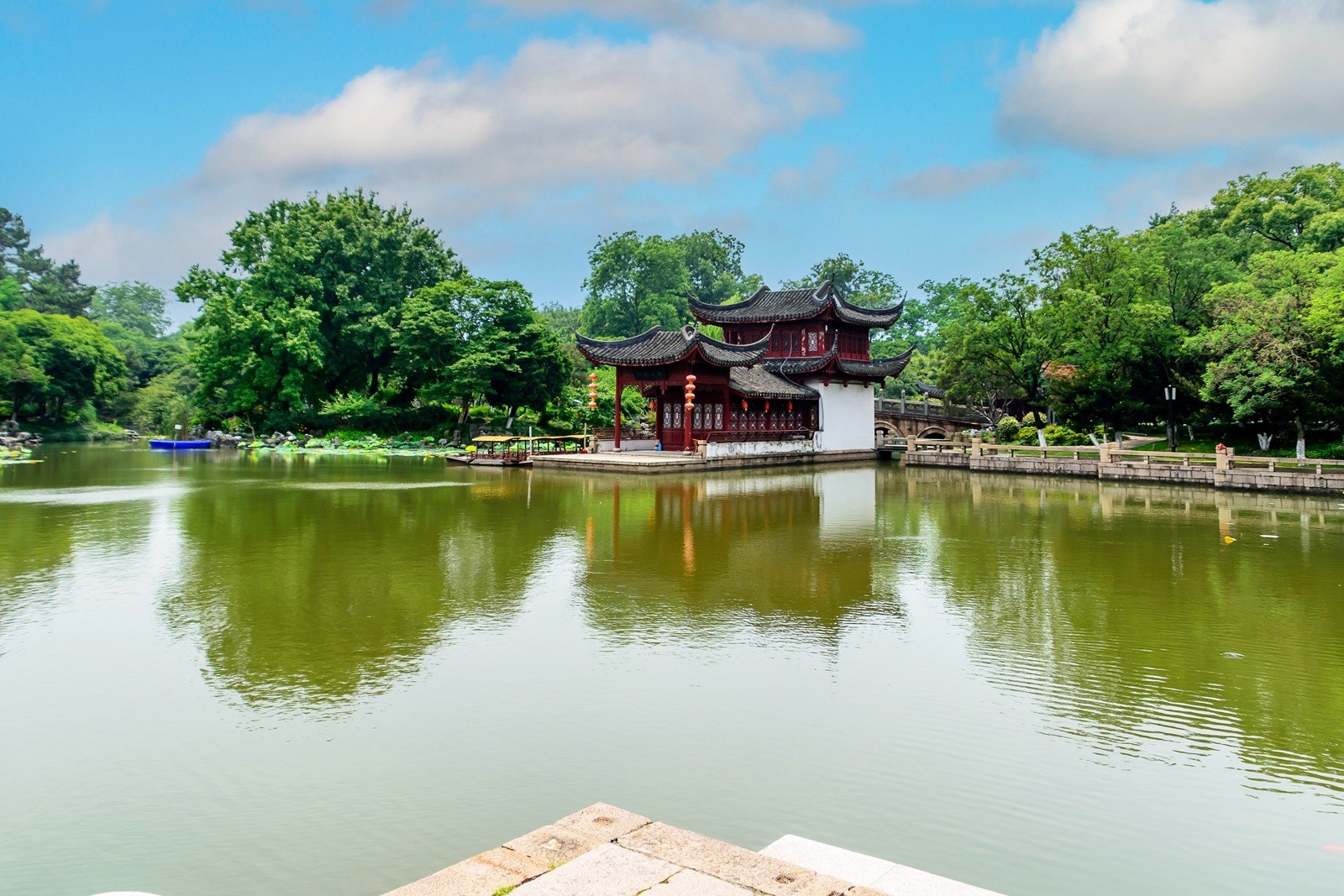
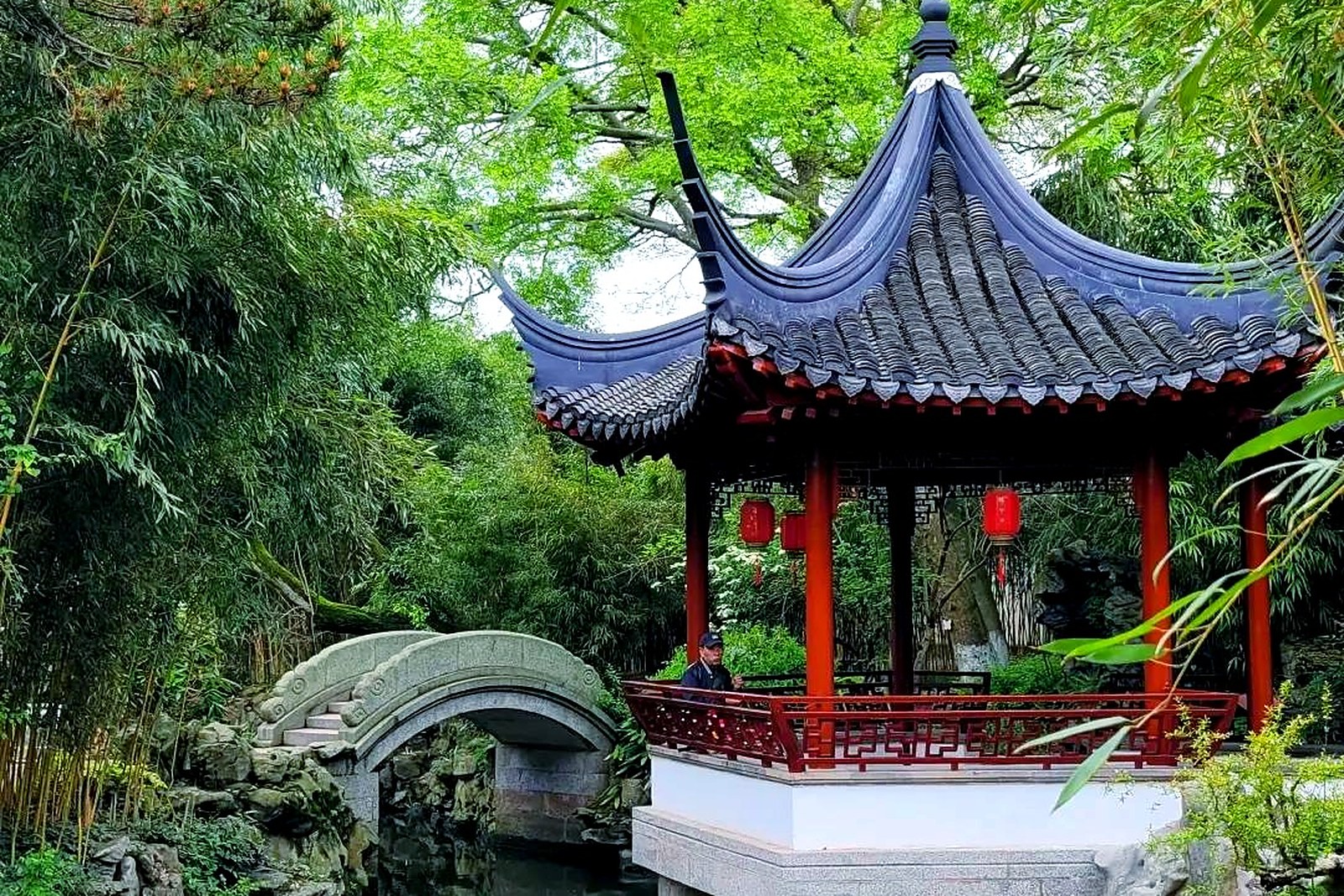
上海大观园 Shànghǎi Dàguānyuán Shanghai Grand View Garden is the full-scale garden built from a novel, on the southern 淀山湖 Diànshānhú Dianshan Lake shore of 青浦区 Qīngpǔ Qū Qingpu District, Shanghai – a classical-style complex laid out in the later twentieth century to bring 《红楼梦》 Hónglóu Mèng The Dream of the Red Chamber’s fictional estate into timber, tile and water, its courtyards assigned exactly as the novel assigns them: 怡红院 Yíhóngyuàn the Happy Red Court for Baoyu with its mirror-rooms and painted beds, 潇湘馆 Xiāoxiāng Guǎn Xiaoxiang Lodge with its slender bamboo for the melancholy Daiyu, 蘅芜苑 Héngwúyuàn for Baochai’s cold-framed vines, and the great 大观楼 Dàguānlóu Grand View Tower ruling the central axis above its lotus pond. The interest is not antiquity – nothing here is old – but fidelity: an estate that existed only in prose, built with classical craft at lake scale, and beloved by generations of Shanghai readers who visit their favourite characters’ rooms like relatives’ houses.
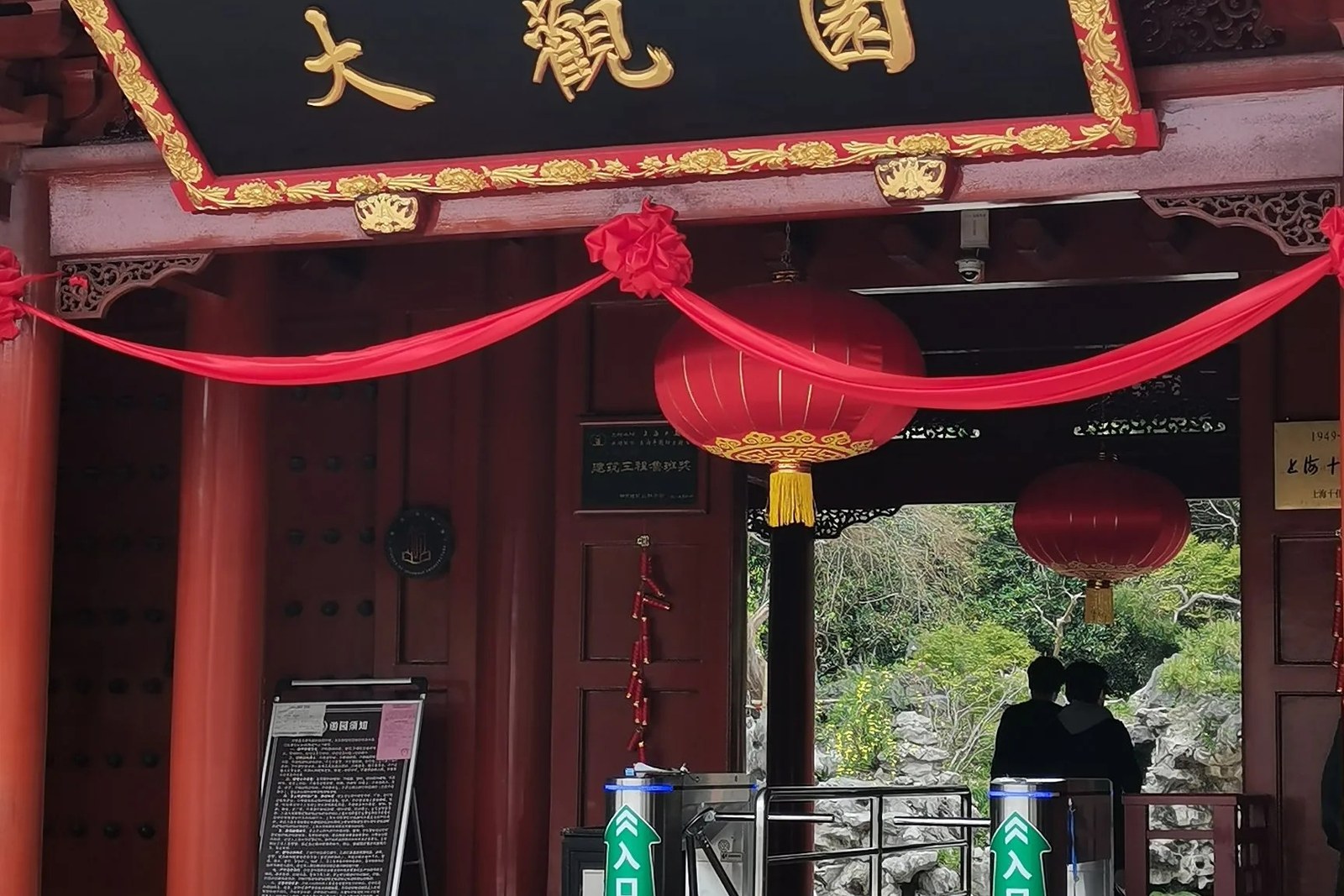
Two visitors keep the courtyards full: literature-minded travellers – readers, teachers, students on novel pilgrimages – who walk the plan like a text and price the room-to-chapter accuracy above all, and garden lovers who use the lake-side location for an unhurried classical-garden day away from the city’s famous tickets (worth confirming the details for seasonal hours and any hall closures, the estate contracting its opened buildings in the quiet season).
Call it honestly: the garden’s age is a trap only if you bring it. Built new, it shows its century in fresh paint and poured edges, and the visitor seeking Ming patina should ride on to Suzhou (worth confirming your expectation accordingly). What the map repays is the walk: the courtyards sequence like chapters, each garden answering a character’s temperament – bamboo against winter waves, ornamental fruits against plain walls – and the lakeside setting adds the one thing the novel’s garden never had, an actual horizon. Against that: crowds are kind by Shanghai standards, the staff know the novel and will argue chapters amiably, and pairing the visit with the lake shore or 金泽 Jīnzé Jinze makes a full west-district day. The honest score: a garden for readers first and walkers second – come for the book and the bamboo, not for ancient stones.
Practicalities
Nearly everything else on this Qingpu list trades a different mood on the same map: choose 朱家角古镇 Zhūjiājiǎo Gǔzhèn Zhujiajiao Ancient Town for the canal lanes, 淀山湖 Diànshānhú Dianshan Lake for the open water, 东方绿舟 Dōngfāng Lǜzhōu Oriental Land for the camp lawns and 金泽古镇 Jīnzé Gǔzhèn Jinze Ancient Town for the old bridges – four more doors into the same 青浦区 Qīngpǔ Qū Qingpu District. Once the day is planned, our Qingpu food map fills the eating hours.
Practicalities
Words and Names
flowcloud would say that a Grand View Garden day is bought for the novel made solid – reader pilgrimage to lakeside garden in the October 2026 snapshot, all worth confirming the details – and that the honest move is to reread a chapter or two before the gates, because the courtyards pay by the reference and the bamboo is the key to the lodge, keep the tower axis and the lake horizon as the plan, and let the novel carry the walk. All checked October 2026.
Getting there: Metro Line 17 to 淀山湖大道 Diànshānhú Dàdào Dianshanhu Avenue station, then a taxi south to the garden’s 淀山湖 Diànshānhú Dianshan Lake shore (worth confirming the details for the garden’s opening hours, which contract in winter); the 怡红院 Yíhóngyuàn Happy Red Court anchors the route. All checked October 2026.