
Shanghai Museum of Glass: A Former Glass Furnace Workshop of the Old Shanghai Glass Instrument Factory No. 1, Reborn in 2011 with Art Galleries, Hot-Shop Live Glass-Blowing Shows and a Working Glass Studio at Changjiang West Road 685 in Baoshan District, Shanghai
窑火曾经熔岁月,琉璃今又照人心。Yáohuǒ céngjīng róng suìyuè, liúlí jīn yòu zhào rénxīn – The furnace fires once melted the years away; glass today shines its light on the human heart.
上海玻璃博物馆 Shànghǎi Bōli Bówùguǎn Shanghai Museum of Glass is not a vitrine-and-paperweight palace — it is, plainly put, a glass factory that kept its furnace heart and learned to perform: the museum fills the 玻璃窑炉车间 bōli yáolú chējiān glass furnace workshop of the 上海玻璃仪器一厂 Shànghǎi Bōli Yíqì Yī Chǎng Shanghai Glass Instrument Factory No. 1 at 长江西路 Chángjiāng Xī Lù Changjiang West Road 685 in 宝山区 Bǎoshān Qū Baoshan District, reopened in 2011 as one of the first museums in China devoted entirely to a single material. The conversion keeps the industrial spine: high kiln-hall roofs, dark brick, and the memory of the workshop floor beneath the 主展馆 zhǔzhǎnguǎn main exhibition hall, whose galleries carry art displays and design commissions running from ancient glass to contemporary installation, while the 玻璃工作室 bōli gōngzuòshì glass studio runs courses and open benches for anyone who would rather try the material than read about it. What you actually visit is a working museum where the exhibits are beautiful and the building remembers being useful.
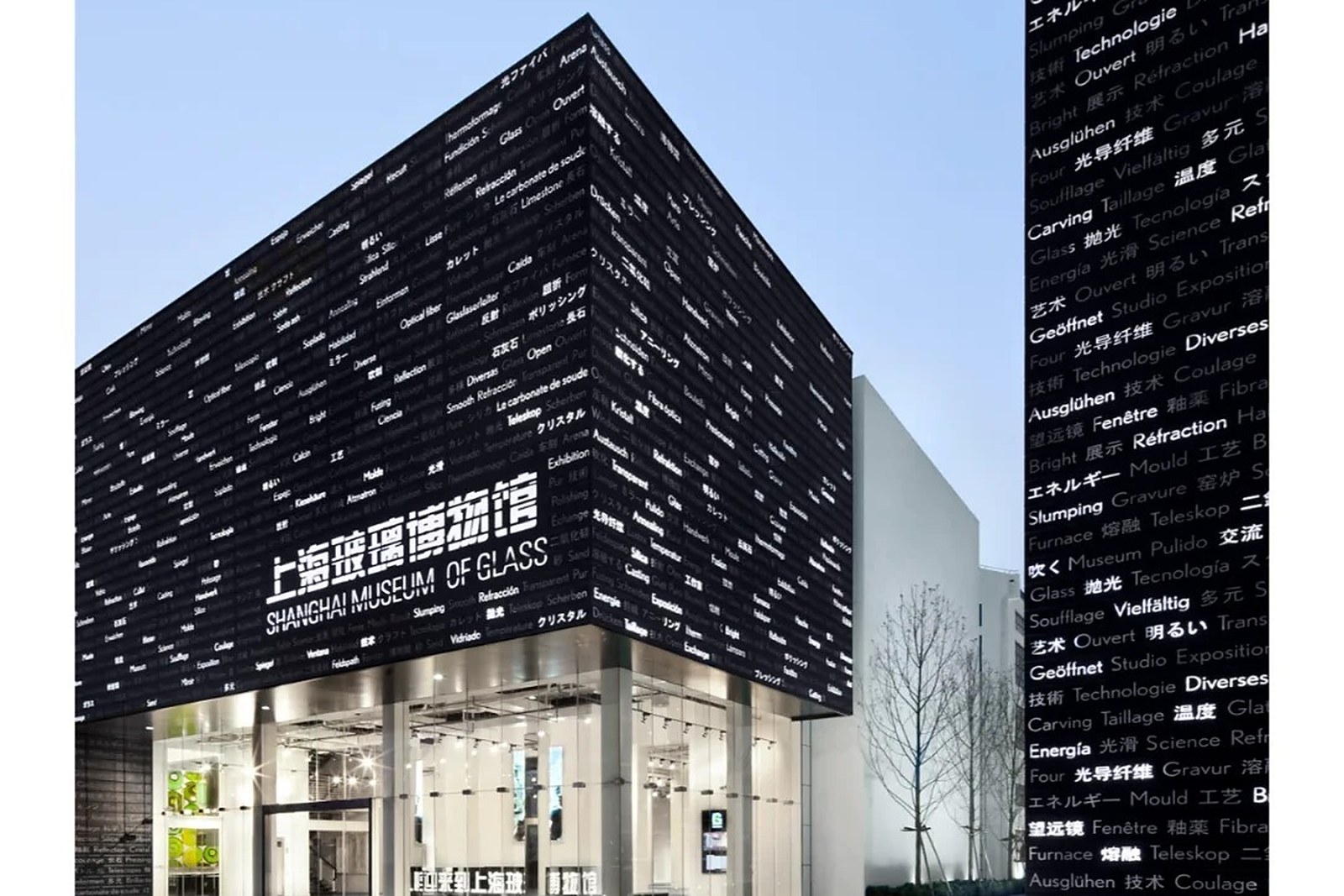
Call it honestly: this is a ticketed museum with its own hours and pricing (worth confirming the details for current admission, concessions and any timed-entry arrangement before you travel), and the honest warning concerns the 热力表演秀 rèlì biǎoyǎn xiù hot-shop live glass-blowing demonstration, which runs at set sessions through the day rather than on demand — plan the visit backwards from a session, because the hot shop is the memory most people carry home. 通河新村站 Tōnghé Xīncūn Zhàn Tonghe Xincun station on Metro Line 1 sets you down for a short shuttle or taxi hop to the gate, through streets that still read as the working Baoshan the factory grew up in. Weekdays are calm and give the galleries room; weekends fill the hot-shop benches early. Give it two to three hours, longer if you book yourself into the glass studio.
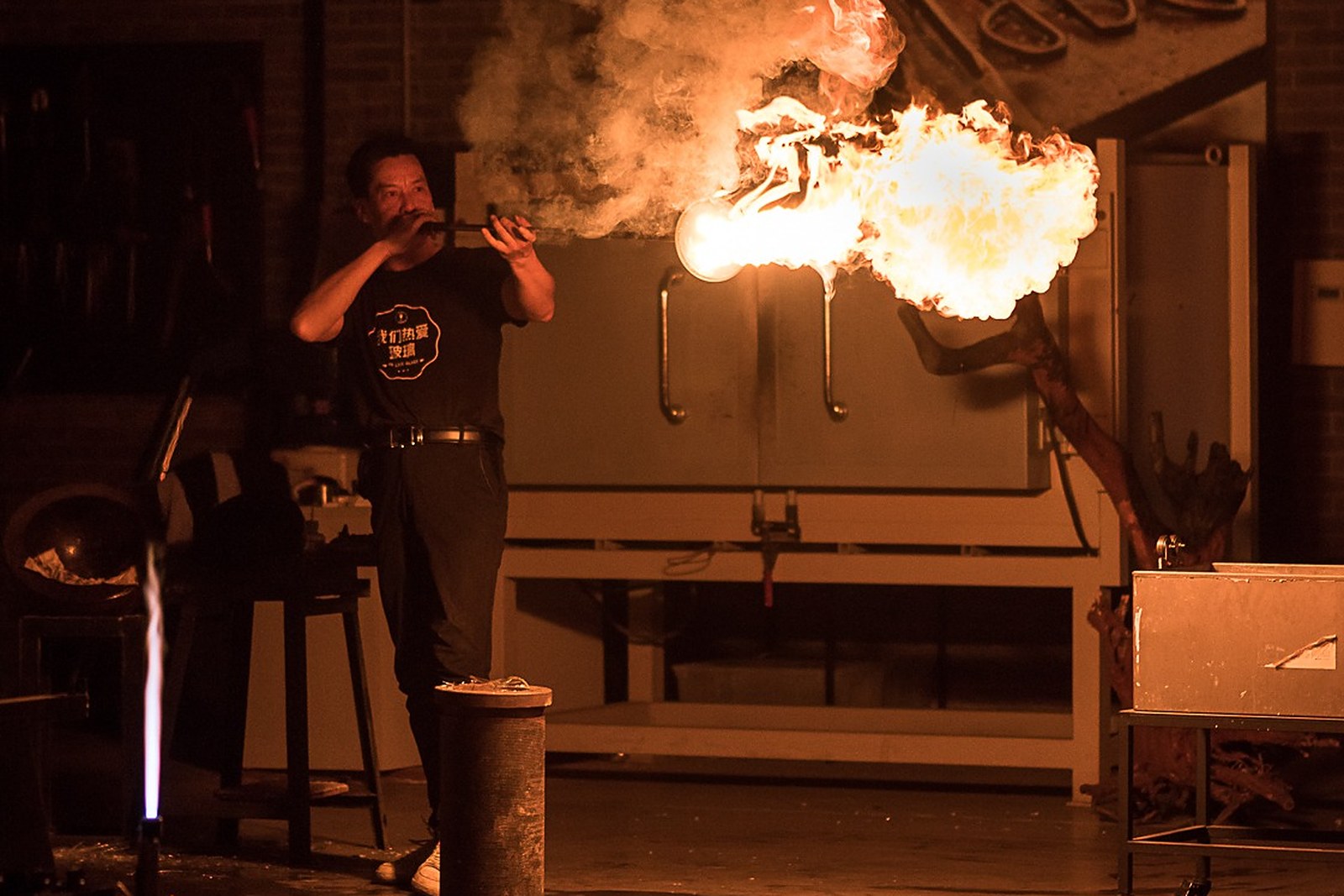
The honest star is the hot shop itself — the glowing furnace, the gathered ball of molten glass at the end of the blowpipe, and a finished piece born in front of your eyes within a single seated demonstration, the one exhibit no photograph can freeze because it exists only in time. What gets oversold is the word “museum”: travellers expecting hushed still-life halls find heat, clang and an audience instead, and part of the site remains a place where glass is made rather than merely displayed (worth confirming the details for the current demonstration timetable and any studio booking requirements). What repays the effort is the range around the performance: main-hall galleries that walk from ancient beads to contemporary installation, the playful temporary shows the museum has built its reputation on, and the kept fabric of the furnace workshop, which turns every gallery into a footnote about the same material. Watch a demonstration first, then study the galleries with new respect for what glass costs. Come for the layering of the place: heat, then art, then the old workshop shell around both.
The self-aware postscript: I was filming the hot shop from the third row one weekday afternoon when the gaffer, resting between pieces, gave me the local view over the roar. “People ask why we kept the old factory bones,” he said, reaching for the pipe again, “because glass remembers heat, and so does this district — we are still doing the same work that rattled these windows forty years ago, only now you are allowed to watch”. That is the visit in miniature. From the gallery mezzanine, looking down into the furnace hall and across the dark brick of the exhibition floor, the museum holds its whole argument in one frame — industry preserved by staying alive, the view no catalogue page can give. 上海玻璃博物馆 Shànghǎi Bōli Bówùguǎn suits whoever treats it as a working material museum with real fire in it first and an art gallery second, and disappoints anyone expecting a conventional collection hall of imperial treasures behind ropes. Nearly everything else on this Baoshan list lies within a ride across the district: the cruise berths of 吴淞口国际邮轮港 Wúsōngkǒu Guójì Yóulún Gǎng Wusongkou Cruise Port wait at 宝杨路 Bǎoyáng Lù Baoyang Road 1, the wetlands and quarry garden of 炮台湾湿地森林公园 Pàotáiwān Shīdì Sēnlín Gōngyuán open beside the river, the Nordic spires of 美兰湖 Měilán Hú Meilan Lake stand north on Metro Line 7, and the cherry lawns of 顾村公园 Gūcūn Gōngyuán Gucun Park open at 沪太路 Hùtài Lù Hutai Road 4788 — all inside the same 宝山区 Bǎoshān Qū Baoshan District whose industrial memory this museum keeps molten.
Practicalities
- Rating: ★★★★☆ — a furnace-hot single-material museum in a saved factory; plan around a hot-shop session, and leave equal time for the galleries.
- Tickets: Ticketed museum with its own pricing (worth confirming the details for current admission and hot-shop session availability).
- Address: 上海玻璃博物馆 Shànghǎi Bōli Bówùguǎn, 长江西路 Chángjiāng Xī Lù Changjiang West Road 685, 宝山区 Bǎoshān Qū Baoshan District, Shanghai — from Tonghe Xincun station on Metro Line 1 plus a short shuttle or taxi hop.
- Time needed: Two to three hours; half a day if you book into the glass studio yourself.
Words and Names
上海玻璃博物馆 Shànghǎi Bōli Bówùguǎn Shanghai Museum of Glass · 上海玻璃仪器一厂 Shànghǎi Bōli Yíqì Yī Chǎng Shanghai Glass Instrument Factory No. 1, the parent factory · 玻璃窑炉车间 bōli yáolú chējiān glass furnace workshop, the converted hall · 主展馆 zhǔzhǎnguǎn main exhibition hall · 热力表演秀 rèlì biǎoyǎn xiù hot-shop live glass-blowing demonstration · 玻璃工作室 bōli gōngzuòshì glass studio · 长江西路 Chángjiāng Xī Lù Changjiang West Road 685 · 通河新村站 Tōnghé Xīncūn Zhàn Tonghe Xincun station · 琉璃 liúlí glass, the museum’s whole subject · 宝山区 Bǎoshān Qū Baoshan District
flowcloud would say that 上海玻璃博物馆 Shànghǎi Bōli Bówùguǎn is the best-argued factory conversion in north Shanghai — the 玻璃窑炉车间 bōli yáolú chējiān glass furnace workshop of the 上海玻璃仪器一厂 Shànghǎi Bōli Yíqì Yī Chǎng Shanghai Glass Instrument Factory No. 1 at 长江西路 Chángjiāng Xī Lù Changjiang West Road 685 in 宝山区 Bǎoshān Qū Baoshan District, opened in 2011 with the 主展馆 zhǔzhǎnguǎn main exhibition hall carrying the art galleries and the 热力表演秀 rèlì biǎoyǎn xiù hot-shop live glass-blowing demonstration still lighting the old hall below (worth confirming the details for current admission and demonstration times before you travel) — and that the honest move is a weekday visit planned backwards from a hot-shop session and reached through 通河新村站 Tōnghé Xīncūn Zhàn Tonghe Xincun station on Metro Line 1, because the quiet-vitrine-museum expectation is the poster half and the furnace roar, the gathered molten glass and the factory bones are the real half, and the museum repays whoever watches the material being made before studying it displayed. All checked October 2026.
Getting there: Metro Line 1 to 通河新村 Tōnghé Xīncūn Tonghe Xincun station, then a short ride to the museum on 长江西路 Chángjiāng Xīlù Changjiang West Road 685 (worth confirming the details for hot-shop performance times, which change monthly); the kiln-workshop facade still carries its factory traces. All checked October 2026.