
The Garden of the Phoenix Hairpin: Shen Garden
钗头凤题壁上恨,沈园池馆锁流年 Chāitóufèng tí bì shàng hèn, Shěnyuán chíguǎn suǒ liúnián – On the wall the Phoenix Hairpin wrote its grief; the Shen Garden halls lock away the flowing years
沈园 Shèn Yuán Shen Garden is a five-hectare Song-dynasty garden carrying the most famous heartbreak in Chinese poetry: here in 1155 the poet 陆游 Lù Yóu Lu You, twenty-something and recently forced by his mother to divorce his beloved first wife 唐婉 Táng Wǎn Tang Wan, met her by chance beside a garden pond. He wrote 《钗头凤》 Chāitóufèng the Phoenix Hairpin on a garden wall – “wrong, wrong, wrong” – she answered in verse and died of grief within the year, and the garden has been the emblem of impossible love ever since.
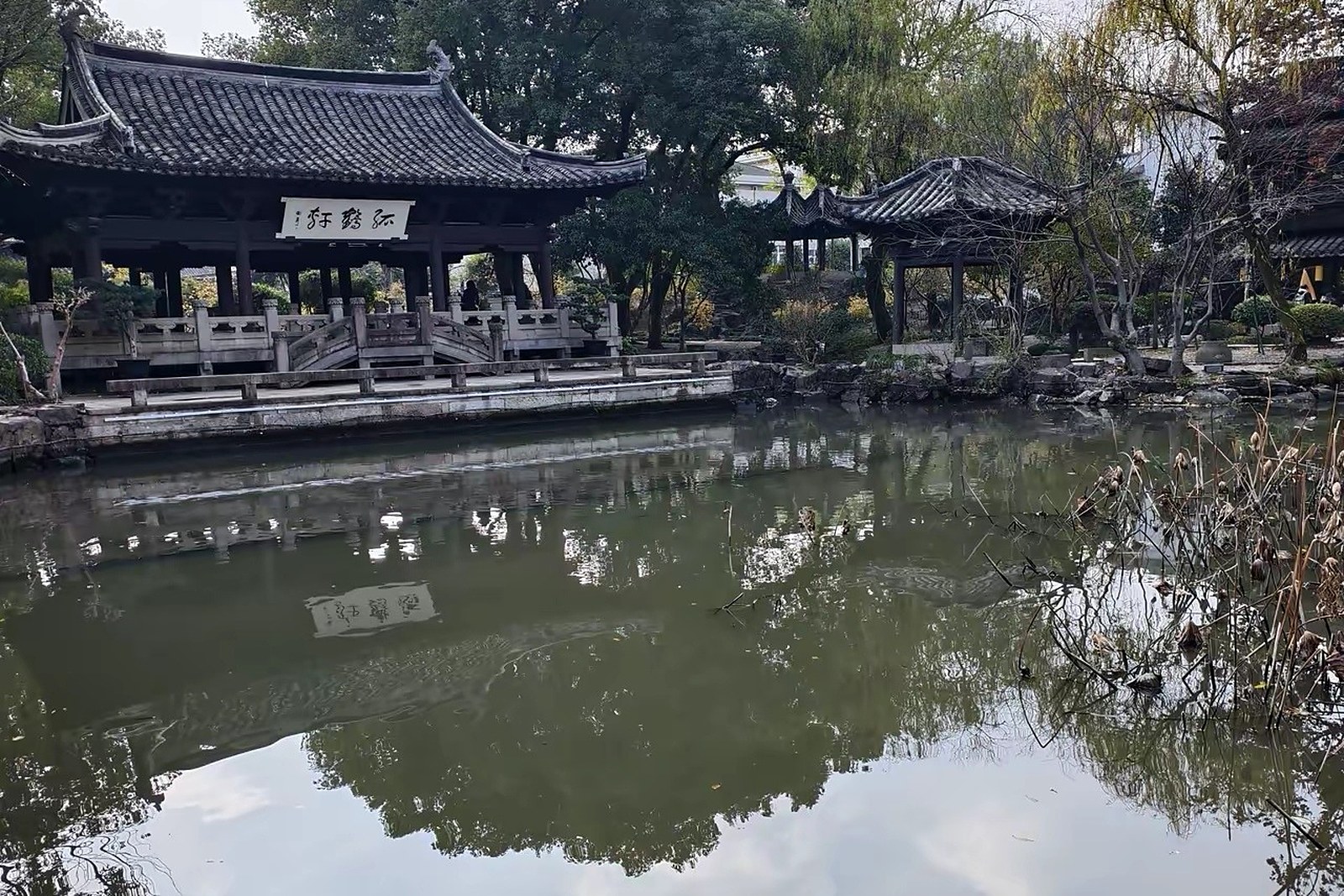
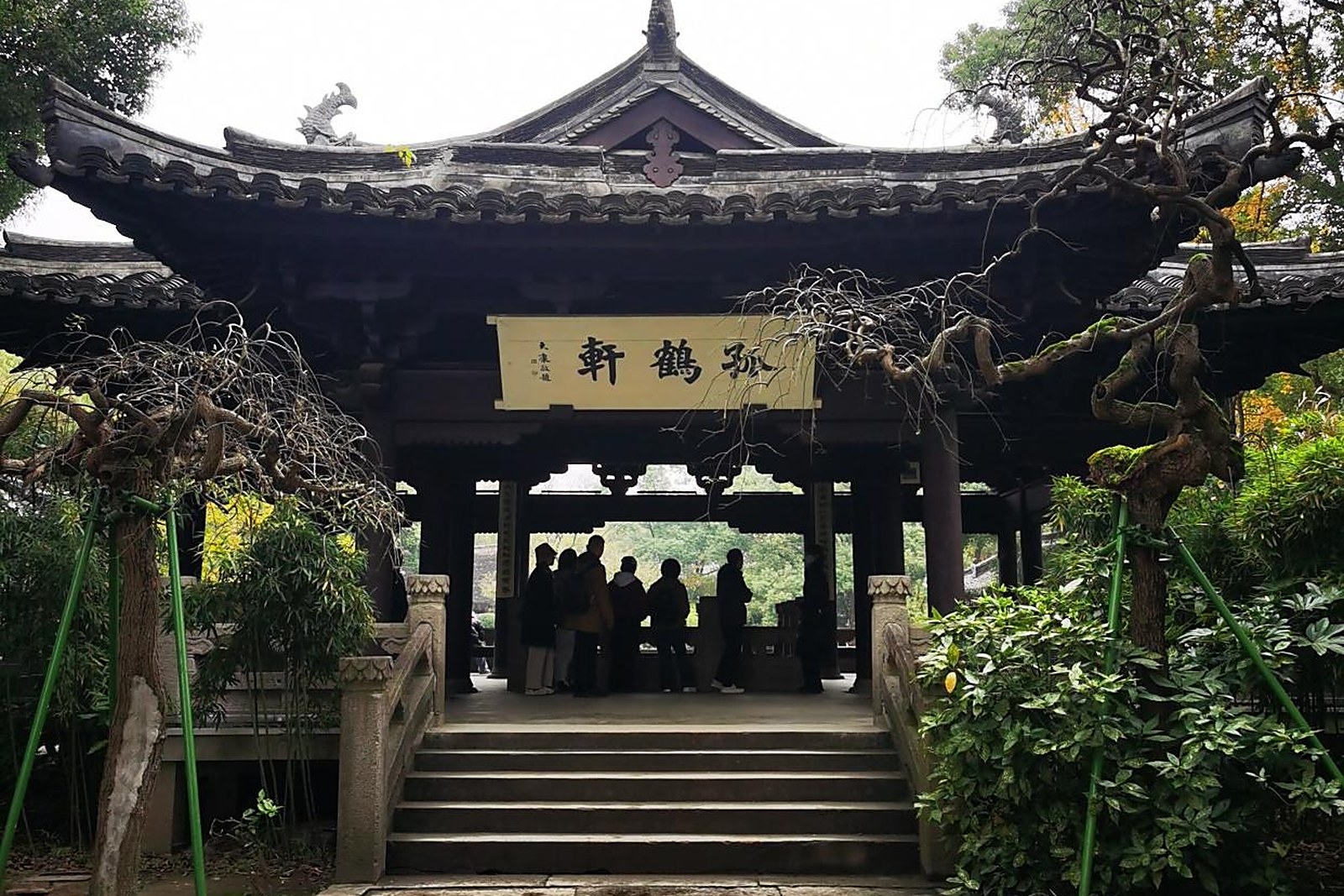
The garden itself is the softer surprise: lotus ponds under covered walkways, the 孤鹤轩 Gūhè Xuán Lone Crane Pavilion rebuilt on Song footings, rockeries, and the question-mark corners where every Chinese tourist pauses at the poem wall – the two Phoenix Hairpins now inscribed in stone, his and hers, face to face across the centuries.
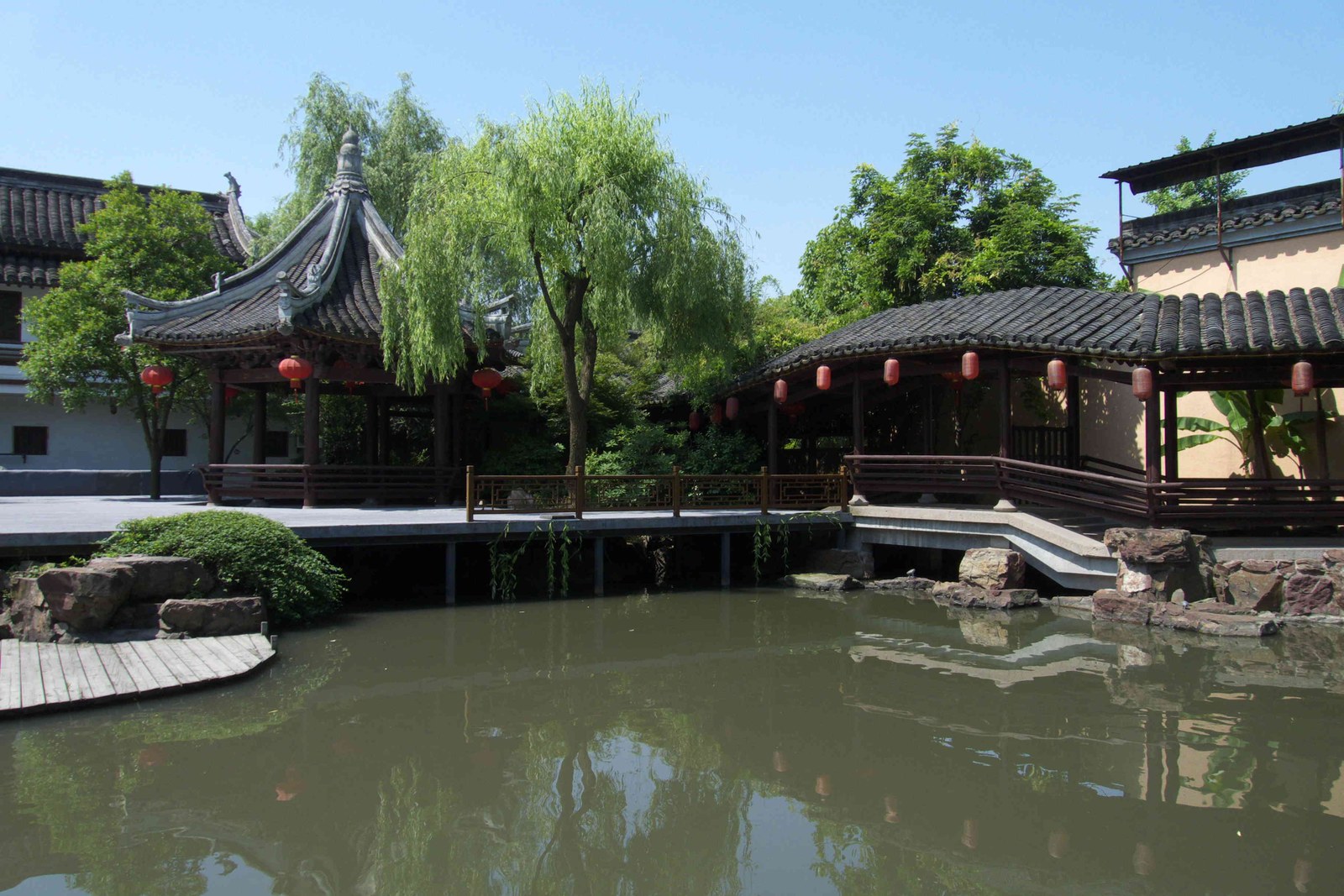
Shaoxing stages the story nightly: the evening session (堂会) dresses guides and musicians in Song costume, actors perform the separation scene on a waterside stage, and the garden’s lantern-lit paths turn the heartbreak into theatre. Book the night ticket separately – day visitors get the botany, night visitors get the drama.
Give it ninety minutes by day: the poem wall, the crane pavilion, the double-lotus pond said to echo the couple’s fate, and the quiet back lanes where the garden meets the old city moat. The site sits inside the walking radius of Lu Xun Native Place – the classic Shaoxing afternoon is his street first, her garden after, one afternoon of prose and poetry stitched together.
Practicalities
- Day tickets are modest; the evening Song-costume show is a separate ticket and sells out on weekends – book online ahead.
- The poem wall and the crane pavilion are the crowd magnets; the back garden and moat lanes stay quiet all day.
- Combine with Lu Xun Native Place on foot – ten minutes between the gates, one old-town afternoon covers both.
- Lotus season (June-August) fills the ponds; winter gives you the garden bare and the poems loudest.
Words and Names
沈园 Shèn Yuán Shen Garden, the Song estate of the famous divorce; 陆游 Lù Yóu Lu You, the Southern Song master poet; 唐婉 Táng Wǎn Tang Wan, the first wife the garden remembers; 钗头凤 Chāitóufèng Phoenix Hairpin, the tune-title of both wall poems; 孤鹤轩 Gūhè Xuán the Lone Crane Pavilion, the garden’s rebuilt center. Beyond the heartbreak garden, the same 绍兴市 Shàoxīng Shì Shaoxing City keeps more places worth the detour: 鲁迅故里 Lǔxùn Gùlǐ the writer’s restored quarter, 兰亭 Lántíng the Orchid Pavilion, 五泄瀑布 Wǔxiè Pùbù the five-tier falls, or 天姥山 Tiānmǔ Shān the dream mountain of Xinchang – four more doors into the same 绍兴市 Shàoxīng Shì Shaoxing City. Once the pond has had its poem, our Shaoxing food map fills the table.
flowcloud would say Shen Garden is a wall that kept its poem: two verses facing each other across eight centuries, a crane pavilion rebuilt over the same pond, and a night show that lets the actors grieve on the visitors’ behalf. All checked November 2026.
Getting there: Shen Garden opens east of Lu Xun Native Place, a ten-minute walk through the old quarter – tickets run day and evening sessions, and the Song-costume night show books separately at the gate. All checked November 2026.