
The Immortals’ Apartment Block: Peaks of Shenxianju
观音岩下云成海,如意桥悬万仞间 Guānyīn yán xià yún chéng hǎi, rúyì qiáo xuán wàn rèn jiān – Below Guanyin Rock the clouds make a sea; the Ruyi Bridge hangs among ten-thousand-fathom cliffs
神仙居 Shénxiānjū Shenxianju – “where immortals dwell” – is 仙居 Xiānjū Xianju county’s answer to a vertical world: a forest of volcanic rhyolite columns, walls and natural bridges lifted straight off the valley floor, now strung together by cliff walkways and steel spans at cloud height. The range is the scenic core of a national park and holds a 5A rating, and its rock names do the selling: 观音峰 Guānyīn Fēng Guanyin Peak, a hundred-meter monolith that reads unmistakably as the bodhisattva in profile; 南天顶 Nántiān Dǐng the South Heaven Top plateau; and the 蝌蚪文 Kēdǒu Wén tadpole glyphs, an undeciphered carving field high on a cliff face that has outlasted every explanation offered since the Song dynasty.
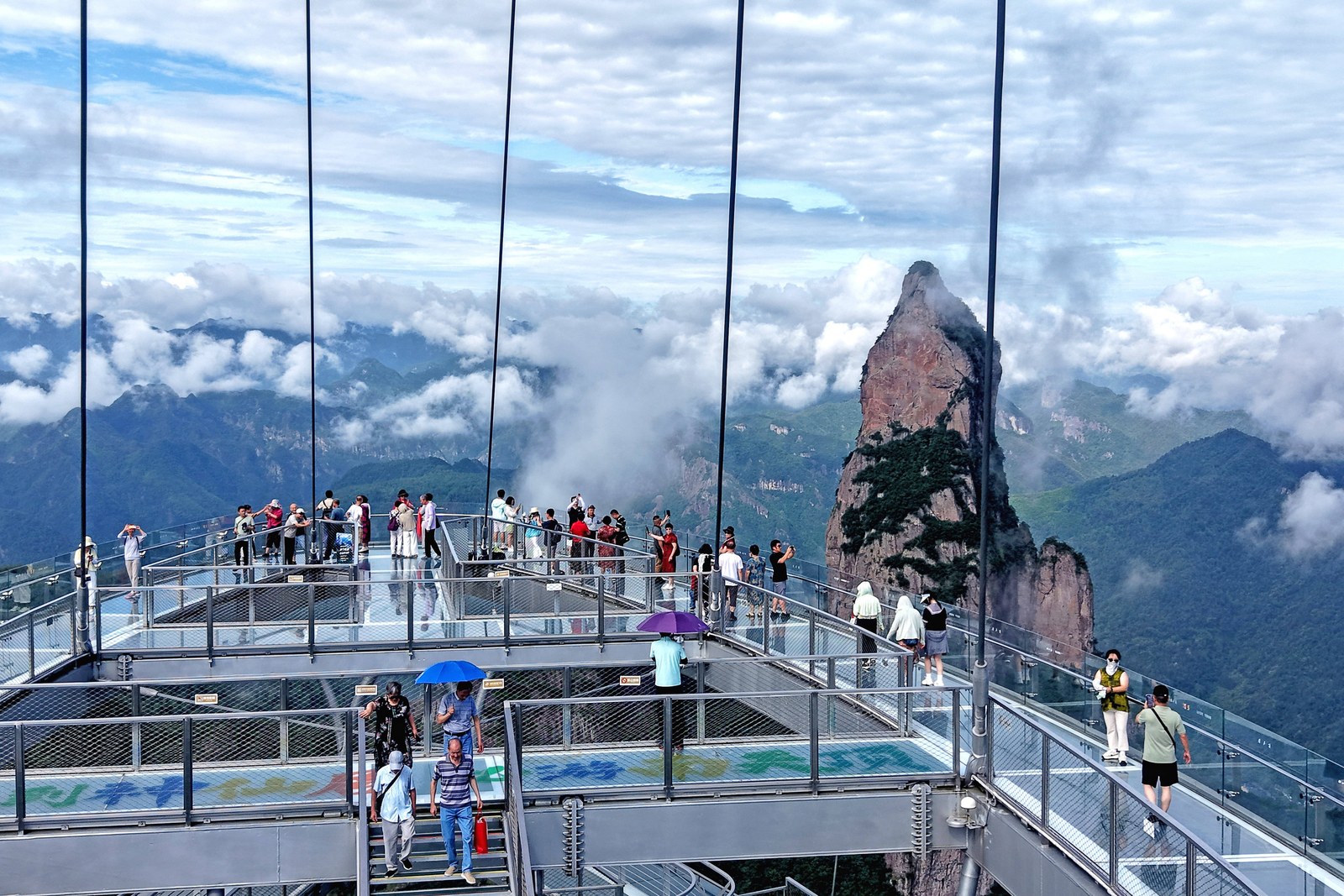
The walk is the experience. Cablecars lift you past the tree line, then a signed circuit of two to five hours crosses 如意桥 Rúyì Qiáo the Ruyi Bridge – a curved steel arch spanning a gap with nothing beneath it – and the glass-floored viewing decks where the drop stops conversation. Fog days are the famous days: the peaks become islands, the walkways become causeways, and every railing post grows a photographer.
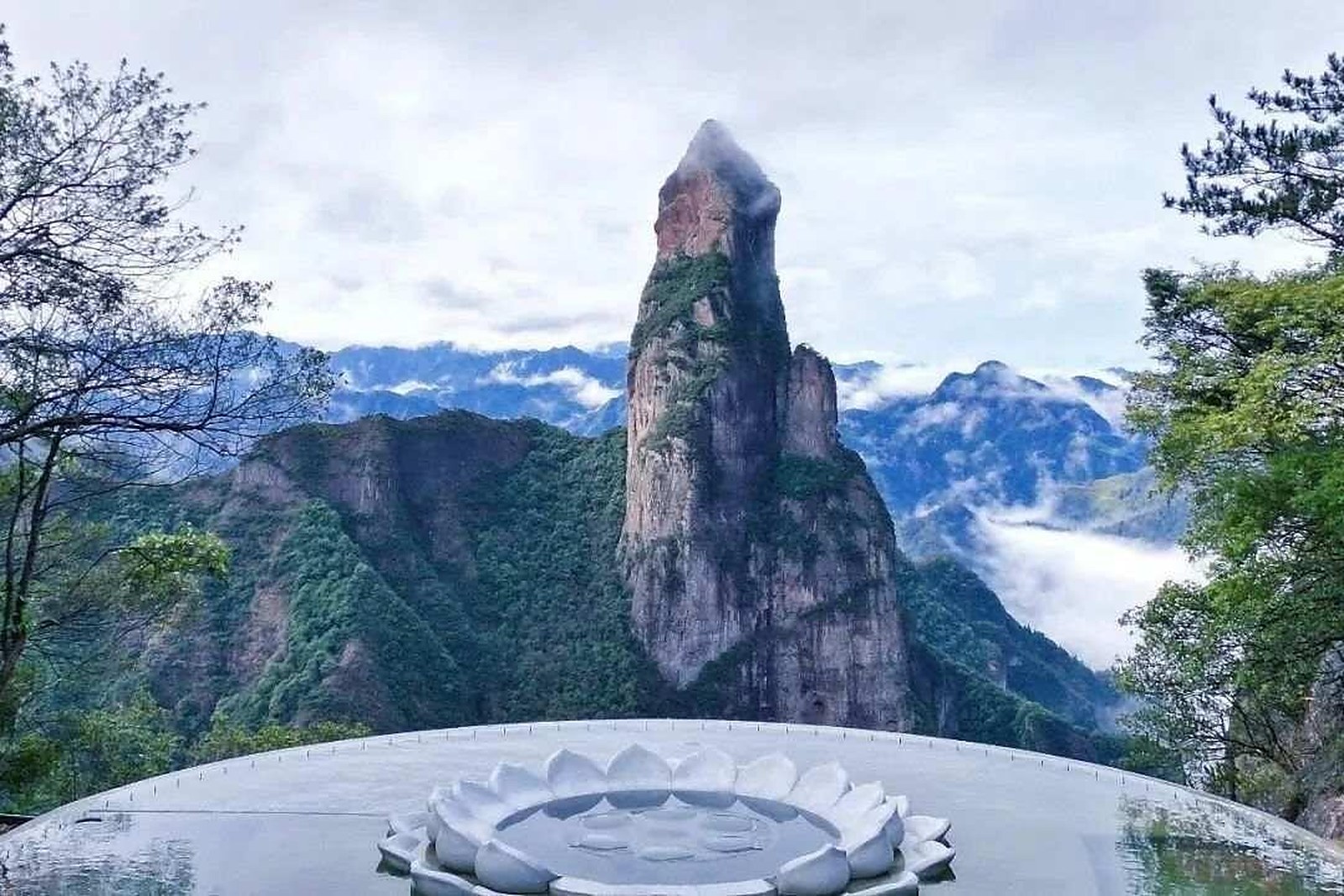
Botany is the quiet claim: the park shelters one of East China’s densest stands of ancient rhododendron and dove-tree, and the valley trails below the peaks keep a stream-run route past 西罨寺 Xīyǎn Sì Xiyansi, the Song-era monastery site where the “West Curtain” cliff rings the ruins like an organ pipe. The lower gorge keeps its own name – 淡竹 Dànzhú the bamboo groves – and paddle-raft trips run it in summer.
Come early or stay late: the park opens at 7:30 and the peak circuit empties by 4 pm, when the tour buses roll and the light goes sideways across the columns. The north and south gates both have shuttles, and the cablecars close before dusk – the walk down is a different mountain.
Practicalities
- Tickets plus cablecar run about 200 yuan combined; the walkway circuit is one-way and signed by hour, so pick the 3-hour loop unless the fog is epic.
- Rain brings the fog and the best photos, but steel decks get slick – same rule as everywhere vertical: grip shoes, no umbrellas on the narrow walks.
- Hangzhou-Taizhou high-speed rail stops at 仙居站 Xiānjū Zhàn Xianju station, twenty minutes from the north gate by taxi.
- Weekends in May and October queue an hour for the cablecar; weekday mornings walk straight on.
Words and Names
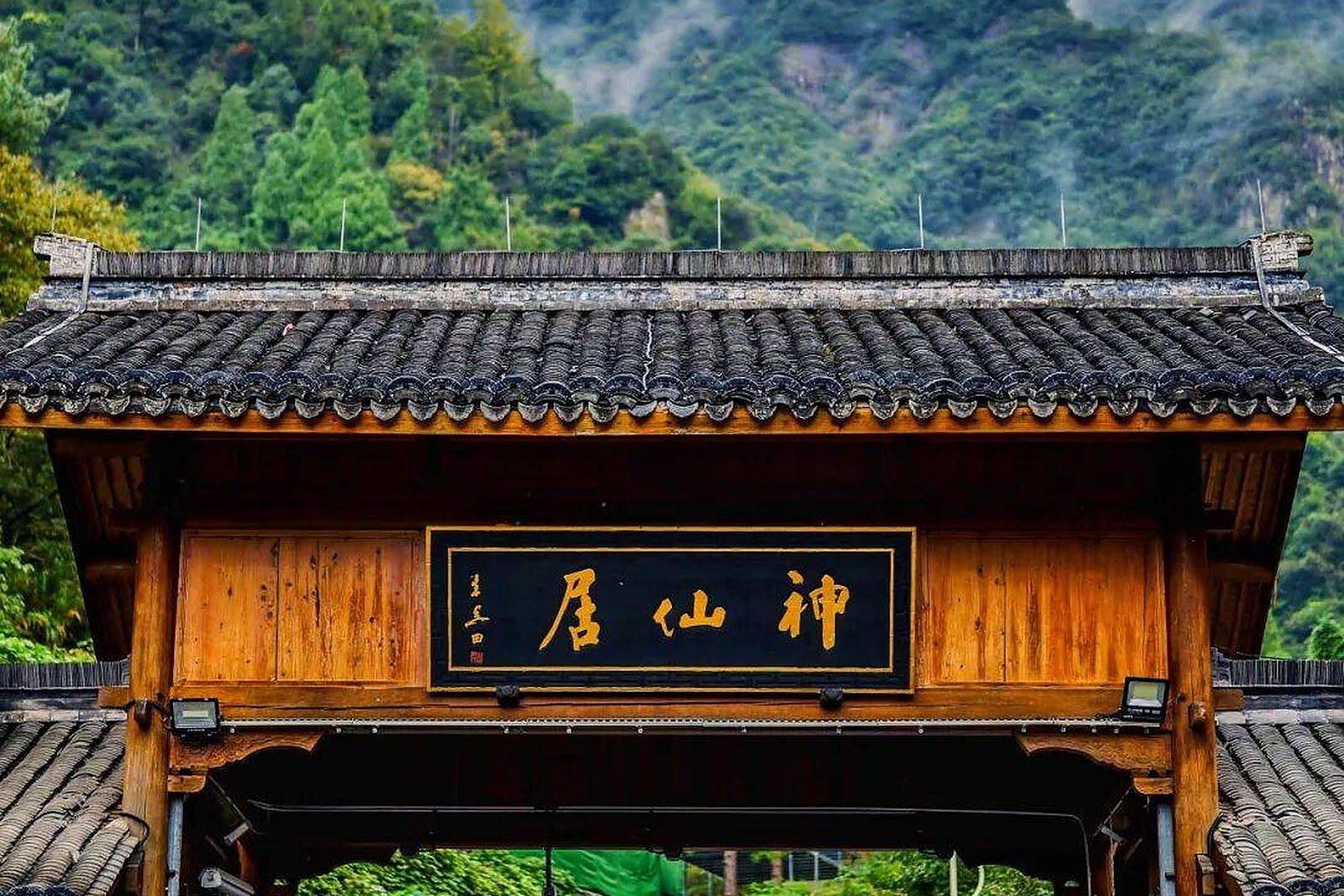
神仙居 Shénxiānjū “dwelling of immortals”, the scenic area’s name since the Tang; 观音峰 Guānyīn Fēng Guanyin Peak, the profiled monolith; 如意桥 Rúyì Qiáo the Ruyi (ceremonial scepter) Bridge; 蝌蚪文 Kēdǒu Wén tadpole script, the undeciphered cliff glyphs; 天姥 Tiānmǔ Tianmu, the mountain Li Bai dreamed and some scholars locate here. Beyond the immortal peaks, the same 台州市 Tāizhōu Shì Taizhou City keeps more places worth the detour: 天台山 Tiāntái Shān the temple mountain of the Tiantai school, 临海古城 Línhǎi Gǔchéng the Ming city wall at Linghai, 石塘渔村 Shítáng Yúcūn the granite fishing village of Wenling, or 蛇蟠岛 Shépān Dǎo the quarry caves of Sanmen Bay – four more doors into the same 台州市 Tāizhōu Shì Taizhou City. Once the bridges have had their fog, our Taizhou food map fills the table.
flowcloud would say Shenxianju is geology showing off: columns nobody could stack on purpose, a bridge named after a lucky scepter, and a cliff of letters no one has ever read – the immortals, at least, kept the lease. All checked November 2026.
Getting there: Shenxianju runs its gates off Xianju county – high-speed trains stop at Xianju station twenty minutes from the north gate, shuttle buses meet every arrival, and the drive from downtown Taizhou runs about an hour. All checked November 2026.