
Shihua Cave: The Seven-Storey Karst Palace, the Stone Flowers and the Moon-Milk Lotus of Fangshan District, Beijing
七层洞府藏瑶石,四季恒温一洞春。Qī céng dòngfǔ cáng yáoshí, sìjì héngwēn yī dòng chūn – A seven-storey cave palace hides jade stones; at four seasons’ constant temperature, one cave keeps its own spring.
石花洞 Shíhuā Dòng Shihua Cave is not one dripping cavern — it is, plainly put, a seven-storey karst palace: a multi-level limestone system in the hills of 河北镇 Héběi Zhèn Hebei town in 房山区 Fángshān Qū Fangshan District, Beijing, counted among China’s four famous caves and billed as the finest show cave of the north — seven levels stacked one above another, the upper six hung with stone scenery and the seventh carrying an underground river, of which four floors are open on a walking route of about 2,500 metres. Tradition has a wandering monk finding the cave in 1446 and naming it 潜真洞 Qiánzhēn Dòng, the Hidden-Truth Cave; Buddhas carved at the mouth earned it the byname 十佛洞 Shífó Dòng, the Ten-Buddha Cave. Inside are 石笋 shísǔn stalagmites, 石钟乳 shízhōngrǔ stalactites, 石幔 shímàn flowstone curtains, 石盾 shídùn stone shields and the rare 月奶石 yuènǎishí moon-milk, set into a “stone lotus” said to be unique in the country — all at a cave-wide constant of about 13°C. What you actually visit is a stair-wound circuit through lit chambers, up and down between the floors.
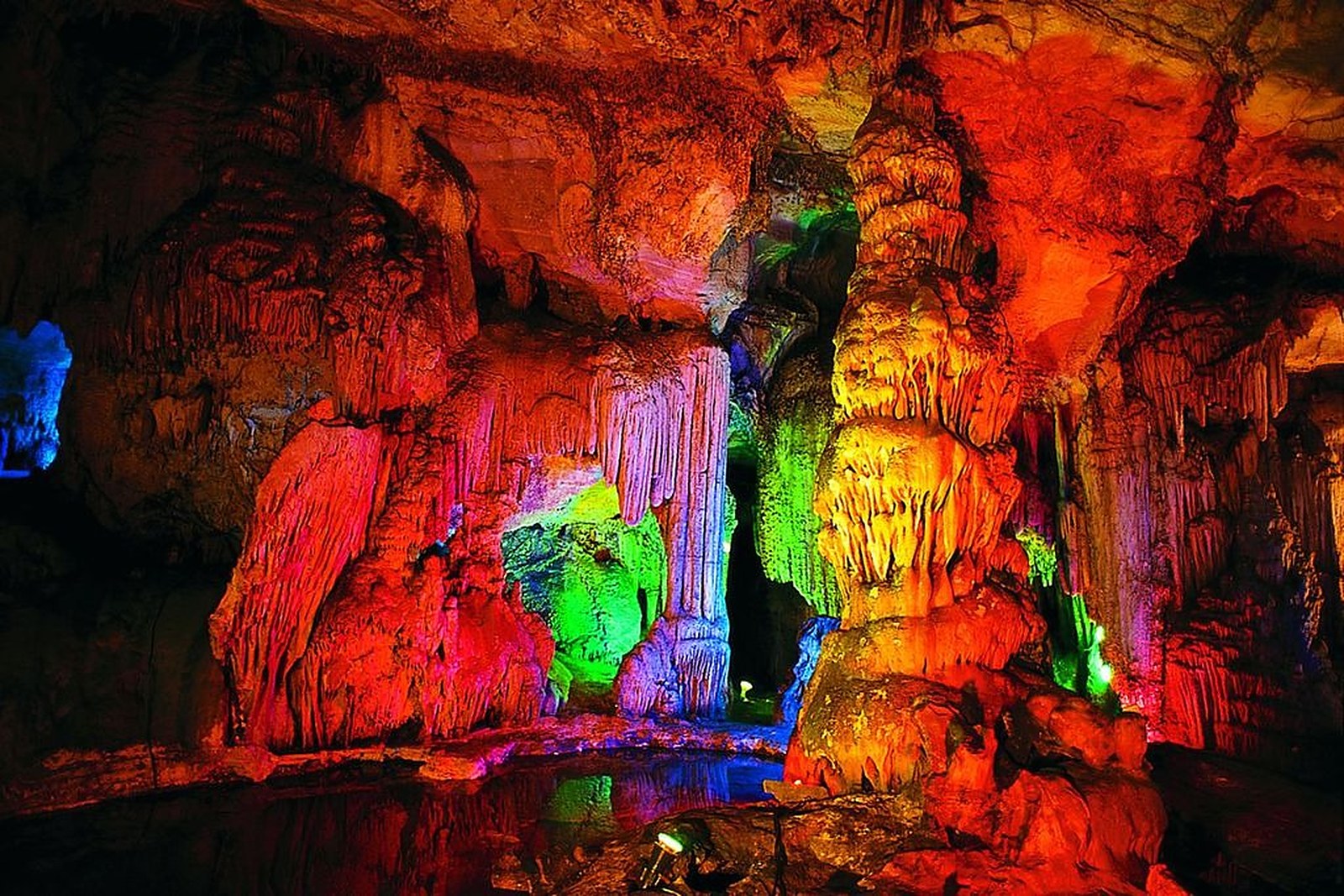
Call it honestly: a ticketed show cave, cool and damp in every season. Adult entry has stood at around seventy yuan with a half-price tier (worth confirming the details for current rates and rules), hours run from nine to late afternoon with an earlier gate in winter (worth confirming the details), and the circuit means real stair work — the route drops and climbs between floors, so anyone with knees or claustrophobia should think first. The honest moves are a weekday morning, when the tour groups thin and the drip of water becomes audible again, and a jacket in any month, because 13°C is winter’s temperature even in August. Photography without a tripod is humbling; look first, shoot once. Give the place two to three hours and let your eyes adjust slowly between chambers.
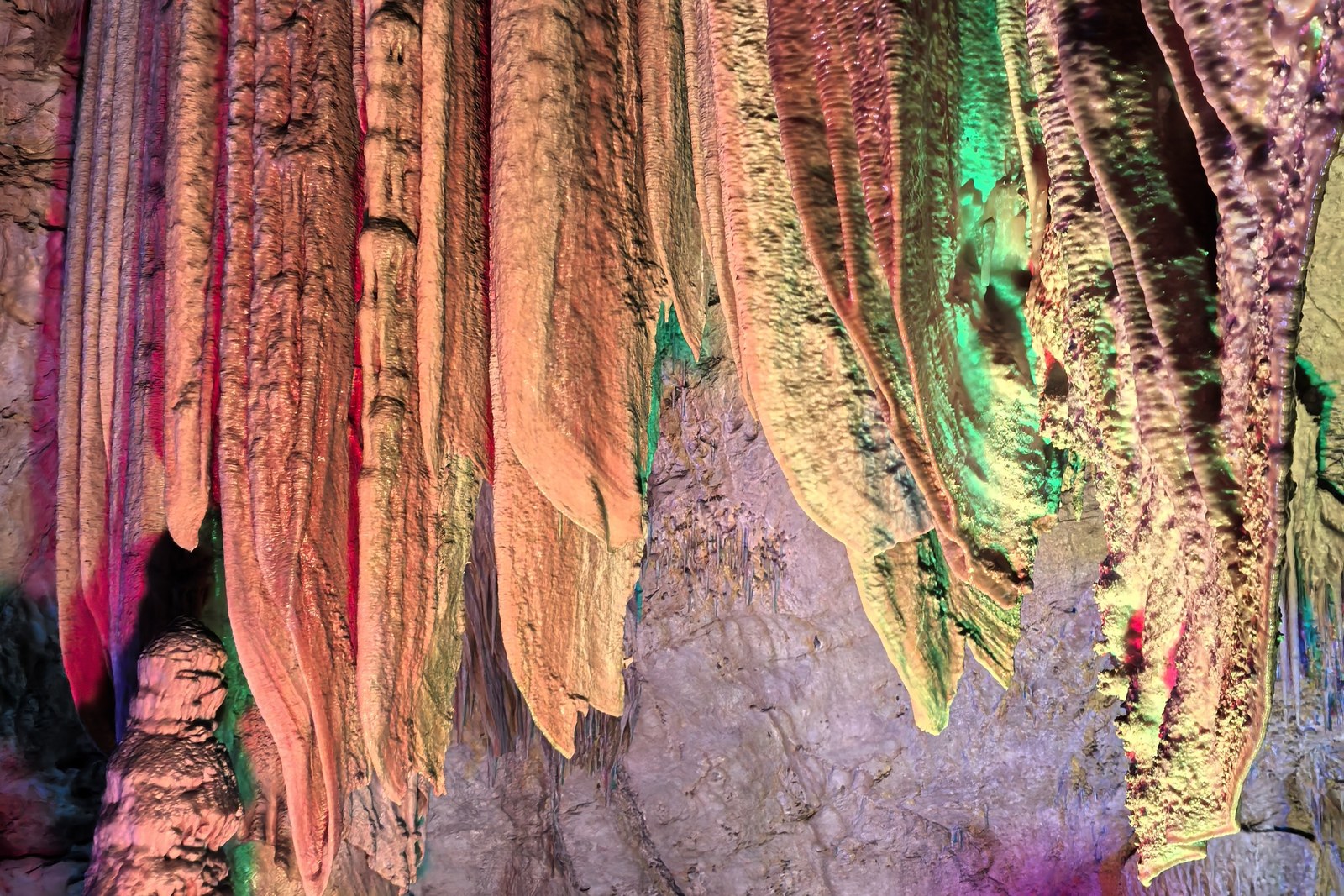
The honest star is the upper “white jade corridor” floors — the third and fourth, where 石花 shíhuā stone flowers, 石枝 shízhī frostwork branches and straw-thin 鹅管 éguǎn straws cover the walls like frost — not the grand curtain near the entrance levels. What gets oversold is the “four famous caves” superlative chased as a checklist item: rankings are ranking games, and the cave’s true rarity is density — the brag is not one giant chamber but dozens of small perfect things (worth confirming the details for which formations are lit on your route). What repays the effort is the great 石幔 shímàn curtain built of hundreds of stacked stone blades, the paired 石盾 shídùn shields that are the cave’s signature, and the moon-milk lotus pool. Come for the layering of the place: stair, then hall, then stone flower.
The self-aware postscript: I fell behind my group on the third floor while photographing a shield, and when I caught up the guide was telling them the formations grow about a centimetre in a century — “so touch nothing; you would be vandalising a millennium”. That is the visit in miniature. 石花洞 Shíhuā Dòng suits whoever treats it as a geology lesson first and a cool hour second — walk slowly, look up, let the colours be the colours — and exhausts anyone expecting a wide dry promenade. Everything else on this Fangshan list is close or close enough: the World Heritage hill of 周口店北京人遗址 Zhōukǒudiàn Běijīngrén Yízhǐ to the south, the stone sutras and Liao pagodas of 云居寺 Yúnjū Sì Yunju Temple beyond 大石窝镇 Dàshíwō Zhèn, the ferry-crossed karst of 十渡 Shídù Shidu up the 拒马河 Jùmǎ Hé valley, and the cloud ladder of 上方山国家森林公园 Shàngfāngshān Guójiā Sēnlín Gōngyuán — all in the same 房山区 Fángshān Qū that keeps its wonders under the hills as well as on them.
Practicalities
- Rating: ★★★★☆ — the finest show cave near Beijing, seven storeys deep with a moon-milk lotus at its heart; the frostwork upper floors and the paired stone shields outrank the entrance halls; bring a jacket and weekday patience.
- Tickets: Adult entry around seventy yuan with a half-price concession tier in recent seasons (worth confirming the details for current rates, hours and winter timings).
- Address: 石花洞 Shíhuā Dòng Shihua Cave, 南车营村 Nánchēyíng Cūn, 河北镇 Héběi Zhèn, 房山区 Fángshān Qū Fangshan District, Beijing — some 46 kilometres from the city centre.
- Time needed: Two to three hours for the four open floors; half a day adding the drive and the surrounding geopark country.
Words and Names
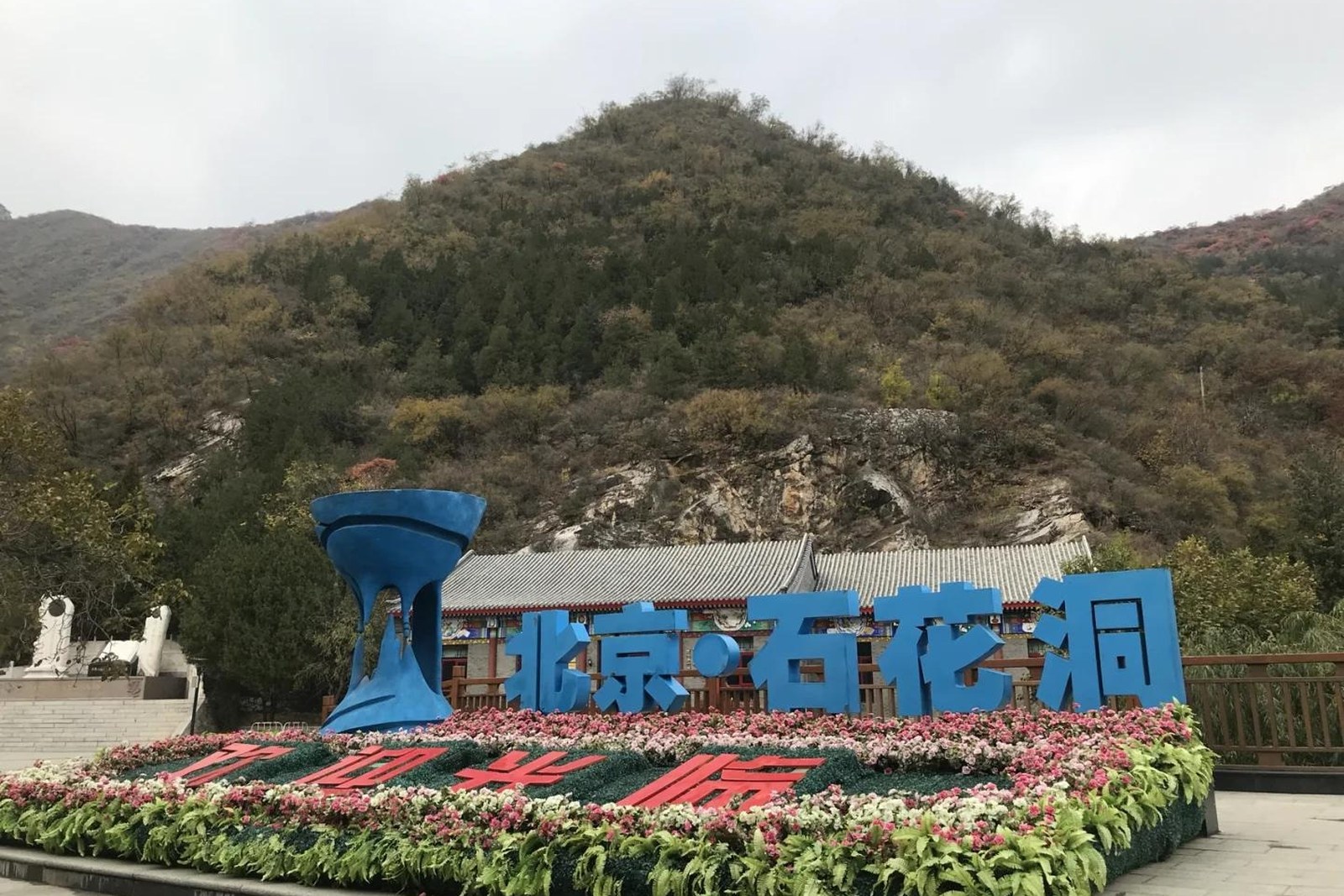
石花洞 Shíhuā Dòng Shihua Cave · the “Stone Flower Cave” of the Hebei town hills 潜真洞 Qiánzhēn Dòng Hidden-Truth Cave · the cave’s 1446 monastic name 十佛洞 Shífó Dòng Ten-Buddha Cave · the byname from the carved Buddhas at the mouth 石笋 shísǔn stalagmite · the up-growing limestone columns of the floors 石钟乳 shízhōngrǔ stalactite · the down-hanging drips of the ceilings 石幔 shímàn flowstone curtain · the stacked stone draperies of the halls 石盾 shídùn stone shield · the table-like shields that are the cave’s signature 月奶石 yuènǎishí moon-milk · the soft white deposit set into a “stone lotus”
flowcloud would say that 石花洞 Shíhuā Dòng is a seven-storey karst palace under the 河北镇 Héběi Zhèn hills — the 潜真洞 Qiánzhēn Dòng found by a monk in 1446, four open floors of 石笋 shísǔn, 石钟乳 shízhōngrǔ, 石幔 shímàn and 石盾 shídùn on a route of about 2,500 metres at a constant 13°C, and the rare 月奶石 yuènǎishí moon-milk lotus — and that the honest move is a weekday morning with a jacket, because tickets, hours and lighting routes all shift (worth confirming the details), the four-famous-caves superlative is the poster half and the small frostwork details are the real half, and the cave repays whoever walks it slowly while losing anyone trying to photograph it at a sprint. All checked October 2026.
Getting there: Buses from the 天桥 Tiānqiáo and 六里桥 Liùlǐqiáo side of the city run toward 良乡 Liángxiāng or 阎村 Yáncūn, with local routes (the 833 or the 房13 in recent years) continuing to the 石花洞路口 Shíhuā Dòng lùkǒu stop and a short ride up to the cave; self-drive follows the G5 京昆高速 Jīngkūn gāosù toward the 河北镇 Héběi Zhèn hills (worth confirming the details for current bus numbers, transfers and parking). All checked October 2026.