
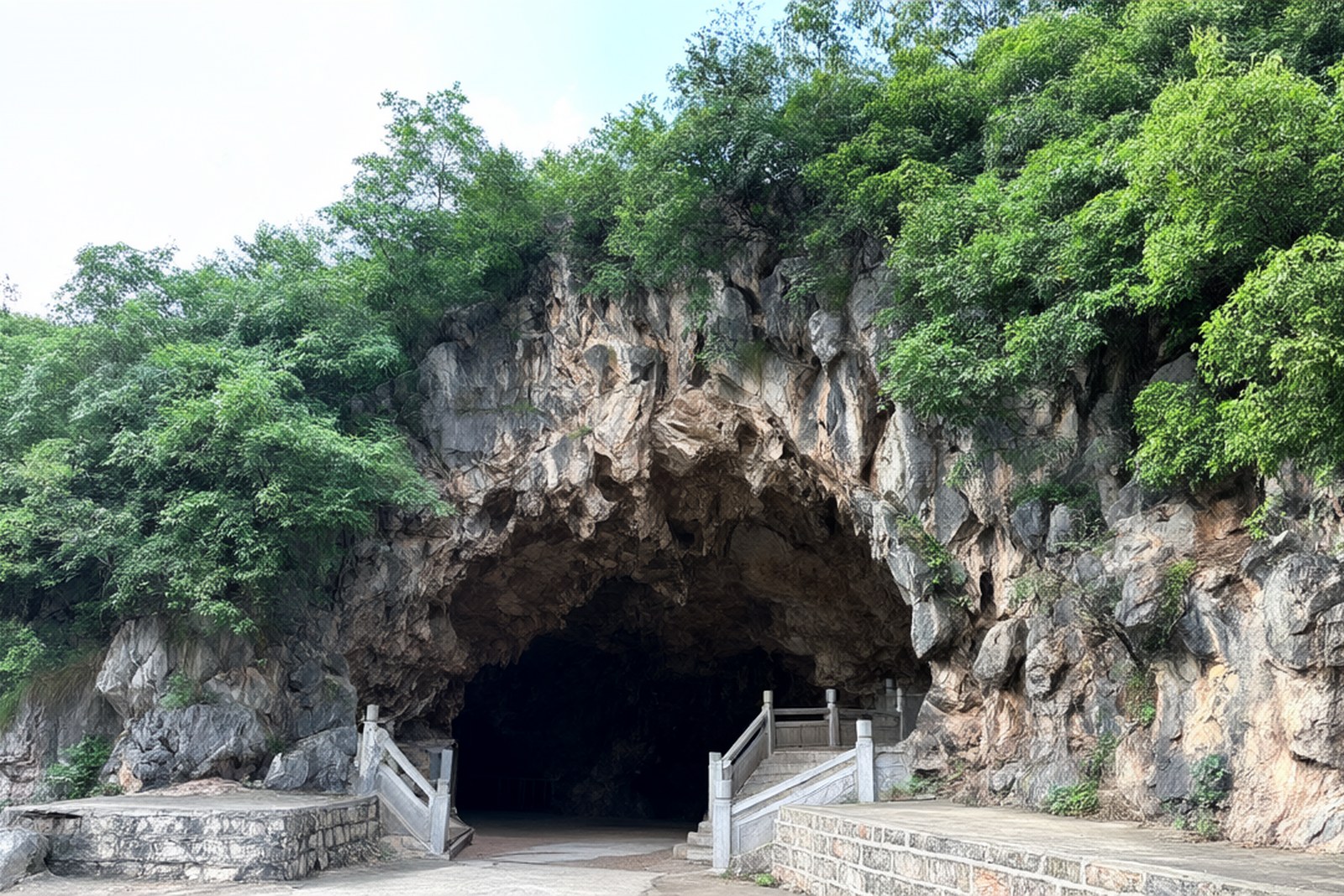
石花水洞 Shí huā shuǐ dòng, the Stone Flower Water Cave, is the limestone cave system in the 英岛山 Yīngdǎo shān hills of the 八一 Bāyī country in 儋州市 Dānzhōu shì, about thirty kilometres south-east of the city centre at 那大 Nàdà. It is a national geological park, and the name refers to what you find in it: 石花 shí huā, stone flowers, the fine crystal growths of calcite and gypsum that develop on the walls of a cave when the air is still and the water is slow, and which are far rarer and more delicate than the big columns of an ordinary show cave. The visit is half walking and half by boat, and the boat is the reason to come.
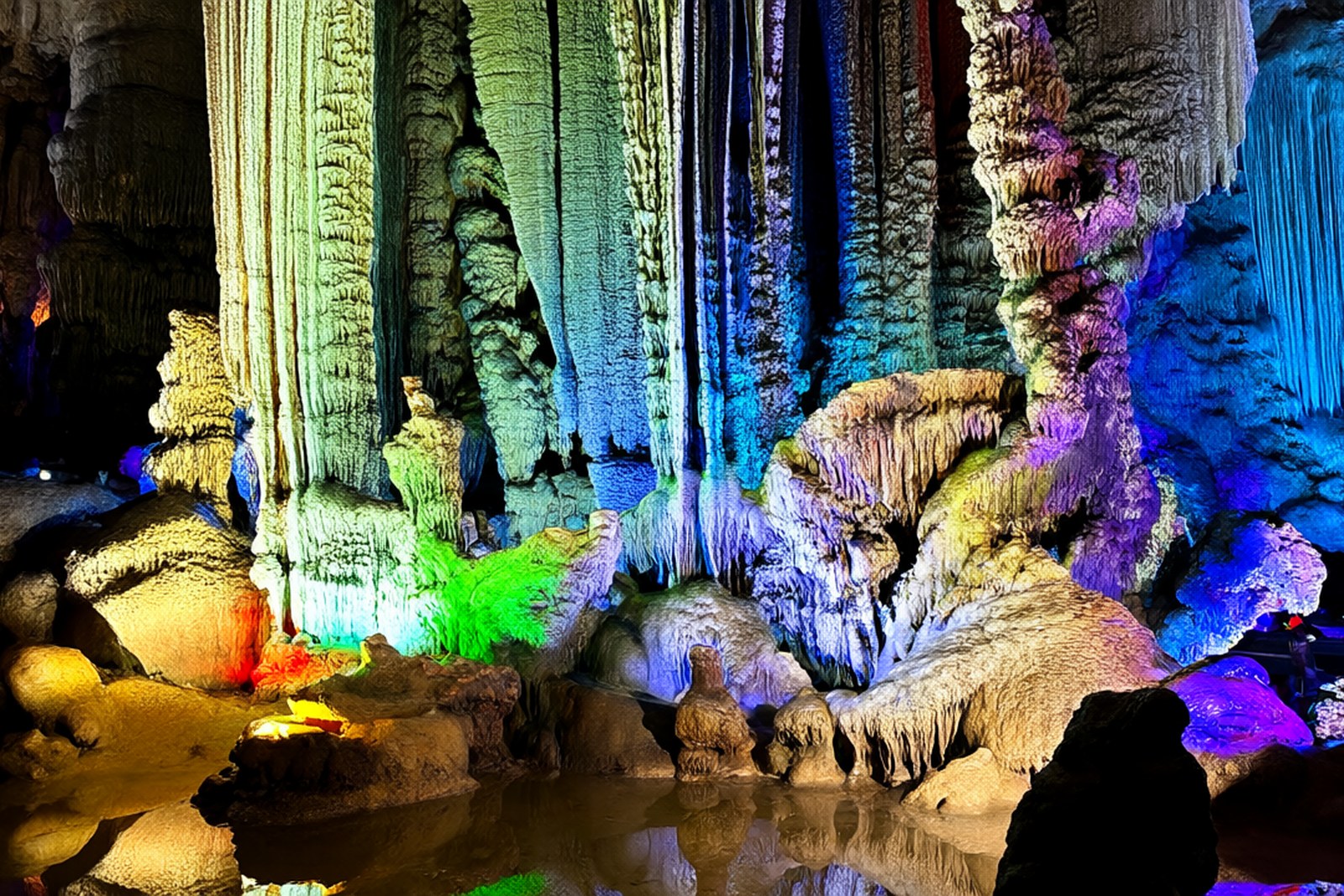
A stone flower is not a stalactite. The big formations most caves are famous for grow by water dripping and running, and they are built up in fat columns and curtains; a 石花 grows because the cave has stopped dripping, the air has become still and humid, and mineral-laden water arriving through the pores of the rock crystallises on the surface instead of running down it. What forms is a frost of thin white and amber needles, sometimes curled like a coral, sometimes fanned out like a flower, and it takes many thousands of years to grow and a touch to destroy. Faced with a wall of it, the instinct to reach out is the thing to resist.
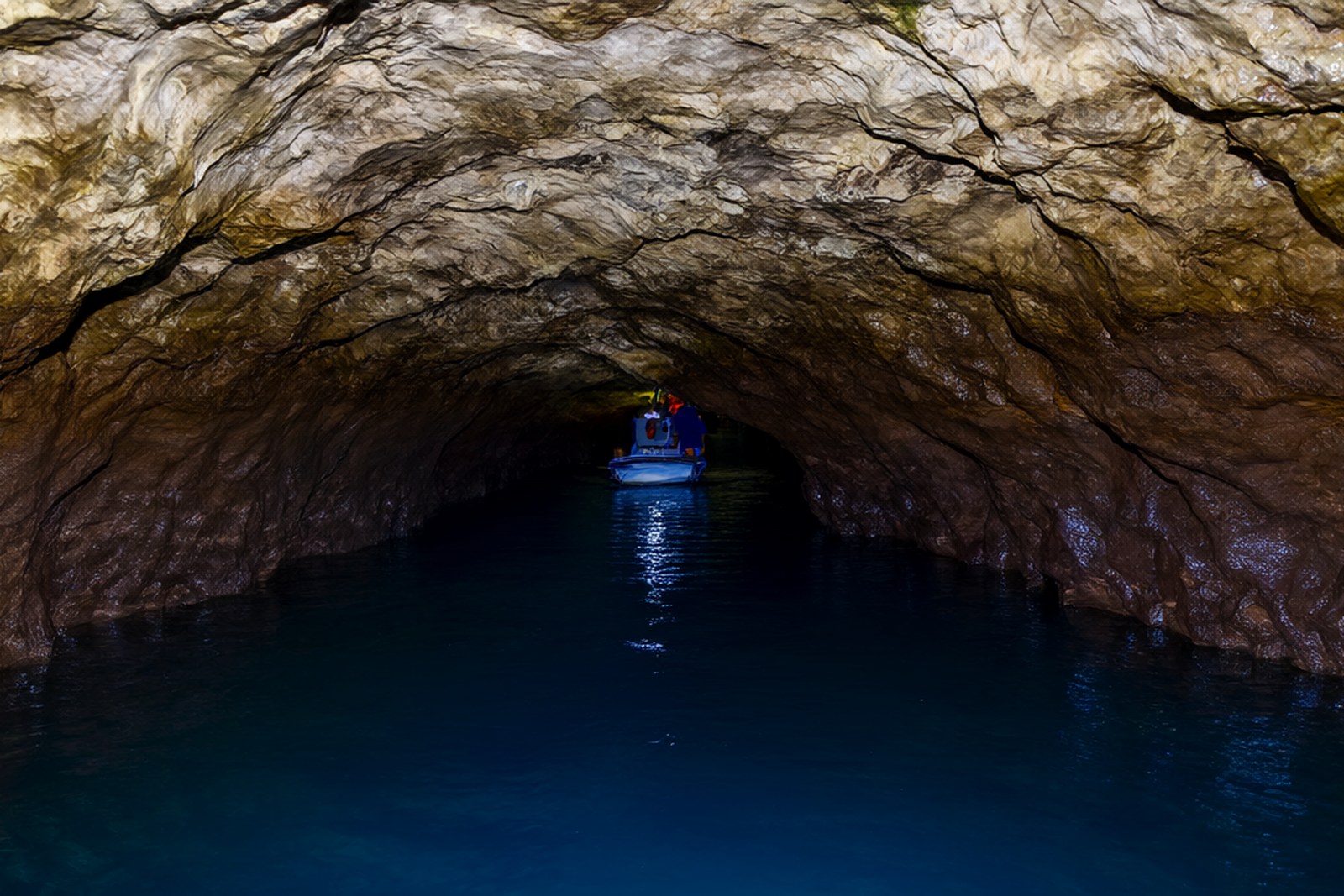
The cave is a 溶洞 róng dòng, a solution cave in limestone, and it comes in two halves that the visit takes in order. The first is the dry section, a walk along a concreted path with a stair at the tight points, through chambers where the ordinary formations of a southern Chinese cave are lit in warm golds and cool blues and the path passes close to columns that reach the roof. The second half is the underground river, boarded in a low boat, with a metre or so of headroom in places and the rock passing close on both sides, lit from below so that the water holds a blue reflection. The boat section is short and it is the part everyone remembers.
The cave sits in the middle of farming country, surrounded by the rubber, banana and fruit plantations of the 八一 area, so the drive out is part of the day rather than a dead run. The site has the usual visitor arrangements, a car park, a ticket hall and a small exhibition on the geology, and the walk is comfortably done in about an hour and a half, which leaves the afternoon. Combine it with the 蓝洋 hot springs, which are in the same direction from the city and about forty minutes away, or with 松涛水库 on the other side of 那大, and the hills south of the city fill a full day. Bring a jacket, because a cave is cold, and shoes with a grip, because the path is wet.
Practicalities
Tickets. The cave charges a combined ticket, in the region of ¥70 to ¥110, which covers the dry walk, the lighting and the underground boat. There is usually a separate small charge if you want a guide, and the exhibition at the entrance is included.
Opening hours. The site is open roughly 08:30 to 17:30, with the last admission in the mid-afternoon because a full visit takes an hour and a half or more. It is quietest in the morning and at the start of the afternoon, and the cave is lit to a constant standard whatever the weather.
Getting there. 石花水洞 is in the 英岛山 hills of the 八一 country, 儋州市, about forty minutes by road south-east of 那大 Nàdà. The nearest high-speed rail stop is 白马井站 Báimǎjǐng zhàn on the west ring line, an hour or more away by taxi, so most visitors come by car from the city or by a taxi arranged for the day.
Closing day. The cave is open every day of the year with no weekly closing day. The underground boat is suspended when the water inside the cave is high after heavy rain, which floods the lower passage and makes the boarding stage unsafe.
flowcloud would say that a cave which stopped dripping, went quiet and humid, and then spent thousands of years growing flowers out of its own walls instead of columns, has made the case for stillness, and that a visitor is only asked to look and not to touch, which is the least any beautiful thing has ever charged.
Getting there: the cave is in the 英岛山 hills of the 八一 country in 儋州市, about forty minutes by road south-east of 那大, which is the base; a car or a taxi for the day is the practical way in, and 白马井站 on the west ring line is the rail gateway for the city as a whole.