
Shijin is a Li village in Sandao Town that sits between the county’s two 5A parks, Yanoda and Binglanggu, on the highway strip where the coach traffic runs. Its story is not that it is old or remote but that it was rebuilt – on a model the county government named the big zone, small town, new village. The brief went to a company, Sandao Bay Big-Zone-Small-Town, which developed the village’s Bulongse rural cultural tourism zone on a plain premise: introduce an enterprise to drive development, and carry the farming households along with it. The county’s ethnic affairs commission, describing the project, set out the starting point without romance: single-industry farming, incomplete infrastructure, houses that were mostly thatch and kitchens that were earthen stoves.
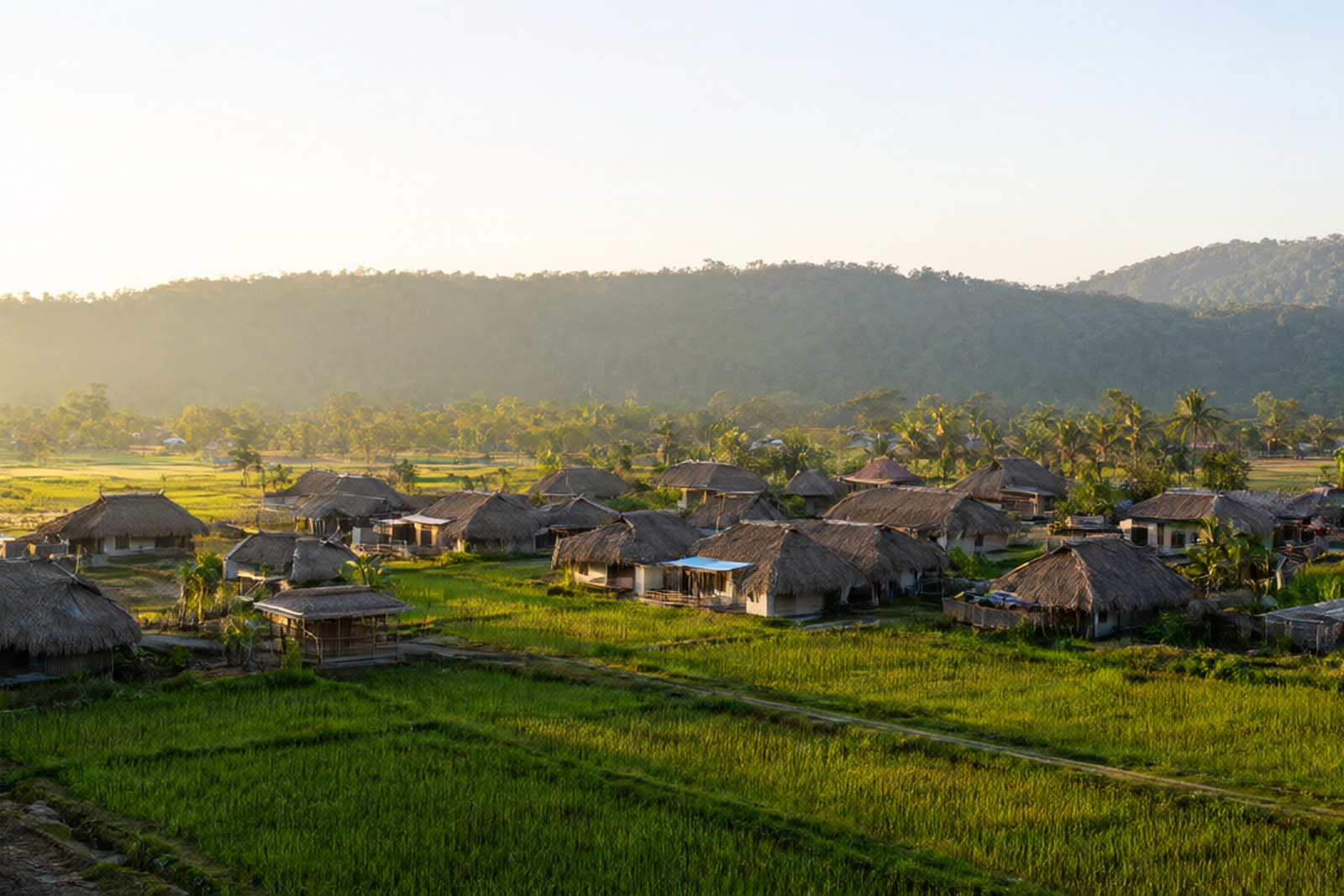
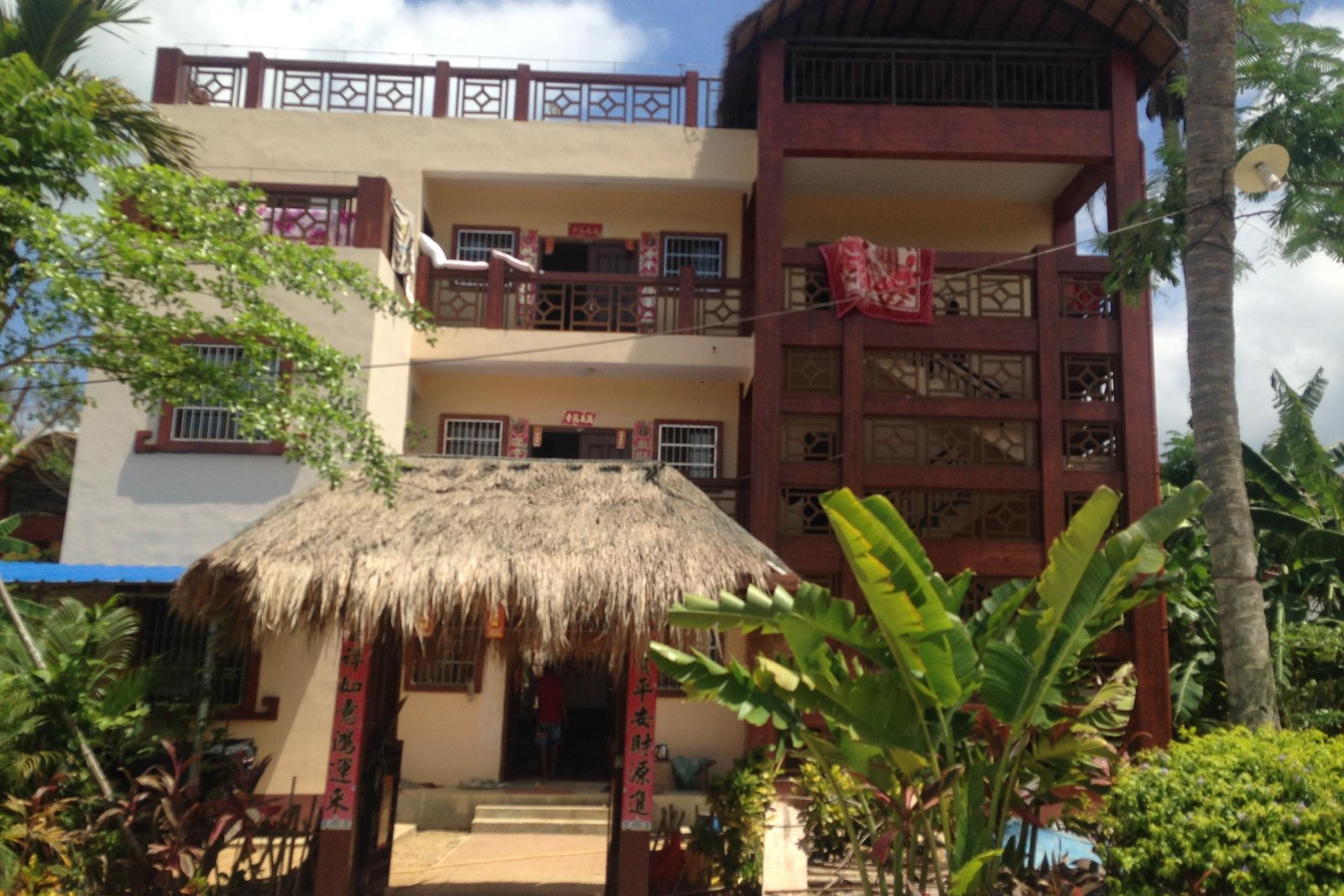
The programme ran on two interlocking formulas. The first was tourism plus agriculture – the village would keep growing rice and tending its fields while earning from visitors. The second was company plus farming household – villagers became the hosts, converting their own homes into guest rooms and taking jobs at the door instead of leaving the county for work. Government and company money paid for the plumbing and the paving: hardened lanes, drainage, planting, fibre optic cable, a party-and-mass activity centre and a village history museum, with outside specialists brought in to lecture residents on law, culture and tourism service. The narrative the county tells is of thatched roofs becoming guest rooms, of wasteland becoming valuable land, and of people who had migrated out for work coming home. It is a policy story as much as a travel one, and it is the reason Shijin appears in official accounts at all.
What that means on the ground is a village you visit at the ends of the day. The visitor side is the Bulongse tourism zone, which has no walls and no ticket and, on the commercial listings that carry it, a rating around 4.3. The village side is the everyday one: rice paddies, lanes, and the Li hospitality that the province’s own account lists – long-table feasts, bamboo-pole dancing and the customary welcome – bookable through the village operators with a day or two of notice. There is a village history museum, several farm kitchens, and the sort of evening that is the whole point of staying: dinner at a long table, a walk under the lamps, and a sky that only gets properly dark outside the city.
The model has a documented political history, which is worth a line because it explains the village’s careful presentation. In 2015, when Binglanggu was plated as a 5A park, the county’s own leadership named Bulongse alongside Binglanggu, Yanoda and Qixianling in the county’s tourism line-up – unusual billing for a village at the time. Later, Baoting folded Shijin into its version of the national demonstrate a thousand villages, improve ten thousand villages programme, and the provincial ethnic affairs commission wrote it up in 2023 as a Baoting model of building a harmonious and beautiful countryside. One caution for anyone planning around it: the tourism zone’s current operator, occupancy and opening patterns have no official update later than that 2023 account, so treat the later years as unverified and confirm before you build a trip on it.
Positioning Shijin correctly takes one comparison, because this site already covers two other Li villages. Luoshuai, in Baisha county, is the whole village is one big guesthouse model built around a rainforest stream, and its appeal is ecology; Maona, in Wuzhishan, is a living village where intangible heritage is simply daily routine. Shijin is neither of those. Its distinction is the enterprise-led big zone, small town structure and a location wedged between two of the country’s most-visited rainforest and ethnic-culture parks – which makes it the obvious third stop on a two-park day. The standard two-day shape runs Yanoda in the morning and a night here, then Binglanggu the next day and a hot-spring soak at Qixianling if there is time. Room types, rates and the lodging side of Bulongse belong to this site’s stay column rather than here.
Practicalities
Tickets. Free to enter. Bulongse is an open village-style tourism zone, not a gated park; the village is a working community, and meals, feasts and experiences are paid for individually through their operators. Checked October 2026, subject to change.
Opening hours. The village is reachable at all hours. Homestays, farm restaurants and the village history museum keep their own hours, and there is no published uniform timetable.
Closing day. No closing day – a working village does not close. Booked experiences such as the long-table feast or a dance performance need a day or two of notice, so plan those ahead.
Getting there. By car, take the Shanhai Expressway and then National Highway 224 to the Sandao Town stretch; Shijin and Bulongse sit between the Yanoda and Binglanggu gates on that road. The Sanya intercity bus line 1 stops at both parks, from which the village is a short walk or a village transfer of about one to two kilometres. From the county seat at Baocheng the drive is in the region of half an hour to forty minutes.
flowcloud would say that Shijin is proof a village need not be famous for scenery to be worth a night – it can be famous for a model – and that the third stop between two 5A parks has quietly learned to keep the visitors the parks bring in.
Getting there: Shijin village and the Bulongse rural cultural tourism zone lie in Sandao Town, Baoting Li and Miao Autonomous County, Hainan, between the Yanoda and Binglanggu gates on National Highway 224; entry is free as an open village, there are no fixed hours and no closing day, booked experiences need a day or two of notice, and access is by car on the Shanhai Expressway and G224 or by the Sanya intercity bus line 1 to either 5A park (checked October 2026, subject to change).