
石碌铁矿 Shí lù tiě kuàng sits at the foot of 金牛岭 about 3 km south of 石碌镇, the county town it created, and the numbers explain the town: cumulative proven reserves of some 466 million tonnes, reckoned about 71 per cent of the country’s rich iron ore, at an average grade of 51.2 per cent and up to 69 – hence the decades-old reputation of Asia’s richest iron mine. The mining area covered about 16 square kilometres, People’s Avenue runs straight out to the mine park, and Qiziwan station is 39 km away.
The mountain was dug long before anyone measured it. Copper shows first, records pointing to 1629 in the late Ming and again to 1782 – two accounts – and the malachite’s colour named the hill: stone green, 石绿岭, worn in speech to 石碌. Four centuries of folk digging followed, a Qianlong ban stele, then a licensed reopening in 1886 under Zhang Zhidong’s approval. The iron hid behind the copper: in 1935, surveying for the Qiongya industrial bureau, investigators found the rich hematite while checking the old workings – a sedimentary-metamorphic deposit, with copper, cobalt, nickel and gold alongside the iron.
Then the war, and the part of this history that is not easy reading, and is not meant to be. Japan seized Hainan in February 1939; in April 1940 the southern orebody was confirmed, and the Japanese navy directed extraction through what became in 1941 the Hainan Xingye company, building a complete mine-railway-port-power-station chain: the 52-kilometre Shilu-to-Basuo railway, a power station, nine blockhouses. The railway – Hainan’s first trunk line – was built by forced labour: track-laying closed in March 1942, a trial ore train reached Basuo on 23 March, and on 1 April 1942 the line opened and the first ore shipped for Japan. The labour system is on the record: about 25,000 people seized in 68 batches from Shanghai, Guangzhou, Hong Kong, Macau, Shantou and Xiamen under the pretext of recruitment, plus 40,000-odd conscripted on the island, some 65,000 in all, besides some 2,000 Allied prisoners of war – British, Australian, Indian and Dutch. Nine hours and more of heavy labour a day, four liang of rice balls to eat; in the cholera and malaria waves of 1942 sick labourers were buried alive or burned. By the surrender of August 1945, 5,803 labourers survived and more than 30,000 miners had died. The mine dug 695,274 tonnes and shipped 694,945 to Japan before the last ship left in October 1944 and the Allied blockade closed the route. The dead labourers’ mass grave lies near Basuo port – across the county line, in today’s Dongfang city – and the memorial there entered the eighth batch of national key protected sites.
The afterlife is a study in restarting: the Nationalist resources commission took over in 1945 and dispersed the survivors, typhoons wrecked the line in 1946, and after liberation on 1 May 1950 the mine passed to military control that June. In the winter of 1952 the central government decided to rebuild it; production resumed on 1 July 1957, and three construction phases to 1985 carried output to 4.6 million tonnes of raw ore a year. In 2011 the State Council listed Changjiang in the third batch of resource-exhausted cities; from 2018 all mining went underground, workings now below 550 metres; over a thousand mu revegetated and 1.3 million trees planted, hundreds of miners retrained as groundskeepers – flower-and-grass workers, in the local phrase.
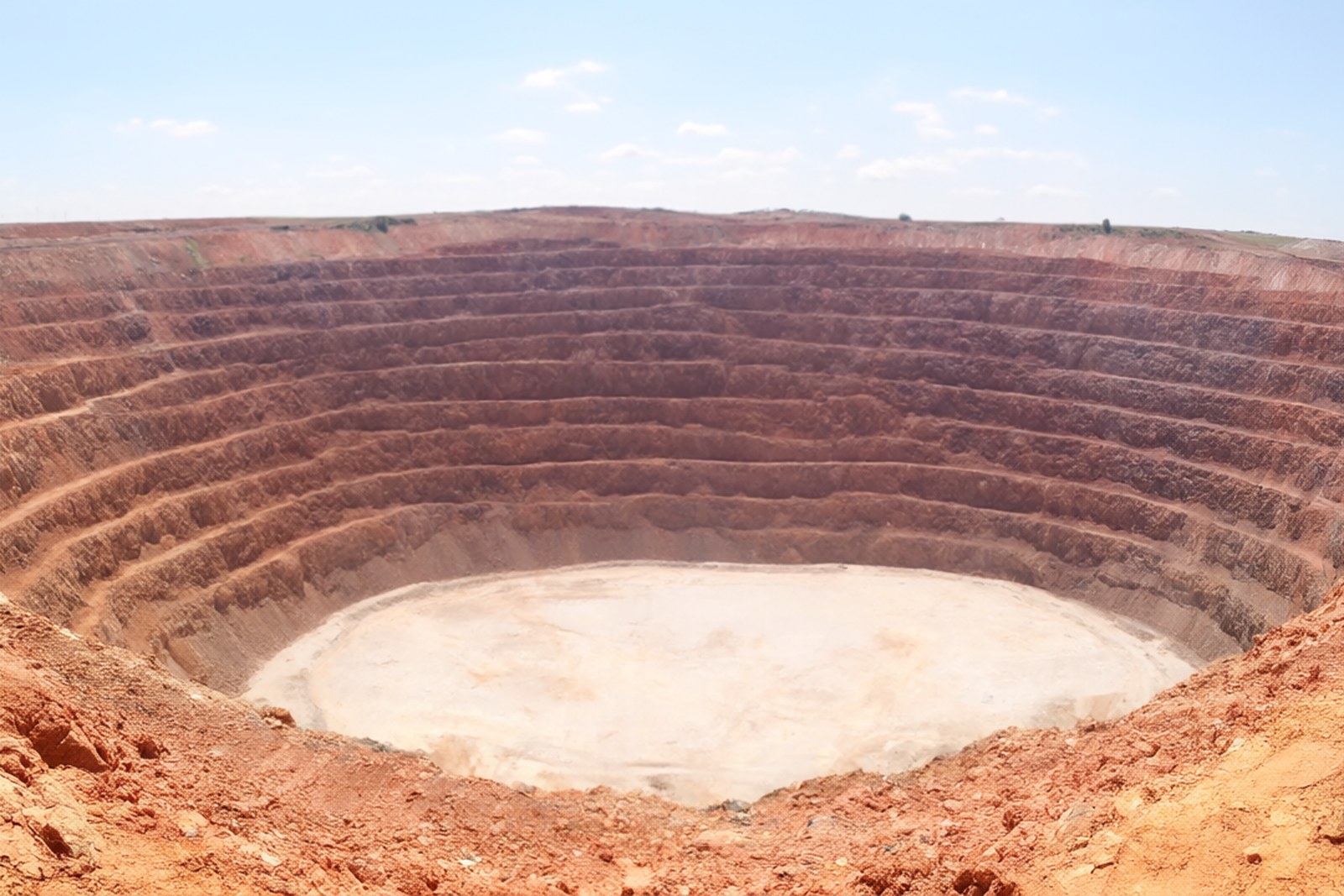
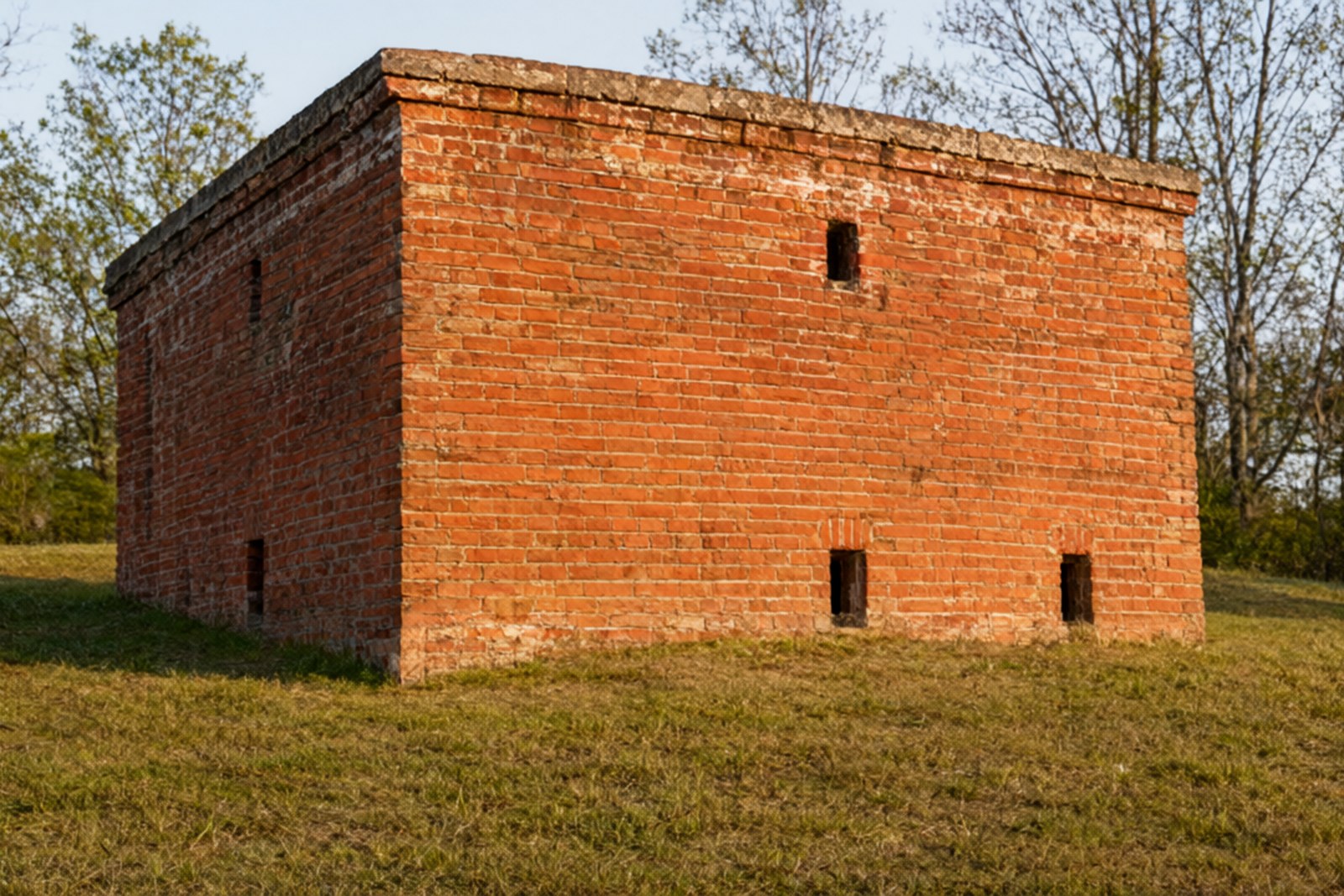
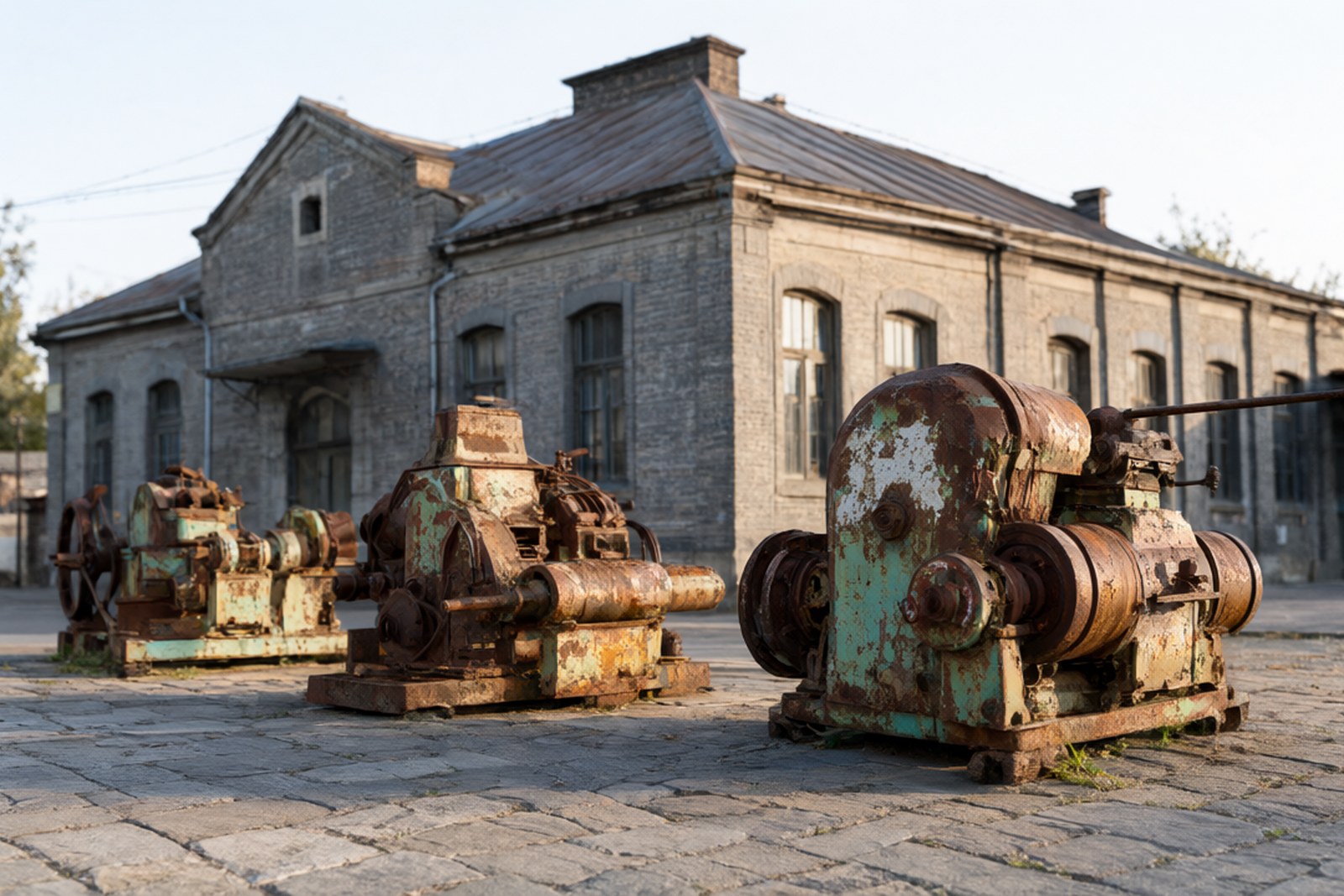
What a visitor walks is the national mine park, qualified by the ministry of land and resources in December 2017 and planned at 31.21 square kilometres in six zones and a river belt – miner-culture square, open-pit heritage science zone, two ridge lookouts, the 280 spoil-tip restoration area, a heritage zone, a Shilu river promenade. The centrepiece is the Bei-1 pit, an oval about 300 metres deep, 1,100 metres long and 750 wide, reopened on that same 1 July 1957, closed at the end of 2017, a viewing platform now on its rim. The red-brick Japanese blockhouse, 8.4 metres tall, still stands, and the dead miners’ memorial keeps the other ledger. At the Spring Festival of 2024 a mining heritage garden opened against the ore warehouse of the old Japanese-era station, displaying equipment of every era of the mine, among it one freight wagon the Japanese left behind, nameplate reading Shōwa 14 – 1939. The iron-mine museum was still being built at the end of 2024, and for railway history the Hainan Railway Museum stands about 50 km away at Basuo in Dongfang – not here.
Practicalities
Tickets. The mine park is free at present: no platform lists a price, and the 2024 hill-walking festival was held here without admission. Checked on 30 September 2026; the museum and visitor centre were still under construction in the latest reports, so expect the free entry to be revisited when they open.
Opening hours. No timetable is published; plan a daytime visit of half a day to a day, longer if you walk the rim and the heritage garden. In February the park doubles as a venue for the kapok art installations – the odd case of a mine dressed for flower season.
Closing day. No closing day is reported. The caveat is the working surroundings: the underground mine next door and the park’s construction sites mean occasional fenced-off areas, and the rim road can close without notice on works days.
Getting there. From 石碌镇 the park is about 3 km down People’s Avenue, walkable from the town’s hotels or a short taxi ride; Qiziwan station is about 39 km, Haikou 188 to 196 km by the published figures, the Qizi Bay resort strip 46 km, Bawangling 26 km – a three-stop west-coast day by car.
flowcloud would say that a mine park which shows the pit, the blockhouse and the 1939 nameplate and softens none of it is doing what industrial heritage is for: the ore bought a town, the railway was laid by people who died laying it, and the honest exhibit is the whole ledger.
Getting there: 石碌铁矿国家矿山公园 stands about 3 km south of 石碌镇 in 昌江黎族自治县, down People’s Avenue, about 39 km from Qiziwan station and 46 km from the Qizi Bay resort strip; entry is free at present as checked on 30 September 2026, with no closing day reported and no published hours; the Bei-1 pit rim, the blockhouse and the 2024 heritage garden with its 1939-marked wagon are the core sights, the iron-mine museum was still unbuilt in late 2024, and the dead-labourers’ memorial and Hainan Railway Museum lie across the county line at Basuo in Dongfang, not here.