
The Boat Ride Through the Rock: Jinhua’s Double Dragon Cave
一隙卧舟穿石腹,双龙垂首亿年泉 Yī xì wò zhōu chuān shí fù, shuānglóng chuí shǒu yì nián quán – Through a rock-hollow gap a boat lies flat and slides in; two dragons bow their heads over springs a hundred million years old
双龙洞 Shuānglóng Dòng Double Dragon Cave is the karst heart of 金华山 Jīnhuá Shān Jinhua Mountain, the limestone upland standing guard north of 金华市 Jīnhuá Shì Jinhua City – and its signature act is the strangest entrance ritual in Chinese caving: visitors lie flat in a flat-bottomed boat and are pulled, face-up, through a rock slit barely half a meter above the water that separates the outer cave from the inner one. The two “dragons” are a pair of limestone dragon heads hanging at the mouth, and inside, the chambers open into cathedral-scale halls of stalactites, draperies and underground rivers – water and rock performing the same slow sculpture they began in the Cretaceous.
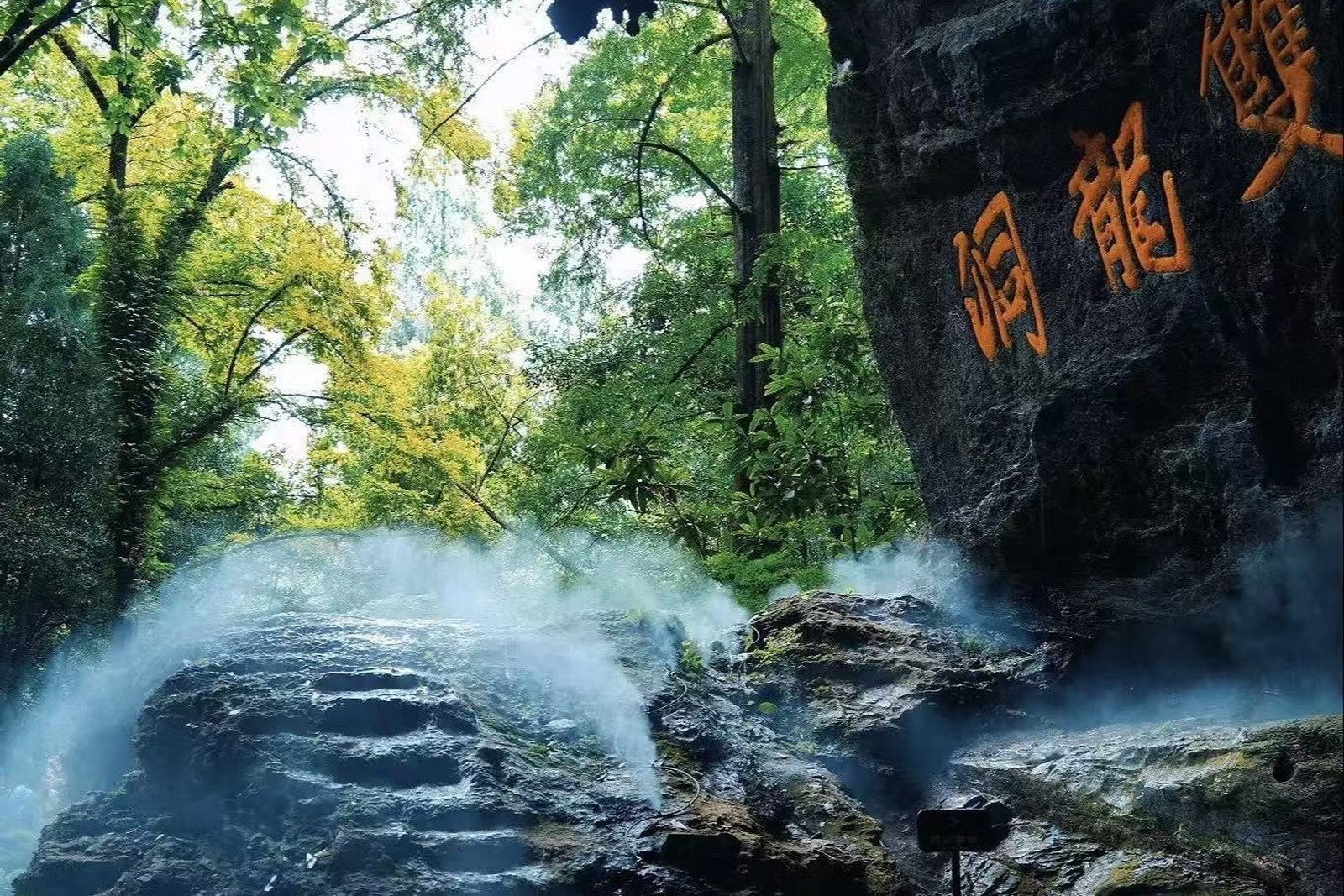
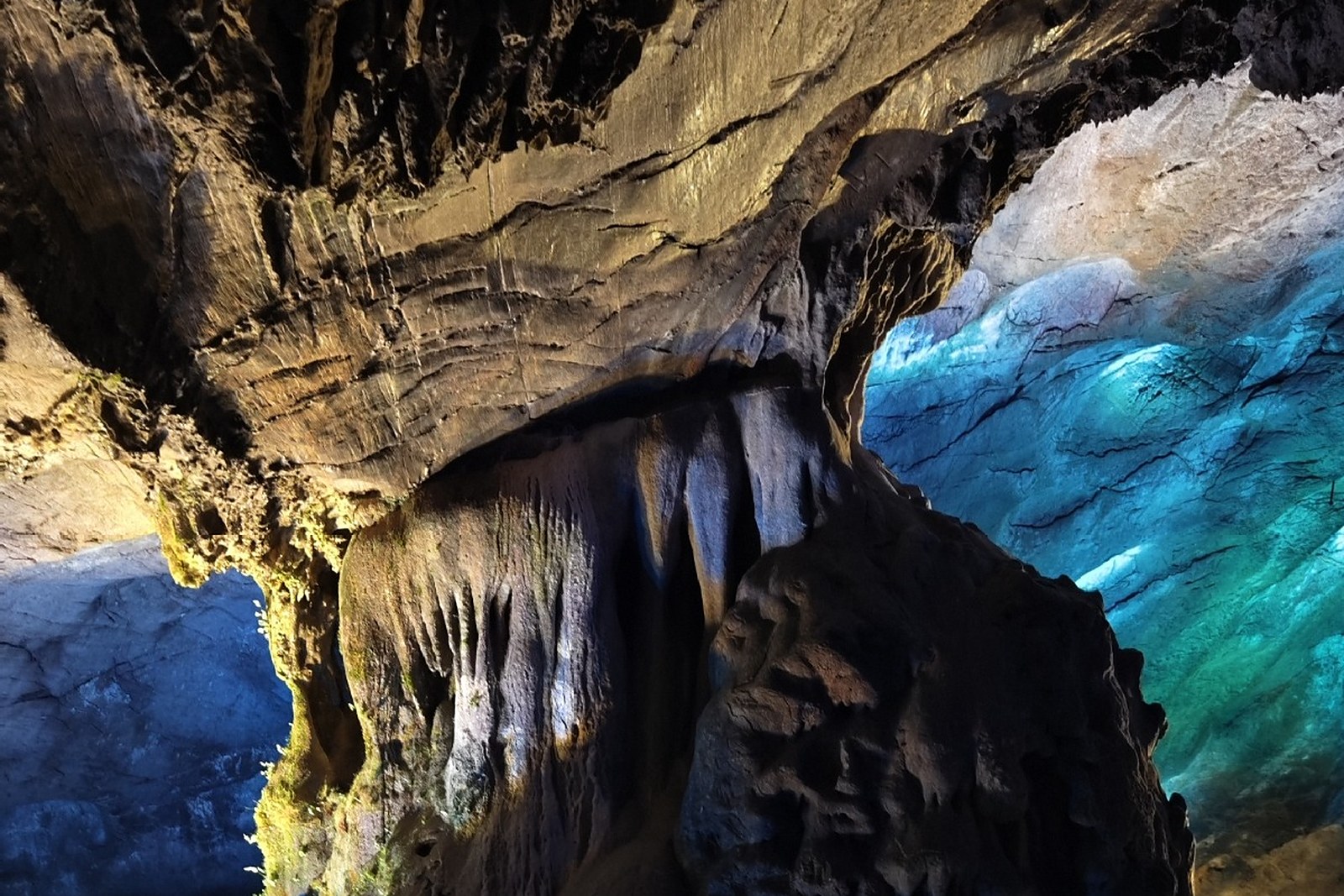
The inner cave holds the famous set pieces: the immortal screen of yellow curtains, the upside-down trumpet, the dragon’s own sleeping hall – every formation named by the scholars and poets who came to cool off here for two thousand years. The guide’s flashlight show and the constant 15-degree air make the half hour inside feel like a different season from the gates.
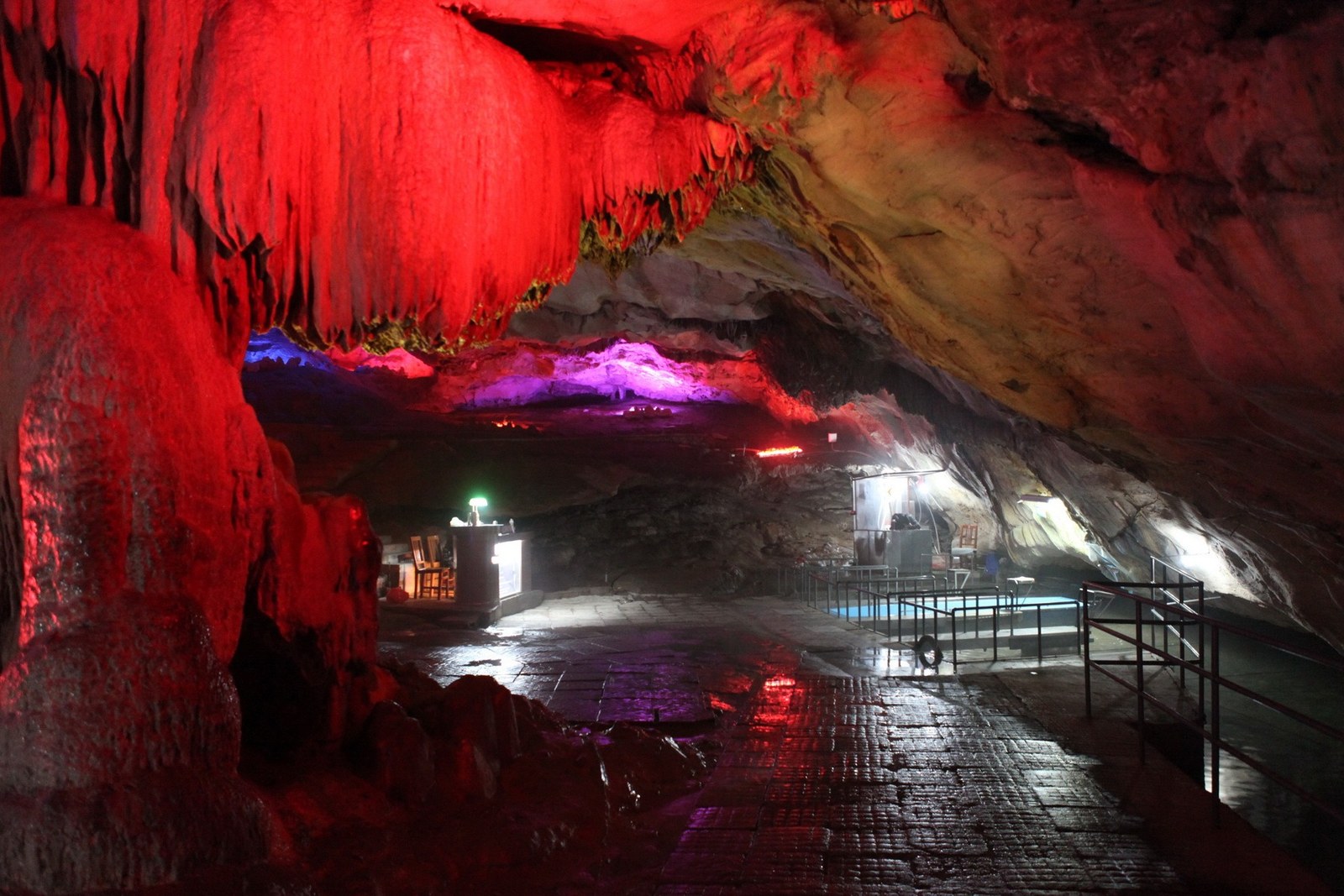
The mountain keeps two sibling caves beside the headliner: 冰壶洞 Bīnghú Dòng Ice Kettle Cave, whose underground waterfall thunders inside the rock itself – you hear it before you see it, and its mist chills the whole chamber; and 朝真洞 Cháozhēn Dòng Chaozhen Cave, a dry vertical slot where light falls through a roof chimney into the dark. 叶圣陶 Yè Shèngtáo Ye Shengtao’s schoolbook essay on the boat ride fixed the cave in every Chinese child’s imagination in 1957, and half the visitors come reciting it.
Give the mountain a half day: the boat-ride cave first while queues are short, the kettle cave’s waterfall after, then the lakeside walks and tea houses above. Down in the city, the museum at the mountain foot explains the karst geology, and the valley’s temples and stone bridges fill whatever afternoon remains.
Practicalities
- The entrance boats are included in the ticket; lie back, keep arms in, and the rope-men pull the boat through the water gap in about ten seconds.
- The mountain gate sits 15 kilometers north of downtown Jinhua; city buses and taxis reach it in half an hour, and the scenic shuttle links the three caves.
- Cave temperature holds near 15 degrees all year – bring a layer even in August.
- Autumn weekdays are the quiet window; national holidays put the boat queue into the hundreds.
Words and Names
双龙洞 Shuānglóng Dòng Double Dragon Cave – for the two limestone dragon heads at the mouth; 冰壶洞 Bīnghú Dòng Ice Kettle Cave, the cave with a waterfall inside it; 金华山 Jīnhuá Shān Jinhua Mountain, the karst upland north of the city; 叶圣陶 Yè Shèngtáo the essayist whose textbook piece made the cave a national memory. Beyond the caves, the same 金华市 Jīnhuá Shì Jinhua City keeps more places worth the detour: 横店影视城 Héngdiàn Yǐngshìchéng the film-set city of Hengdian, 诸葛八卦村 Zhūgě Bāguà Cūn the bagua-shaped village of Lanxi, 方岩 Fāngyán the danxia mesas of Yongkang, or 牛头山 Niútóu Shān the forest canyons of Wuyi – four more doors into the same 金华市 Jīnhuá Shì Jinhua City. Once the boat has slipped you through the rock, our Jinhua food map fills the table.
flowcloud would say Shuanglong Cave is geology with a sense of humor: a mountain that lets you in lying down, dragons that are only rock, and a waterfall that lives indoors – two thousand years of visitors, one shared gasp at the slit in the stone. All checked November 2026.
Getting there: Double Dragon Cave sits 15 kilometers north of downtown Jinhua on Jinhua Mountain – city buses and taxis reach the gate in half an hour, a scenic shuttle links the three caves, and high-speed trains put Jinhua an hour west of Hangzhou. All checked November 2026.