
青龙桥下水,九鼎潭底天。Qīnglóngqiáo xià shuǐ, Jiǔdǐng tán dǐ tiān – Water under the Qinglong bridge; sky in the Jiuding pool’s bottom.
束河古镇 Shùhé Gǔzhèn Shuhe Old Town – 龙泉村 Lóngquán Cūn “dragon-spring village”, 绍坞 Shàowù “the settlement below the peaks” in Naxi, and recorded by 徐霞客 Xú Xiákē as 十和院 Shíhé Yuàn – is the Tea-Horse Road town about 4 km north-west of Dayan, and one of the three components of the UNESCO Old Town of Lijiang property (inscribed 1997, extended 2012). Entry to the lanes is free and open around the clock, though under the 2025 rule 束河 Shùhé is one of the three areas where the 50-yuan maintenance fee may be checked; tour groups pay through agencies. The core is about one square kilometre, holding close to a thousand traditional Naxi houses, and the town’s water is 九鼎龙潭 Jiǔdǐng Lóngtán – a spring cluster the town treats as a sacred pond, with 龙泉寺 Lóngquán Sì on the slope above it – feeding channels through the lanes in the same 三眼井 Sānyǎnjǐng three-pond pattern as Dayan: first pond to rinse, second to wash vegetables, third to wash clothes. 青龙桥 Qīnglóng Qiáo the bridge, designed under the 木氏 Mùshì Mu chieftains in the Ming 万历 Wànlì era – about 400 years old, 25 m long and 4.5 m wide, the finest old stone bridge in Lijiang – still shows the polish of caravan hooves, and the 束河四方街 Shùhé Sìfāng Jiē market square, 33 m by 27 m, is the oldest market floor on the plain. The paid stops are few: the 茶马古道博物馆 Chámǎ Gǔdào Bówùguǎn in the Ming-era 大觉宫 Dàjué Gōng hall (about 30 yuan, closed Mondays) and 哈里谷 Hālǐ Gǔ (about 30 yuan). The honest shape is the caravan town that stayed a village.
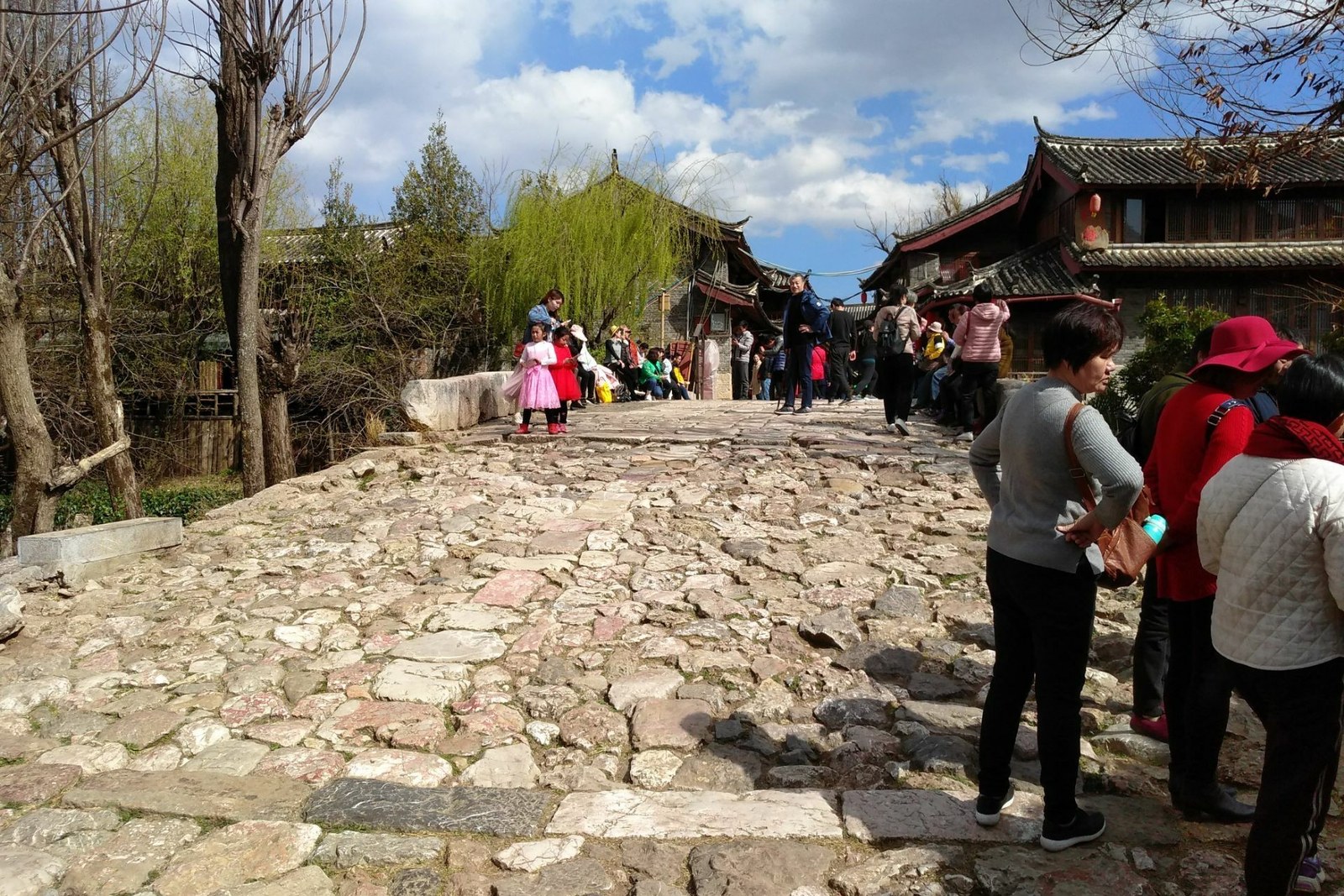
The mechanism was leather. 束河 Shùhé was the 皮匠村 Píjiàng Cūn tanners’ town of the 茶马古道 Chámǎ Gǔdào: at its height some 300-odd households worked hides, and 皮鞋 píxié shoes and pelts travelled from here to 西藏 Xīzàng Tibet, 西昌 Xīchāng, 青海 Qīnghǎi and as far as 印度 Yìndù India and 尼泊尔 Níbó’ěr Nepal – hence the saying “束河皮匠,一根锥子走天下” Shùhé píjiàng, yī gēn zhuīzi zǒu tiānxià – a Shuhe tanner walks the world with one awl. The proof is still standing: the 三圣宫 Sānsèng Gōng hall by the spring honours 孙膑 Sūn Bìn as the patron saint of tanners, and 皮匠村 Píjiàng Cūn tanner quarters of the same name still exist in 宁蒗 Nínglàng, 中甸 Zhōngdiàn and 德钦 Déqīn. The town was also the Mu clan’s cradle – the 凤凰山 Fènghuáng Shān phoenix hill at 白沙岩脚 Báishā Yánjiǎo is named as the family’s origin ground – and a school town: a government-supported 义学馆 Yìxué Guǎn charity school opened here in the 乾隆 Qiánlóng reign, with three private academies beside it. The comparison with Dayan is the town’s own joke: Dayan’s 四方街 Sìfāng Jiē is said to be a copy of Shuhe’s, built after the village had already shown the plain how a market square with water running through it should work.
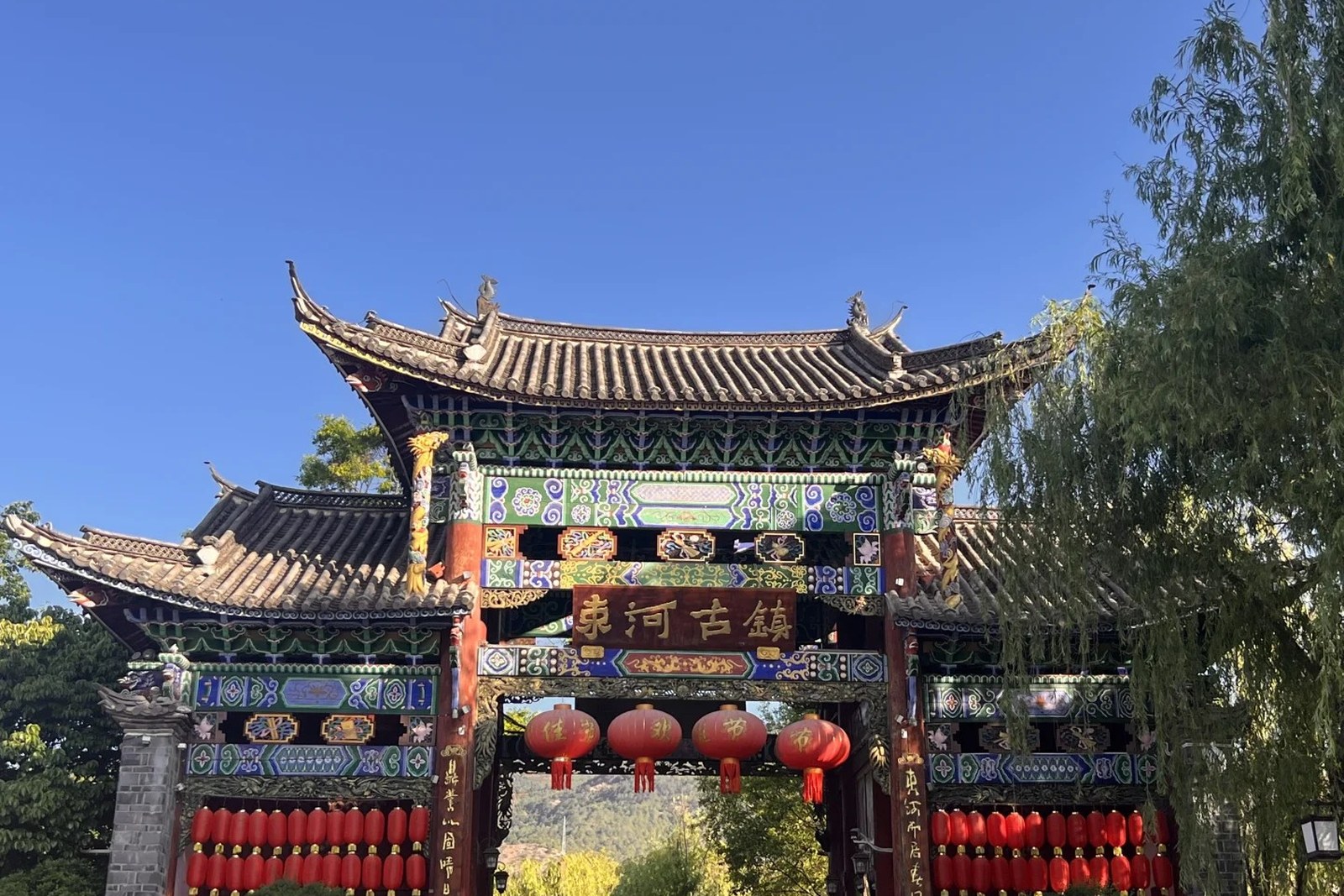
The local habit is the edges of the day. Come before eight or after seven, when the coach crowds are out and the 青龙桥 Qīnglóng Qiáo wears its 烟柳平桥 Yānliǔ Píngqiáo “smoke-willow flat bridge” mist; the 四方听音广场 Sìfāng Tīngyīn Guǎngchǎng runs free intangible-heritage classes at three in the afternoon and 纳西古乐 Nàxī Gǔyuè Naxi ancient music or bonfire nights after dark; 石莲寺 Shílián Sì is a ten-minute climb for the panorama over grey tiles and snow peak; and the 飞花触水 Fēihuā Chùshuǐ lane – bridges, creek and lanterns – is where the restaurants and the rooftop cafes face the mountain. Get here by the 6路 Liù Lù or 11路 Shíyī Lù bus for about 2 yuan, a 15-yuan taxi ride, or a rented bike in half an hour along 香江路 Xiāngjiāng Lù; the 南门 Nánmén south-gate lot charges about 10 yuan a day. Experiences are priced by the hour – 骑马 Qímǎ horse rides about 80 per half hour, 扎染 Zārǎn tie-dye pieces from about 30 – and the honest day is bridge, pool, square, then dinner by the water. The 三眼井 Sānyǎnjǐng pattern is still in use, which is the detail that separates the town from a film set: the upper pond is drinking and rinsing water, the lower ones take the vegetables and the clothes, and the channels run whether or not anyone is watching – the reason the lanes feel lived in rather than curated, and the reason the morning walk is the town’s best hour.
Practicalities
- Rating: Component of the UNESCO Old Town of Lijiang (inscribed 1997, extended 2012) as the 束河民居建筑群 Shùhé Mínjū Jiànzhúqún Shuhe housing cluster; it carries no separate national scenic grade, and the lanes are a free, open town.
- Tickets: Free entry to the lanes, open around the clock; under the 2025 rule 束河 Shùhé is one of the three areas where the 50-yuan maintenance fee may be checked, while tour groups pay through agencies. The 茶马古道博物馆 Chámǎ Gǔdào Bówùguǎn in the Ming-era 大觉宫 Dàjué Gōng hall is about 30 yuan and closed Mondays, 哈里谷 Hālǐ Gǔ about 30, and horse, tie-dye and workshop experiences are priced separately.
- Address: 丽江市古城区束河街道 Shùhé Jiēdào (束河路 Shùhé Lù), about 4-6 km north-west of Dayan; tell a driver “束河古镇 Shùhé Gǔzhèn” or “束河四方街 Shùhé Sìfāng Jiē”. Bus 6路/11路 runs about 2 yuan from the old town, a taxi about 15 yuan and 15 minutes, and the town is about 3 km from 白沙 Báishā further up the road.
- Time needed: Half a day for 青龙桥 Qīnglóng Qiáo, 九鼎龙潭 Jiǔdǐng Lóngtán and the square; a full day with the museum, 哈里谷 Hālǐ Gǔ and a creek-side dinner; overnight to catch the morning mist on the bridge.
Words and Names
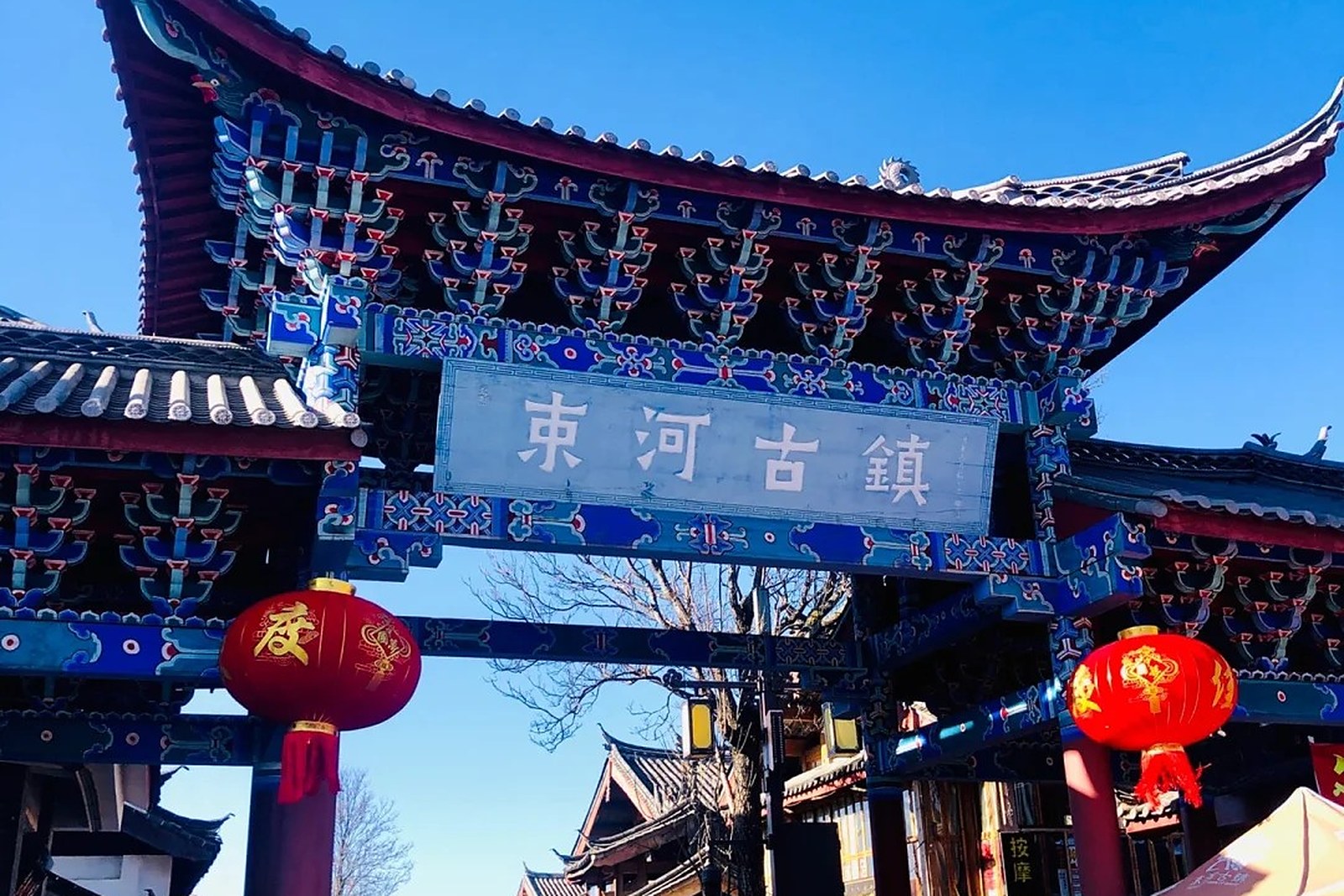
束河古镇 Shùhé Gǔzhèn Shuhe Old Town · the quiet caravan town 4 km north-west of Dayan 青龙桥 Qīnglóng Qiáo the Qinglong bridge · a Ming 万历 Wànlì stone bridge, some 400 years old 九鼎龙潭 Jiǔdǐng Lóngtán the Jiuding spring pool · the sacred spring at the town’s heart 茶马古道 Chámǎ Gǔdào the Tea-Horse Road · the trade route Shuhe tanned leather for 大觉宫 Dàjué Gōng the Ming hall · houses the 茶马古道博物馆 Chámǎ Gǔdào Bówùguǎn 四方街 Sìfāng Jiē Shaowu’s market square · the plain’s oldest market floor, 33 m by 27 m 飞花触水 Fēihuā Chùshuǐ the creek-and-lantern lane · where the restaurants face the mountain 石莲寺 Shílián Sì the hilltop temple · a ten-minute climb for the tiled-roof panorama 龙泉 Lóngquán “dragon spring” · the old name of the spring village 皮匠村 Píjiàng Cūn the tanners’ town · Shuhe’s old trade of hides and shoes
flowcloud would say that Shuhe is the town the caravans tanned leather in – one square kilometre of Naxi lanes around a sacred spring, a 400-year bridge and the plain’s oldest market square – and that the honest move is to walk it before eight or after seven, because Dayan’s square was copied from this one and the copy now gets the coaches. All checked October 2026.
Getting there: 束河古镇 Shùhé Gǔzhèn Shuhe Old Town, in 丽江市古城区束河街道 Shùhé Jiēdào about 4-6 km north-west of Dayan – tell a driver “束河古镇 Shùhé Gǔzhèn” or “束河四方街 Shùhé Sìfāng Jiē”, because the core is a walking zone where cars stop at the edge. Bus 6路/11路 runs from the old town for about 2 yuan, a taxi is about 15 yuan and 15 minutes, and the town is about 3 km from 白沙 Báishā further up the road (checked October 2026, subject to change).