
The bus drops you at the edge of the village and from there the road is a narrow lane of packed earth between woven bamboo fences, with tea planted behind them and, behind the tea, the mountain. Nobody is in a hurry. A woman is turning something drying on a mat outside her gate; two children are taking turns on a bicycle that is far too large for both of them; a dog has found a patch of sun and does not move when you pass. The houses are low, timber and concrete, some with tiled roofs and some with the deep overhanging eaves of the old 船形屋 chuánxíng wū, the boat-shaped houses of the Li. Then the lane bends and you see it properly: 五指山 Wǔzhǐshān, five peaks in a row above the roofs, with cloud caught in the gaps between them like something spilled. The villages of 水满乡 Shuǐmǎn Xiāng sit directly under the mountain, and they are the reason the mountain has a culture attached to it rather than just a car park.
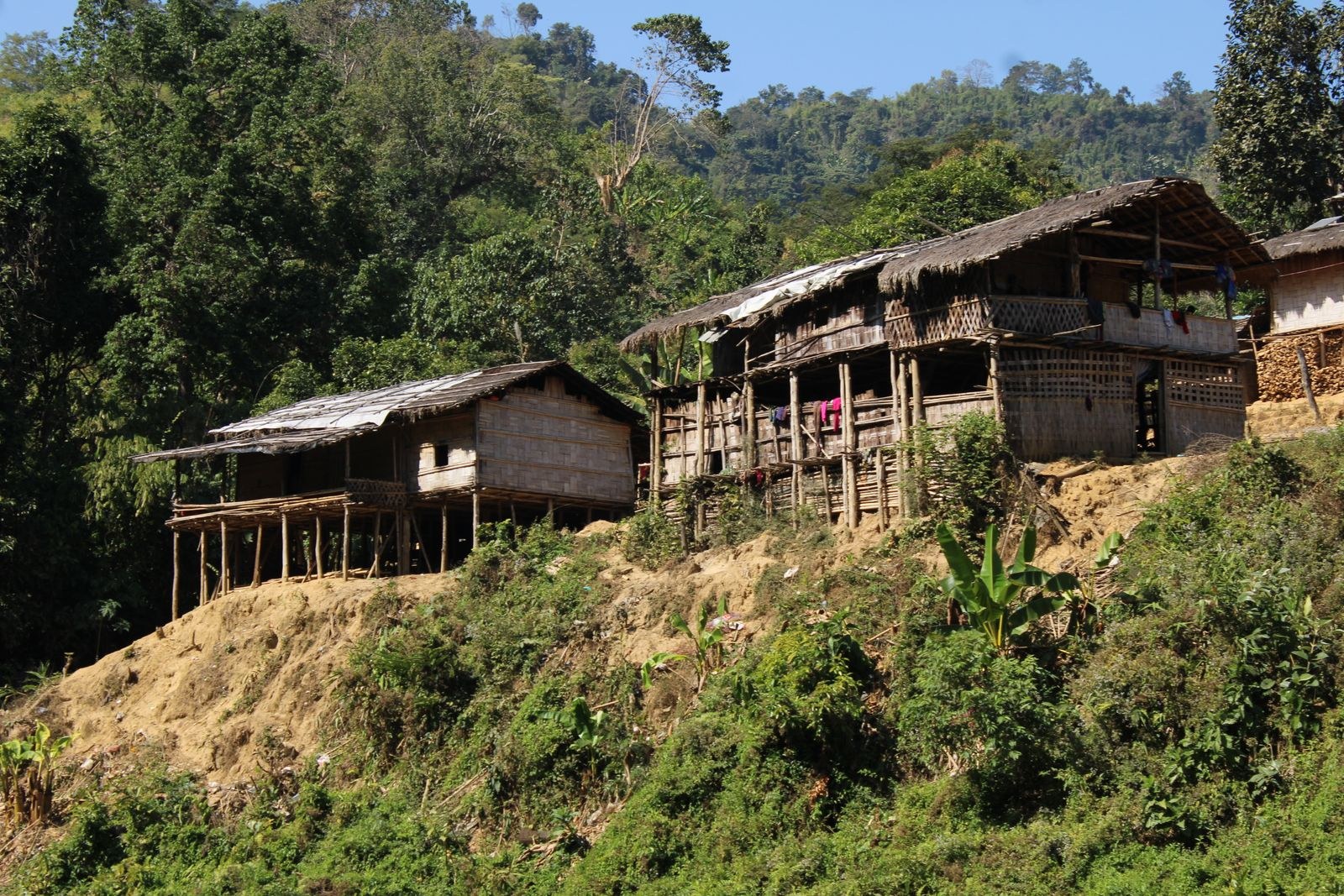
The name 水满 Shuǐmǎn is a 黎语 Lí yǔ place name, and the received translation is worth knowing before you arrive, because it is not about water at all: it means something close to very old, and supremely high. This is the heartland of the 黎族 Lízú, the Li people, who are the original inhabitants of Hainan, and whose language, weaving and farming systems were all shaped by this specific valley. Above the village, on the lower slope of the first peak, stands the 黎峒文化园 Lídòng Wénhuàyuán, the Li cultural park, whose main hall — the 黎祖大殿 Lízǔ Dàdiàn — is built facing the mountain with farmland in front of it and the ridge rising behind. Inside is the shrine to 袍隆扣 Páolóngkòu, the ancestor figure of Li tradition, and every year on the third day of the third lunar month, at 三月三 Sānyuèsān, thousands of Li from across the island come up here to hold the year’s main ceremony: dancing, singing in antiphonal verse, and a great deal of food on long tables. It is a religious occasion rather than a show, and the atmosphere on the day is closer to a homecoming than a festival.
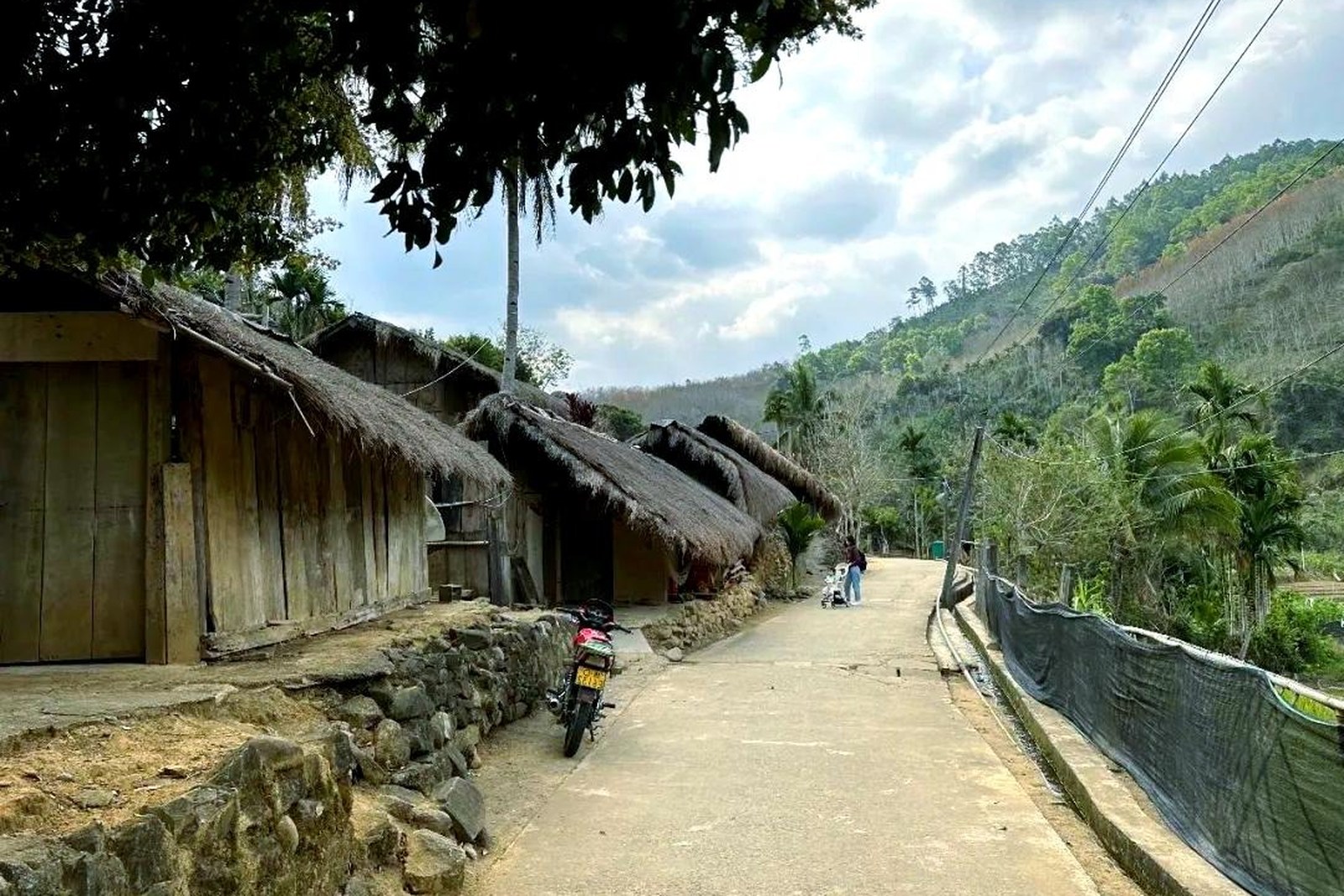
A few kilometres further along the valley is 毛纳村 Máonà Cūn, the village that the guidebooks now call the most beautiful Li village on Hainan, and the one that came to national attention after a visit in April 2022 put it on the map. What has happened since is worth seeing partly as a lesson in how Chinese rural tourism actually works: a new visitor centre, a shuttle from the 水满 Shuǐmǎn bus station, a waterwheel, a covered walkway, tea workshops, a small shop selling the local black tea, and a network of lanes that have been tidied without being rebuilt. The village still farms. There is a long-table restaurant on the weekends, and in summer the fields below the houses fill at night with fireflies, which is the thing local people will tell you about before anything else. Between the two villages, and along the road connecting them, the 水满河 Shuǐmǎn Hé loops around a hill planted entirely in tea, which is the photograph most people carry home.
Practicalities
Tickets. The villages themselves have no admission charge and are working settlements rather than attractions; you pay for the shuttle up to 毛纳村 from the 水满 Shuǐmǎn bus station, and for food and tea. The 黎峒文化园 Lídòng Wénhuàyuán is free to enter in normal times, and the neighbouring 水满河热带雨林风景区 Shuǐmǎnhé rèdài yǔlín fēngjǐngqū, with its viewing platform facing the five peaks, charges around ¥42 to ¥48 including the internal shuttle.
Opening hours. The villages are open all day and all evening, on the basis that people live in them; the cultural park and the scenic area keep roughly 08:30 to 17:30, and the last shuttle up to 毛纳村 leaves in the late afternoon. The long-table dinners are usually booked a day ahead and run into the evening.
Closing day. There are no closing days. The only dates worth planning around are the 三月三 Sānyuèsān festival in the third lunar month, when the cultural park is packed and the ceremony is the main event, and the first week of the spring tea harvest in February and March, when the slopes are full of pickers.
Getting there. 水满乡 Shuǐmǎn Xiāng is about twenty kilometres above 五指山市 Wǔzhǐshān Shì on the mountain road, forty minutes by car, and there are buses from the city to 水满 in the morning. From 三亚 Sānyà the drive is roughly ninety-five kilometres and from 海口 Hǎikǒu about two hundred and fifteen. Once you are in the valley, a car or a scooter saves a lot of walking, but everything here is close enough that a patient visitor can do it on foot.
flowcloud would say that the reason these villages feel different from the resort belt twenty minutes downhill is that they were not designed to be looked at, and the best thing a visitor can do is stay long enough to be boring.
Getting there: go up in the morning, walk the lanes of 毛纳村 before the shuttles start arriving, eat a long-table lunch or dinner if there is one on, and leave the mountain’s own trails for another day. Buy tea from the village workshops rather than from the city, and if you are here in April, the third month of the lunar calendar, clear your schedule for the ceremony.