
Simatai Great Wall: The Original Ming-Dynasty Great Wall Steep and Unrestored Above Gubeikou, with the Wangjing Tower Summit and Its Famous Night Tour and Cable Car in Miyun District, Beijing
长城险绝推司马,望京楼上接天风。Chángchéng xiǎnjué tuī Sīmǎ, Wàngjīng lóu shàng jiē tiānfēng – For sheer peril among the Wall’s passes, Simatai takes first place; from Wangjing Tower your hands reach up and touch the winds of heaven.
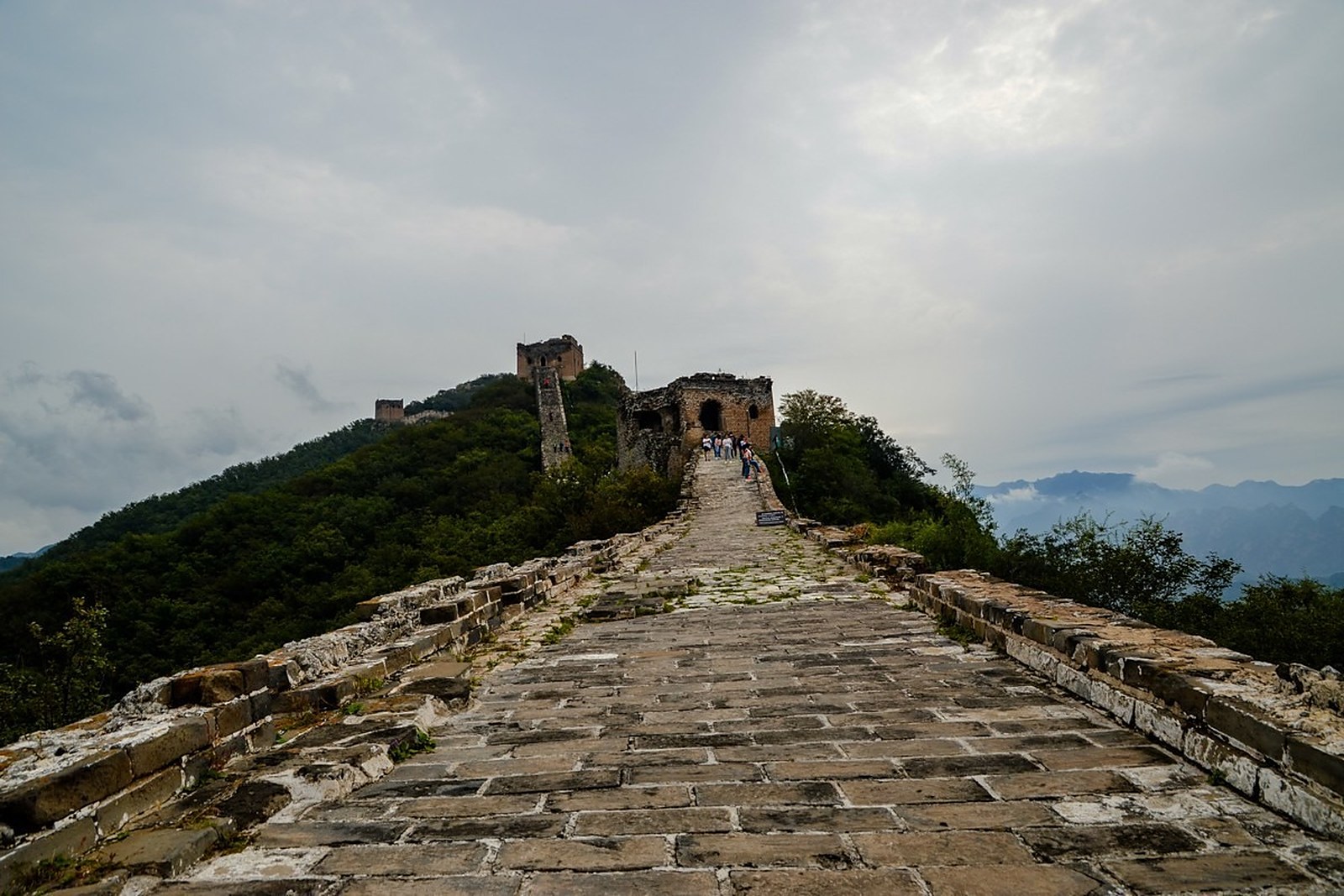
司马台长城 Sīmǎtái Chángchéng Simatai Great Wall is not a rebuilt, railed-and-polished wall walk — it is, plainly put, the section of the Great Wall that kept its original bones: a steep, narrow Ming-dynasty 明代 Míngdài wall above the old garrison pass of 古北口 Gǔběikǒu Gubeikou in the far northeast of 密云区 Mìyún Qū Miyun District, left largely unrestored so that the brick is cracked, the parapets crumble and the gradient is honest mountain. The climb runs through a chain of 敌楼 dílóu watchtowers toward the two famous summits — the 仙女楼 Xiānnǚ Lóu Fairy Tower, slender and elegant, and the 望京楼 Wàngjīng Lóu Wangjing Tower on its razor ridge, from which legend says you can see the lights of Beijing on a clear night. It is also one of the few sections where the wall opens after dark. What you actually visit is a hard, authentic ridge climb — or a lit night scramble — not a promenade.
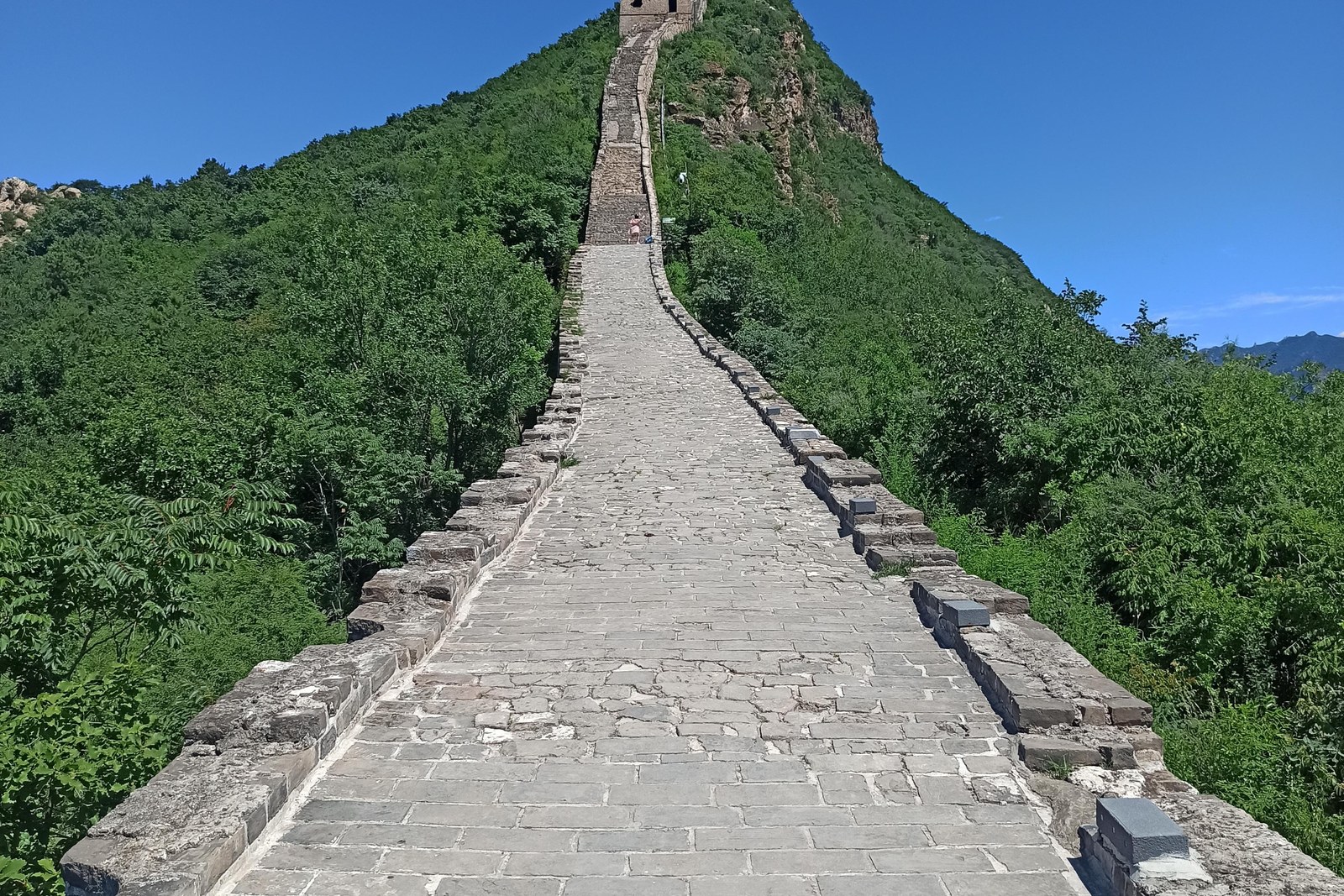
Call it honestly: the site charges a gate fee, with the 索道 suǒdào cable car and the night tour costing extra and entry capped by timed slots, and the steepest upper towers close in bad weather (worth confirming the details for current admission, cable-car fares, night-tour times and daily caps). The honest warning is the gradient, not the ticket — the steps are uneven and original, some pitches climb like ladders, and the ridge narrows to a few paces wide, so children, vertigo and slippery soles all deserve respect; go at first light on a weekday for empty towers, or book the night session for the lantern-lit wall strung like a dragon’s spine across the dark. Give it three to four hours for a proper climb, and wear real shoes with grip.
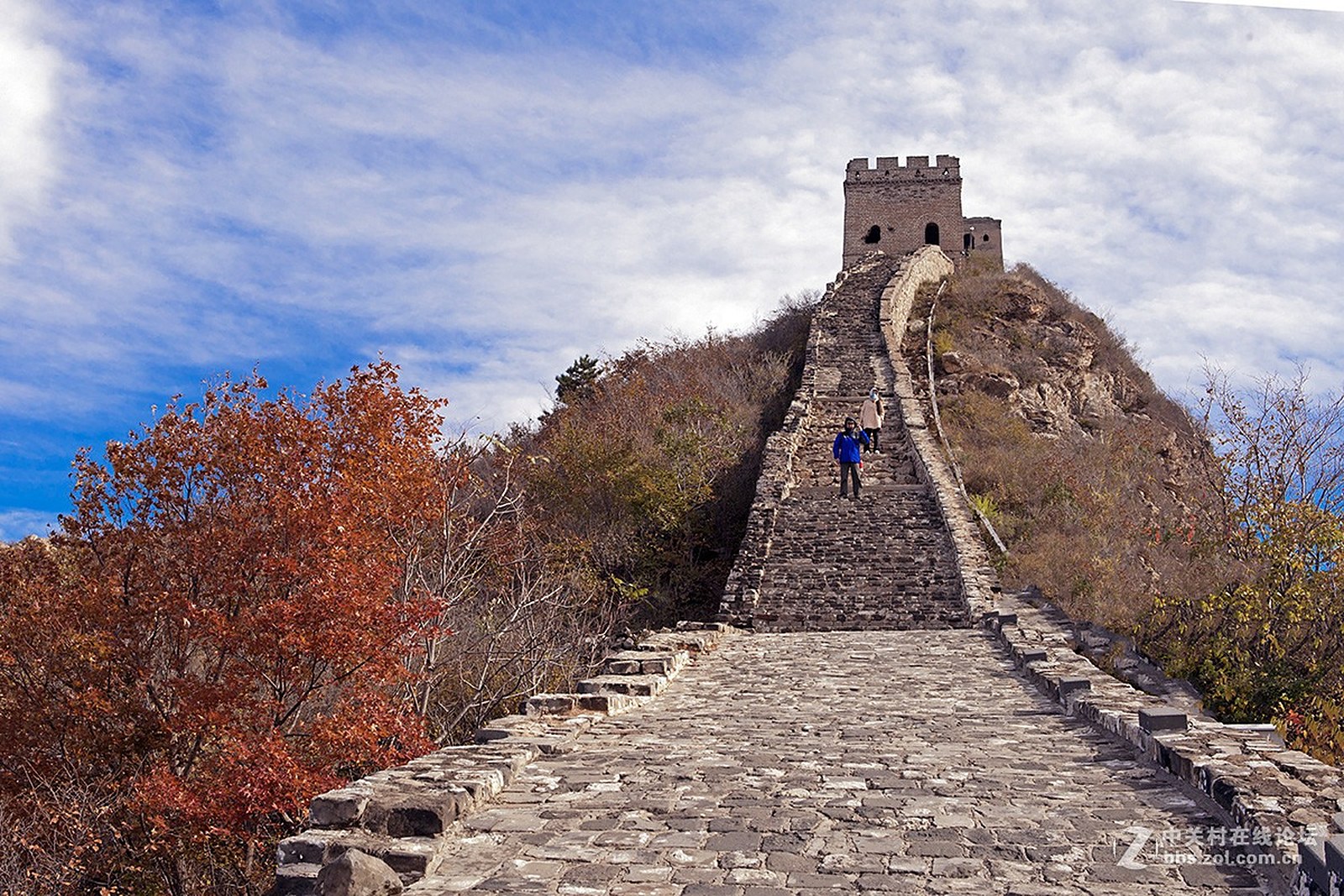
The honest star is the wall itself in its raw state — towers tilted by five centuries, bricks stamped with their makers’ names, the ridge line dropping away on both sides and the gondola sliding silently beneath you as you climb (worth confirming the details for which towers and ridges are open on your day). What gets oversold is the word “authentic” read as comfortable: original here means original hazards, and the Fairy Tower’s beauty sits behind conditions the crowds at Badaling never meet. What repays the effort is exactly that — standing inside a watchtower the Ming garrison actually manned, with no reconstruction between you and the wind. Come for the layering of the place: step, then tower, then the ridge line running on beyond sight.
The self-aware postscript: I caught my breath in a leaning watchtower beside a Beijing student sketching the ridge, and when I asked why she chose the hardest wall she said, “the rebuilt sections show you the Great Wall of postcards — this one shows you what the wind has been doing for five hundred years”. That is the visit in miniature. 司马台长城 Sīmǎtái Chángchéng suits whoever treats it as a genuine, demanding climb on original masonry first and a photo summit second, and exhausts anyone expecting handrails, smooth steps and an easy loop. Everything else on this Miyun list lies within the same district: the vast protected water of 密云水库 Mìyún Shuǐkù Miyun Reservoir to the southwest, the lantern-lit water lanes of 古北水镇 Gǔběi Shuǐzhèn Gubei Water Town directly at the foot of this wall, the pine ridges of 云蒙山 Yúnméng Shān Yunmeng Mountain and the waterfall gorge of 黑龙潭 Hēilóngtán Heilongtan — all in the same 密云区 Mìyún Qū that keeps the Wall’s steepest original spine on its northern edge.
Practicalities
- Rating: ★★★★★ — the original, unrestored Ming wall above Gubeikou and one of the few wall sections open at night; the raw towers and the ridge views outrank the cable car; climb early or climb lit.
- Tickets: Gate fee plus separate cable-car and night-tour options, with timed entry and weather closures on the steepest ridges (worth confirming the details for current admission, cable-car fares, night-tour times and daily visitor caps).
- Address: 司马台长城 Sīmǎtái Chángchéng, 古北口镇 Gǔběikǒu Zhèn Gubeikou town, 密云区 Mìyún Qū, Beijing — on the northern edge of the district above the Gubeikou pass, reached through the Gubei Water Town entrance area.
- Time needed: Three to four hours for a full climb to the upper towers and back; half a day adding the night tour or pairing it with Gubei Water Town below.
Words and Names
司马台长城 Sīmǎtái Chángchéng Simatai Great Wall · the original Ming wall of the northeast 明代 Míngdài Ming dynasty · the era whose bricks still stand unrestored 敌楼 dílóu watchtower · the garrison towers strung along the ridge 望京楼 Wàngjīng Lóu Wangjing Tower · the high summit tower that watches toward the capital 仙女楼 Xiānnǚ Lóu Fairy Tower · the slender tower on the narrow ridge 古北口 Gǔběikǒu Gubeikou · the old garrison pass at the wall’s foot
flowcloud would say that 司马台长城 Sīmǎtái Chángchéng is the Great Wall with its make-up off — a steep, unrestored 明代 Míngdài wall above 古北口 Gǔběikǒu Gubeikou in 密云区 Mìyún Qū, where the ridge climbs through original 敌楼 dílóu watchtowers to the 望京楼 Wàngjīng Lóu Wangjing Tower and the night tour strings lamps along the dragon’s spine — and that the honest move is a weekday first-light climb with grippy shoes, because admission, cable-car fares, night-tour times and daily caps all shift (worth confirming the details), the authentic-masonry poster half comes with authentic hazards as the real half, and the wall repays whoever respects the gradient it has held for five centuries. All checked October 2026.
Getting there: A tourist shuttle or the 980 bus connection runs from 东直门 Dōngzhímén Dongzhimen toward 古北口 Gǔběikǒu Gubeikou and the Simatai gate (worth confirming the details for seasonal night-session tickets, which are capped); self-drive takes the 京承高速 Jīngchéng gāosù G45 to the Gubeikou exit and signed lanes to the cable-car base. All checked October 2026.