
Generals of the Reclamation: The Sixth Division Memorial at Wujiaqu
剑犁并用开天地,将星曾照戈壁滩 Jiàn líng bìngyòng kāi tiāndì, jiàngxīng céng zhào gēbì tān – Sword and plough opened heaven and earth; the generals’ stars once lit the gobi flats
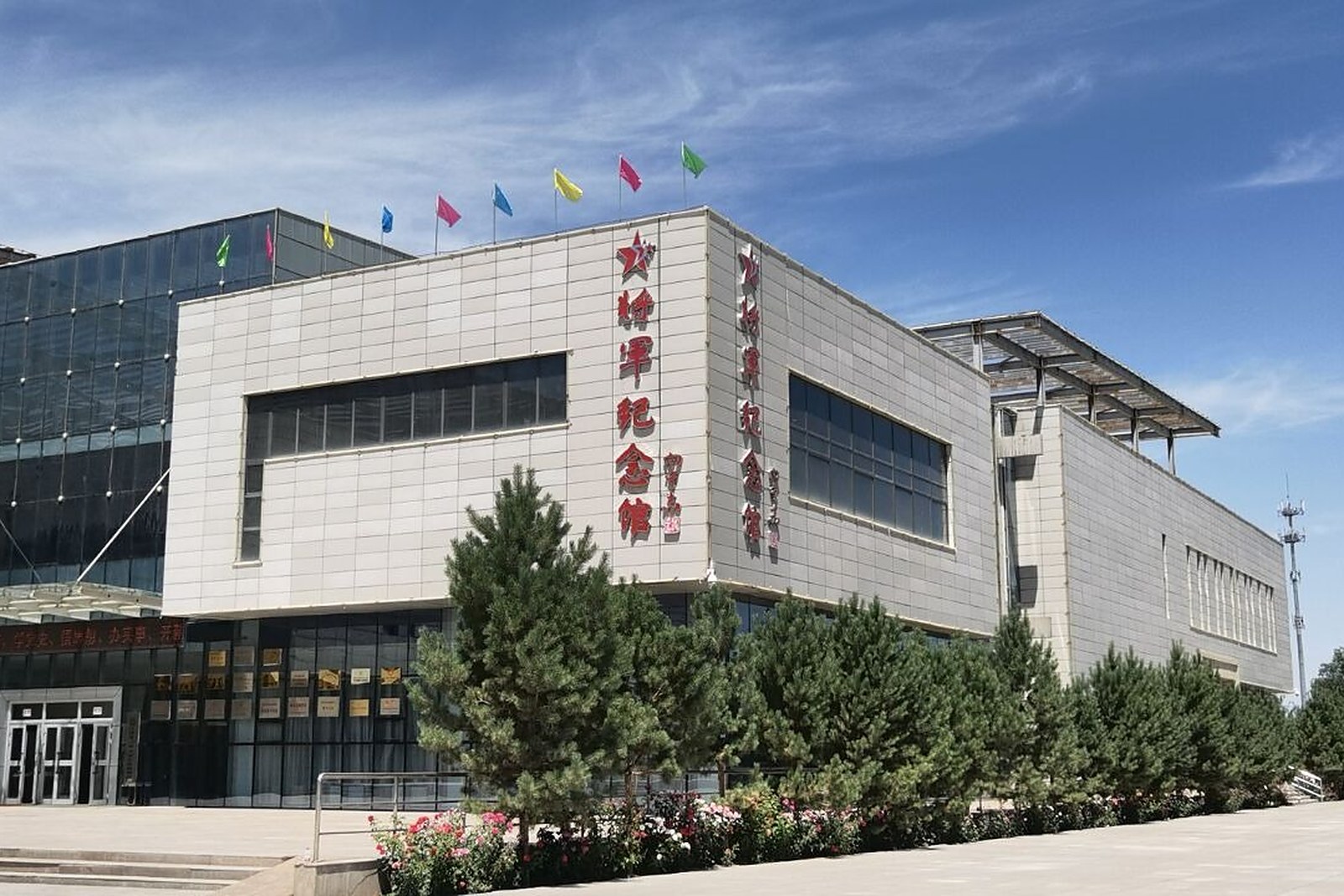
正文:将军纪念馆 Jiāngjūn Jìniànguǎn the General Memorial Hall stands on Wujiaqu’s central avenue as the memory bank of the Sixth Infantry Division – the unit that marched here in 1949, traded its rifles for canals, and built 五家渠市 Wǔjiāqú Shì Wujiaqu City out of the reed marshes north of Urumqi. The white exhibition hall carries its name in red vertical characters, and inside, one vaulted hall after another walks you through the strange double life of a division that fought the Huaihai campaign and then dug the Qinggeda dam eleven years later.
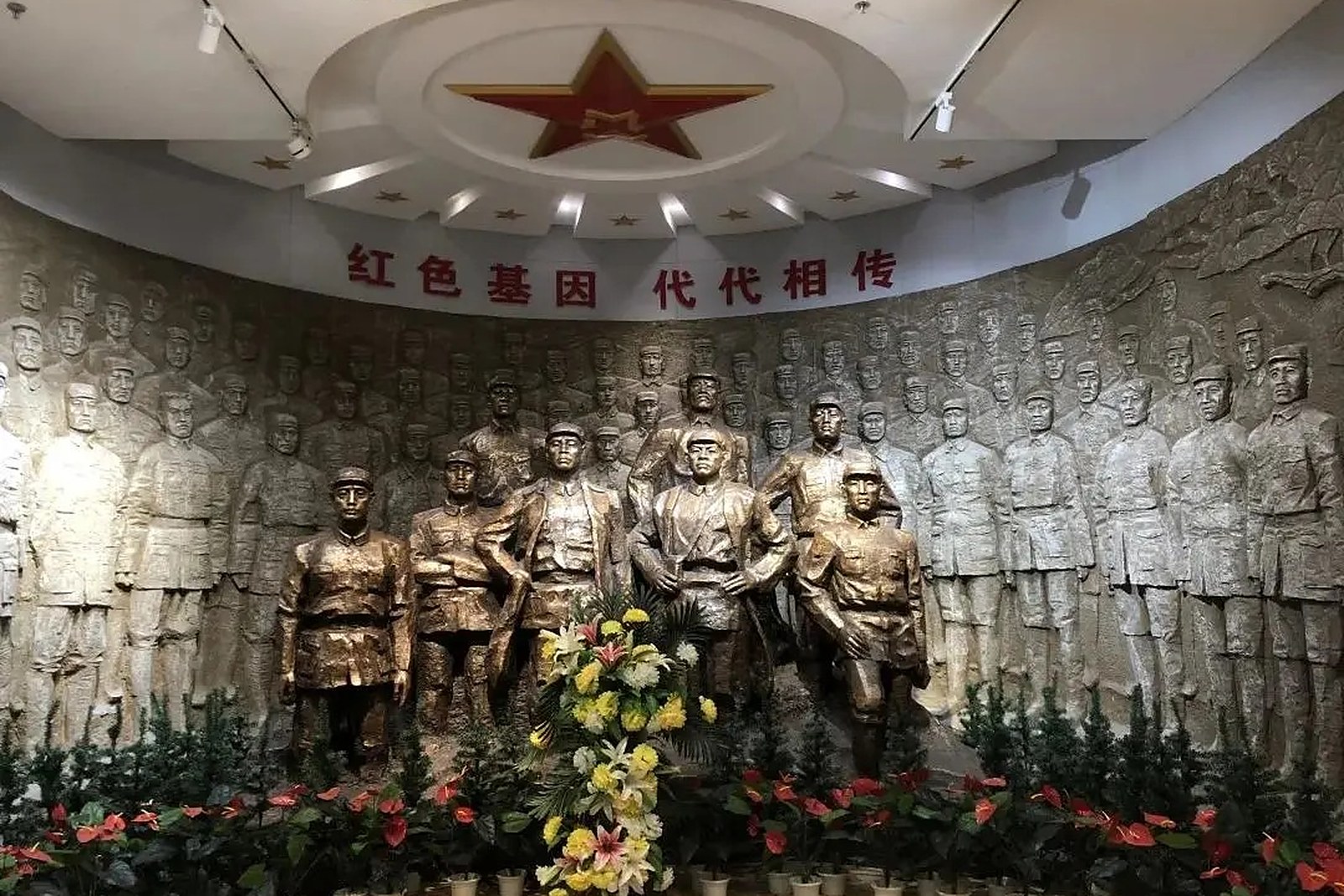
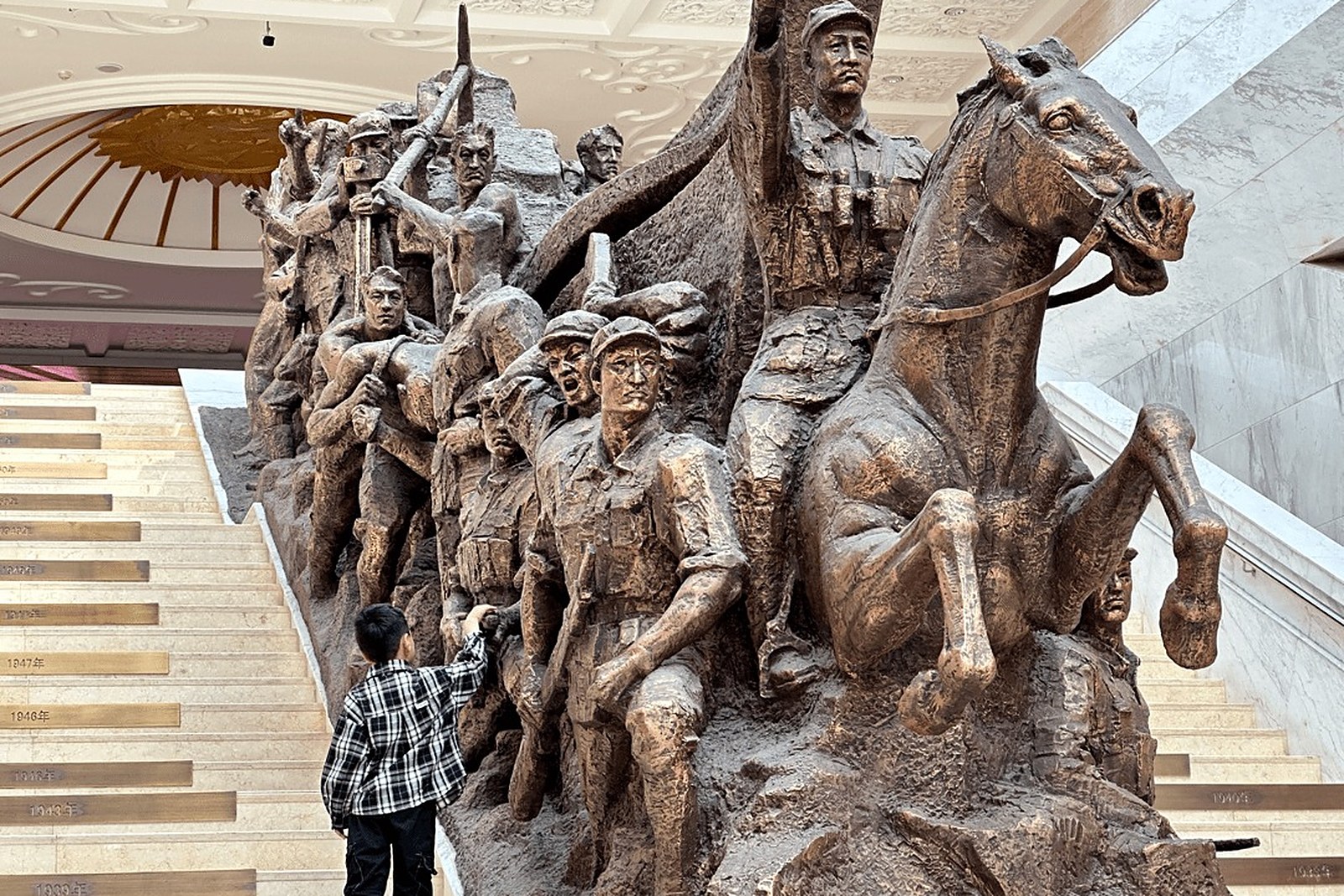
The red-star hall is the emotional center. A bronze group sculpture – generals and soldiers and their families – stands beneath a glowing star on the ceiling, ringed by a wall of names, and fresh flowers at the base say the room still gets daily visitors. The side halls move from war to water: campaign maps give way to dam blueprints, rifles to survey chains, and a cavalry bronze charging up the stairwell keeps the division’s horse-soldier pride alive in the middle of all this irrigation paperwork.
Read the halls in order and the city outside starts making sense. The museum explains why the streets run so straight, why the tree belts hug every avenue, and why the lake to the north is exactly the size of a division’s four-year labor – Wujiaqu is a planned city in the most literal sense, drawn by soldiers who thought in maps. Exhibit labels carry English summaries in the main halls, and the docents are happy to slow down for foreign guests who show curiosity about the reclamation years.
Outside, the memorial plaza opens onto the general street – a promenade lined with the names and busts of the division’s 124 generals, under poplars old enough to have been saplings when the first canal diggers camped here. Locals cross the plaza with shopping bags; on holidays the flag-raising gathers the whole neighborhood. The building itself is an easy landmark for the city center – white walls, red characters, and a bunting line on festival mornings that photographs beautifully against the gobi sky.
Budget ninety minutes for the halls and another half hour for the general street outside. Entry is free with ID; the halls close on Mondays; and the afternoon light through the entry glass makes the red-star hall glow best after 4 pm. Photography is allowed in the halls but not with flash on the mural walls.
Practicalities first. The memorial sits at the center of Wujiaqu on Changzheng East Street – any city bus or a five-yuan taxi reaches the gate; pair it with the lake or the river valley for a full day. The English labels cover the main storyline; the deepest archival rooms are Chinese-only but visually self-explanatory.
Practicalities
Beyond the memorial, the same 五家渠市 Wǔjiāqú Shì Wujiaqu City keeps more places worth the detour: 青格达湖 Qīnggédá Hú Qinggeda Lake for the bird water, 头屯河谷 Tóutún Hé Gǔ the Toutun river valley for the boardwalk wetlands, 郁金香花园 Yùjīnxiāng Huāyuán the tulip gardens for the May fair, or 蔡家湖田园 Càijiāhú Tiányuán the Caijiahu fields for the cotton horizons – four more doors into the same 五家渠市 Wǔjiāqú Shì Wujiaqu City. Once the halls are seen, our Wujiaqu food map fills the day.
Practicalities
Words and Names
flowcloud would say the General Memorial Hall is the quiet heart of a soldier-built city: bronze generals under a red star, cavalry pride riding up a stairwell, and a name wall that explains every straight street outside. All checked November 2026.
Getting there: The museum stands on the central axis of Wujiaqu, a short walk from the main square; city buses stop on the avenue outside and parking is ample. All checked November 2026.