
The Forest That Refuses to Fall: Sleeping Huyang Valley on the Tarim’s South Bank
生而千年不死,死而千年不倒 Shēng ér qiānnián bù sǐ, sǐ ér qiānnián bù dǎo – A thousand years alive without dying; a thousand years dead without falling
正文:睡胡杨谷 Shuì Húyáng Gǔ the Sleeping Huyang valley spreads across the south bank of the Tarim river below 阿拉尔市 Ālā’ěr Shì Aral City – thousands of desert poplars that died when the river’s flood fingers withdrew, yet stand on, gray and bare and upright, in a silence that visitors describe the same way every time: like walking into a crowd that stopped talking. Local tradition gives the huyang a triple immortality – alive a thousand years, standing dead a thousand more, and lying fallen another thousand – and the valley is the standing-dead chapter made landscape. Locals call the trees asleep rather than dead: waiting for water, they say, and in recent decades the ecological water releases down the Tarim have indeed woken whole groves back to green.
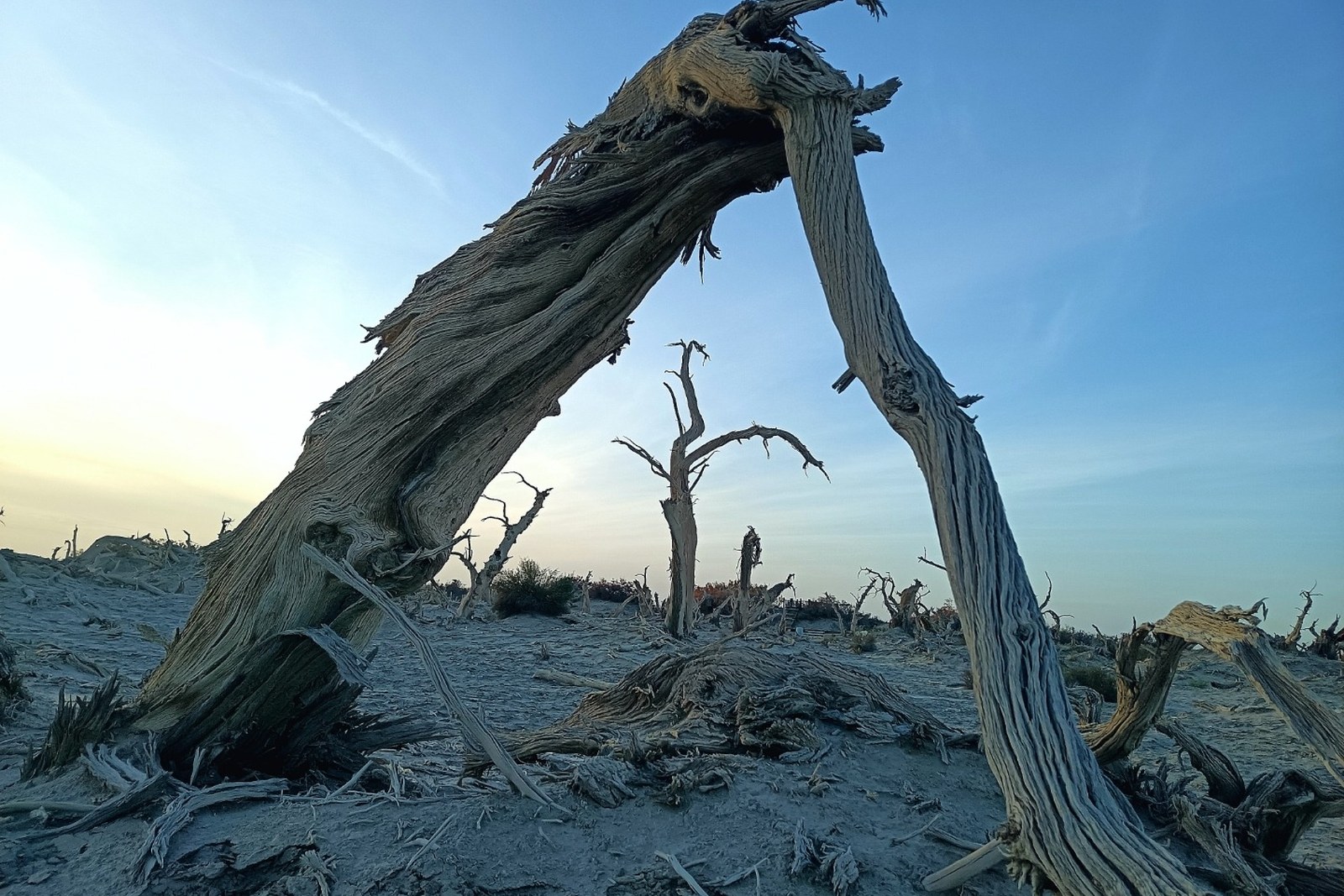
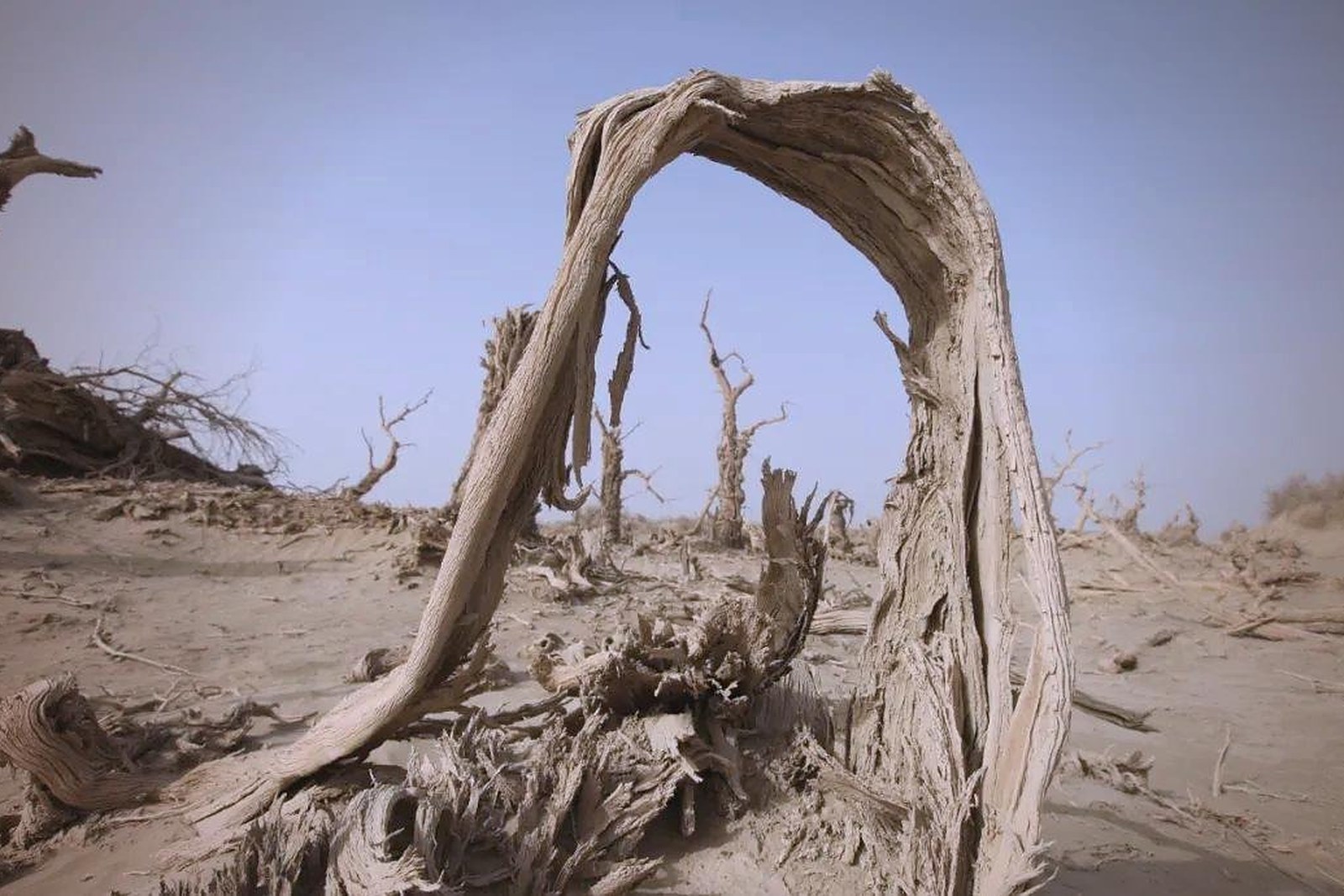
The valley’s effect is sculptural before it is botanical. Trunks the colour of driftwood twist into arches and corkscrews; whole families of trees lean in the same wind-driven angle; and the light – beige morning, brass noon, amber dusk – moves across bark that has no leaves to block it. Photographers treat the place as a natural studio, and in the soft months the dune edges behind the groves give the compositions a second horizon. Nothing needs arranging; the forest has been rehearsing for centuries.
The ecology explains the sleep. Poplars here sprout from the river’s flood pulse, and when dam regulation and irrigation cut the spring floods of the late twentieth century, whole terraces of huyang died standing – their roots still gripping the water table the deep taproots remember. The valley preserves that moment at scale. Information boards at the grove entrance map the water releases that have brought green shoots back along the channels, so a visitor can literally see the resurrection line moving through the stand: gray trees, then mixed, then green crowns where the newest floods reached.
Walking it well takes two hours and no effort. The valley floor is firm sand and old flood gravel; paths loop through the densest stands and out to the open flats where single patriarch trees hold whole views alone. Autumn – late October into November – is the season of seasons: the surviving green trees turn gold, the dead stay silver-gray, and the two palettes mix in one frame, the forest’s past and present standing in the same photograph. Spring brings the leaf-flush and the poplar catkins drifting like warm snow.
The valley also keeps the basin’s older economy in view. Herders still run sheep along the margins; the flood channels carry fishing stories from the river hamlets downstream; and the timber-free ethic of the reserve – deadwood stays where it falls – is itself the lesson, the forest left to keep its own long calendar. Bring water, a hat and a wide-angle lens; the site is raw by design, with the grove entrance providing shade platforms and the minimum of railing.
Practicalities first. The valley lies about twenty kilometres south of central Aral on the river road; taxis negotiate round trips with waiting time, and self-drivers follow the signs past the canal bridges. Entry is modest, the light is best before ten and after four, and October’s gold season draws the tour buses – go early morning then, or wait for their midday departure and have the arches to yourself.
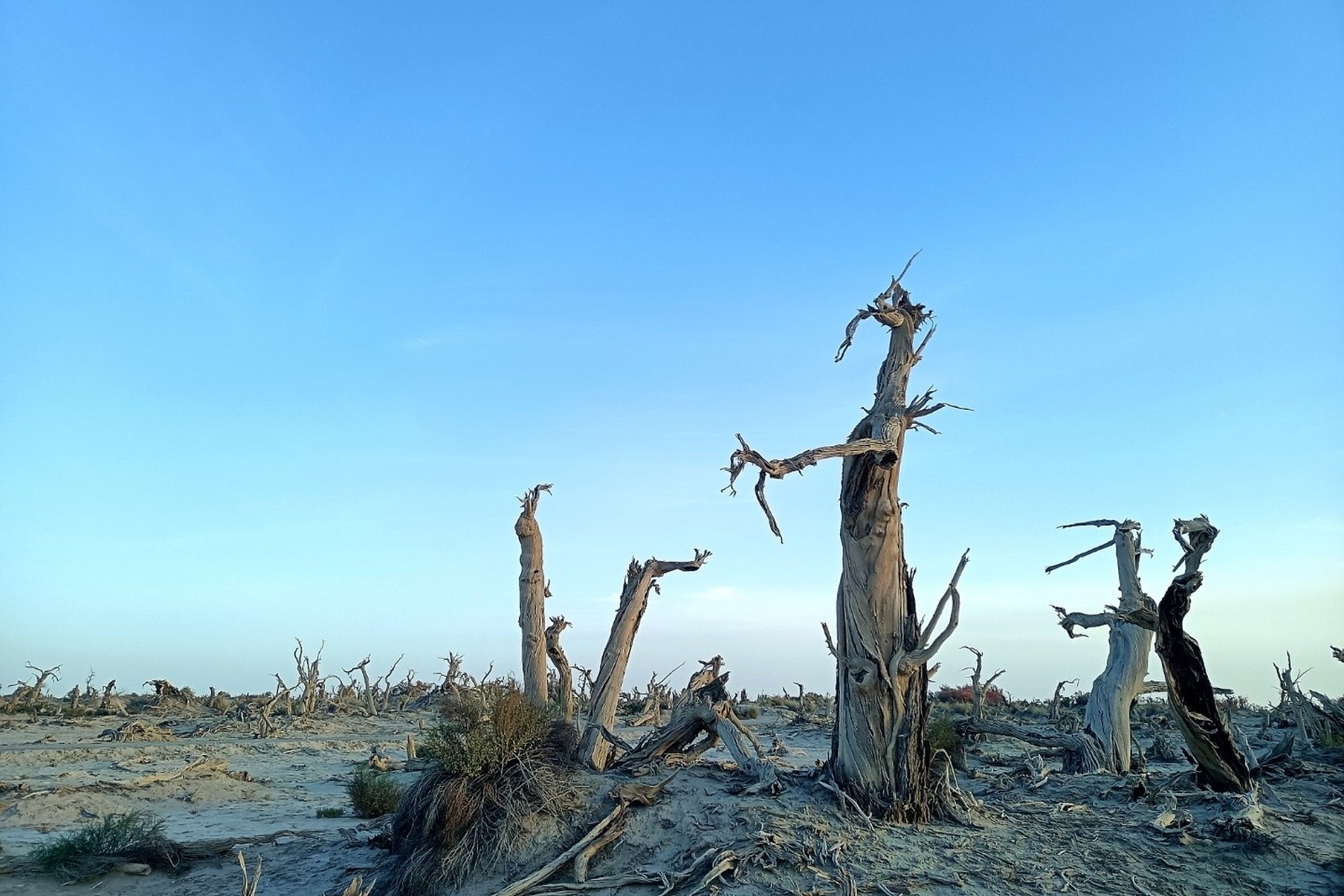
Widen the frame and the sleeping valley is the honest centrepiece of any Aral itinerary: the memorial tells what people built here, the university explains how they kept it, and the valley shows the landscape they started from – beautiful, brutal and patient, waiting for water exactly as the old sayings promise.
And that is the lasting impression: a forest with no leaves and no complaint. The trunks stand like the frames of houses that never got built, the sand keeps the footprints of the few who visit, and somewhere under the gravel the roots hold their long breath – asleep, not gone.
Practicalities
Beyond the valley, the same 阿拉尔市 Ālā’ěr Shì Aral City keeps more places worth the detour: 三五九旅纪念馆 Sānwǔjiǔ Lǚ Jìniànguǎn the 359 Brigade Memorial for the founding story, 塔里木大学 Tǎlǐmù Dàxué Tarim University for the campus walk, 塔里木河大桥 Tǎlǐmù Hé Dàqiáo the Tarim River bridge for the braided gold, or 千鸟湖湿地 Qiānniǎo Hú Shīdì Qianniao Lake wetland for the living wetland birds – four more doors into the same 阿拉尔市 Ālā’ěr Shì Aral City. Once the valley is seen, our Aral food map fills the day.
Practicalities
Words and Names
flowcloud would say the Sleeping Huyang valley is the desert’s sculpture garden: ten thousand gray trunks holding their pose between one flood and the next, some already awake and green again, all of them standing by the old promise – a thousand years down, and still refusing the ground. All checked November 2026.
Getting there: The valley lies about 40 kilometres south of the city toward the desert rim on the Tanan road; hire a car or negotiate a round trip with waiting time for a few hundred yuan. Go late afternoon when the low sun turns the dead trunks silver. All checked November 2026.