
The Lake That Reads Like a Scroll: Yangzhou’s Slender West Lake
两堤花柳全依水,一路楼台直到山 Liǎng dī huāliǔ quán yī shuǐ, yīlù lóutái zhídào shān – Flowering willows line both dikes leaning on the water; a road of terraces and towers runs straight to the hill
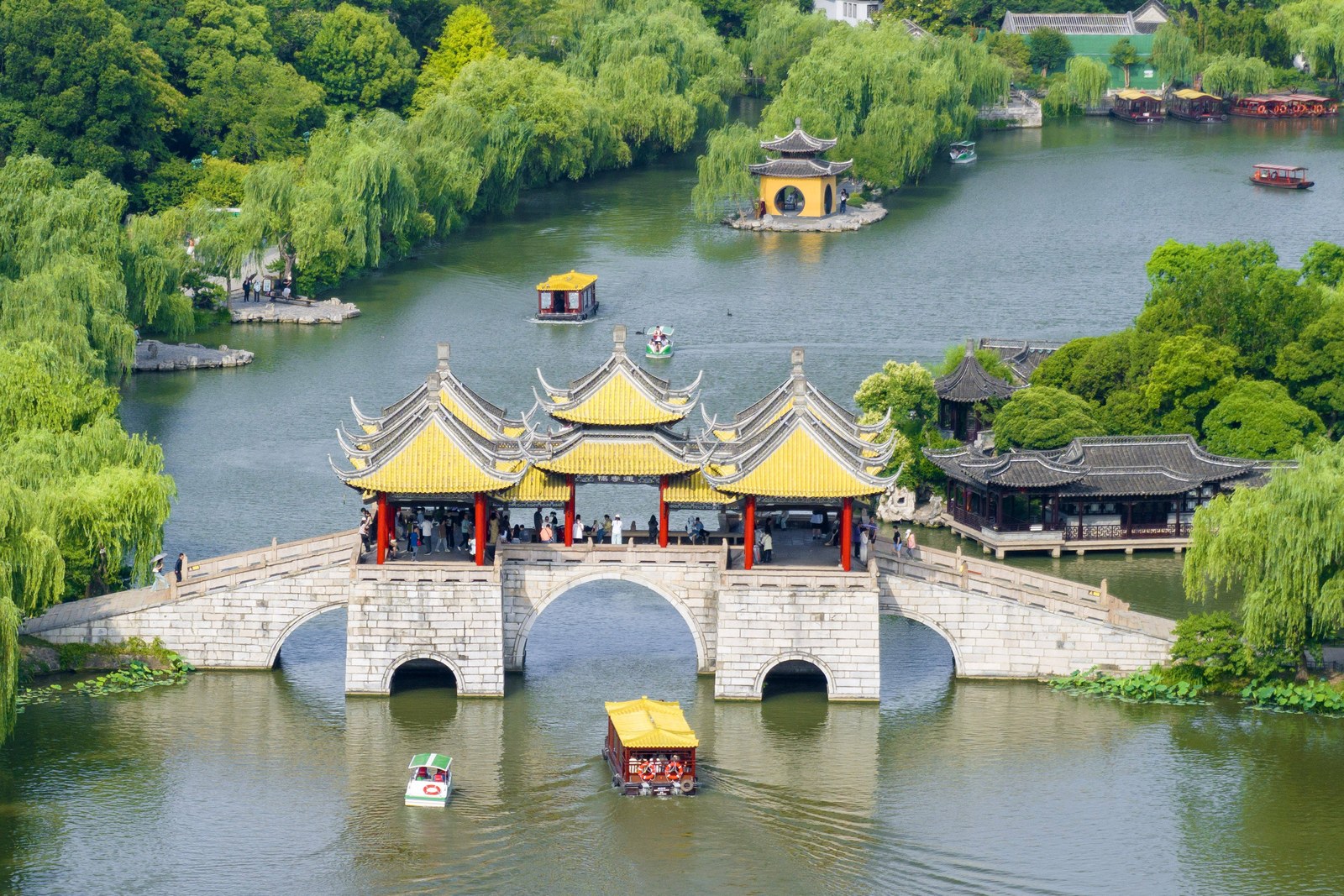
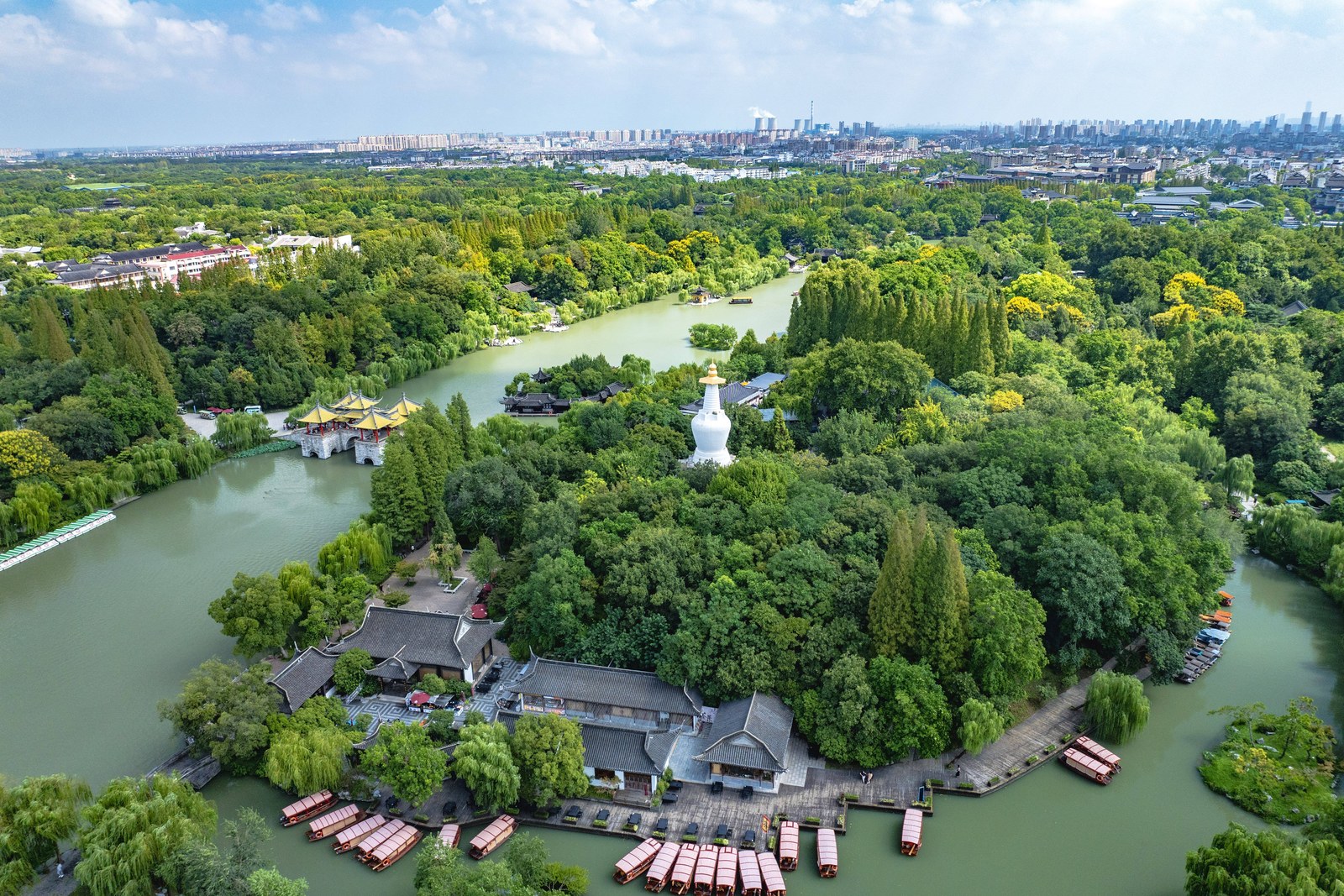
正文:瘦西湖 Shòu Xīhú Slender West Lake is the lake that gave Yangzhou its postcard – a long, narrow waterway threading between the old city and Shugang hill, where the Five-Pavilion Bridge, the White Dagoba and the Fishing Platform arrange themselves across the water like entries in a painted handscroll. The name says the point: this is a “slender” West Lake, an elongated chain of ponds and channels remodelled by Qing-dynasty salt merchants into a private-then-public paradise, and its scenery is composed, not wild – every bridge, pavilion and causeway sits where a painter would put it. Boat loops run the whole axis, willows sweep the banks in every season, and the lake’s curve of bridges from the Five-Pavilion span to the Twenty-Four Bridge has become the shorthand for the city itself.

The Five-Pavilion Bridge is the anchor. Its yellow roofs crown the crossing mid-lake, ten arches below and five pavilions above, and from any angle – the bank, a boat, the terrace opposite – it stacks bridges on pavilions into one object. The White Dagoba rises behind it on the far shore, a white cone against the trees, and the two together have printed themselves on every visitor’s idea of Yangzhou since the eighteenth century.
The lake rewards walking more than photography expects. East of the bridge the banks open into lawns and the Fishing Platform pavilion, framed so the bridge appears inside its round moon gate; westward the water narrows past rockwork and planted banks toward the Twenty-Four Bridge, a flat jade arc famous from Tang poetry. Boat rowers pole the channels singing local tunes, and in March the willows turn the whole length of the water soft green.
Timing splits the experience. Early mornings belong to locals – tai chi on the banks, herons working the shallows, the bridges empty; midday fills with tour groups; and evening in season reopens the gates for the light-and-lantern cruise, when the pavilions glow on the black water. The full axis takes two unhurried hours, longer by boat, and the exit at the north gate lands you at the foot of Shugang for Daming Temple.
Practicalities
Beyond the lake, the same 扬州市 Yángzhōu Shì Yangzhou City keeps more places worth the detour: 大明寺 Dàmíng Sì Daming Temple on the hill above, 个园 Gè Yuán Ge Garden for the Four Seasons rockeries, 东关街 Dōngguān Jiē Dongguan Street for the old lanes, or 何园 Hé Yuán He Garden for the double-decker corridor – four more doors into the same 扬州市 Yángzhōu Shì Yangzhou City. Once the bridges are crossed, our Yangzhou food map fills the day.
Practicalities
Words and Names
flowcloud would say Slender West Lake is Yangzhou writing in water: willow, bridge, pagoda, boat – a sentence the city has been polishing for three hundred years. All checked November 2026.
Getting there: The south gate is a short taxi ride from Wenchang Pavilion in the city centre; entry is ticketed with the park open through the evening in season, walking is flat, and the Five-Pavilion Bridge to Twenty-Four Bridge axis takes about two hours. Early mornings are quietest. All checked November 2026.