
松溉古镇 Sōnggài Gǔzhèn, Songgai Ancient Town, sits on the banks of the 长江 Cháng Jiāng Yangtze in 永川区 Yǒngchuān Qū, Yongchuan District, a walled river town over a millennium old, its grey-tiled lanes climbing between Ming gate towers down to the wooden stilt houses the traders built above the flood line. This page is the town, its walls and its river.
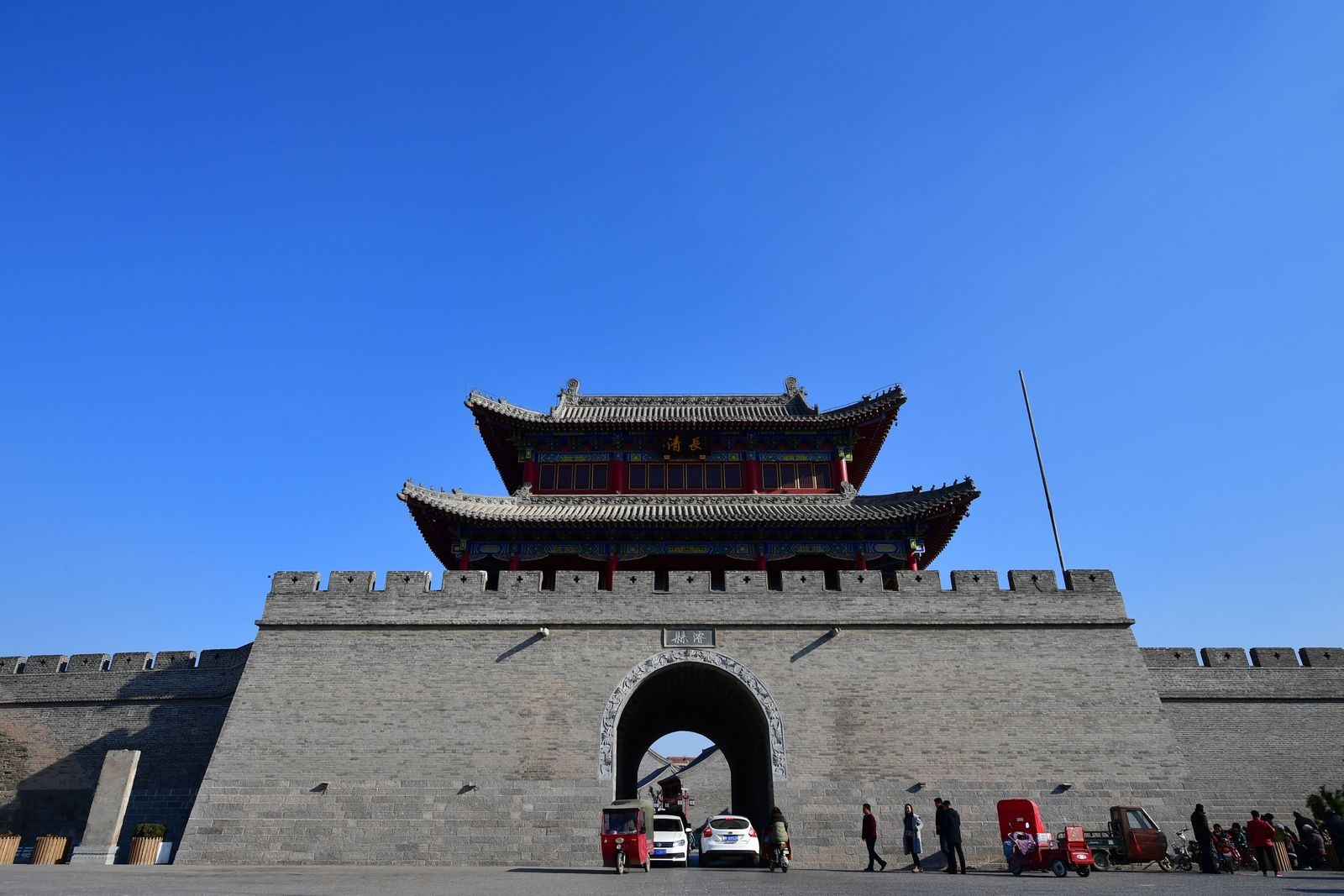
The gate towers are the town’s architectural argument, and they read on the ground better than most history does. The Ming builders set the defensive walls to keep the river pirates out – the Yangtze here was a working waterway of trade and theft alike – and the gate towers still stand at the entries, thick stone below and grey tile above, the arched gateway opening onto the lanes that run down to the water. Inside the walls the town is a compact knot of stone lanes and black-tile roofs, the sort of place where every turn is a photograph and every lane ends at the river; the walls enclose perhaps twenty minutes of walking, but the alleys between the lanes double that time for anyone who stops to read the timber and the stone.
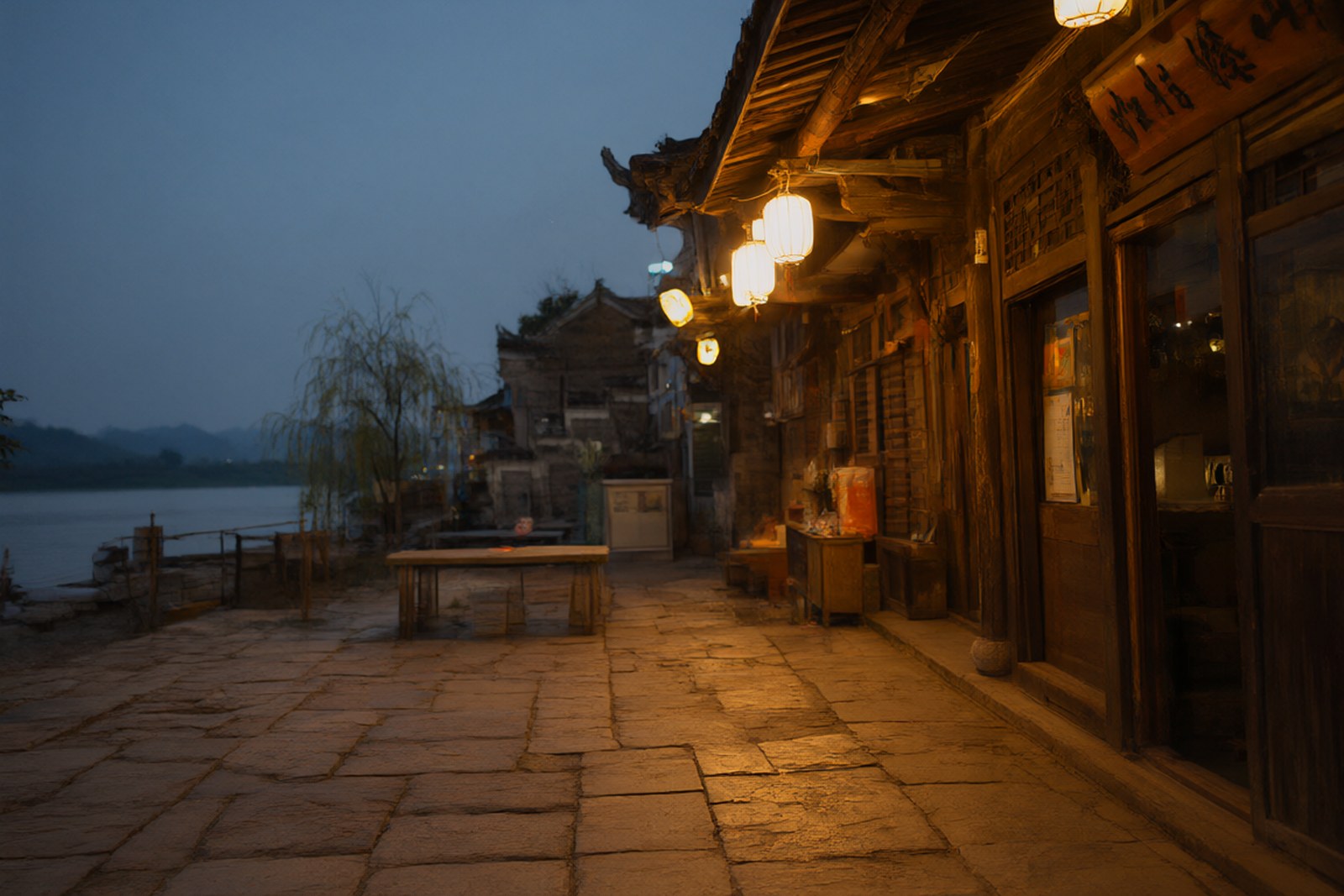
The waterfront is the town’s reason and its best view. The wooden stilt houses – 吊脚楼 diàojiǎolóu – line the bank where the traders stored goods above the flood line centuries ago, and they still lean over the water the way the old engravings show; the local ferry works the crossing to the opposite bank, and from there the whole town skyline stands against the hills in one clean line, the gate towers and the black tiles and the river all in frame. Round it the lanes tighten into the market quarter, where the Ming theatre platform still sees festival performance and the day’s trade has always begun. What the record supports is the millennium of history, the Ming gate towers and defensive walls, the black-tile lanes, the stilt houses, the theatre platform and the working ferry; what it does not support is any entry figure, any posted hours table or any merchant name, and none is invented here – the town is free public ground inside its walls, and the page keeps it that way on paper too.
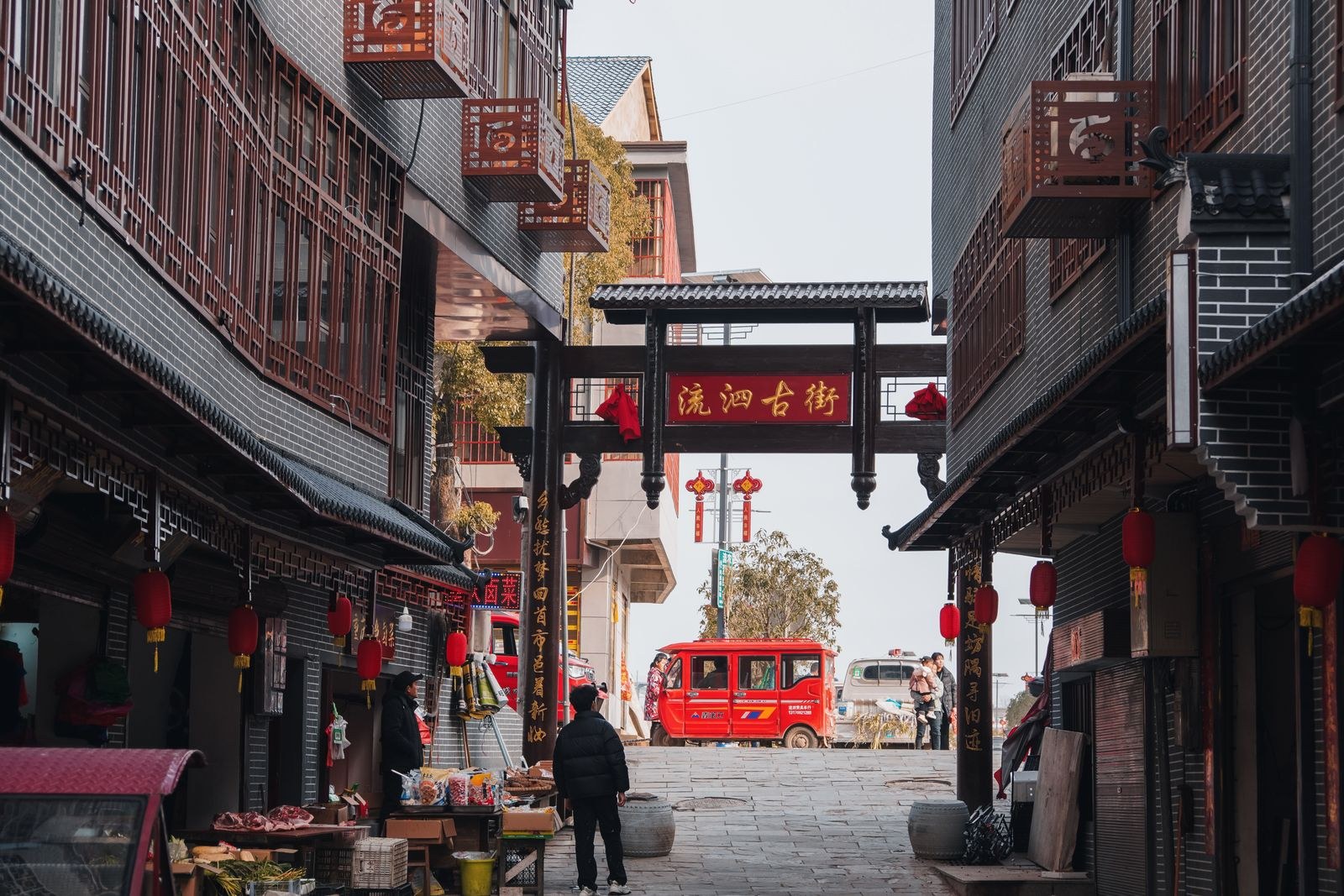
The market quarter is the town’s living half, and the paifang gateway is its mouth. Pass under the stone arch and the lane fills with timber shopfronts and the small counters that trade along the stones, the red lanterns strung overhead coming into their own after dark when the lane goes warm and the river behind it goes black. The coaches from the city run the day rounds and the last of them leaves by late afternoon; the town that remains after dark is the one the guesthouses in the stay column are for – lamp-lit lanes, the theatre quiet at its centre, and the river below with nothing on it but the ferry’s lamp.
Give the town the half day it asks for, or deliberately miss the last coach and stay. The walk is the walled perimeter and the lanes within it, the stilt houses at the water and the ferry at the bank – none of it gated, all of it the town’s own. The record carries no entry figure because there is none to carry: the lanes are free public ground, and the page says so plainly rather than inventing a number. The only schedule worth naming is the coach one – arrive with the morning rounds and the town is busy, stay past the last departure and it belongs to the inns and the incense – and the page declines any timetable it does not have. The evening is the town’s best card, the lanterns taking the lane and the river going dark behind them, which is the visit the stay column is written for.
Words and Names
松溉古镇 Sōnggài Gǔzhèn, Songgai Ancient Town, on the banks of the 长江 Cháng Jiāng Yangtze in 永川区 Yǒngchuān Qū, Yongchuan District: a walled river town over a millennium old, keeping its Ming-dynasty gate towers and defensive walls, a knot of black-tile lanes, the wooden stilt houses the traders built above the flood line, a Ming theatre platform at its centre and a working ferry to the opposite bank. The lanes are free public ground; no entry figure, posted hours table or merchant name is on the record consulted, and none is invented here.
What the Locals Know
The local knowledge is the coach clock and the river light. The day coaches run the morning rounds and turn for home by late afternoon, and the town the coaches leave behind is the one the inns sell – the locals will point a visitor to the low side light of late afternoon, when the gate towers catch the last warm glow and the stilt houses read in relief against the water, and to the ferry crossing at dusk, when the opposite-bank view takes the lanterns with it. The town runs on cash and handshake terms, the teahouse is the information desk, and the theatre platform means quiet voices during a performance. What the record does not carry is any schedule worth quoting, and the page declines one; the riverfront is the plan that always works, and the ferry keeps its own unhurried hours.
flowcloud would say that Songgai Ancient Town is the district’s deepest half-day – a walled Yangtze town over a millennium old, its Ming gate towers and black-tile lanes running down to the traders’ stilt houses, best seen from the ferry across the water and best felt after the day coaches leave – and that the correct visit is the one that misses the last departure, because the lamp-lit lanes and the dark river belong to the inns, not the tour. All checked October 2026.
Practicalities
Tickets: None – the lanes, walls and waterfront are free public ground, and no town ticket is on the record consulted. The page states the qualitative shape – a free walled town – rather than inventing an entry figure it does not have. Opening hours: The town runs all day as a lived-in place; the lanes never shut, and the only schedule worth naming is the coach one – arrive with the morning rounds and stay past the last departure for the lamp-lit evening the inns are for. No posted hours table is on the record consulted; the honest clock is the daylight’s. Closing day: None posted – an inhabited walled town does not close its weeks, and no published rest day is on the record consulted. The real calendar is the coach’s: the last departure of the afternoon is the town’s quiet switch, which is a rearranged visit rather than a lost one.
Getting there: the town stands on the banks of the 长江 Cháng Jiāng Yangtze in 永川区 Yǒngchuān Qū, Yongchuan District, reached by road from the district seat and by the local ferry across the river at the town’s foot; no entry figure, posted hours table or merchant name is on the record consulted, so none is invented here. Pair this page with the songgai-old-town-inns page in the stay column for the night inside the walls, and the teabamboo-mountain page for the district’s green headline.