
遂溪醒狮 Suìxī xǐng shī is the southern lion dance of 遂溪县 Suìxī xiàn, and in this county it is not a folkloric survival but a competitive sport with a professional circuit behind it. The lion is the southern one: a large painted head with a single horn in the middle of the brow, a hinged jaw that opens and shuts, eyes that roll and a mirror set in the forehead, on a body of cloth with a fringed tail, worked by two men, one in the head and one in the body, with a drummer and a gong behind them keeping the pace. The county has several hundred troupes; the 中国民间文艺家协会 Zhōngguó mín jiān wén yì jiā xié huì named 遂溪 中国醒狮之乡 Zhōngguó xǐng shī zhī xiāng, the home of the Chinese lion dance, in December 2003; and the dance was entered on the first national list of intangible cultural heritage in 2006.
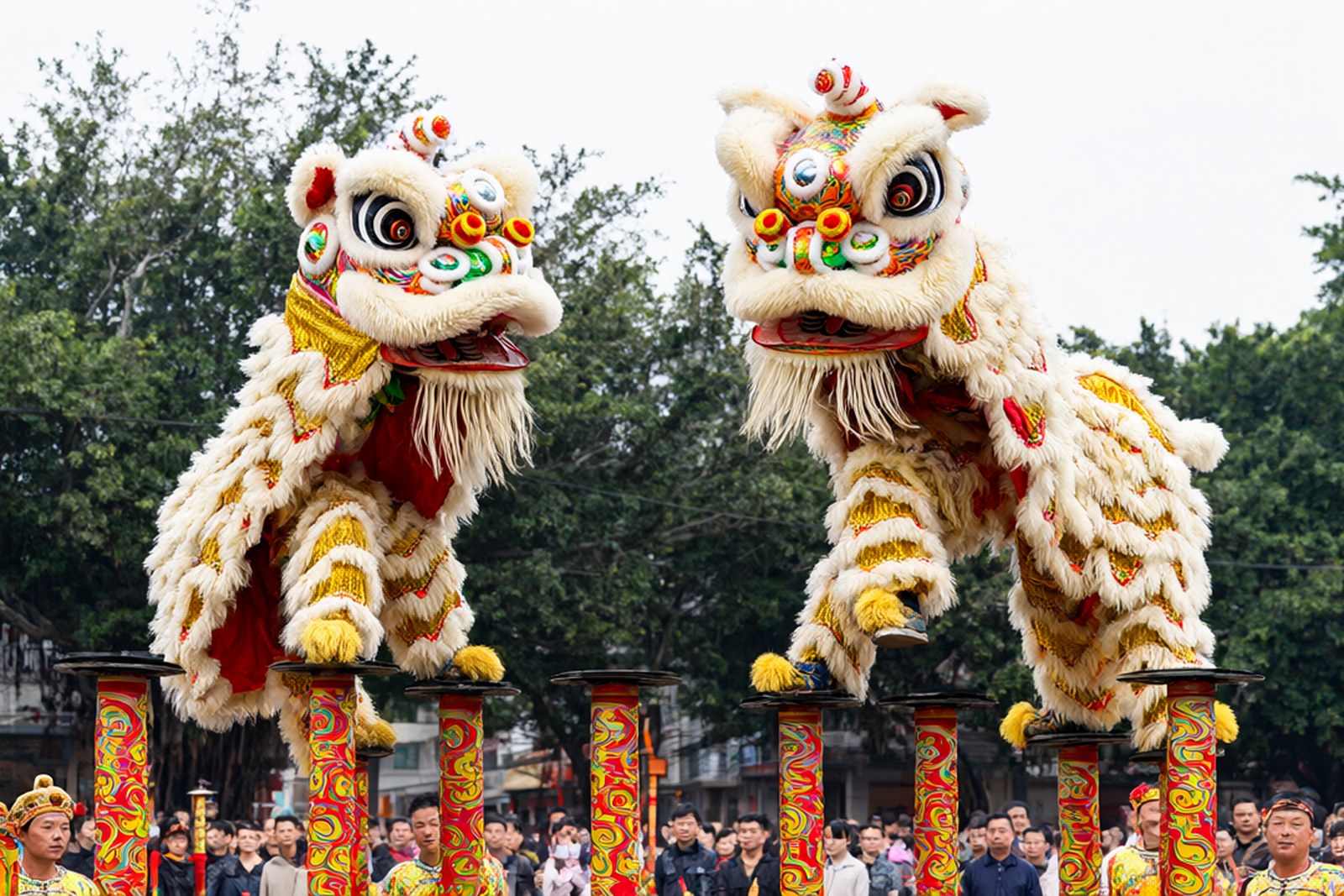
What 遂溪 is famous for within the dance is the poles. Ordinary lion dancing is done on the ground, the lion stepping through a floor pattern called the 七星 qī xīng, the seven stars, or doing the 采青 cǎi qīng, taking a bundle of greens hung above a shop door, which is what a troupe is usually hired for. The 高桩 gāo zhuāng version puts the animal up on a row of poles two or three metres off the ground with a gap of a metre and more between them, and the two dancers have to jump the lion from pole to pole in step, land on a surface smaller than a dinner plate, and keep the head and the body moving as one animal the whole way. The county’s recorded jump is a span of three and seven-tenths metres, set in 2005 and entered in the Guinness records; a 遂溪 troupe took the national championship in 2007; the county’s teams performed in the opening ceremony of the Beijing Olympics in 2008; and a 遂溪 troupe has since taken the country’s highest folk-art award.
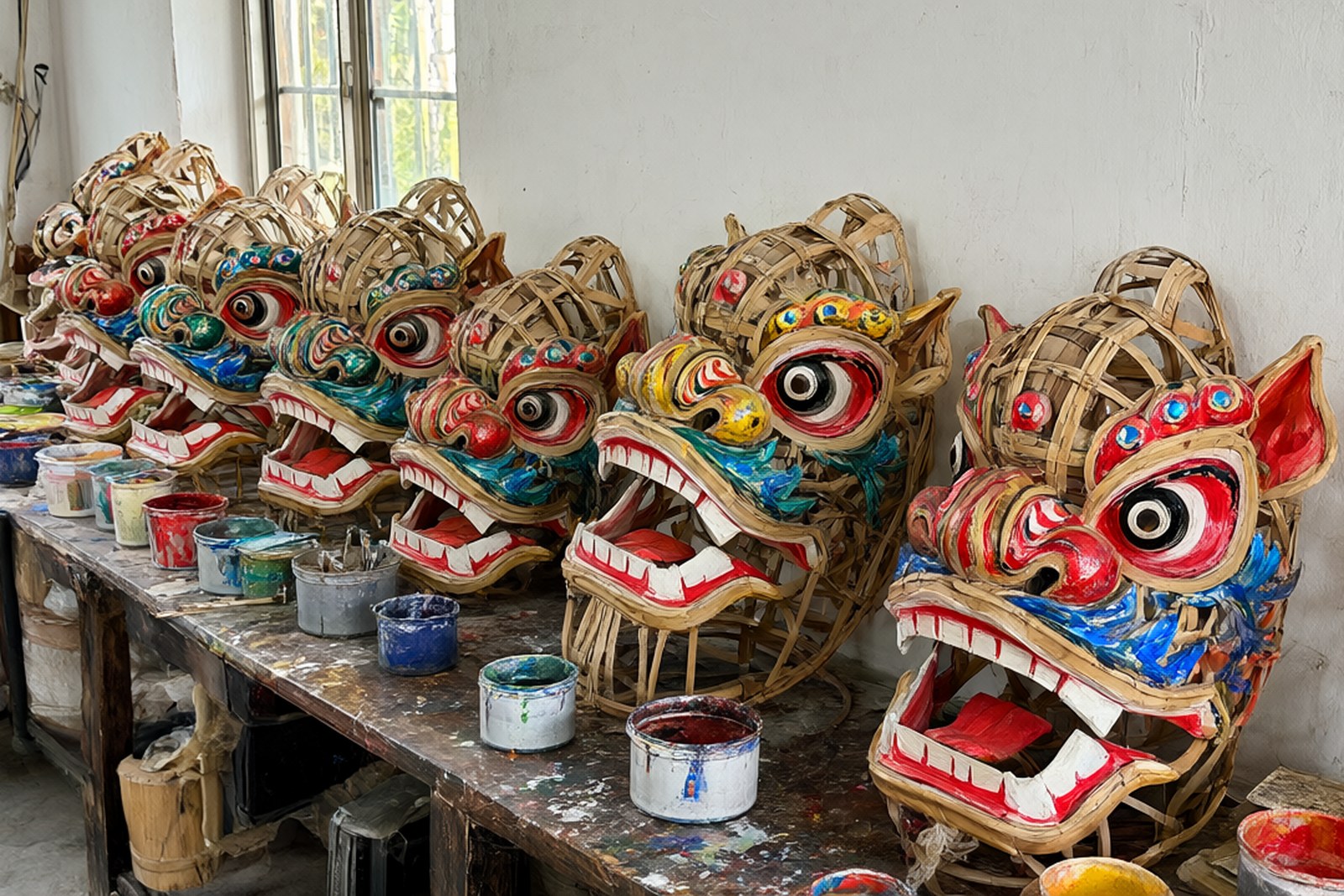
The other half of the trade is the making of the lion itself, and 遂溪 does that too. The head is built up over a bamboo frame bound with strips of paper and cloth, coated and then painted by hand: the outline of the brow and the nose, the pattern on the cheeks, the scales along the horn, and the mirror set into the forehead to drive off anything looking on. A good head is light enough for a dancer to carry for an hour and stiff enough not to deform when it is thrown and caught. The county has a 醒狮文化博物馆 xǐng shī wén huà bó wù guǎn, a lion dance museum, at 黄略镇龙湾村 Huáng lüè zhèn Lóng wān cūn, holding heads, costumes, drums and photographs, and it is the place to go if you want to see the range of the tradition rather than a single performance; 黄略 itself, on the road between the county town and 湛江, is one of the towns that produces the best teams.
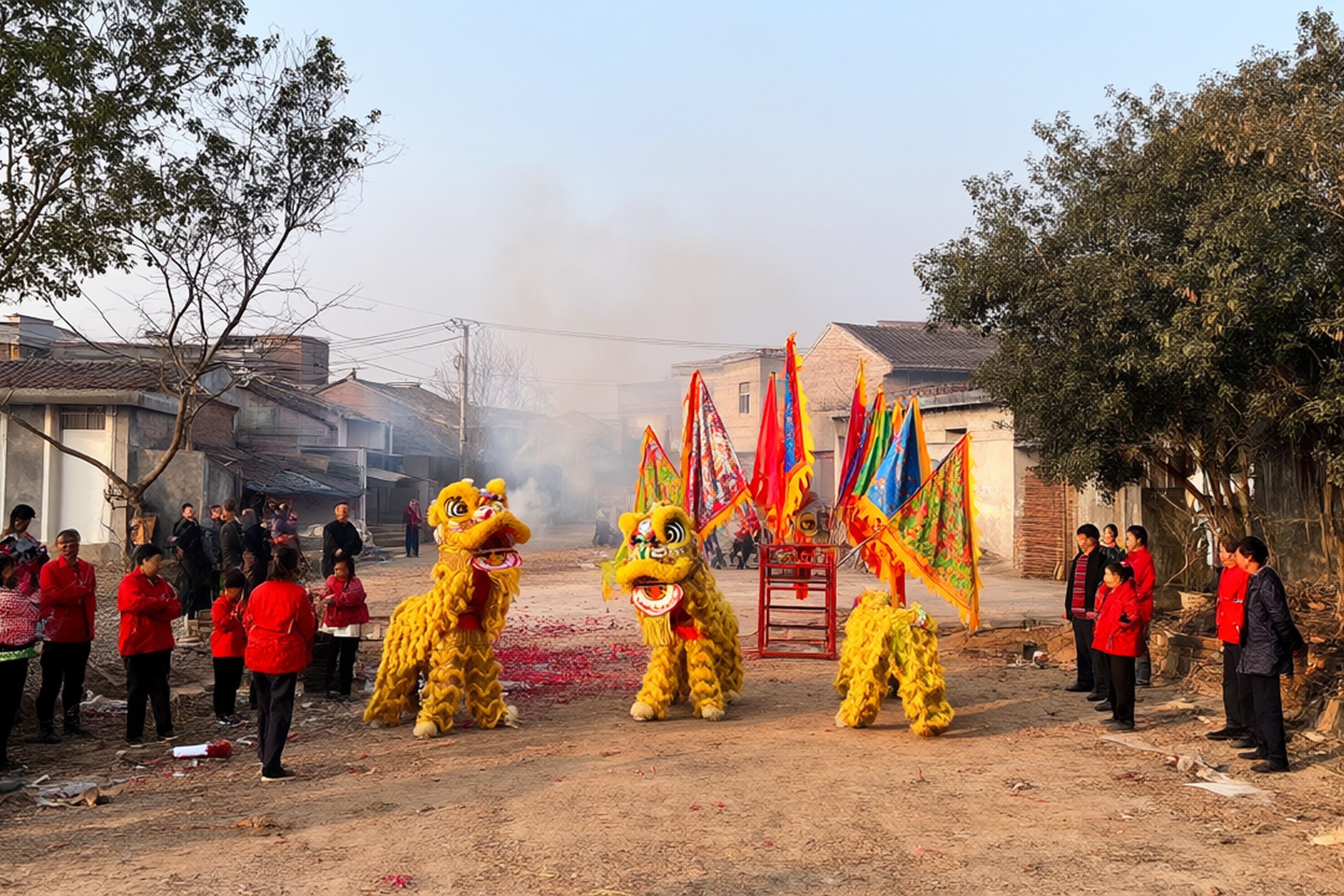
Seeing a performance is a matter of timing rather than of buying a ticket. The dance comes out for the Lunar New Year, for temple festivals, for shop openings and for competitions, and the competitive season is in the winter and the spring; outside those dates a visitor will generally have to ask, and the museum at 黄略 can usually say who is performing and where. The rest of the county is worth a half day on its own. 遂溪 is the county of the 沙虫 on its western shore at 草潭 Cǎotán, of the 螺岗岭 Luó gāng lǐng forest park north of the county town, and of the 孔子文化城 Kǒng zǐ wén huà chéng, a Confucian temple complex built in the town at the end of the 2010s which is now the county’s other set piece. 江洪 Jiāng hóng, on the coast, is a working fishing port with a morning market, and the two together fill a day out of 湛江.
Practicalities
Tickets. A performance at a temple festival, a shop opening or a village occasion is free and open to anyone standing there; a performance booked for a group is a commercial arrangement priced by the troupe. The 醒狮文化博物馆 at 黄略镇龙湾村 is free or a nominal charge, and the 螺岗岭 forest park and the 孔子文化城 charge modestly, at around ¥20 to ¥40.
Opening hours. The museum keeps roughly 09:00 to 17:00 and closes on Mondays; the forest park and the Confucian complex keep daylight hours. Performances are usually in the late afternoon or the evening and last twenty minutes to an hour, and the competitive season runs from about November to April. Half a day covers the museum and 黄略, and a full day covers them with the coast at 草潭 or 江洪.
Getting there. 遂溪站 Suìxī zhàn on the 深湛 high-speed line is in the county town, about forty minutes north of 湛江市 by road on the 沈海 expressway; 黄略镇 lies between the county town and 湛江, about twenty minutes from either. 湛江吴川机场 Zhànjiāng Wúchuān jī chǎng is about an hour east. A car or a taxi is needed for the museum and the coast, and the county town itself is compact enough to walk.
Closing day. There is no closing day for the county, and the museum closes on Mondays like the rest of the country’s. Performances stop for nothing except the weather; the busiest days of the year are the first and the fifteenth of the first lunar month, when every troupe in the county is out and the 采青 is done at every shopfront on the main streets.
flowcloud would say that a county which took a dance meant to be performed on the ground, put it on poles three metres up with a metre of air under each step, and then built a museum to the heads it makes for it, has turned a blessing performed outside a shop door into a sport with a championship, which is one way a tradition stays alive.
Getting there: the lion dance museum is at 黄略镇龙湾村 in 遂溪县, twenty minutes from both 遂溪站 on the 深湛 high-speed line and 湛江市, and about forty minutes from the county town; the performances themselves are wherever a festival or a competition is being held, which the museum can tell you.