
The hill is only 526 metres high and it stands directly behind the centre of 郴州 Chēnzhōu, which means that from the top of it you can see the entire city laid out and, on a clear day, the line of the 南岭 Nánlǐng mountains to the south. Locals treat it as a park: they climb it before work, they climb it after dinner, and the stone staircase up the northern face is busy from half past five in the morning until ten at night. But 苏仙岭 Sūxiān Lǐng — Suxian Ridge — is not only a park. It is one of the twenty-one 道教福地 dàojiào fúdì, the Taoist blessed sites of China, the legendary home of a man who is supposed to have become an immortal here, and the site of a stone tablet that three of the greatest names of the Song dynasty contributed to without ever meeting each other.
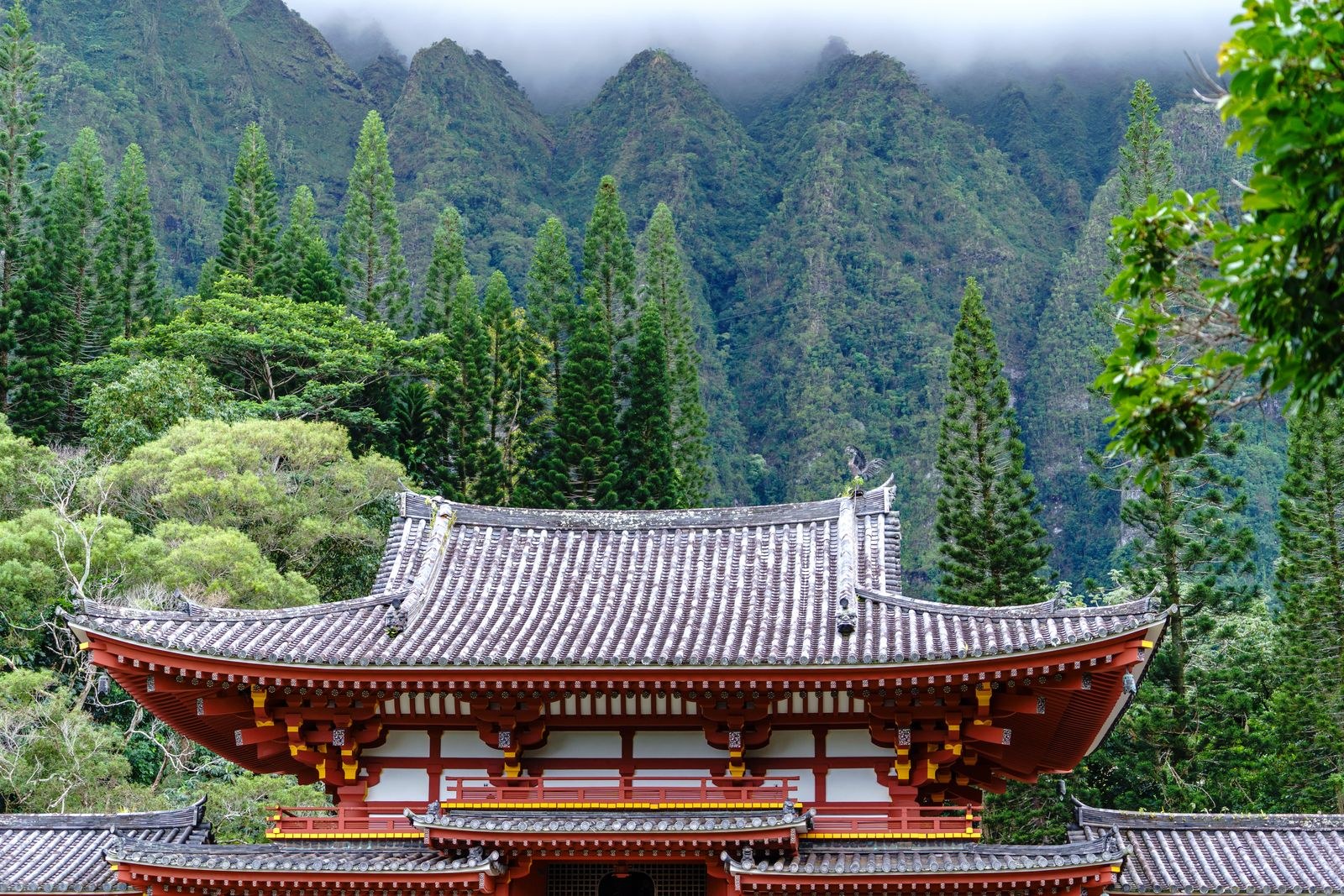
The legend is the reason for the name. 苏仙 Sūxiān, the Immortal Su, was a boy called 苏耽 Sū Dān who, in the versions told here, was raised by his mother in a cave on the hill and lived on nothing but 灵芝 língzhī and spring water, learned the arts of medicine, and cured a plague in the town before departing from the summit one morning on the back of a white crane. The cave, 白鹿洞 Báilù Dòng — white deer cave — is one of the spots on the hill, along with a spring said to be the one he drank from, and a set of stone footprints on the top platform that are said to be where the crane lifted off. This is folk hagiography rather than history, but the hill has been a place of pilgrimage on the strength of it since at least the Tang dynasty, and the temples that accumulated over the centuries — 南禅寺 Nánchán Sì, 景星观 Jǐngxīng Guàn, several smaller shrines — are real enough.
The tablet is the other reason to come, and for anyone interested in Chinese writing it is the main event. 三绝碑 Sān Jué Bēi, the Tablet of Three Excellences, carries a poem by 秦观 Qín Guān, the 踏莎行·郴州旅舍 Tàshāxíng · Chēnzhōu Lǚshè — “Treading on Grass: Chenzhou Inn” — written in 1097 while he was exiled here and one of the most quoted pieces of Song lyric poetry; a colophon by 苏轼 Sū Shì, Su Dongpo, who had never been to Chenzhou and wrote from memory of the poem; and the calligraphy of 米芾 Mǐ Fú, who brushed the whole thing onto stone in 1101. Three of the greatest names in Chinese literary history on one slab, connected by a chain of exile, admiration and accident. The original is protected; what you see on the hill is a later carving, which the site states plainly.
Practicalities
Tickets. The hill itself is free to walk up; the paid elements are the 观景平台 guānjǐng píngtái, the summit viewing platform, at ¥26, and the cable car, which is around ¥21 up, ¥42 down, or ¥40 return for children, students and seniors. Temple halls are free to enter.
Opening hours. The site is open from 05:30 to 22:30, which makes it unusual among Chinese scenic areas and is a deliberate service to the exercise crowd. The temples close earlier, generally around 17:00.
Closing day. There is no closing day. The hill is open 365 days a year, and in practice it never empties: the earliest climbers start at half past five and the last ones come down after ten.
Getting there. The entrance is at 苏仙北路 2 号 Sūxiān Běilù 2 hào, on the northern edge of the city centre, which means you can walk or take a short taxi ride from almost any hotel in 郴州 Chēnzhōu. Buses stop on 苏仙北路; the high-speed station is about 25 minutes away by car.
flowcloud would say that Suxian Ling is what happens when a modest hill gets two thousand years of stories attached to it: it stops being a hill.
Getting there: walking up takes about forty minutes at a normal pace and the path is lit all the way, so an evening climb in summer is both cooler and busier. Take the cable car down if your knees have opinions.