
Tai Kwun — the Police Station That Became an Art Quarter
花岗墙上旧灯影,检阅场中今日风 Huāgāng qiáng shàng jiù dēng yǐng, jiǎnyuè chǎng zhōng jīnrì fēng – Old lamp shadows play on the granite walls; today’s wind crosses the parade ground
大馆 Dàguǎn Tai Kwun – “the big station” – is the restored Central Police Station compound on 荷李活道 Hélǐhuódào Hollywood Road, the densest single block of heritage in the district. Three generations of colonial architecture stand inside its granite walls: the Victorian barracks of the police headquarters, the former Central Magistracy, and 域多利监狱 Yùduōlì Jiānyù Victoria Prison, whose cells held residents from the 1840s until 2006. Reopened in 2018 after a decade of careful rebuilding, the compound now runs as an arts and heritage quarter, and admission to its courtyards is free.
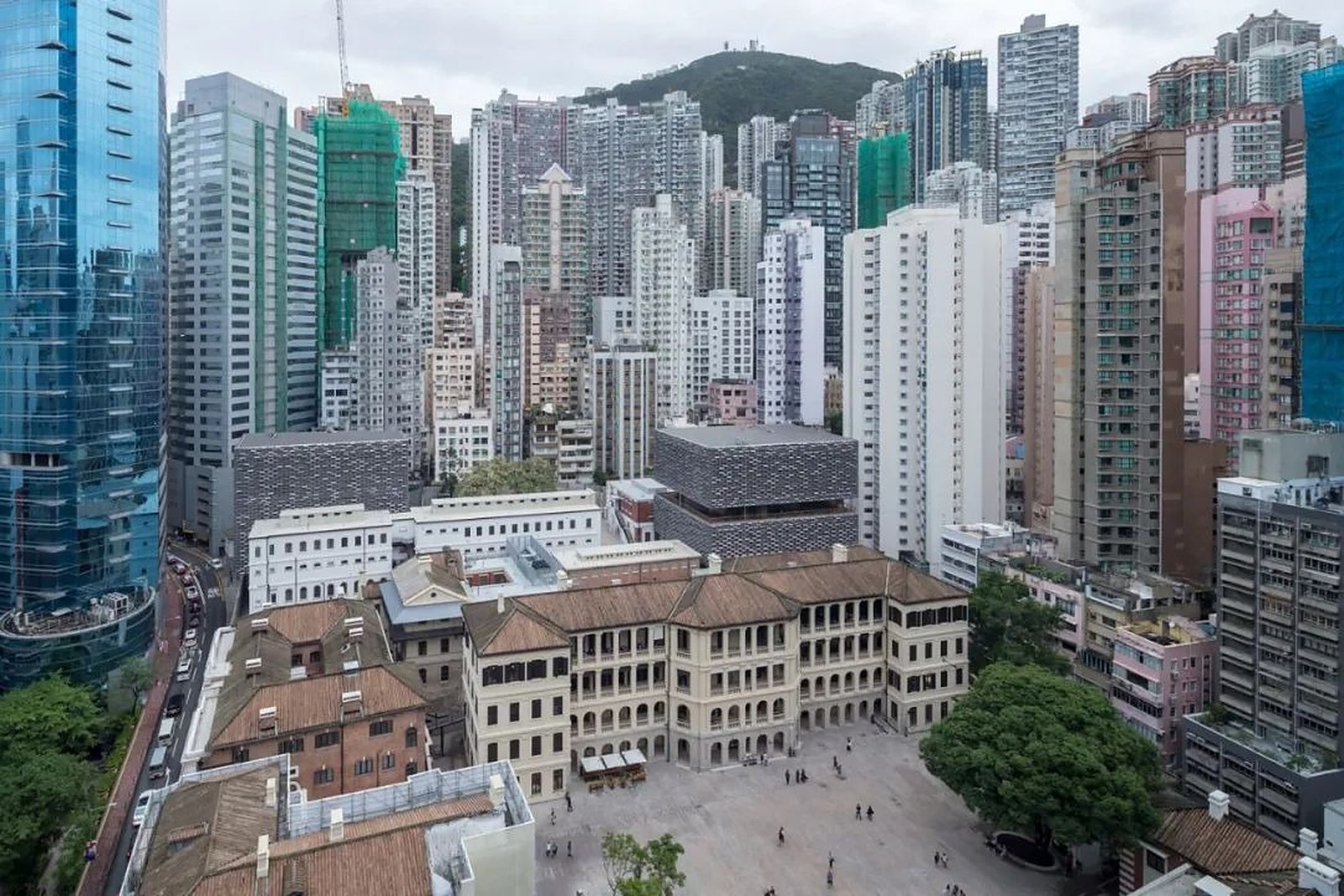
Seen from above, the compound reads as a small walled city dropped into Central: pitched roofs and red brick against the glass towers, the whole ensemble holding its ground while the skyline rose around it. That stubbornness is the point – Tai Kwun preserves, at street level and at scale, the physical memory of the colonial town that grew into today’s city.
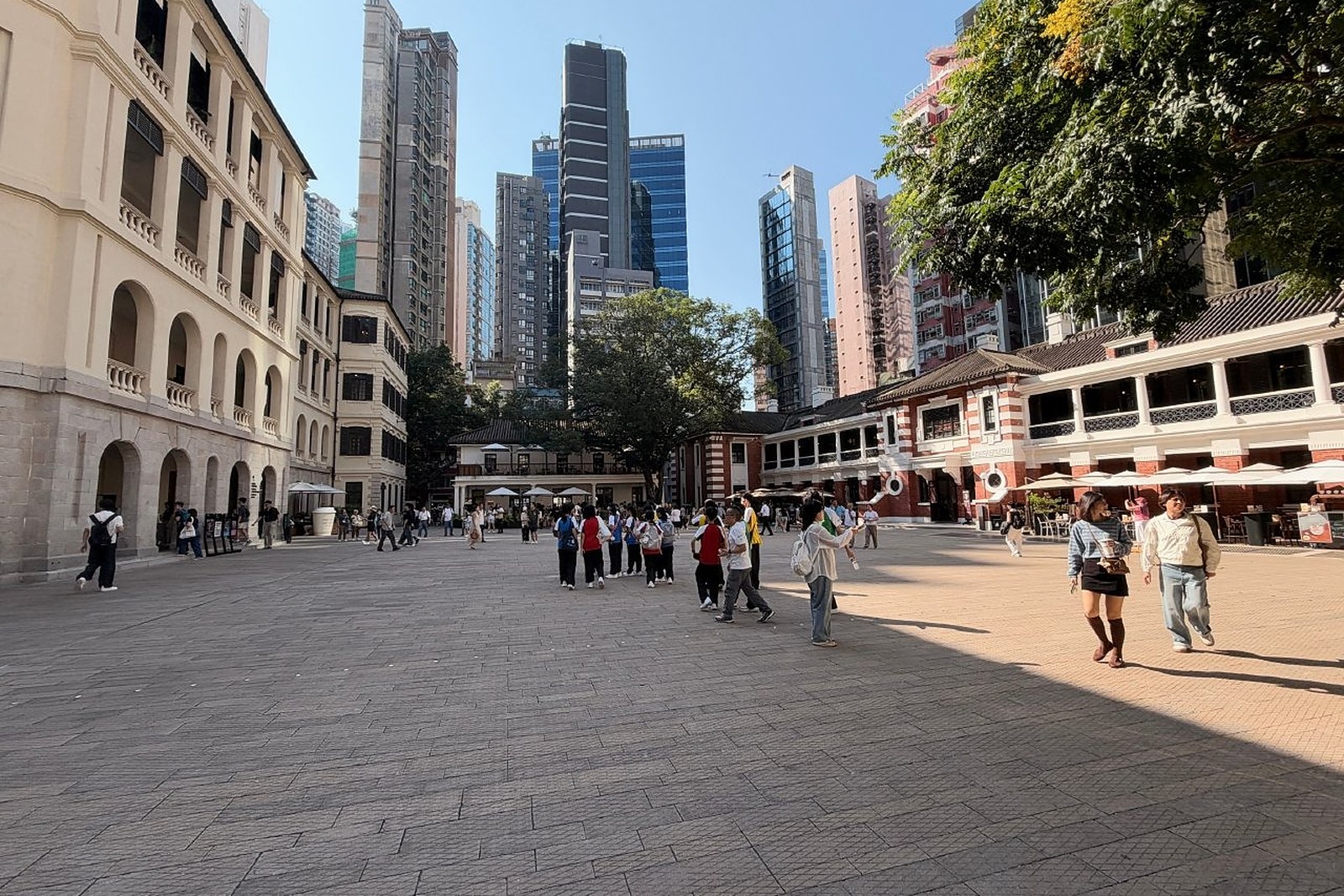
The 检阅广场 jiǎnyuè guǎngchǎng Parade Ground is the compound’s living room – a stone-paved terrace where roll call once formed and where cafes now set their tables. Around it, heritage displays occupy the old charge rooms and barracks, telling the compound’s century and a half of policing, while galleries thread through the yards. Two new buildings by Herzog and de Meuron – a cast-aluminum contemporary art gallery and a theater – tie the old structures together without imitating them.
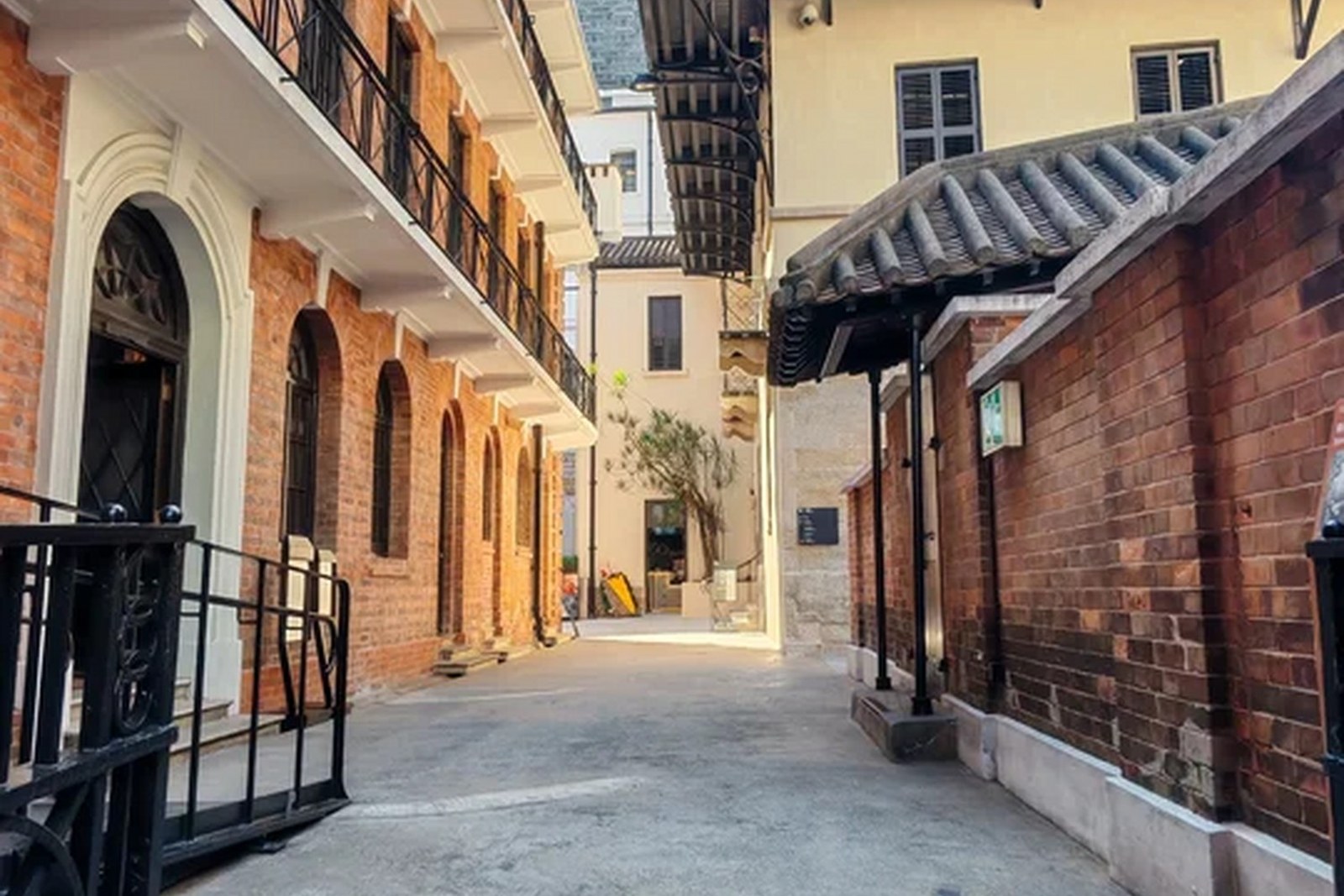
Down the inner lanes the prison blocks keep their own atmosphere: iron gates, whitewashed corridors, the low light of cells that held generations of the city’s defendants and dissidents. Walk the compound slowly – heritage downstairs, exhibitions above, and a lunch terrace that must be the most surprising in Hong Kong – and the block explains the district better than any museum.
Practicalities
- Tai Kwun stands at 10 Hollywood Road; exit D1 or D2 of Central station and walk up Arbuthnot Road.
- Entry to the courtyards and heritage displays is free; special exhibitions and performances are ticketed.
- The Parade Ground cafes fill at lunch on weekdays; mornings are quiet and the light on the granite is best then.
- Allow two hours minimum – the prison displays, galleries and courtyard loop reward an unhurried visit.
Words and Names
大馆 Dàguǎn Tai Kwun, the Central Police Station compound turned arts quarter; 域多利监狱 Yùduōlì Jiānyù Victoria Prison, the granite cell blocks closed in 2006; 检阅广场 jiǎnyuè guǎngchǎng the Parade Ground, the compound’s central terrace; 中区警署 Zhōngqū Jǐngshǔ the Central Police Station, the compound’s founding role; 营房大楼 yíngfáng dàlóu the Barrack Block, the main heritage hall. Beyond the compound, the same 中西区 Zhōngxī Qū Central and Western keeps more places worth the detour: 太平山顶 Tàipíng Shān the great summit terrace, 文武庙 Wénwǔ Miào the incense hall two streets west, 荷李活道 Hélǐhuódào the gallery street at the door, or 天星小轮 Tiānxīng Xiǎolún the harbor crossing below – four more doors into the same district. Once the courtyards are behind you, our Central and Western food map fills the table.
flowcloud would say Tai Kwun is the district’s memory given a second job – granite walls that once held people now holding art, and holding it well. All checked November 2026.
Getting there: Exit D1 or D2 of Central MTR station, then walk up Arbuthnot Road to the Hollywood Road entrance; entry to the courtyards and heritage displays is free, special exhibitions ticketed. All checked November 2026.