
Taiping Old Street
The first thing to understand about 太平老街 (Taiping Old Street) is how short it is.
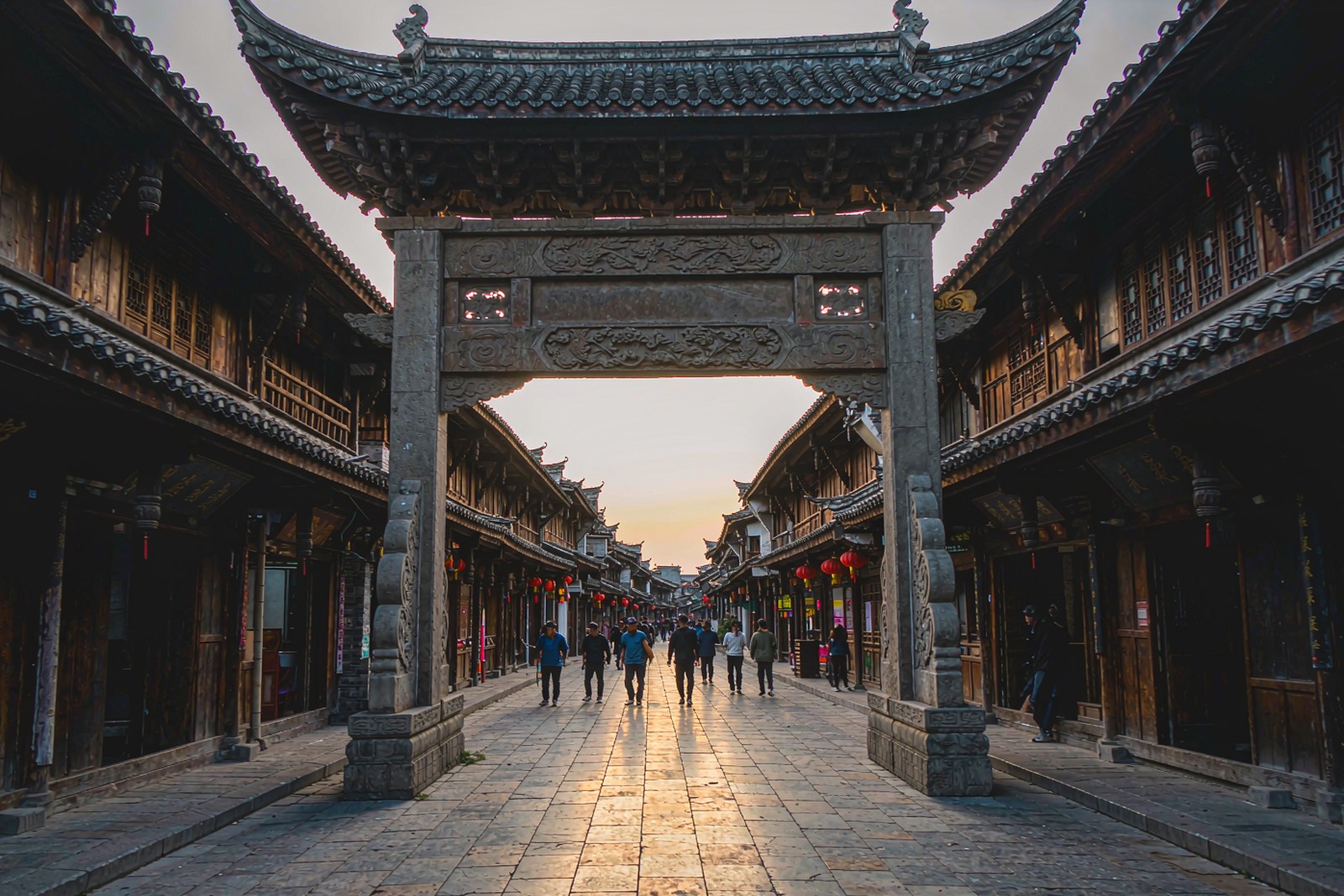
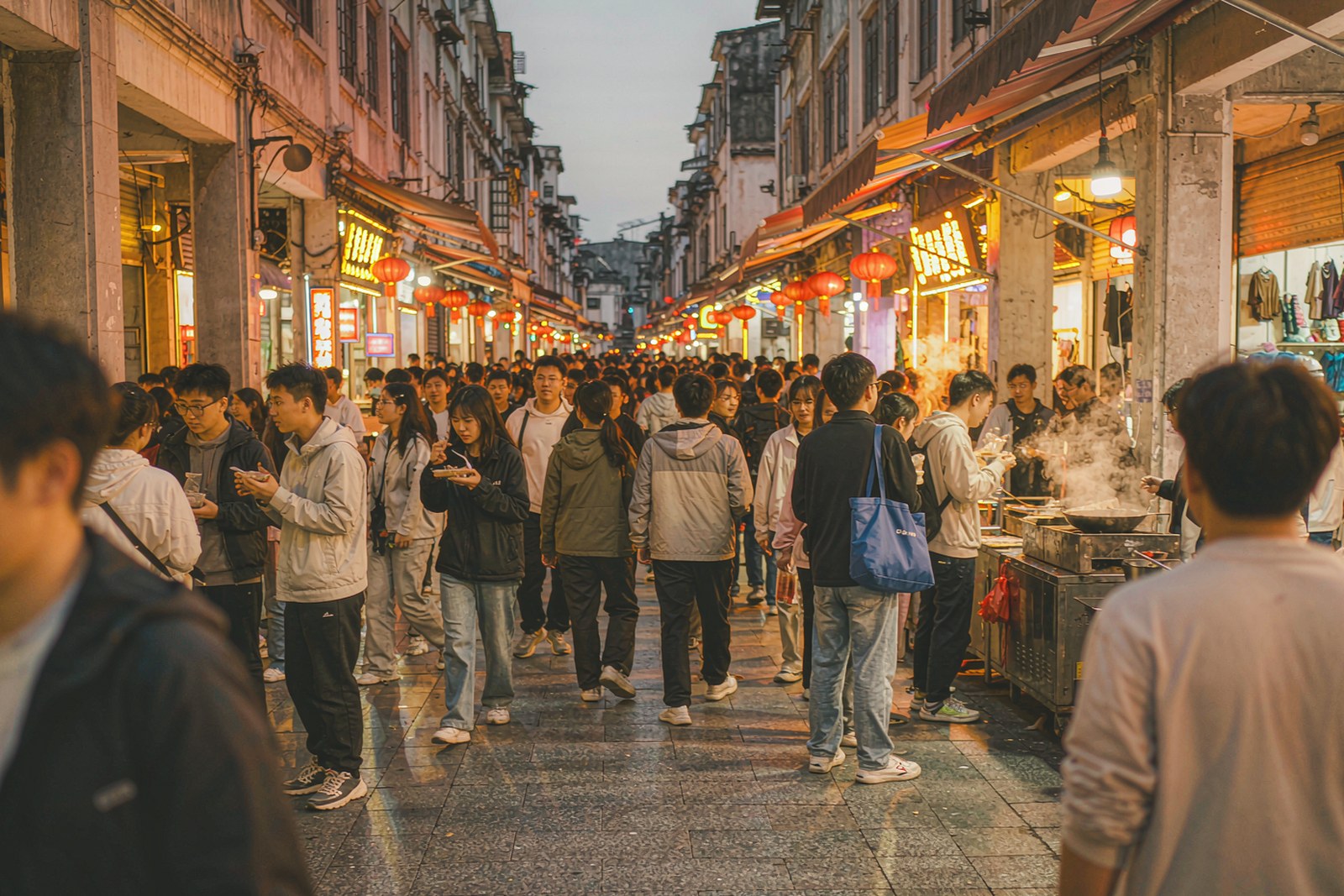
375 metres. Seven metres wide. You can walk it in five minutes without stopping, and if you are the kind of traveller who judges an attraction by its footprint you will be disappointed by the middle of it, which is a crowd of people buying fried things from other people. Give it a second look. It is the best-preserved historic lane left in Changsha, and the reason it is worth your afternoon is not that it is beautiful. It is that it is true — this street has been a commercial lane for two thousand years and it still is one, just with worse souvenirs.
Why This Lane Survived
太平街 was laid out in the Warring States period and has been in continuous use for more than two millennia. When 吴芮 (Wu Rui), the first King of Changsha, built his city wall on the east bank of the Xiang in the early Han, this lane was already inside it — the near-river district where goods came off the water and money changed hands.
The name means 天下太平,世道昌盛 — “all under heaven at peace, the age prosperous”. It is an aspiration, not a description, which is fair enough for a street that has seen the city burned, occupied, rebuilt and rebuilt again. But 太平街 is the one place in the centre where the old footprint has been kept: the same line, the same width, the same tight-grain scale of the buildings, with the granite surface underfoot and the timber shopfronts above.
What is not original is most of what fills it. The 1938 fire took the interiors; the twentieth century took the rest. What you are walking through is a restored streetscape in which a handful of genuinely old structures are embedded, and the trick of enjoying it is to spend your time on the embedded ones rather than the shopfronts.
The House at Number 28
The street’s single most important building is also its least commercial, and it is easy to walk past.
贾谊故居 (Jia Yi’s Former Residence), at 太平街 28 号, is the house of 贾谊 — Jia Yi, the Western Han statesman and essayist who was exiled from the imperial court to Changsha as tutor to the King of Changsha around 176 BC, and who wrote some of the most famous political essays in the Chinese canon while he was here. He is the “贾” in 屈贾之乡, “the land of Qu Yuan and Jia Yi” — the phrase Changsha uses to describe itself as a birthplace of literary exile. The city treats this house as the source of its literary identity.
The property is a national-level protected site, and what you see now is the product of many rebuildings — a 太傅祠, a stele corridor, a 寻秋草堂 hall, all arranged around a small courtyard. The object to look for is the well: 长怀井 (Changhuai Well), which Jia Yi is said to have dug himself, and which is built oddly — narrow at the top and wider at the bottom, a shape that has puzzled the people who write about it for centuries. Du Fu, passing through on his own wanderings, wrote a poem about it.
It is small — an hour including the steles. Admission is free, but you must register with your ID card at the gate, and like most Chinese heritage sites it closes on Mondays and stops admitting at 16:30. If you have any interest in Chinese letters, do not skip it. If you have none, it is still the only place on this street where you can stand in a courtyard that is not selling anything.
The Shops That Predate the Souvenirs
Three old commercial buildings survive in recognisable form and are worth picking out as you walk:
乾益升粮栈 — a grain warehouse and shop that was once part of the 曾国藩 (Zeng Guofan) family’s commercial holdings. Zeng Guofan was the Qing general and statesman from Xiangxiang who put down the Taiping Rebellion; that his family ran a grain business on this street is a reminder that the Changsha of the nineteenth century was a serious trading city, not a provincial backwater.
利生盐号 — the premises of a salt merchant, salt being in the imperial period one of the most tightly controlled and profitable trades in the country. Taxing salt was how Chinese dynasties paid for armies.
杨隆泰钉子铺 — a nail shop, a hardware business that kept the traditional handicraft trade going on the street long after the salt and grain money left. Nails, hinges, tools: the unglamorous commerce that a real street needs and that no heritage district ever puts on a poster.
There is also 太平里, a converted block now run as a small arts-and-workshop complex — studios, exhibitions, handwork, coffee — and the 文和友臭豆腐博物馆, a brightly lit, determinedly retro-futurist exhibition about fermented tofu run by the restaurant group that turned 臭豆腐 into a national brand. The latter is a marketing exercise and is honest about it. It is also genuinely fun if you have children with you.
What to Eat, and What It Costs
This is a street for eating standing up, and the prices are low enough that you can work through most of it for the price of a restaurant main course.
- 黑色经典臭豆腐 — black classic stinky tofu, the brand that started in 2010 and turned 灌汁臭豆腐 (tofu with the sauce injected into it) into an art form. About ¥10 a portion. Order it, eat it within thirty seconds, do not photograph it for longer than that.
- 茶颜悦色 — Changsha’s own tea brand, and the reason there are queues on this street. 幽兰拿铁 is the drink to order. There are several branches on the one street; do not queue at the first one you see.
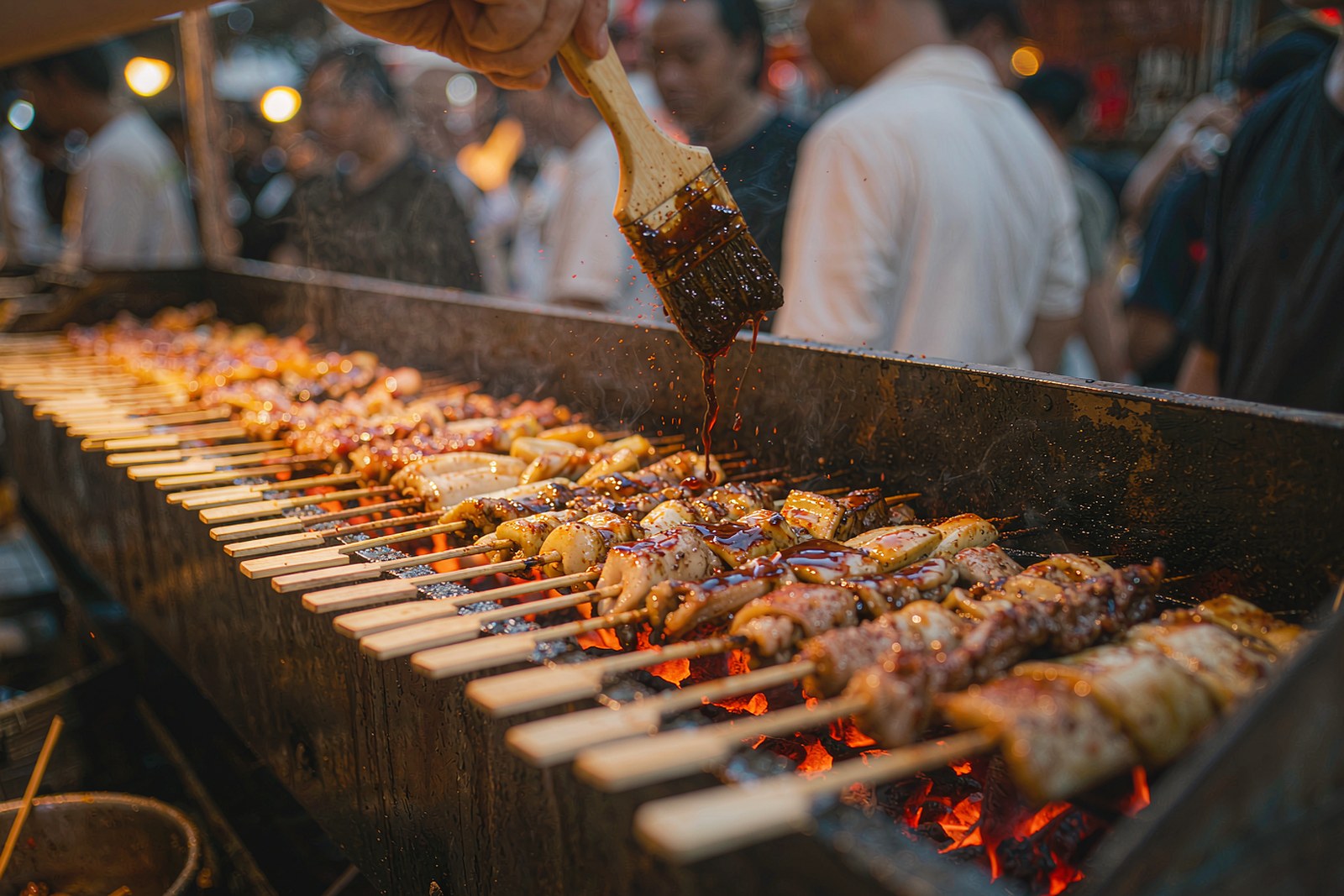
- 胡记炸炸炸 — deep-fried skewers, tucked into 孚嘉巷, a side alley off the main lane. The local verdict is that this is the best fried-skewer stall in the city, and the queue reflects it. Skewers are brushed with a house sauce and are hot in both senses.
- 金记糖油粑粑 — sugar-oil rice cakes, fried to order, about ¥5. Eat them hot; cold they are a different and much worse food.
- 邵福记梅菜扣肉饼 — a griddled flatbread stuffed with preserved mustard greens and pork. The sweet-savoury relief valve for anyone who has hit their chili ceiling.
- 老长沙大香肠 — the big sausage, split, grilled and dusted with chili powder. Crude, effective.
The general advice: eat as you walk, buy from the side alleys as well as the main lane, and treat the main lane’s frontage as advertising rather than as the destination.
Practicalities
Tickets and booking. The street is free and open at all hours, and there is no booking of any kind. A few individual attractions inside it charge separately — 贾谊故居 is free with ID registration, while some small exhibition spaces charge a modest fee. Nothing on this street requires a reservation.
Opening hours. The lane never closes; the shops mostly run 10:00–22:30, and the food stalls later. The street is at its best in the late afternoon and after dark, when the lanterns come on.
Getting there. Address: 天心区, running from 五一大道 in the north to 解放西路 in the south — you will also see it listed as 解放西路 449 号. Two good options by metro: line 1 or 2 to 五一广场 station, exit 1, then about 300 metres on foot; or line 2 to 湘江中路 station, exit 2A, then roughly 300 metres east. Buses 3, 6, 12, 106, 109, 202, 317 and 358, plus the 立珊 shuttle, stop at 太平街口.
Driving. Do not. The old town has almost no parking, what exists is expensive, and the streets around 五一广场 are among the most congested in the city at any hour. Take the metro.
How to Walk It
Go in the late afternoon. Between about 15:00 and 17:00 the crowd thins — this is a Chinese tourist street, so the peak is evenings and weekends — and the light coming down the lane is decent for the timber and the brick.
Enter from the north end and walk south, which brings you out near 解放西路 and the nightlife. Do the lane once without buying anything, note where 贾谊故居 is (you will need your passport or ID), and then walk back eating. When you reach the bottom, turn into 坡子街, which is the other historic food street and connects to 火宫殿. The two can be done in one evening, and together they are the most efficient hour of eating in the city.
One last thing. This is a working street with people living on and above it, and it is very small. Stand aside for the scooters, do not block the stalls to take a photograph, and do not assume a courtyard is public because the door is open. That is the only rule.
flowcloud would say that two thousand years of continuous trade is a harder thing to preserve than any building, and that a lane 375 metres long which has never once stopped being a market is doing better than most monuments — even if what it is selling on a Tuesday night is milk tea.
Getting there: 太平老街 (Taiping Old Street), 天心区, Changsha — between 五一大道 and 解放西路. Metro line 1/2 to 五一广场 (exit 1) or line 2 to 湘江中路 (exit 2A), both about 300 metres. Free, no booking, open all hours. 贾谊故居 at 太平街 28 号 is free with ID, closed Mondays, last entry 16:30.