
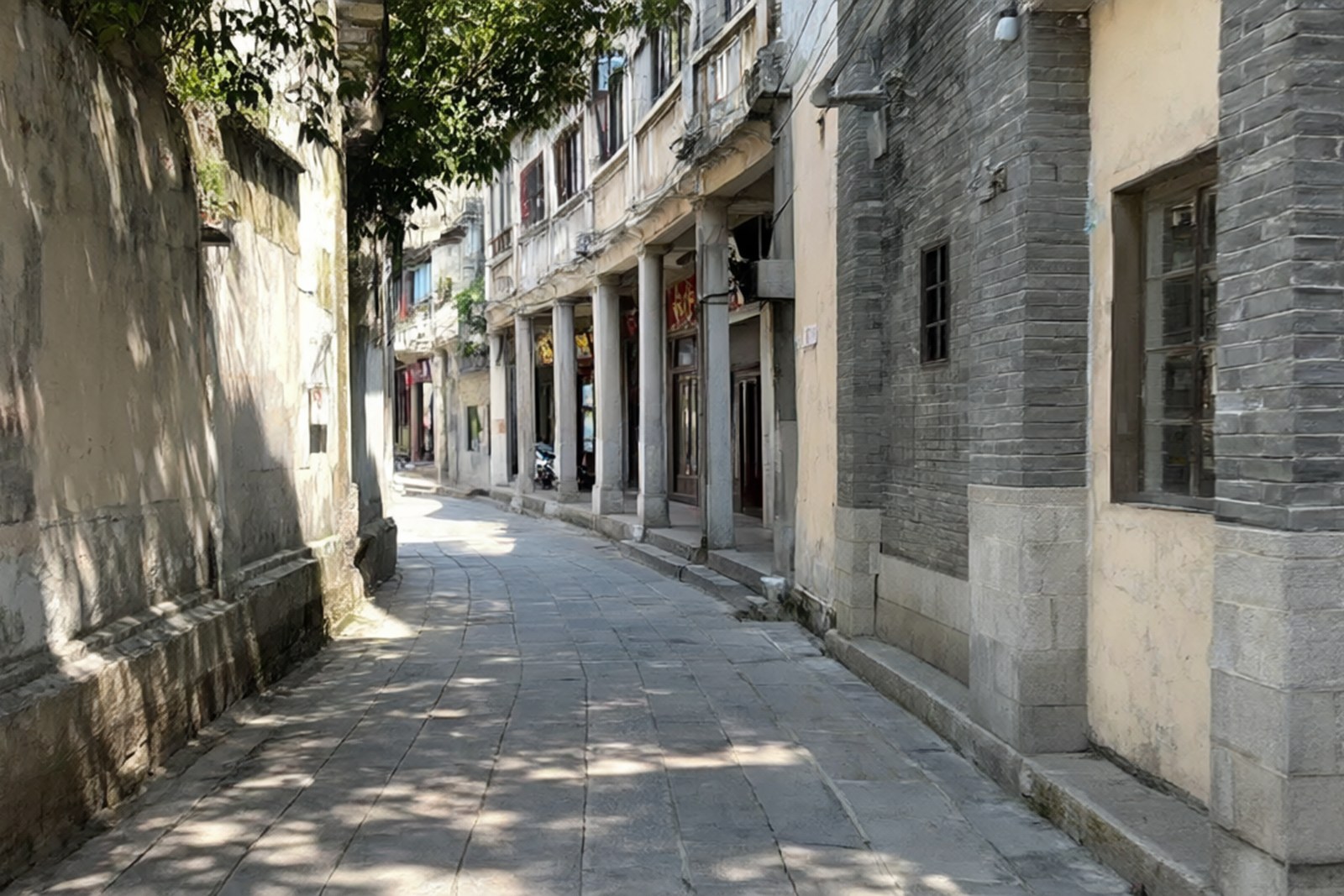
唐家湾古镇 Tángjiāwān Gǔzhèn, Tangjiawan Old Town, sits in the north of 珠海市 Zhūhǎi Shì, Zhuhai, on the western shore of the Pearl River estuary, and today belongs to 唐家湾镇 Tángjiāwān Zhèn, Tangjiawan Town, under the Zhuhai High-tech Industrial Development Zone. Its main street is 山房路 Shānfáng Lù, Shanfang Road. Local accounts describe it as a Late Qing and early Republican village and overseas-Chinese hometown that has survived unusually intact, and as a place that was, for a time, the seat of Zhongshan Model County in the Republican era and later of Zhuhai County in the early years of the People’s Republic. That administrative past matters less for the buildings than for the people. It is a town of low grey houses and narrow lanes rather than of grand squares, and its importance is not architectural drama but accumulation: layer on layer of ordinary buildings that a departing century simply left standing. A single settlement of lanes and ancestral halls produced, within a generation or two of one another, four men whose names are attached to four entirely different spheres of modern Chinese life.
The four names are the reason to come. 唐绍仪 Táng Shàoyí, Tang Shaoyi, was the first premier of the Republic, and his private garden still stands in the town. 苏兆征 Sū Zhàozhēng, Su Zhaozheng, was a leader of the seamen’s strike and a figure in the early labour movement, and his birthplace is on 淇澳岛 Qíào Dǎo, Qi’ao Island, which is part of the same town. 唐国安 Táng Guóān, Tang Guoan, was the first president of Tsinghua University. And 古元 Gǔ Yuán, Gu Yuan, was a woodcut artist whose prints belong to the story of twentieth-century Chinese art. A premier, a labour leader, a university president and a printmaker, all from the same small place, is the kind of coincidence that turns a village into a subject. The town treats all four as local history, and that is how they are best read here, as a roll of names and the houses behind them rather than as a lesson.
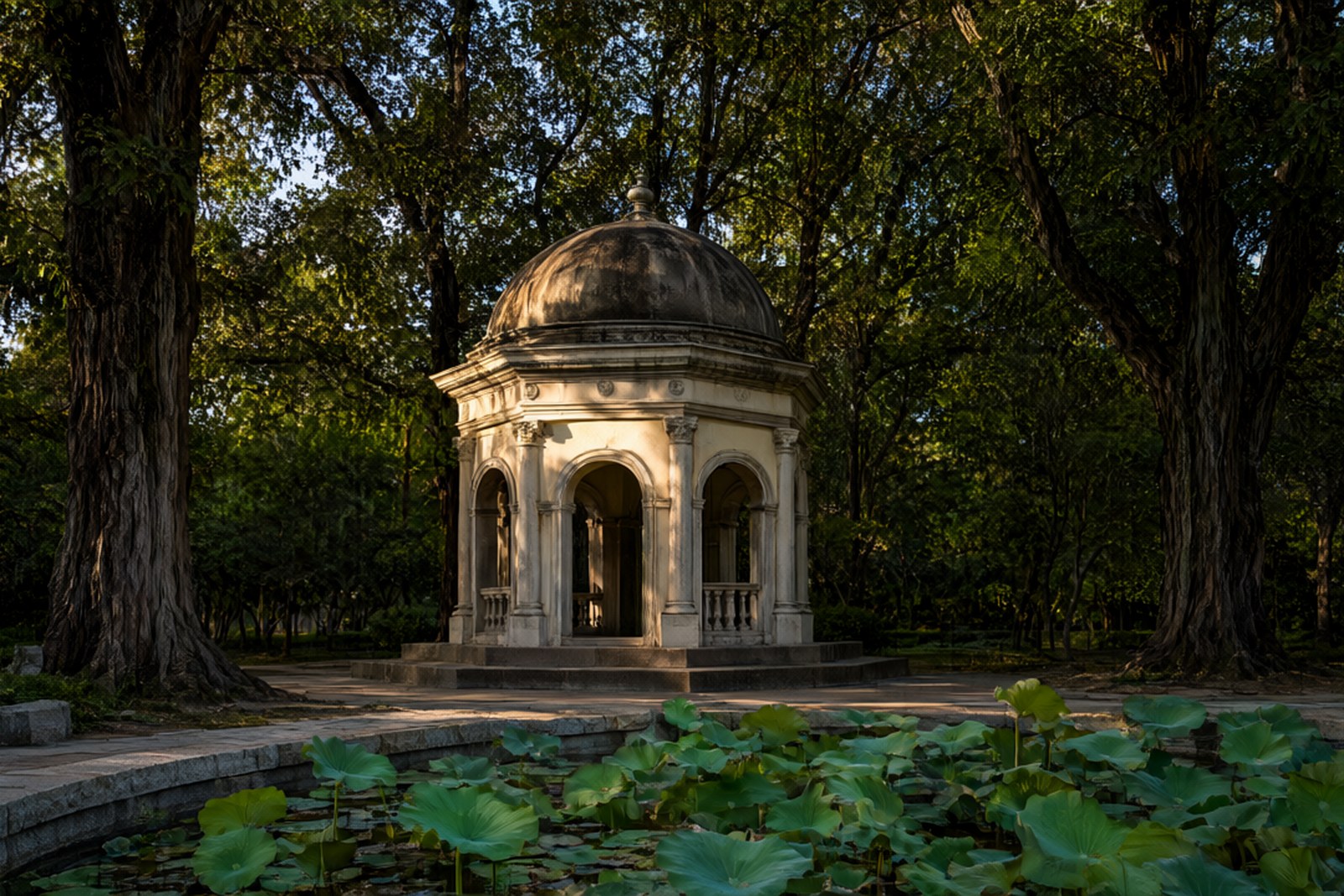
The most complete single building is 共乐园 Gònglè Yuán, Gongle Garden, the Garden of Shared Joy, Tang Shaoyi’s private garden at number 234 Shanfang Road, below Efeng Hill. Local accounts say it was begun in 1910, though one version puts the start at 1900 under the earlier name 小玲珑山馆, the Small Exquisite Mountain Hall; it was renamed Gongle in 1921, meaning shared joy with the people, and in 1932 Tang Shaoyi gave the garden to the village of Tangjia. Inside are an observatory pavilion, century-old camphor trees, a lychee grove and a lotus pond, laid out as a scholar’s retreat that happens to face the sea. It is said that Sun Yat-sen planted a white magnolia here and that the opera star Mei Lanfang planted a tree known as the beauty tree, and those are local stories rather than recorded events. The garden is free to enter with an identity document. A contemporary park and lantern festival now overlay it, and when the lantern show is running it is ticketed separately.
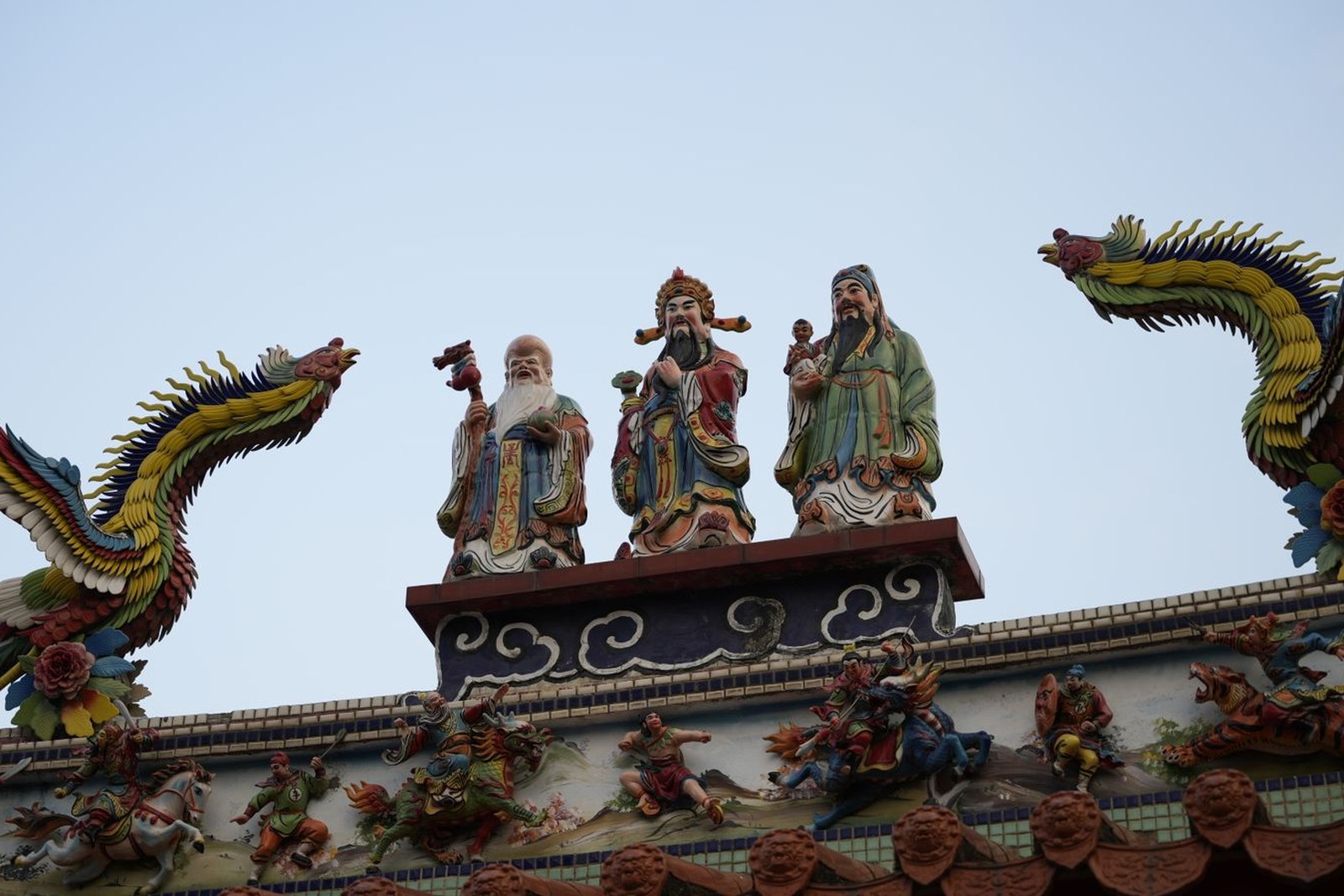
The town’s religious and street architecture is the other half of the visit. 唐家三庙 Tángjiā Sānmiào, the Three Temples of Tangjia, comprise the Shengtang, Wenwu and Jinhua temples standing side by side, and are described locally as one of the largest surviving temple groups in Zhuhai, their roof ridges carrying the Lingnan craftwork known as three carvings and one sculpture, that is wood, stone and brick carving with plaster sculpture. Along 山房路 Shānfáng Lù, Shanfang Road, flagstones and arcades of mixed Chinese and Western design run together, the product of a town whose men went abroad and came home with money and ideas. Elsewhere in the streets stand the Ruizhitang ancestral hall and the Wangcishanfang hall, which now holds an exhibition on Tang Shaoyi’s life. It is a town to walk rather than to tick off, and the walking is short.
One more place belongs in the same visit: 会同村 Huìtóng Cūn, Huitong Village, which lies within the same town. It is known for its grey-brick and grey-tile houses, its watchtower and its village history hall, and it appears in official city reporting as one of Zhuhai’s recognised cultural names, which tells you how the city itself regards it. Together, the old town and the village give a picture of the same phenomenon in two registers, the county seat and the village, and both are about what happens to a place when its people leave, succeed elsewhere and build the home town they remember.
There is no gate, no ticket booth and no particular order in which to see things, and the town is small enough that two or three hours on foot will cover it, which is the right amount of time to give it. The walking is the point. The arcades along Shanfang Road were built by families with money from abroad, and reading them means looking up at the upper storeys, where the mixed Chinese and Western detail is thickest, and then down at the flagstones, which are old and uneven and reward flat shoes rather than anything with a heel. In the warm months the lanes and the garden hold mosquitoes, so bring repellent. The best hours are early morning, before the groups arrive and the heat builds, when the arcades throw long shadows across the stone, and the late afternoon, when the light comes in low off the water and the grey brick turns warm.
What Tangjiawan is not is a reconstruction. Elsewhere in Guangdong, and indeed elsewhere on this site, there are gardens built to look old. Tangjiawan never had to be built to look old; it simply stopped being a county seat and kept its buildings. That is why it feels lived-in rather than staged, and why the appropriate pace here is slow: two or three hours on foot will cover it, and the reward is detail rather than scale.
Practicalities
Tickets. The old town is free throughout; Gongle Garden is normally free with an identity document, and the former residences and culture halls need no reservation. When a special lantern festival is running, that event is ticketed separately, and its price is set by the organiser for the season. As of October 2026, subject to change.
Opening hours. The old town is an open street and can be walked at any hour, and platform listings give it as open around the clock. Gongle Garden’s grounds are listed as open until about 18:00, while the small residence and exhibition halls have no official published hours, so check locally. For light and quiet, a weekday morning before ten, or the late afternoon after four, is the best time.
Closing day. The old town and Gongle Garden have no fixed closing day. Some of the smaller exhibition halls may close one day a week, but there is no official notice confirming which day, so the safe guidance is that some small halls shut one day a week and you should check before you go. The outdoor lanes are affected only by weather.
Getting there. By intercity railway, reach Tangjiawan Station and take a taxi for about ten minutes. By bus, routes K3, K1 and 10 stop at the Tangjia stop, from which the walk is about five minutes. By car, Shanfang Road’s old-tree car park is the practical target and usually has space. Qi’ao Island, also part of Tangjiawan Town and reached by the Qi’ao Bridge or bus 85, can be added to the same day.
flowcloud would say that Tangjiawan is a county seat that produced a premier, a labour leader, a university president and a printmaker, and then simply stopped being a county seat.
Getting there: Tangjiawan Old Town is the historic village and former county seat of Tangjiawan Town in northern Zhuhai, Guangdong, local accounts describing it as a seat of Zhongshan Model County and later of Zhuhai County; its main street is Shanfang Road and its best-known stop is Gongle Garden, the garden of Tang Shaoyi, first premier of the Republic, with the Three Temples of Tangjia and the neighbouring Huitong Village close by; the old town is free and open at all hours with no fixed closing day, the garden is free with an identity document, and access is by intercity railway to Tangjiawan Station or by buses K3, K1 and 10 to the Tangjia stop (checked October 2026, subject to change).