
Walls of the Tang Frontier: Walking the Tangwang City Ruins Above Tumushuke
唐垒临河处,胡杨守故城 Táng lěi lín hé chù, húyáng shǒu gùchéng – Tang ramparts overlook the old river; poplars keep watch over the ancient city
正文:唐王城遗址 Tángwáng Chéng Yízhǐ the Tangwang City ruins sit on the desert fringe north of 图木舒克市 Túmùshūkè Shì Tumushuke City, where terraced walls of rammed earth climb the old river terrace above the vanished channel of the Yarkand. The site’s Uyghur name, 托库孜萨来 Tuōkùzīsàlái Tokuz-sarai – “nine courtyards” – remembers what the Chinese chronicles record: a garrison town of the Tang dynasty’s Anxi protectorate, the largest fortress between Kashgar and Aksu in its day, garrisoning the silk-road shortcut that crossed the basin here. What remains today is earthwork rather than architecture – stepped platforms, wall stumps and potsherd slopes – but the plan of the place reads plainly from the crest: an upper citadel, a lower town, and the river gravels below where caravans once watered.
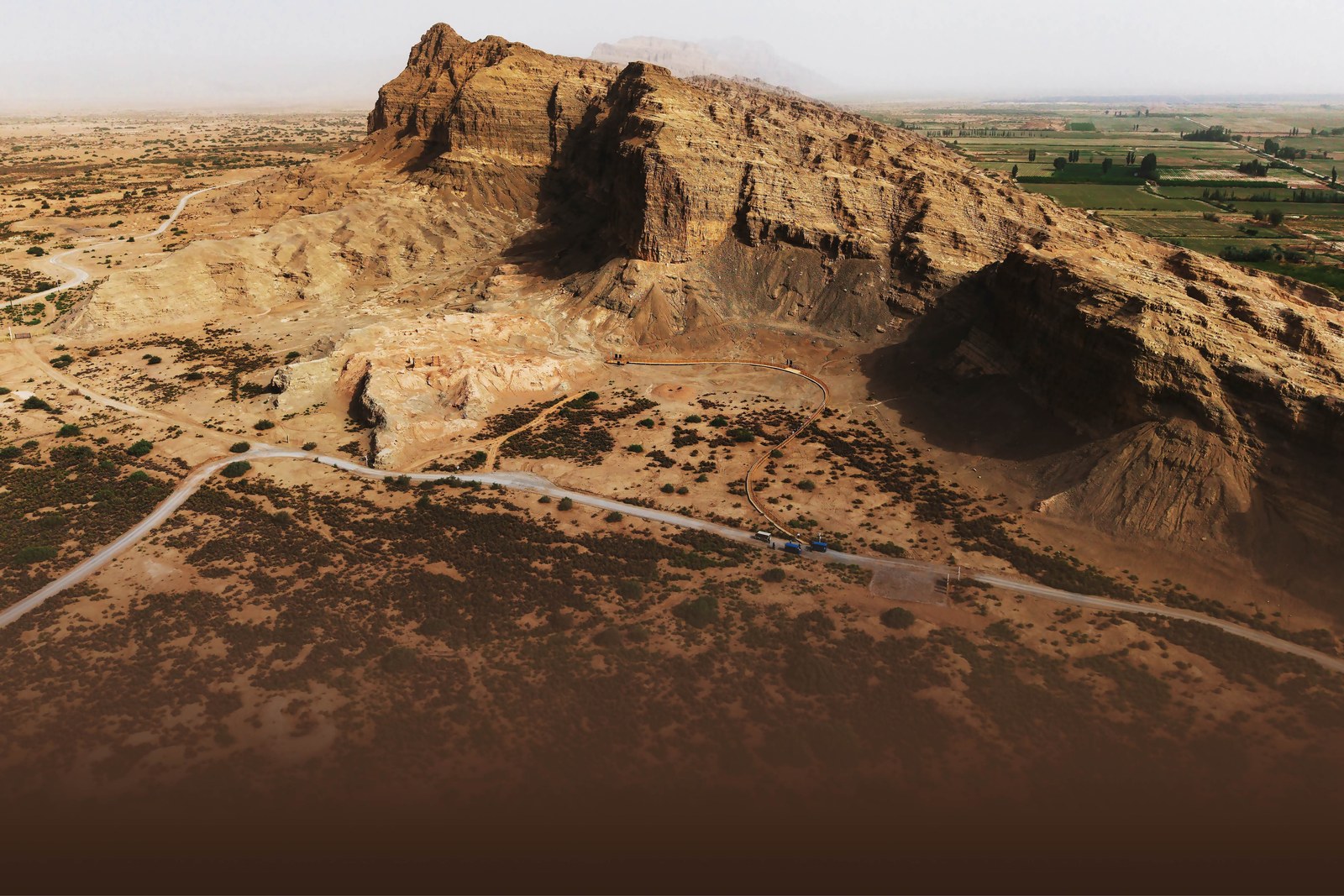
Walk the site slowly and the layers announce themselves. The lowest terrace carries the densest scatter – potsherds glazed and unglazed, kiln wastes, the odd bronze fragment – marking the artisan quarters that served the garrison. Midway, the wall stumps rise in stepped courses with the slope, pierced by the outlines of gate passages that still show their wheel-worn approaches. The upper platform, reached by a spine of path, gives the view the whole site was sited for: the modern green line of the oasis on one hand, the dun emptiness of the desert on the other, and the dry river terraces threading between – a garrison’s-eye survey of exactly the frontier it was built to watch.
Archaeology here has been long and intermittent. Teams from the early twentieth century onward hauled away sculpture and manuscript fragments that now sit in collections from London to Urumqi, and the site’s Buddhist chapter – chapels, stupa platforms, clay figure workshops – went with them. The 图木舒克博物馆 Túmùshūkè Bówùguǎn Tumushuke Museum in town now keeps the local share of the finds, so the sensible pairing is ruins in the cool of morning, museum in the afternoon: the mud-brick afterimage the site leaves is best decoded by the cases downtown.
Practicalities first. The ruins sit a short drive north of the city on the road toward the old river terraces; taxis negotiate round trips with waiting time, and there is no shade, no water and no fence – carry your own. Go morning or late afternoon when the low sun rakes the walls into relief; midday flattens the earthworks into glare. Surfaces underfoot are loose potsherd and crumbling mud brick, so boots beat sneakers, and the site’s unprotected edges deserve the same respect as any scaffold.
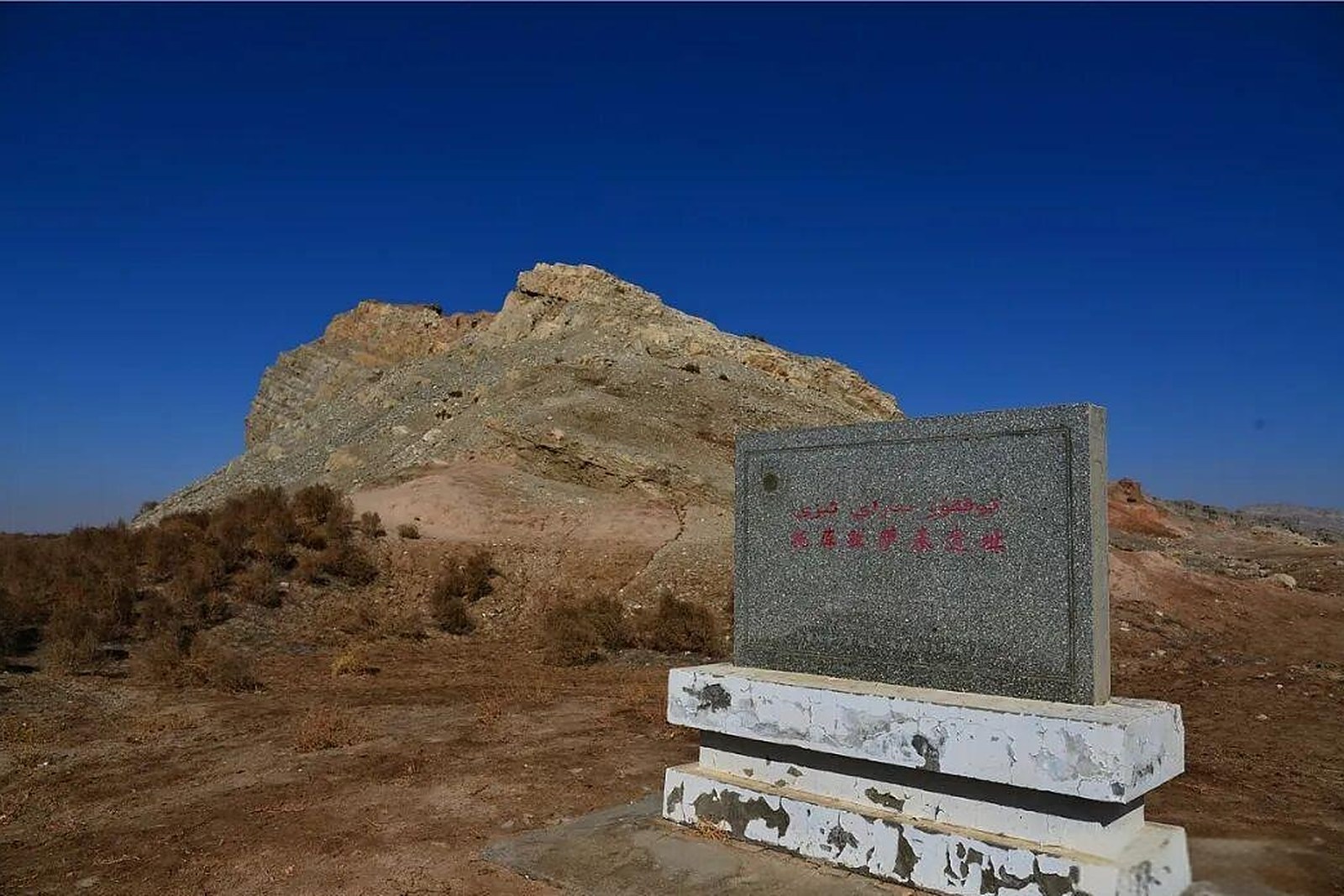
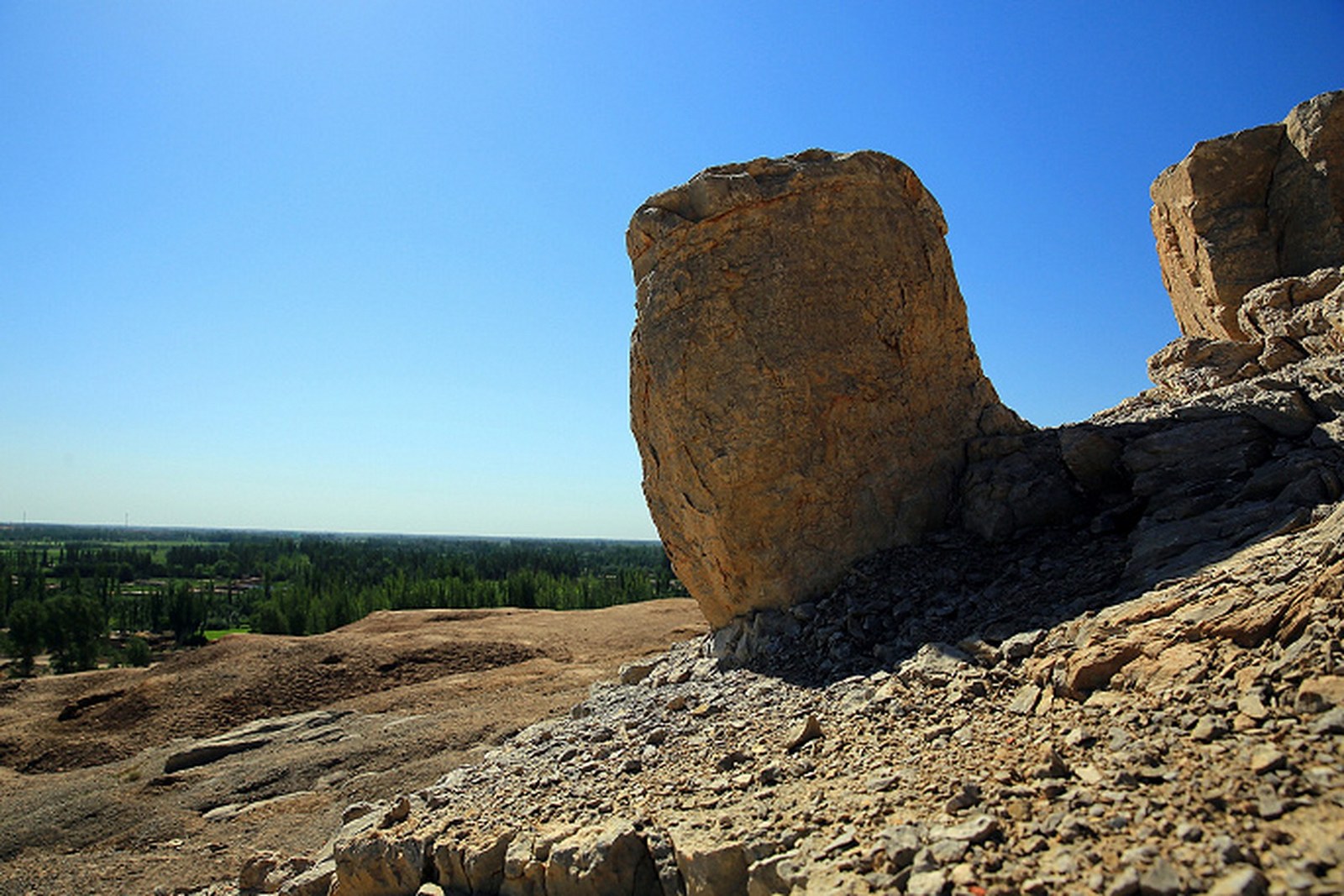
The ruin rewards the eye that likes palimpsests. Herders still graze the lower slopes; the desert wind rebuilds the dunes against the walls a little every year; and the modern canal line runs green within sight of the dry channel it replaced – three economies of the same water, stacked in one view. Few sites this close to a city grid give so clean a read of how the Tarim’s frontiers rose on silt, held on soldiers, and slipped back into sand when the river moved.
Practicalities
Beyond the walls, the same 图木舒克市 Túmùshūkè Shì Tumushuke City keeps more places worth the detour: 小海子水库 Xiǎohǎizi Shuǐkù the Xiao Haizi reservoir for the great plain of irrigation water, 胡杨林公园 Húyáng Lín Gōngyuán the Huyang Forest Park for October gold within minutes of downtown, 永安湖 Yǒng’ān Hú Yong’an Lake for the egret reed-bays, or 图木舒克博物馆 Túmùshūkè Bówùguǎn the Tumushuke Museum for the garrison’s excavated story – four more doors into the same 图木舒克市 Túmùshūkè Shì Tumushuke City. Once the ruins are walked, our Tumushuke food map fills the day.
Practicalities
Words and Names
flowcloud would say the Tangwang ruins are the oasis’s memory standing in raw earth: a citadel plan you can read with your feet, potsherd slopes that crackle underfoot, and the modern canal glittering within sight of the dead channel – the frontier’s whole argument in one climb. All checked November 2026.
Getting there: The ruins sit a short drive north of central Tumushuke on the road toward the old river terraces; taxis negotiate round trips with waiting time. Go morning or late afternoon for the wall light – the site is open ground, so bring sun cover. All checked November 2026.