
Tanzhe Temple: The Thousand-Year Mountain Monastery, the Emperor Tree Ginkgo and the Old Saying That Came Before the City of Mentougou District, Beijing
古刹先于城郭立,帝王树上又经秋。Gǔchà xiān yú chéngguō lì, dìwáng shù shàng yòu jīng qiū – The ancient temple stood before the city walls; upon the Emperor Tree another autumn has passed.
潭柘寺 Tánzhè Sì Tanzhe Temple is not a temple that happens to be old — it is, plainly put, the ancient monastery from which Beijing’s own foundation story begins: a great Buddhist establishment folded into the foot of 潭柘山 Tánzhè Shān Tanzhe Mountain in the south-east of 门头沟区 Méntóugōu Qū Mentougou District, Beijing, so senior in the local memory that the proverb gives it precedence over the capital itself — 先有潭柘寺,后有北京城 xiān yǒu Tánzhè Sì, hòu yǒu Běijīng chéng, “first there was Tanzhe Temple, then came the city of Beijing” (the founding is variously dated more than a thousand years back, with the popular figure running to some seventeen centuries — worth confirming the details). Within its courts, stepped one above another up the slope, stand the 大雄宝殿 Dàxióng Bǎodiàn Mahavira Hall at the centre, the witty 流杯亭 Liúbēi Tíng Floating-Cup Pavilion where wine-boats once drifted down a winding stone channel, the tall 毗卢阁 Pílú Gé Pilu Pavilion closing the axis at the rear, the 山门 shānmén mountain gate below and the 龙潭 Lóng Tán Dragon Pool up among the trees — a whole mountain-temple complex rather than a single yard. What you actually visit is an hour or two of climbed courtyards under old trees, with the 香火 xiānghuǒ incense of the western hills drifting through all of it.
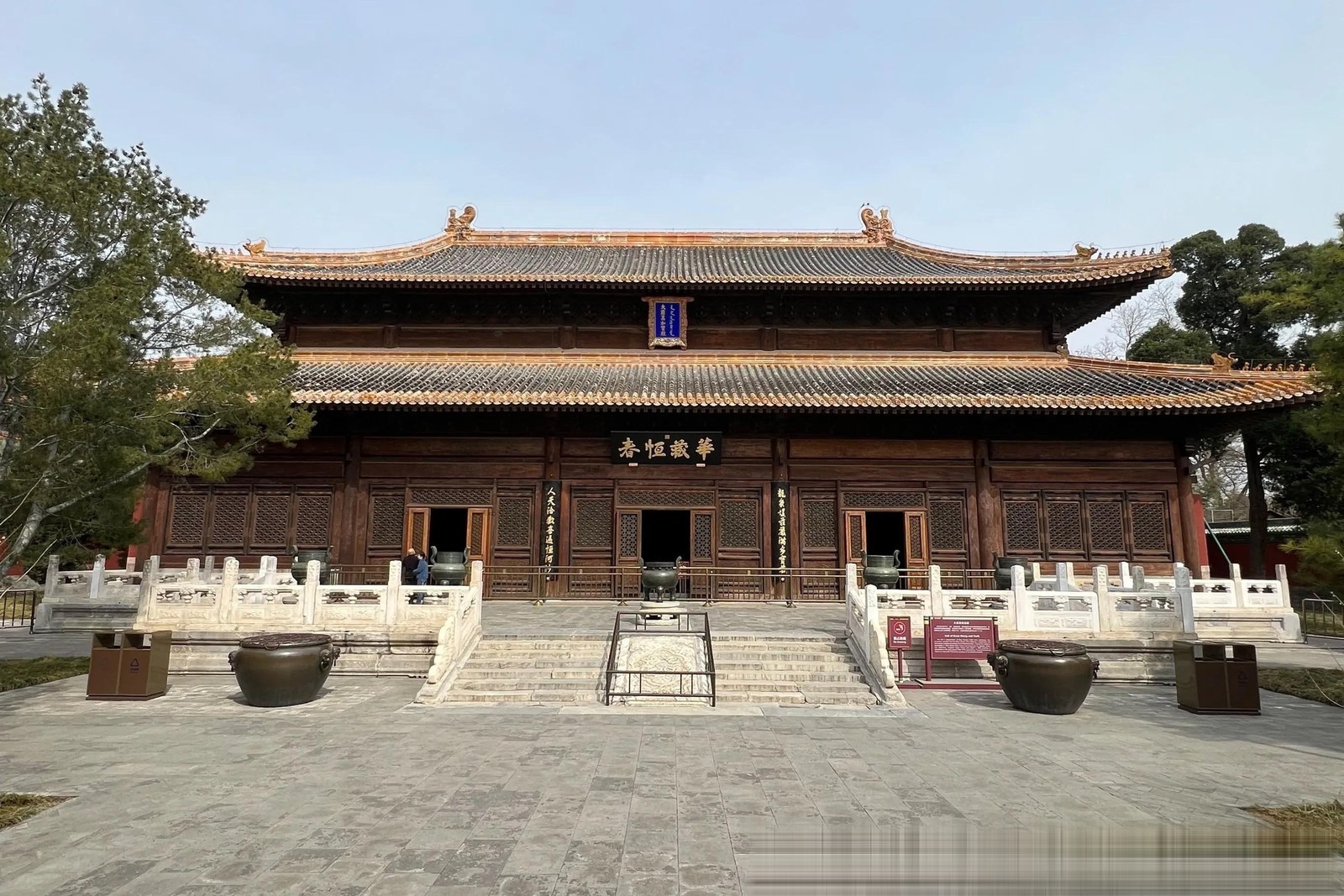
Call it honestly: a ticketed mountain temple whose rules shift with the devotional calendar. Entry is ticketed, and the rate, the hours and any special hall arrangements are worth confirming the details before you set out; festivals and the lunar new year fill the courts with fair noise, and the weeks when the great ginkgo turns crowd hardest of all (worth confirming the details for the current calendar); parking below the gates is finite and the last stretch of steps is honest work (worth confirming the details). The honest moves are a weekday morning or the first hour of the day, when incense smoke hangs level in the cold air and the courts belong to keepers and believers. Wear real shoes, carry water, and treat the complex as one mountain rather than one hall: two or three courts read slowly beat every court done panting.
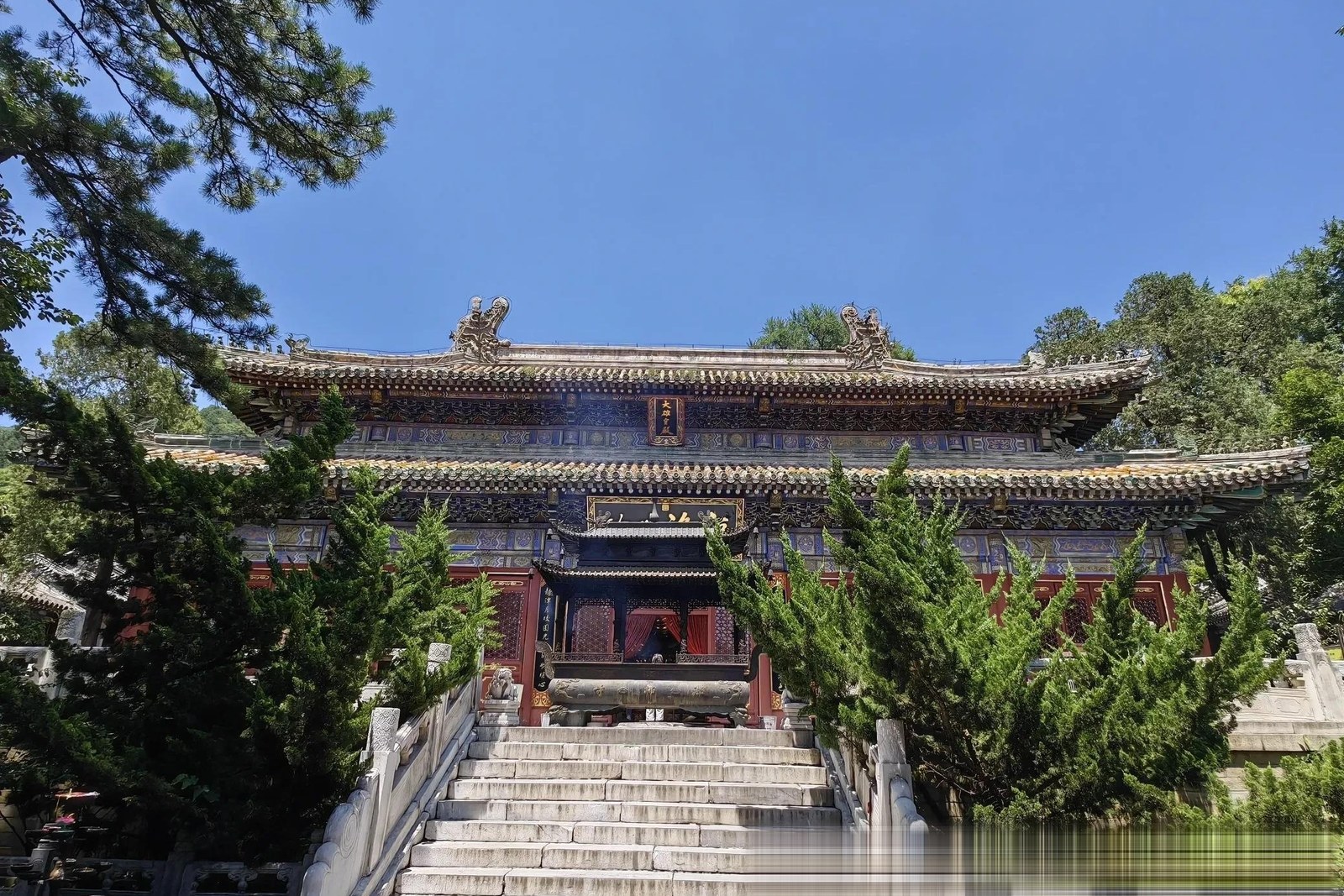
The honest star is the 帝王树 Dìwáng Shù Emperor Tree — the great old ginkgo by the rear courts, named in legend for emperors — not the entrance archway. In late autumn it turns molten and then drops its gold across the flags within days, and the whole hillside seems arranged to watch it happen. What gets oversold is the “oldest temple in Beijing” superlative chased as a checklist item: the buildings you walk through are largely later rebuilds, and the antiquity is an atmosphere rather than a relic you can date by eye (worth confirming the details for the building history). What repays the effort is the upper walk — the 毗卢阁 Pílú Gé view back over the courts and valley, the quiet side yards with their pines, and the pool up the path that shares the temple’s name. Come for the layering of the place: mountain, then incense, then tree.
The self-aware postscript: I stood under the Emperor Tree on a weekday morning while a keeper swept its leaves into a neat golden windrow and gently refused to let a tour group carry the pile away — “the tree gives them out slowly, so you should collect them slowly”. That is the visit in miniature. 潭柘寺 Tánzhè Sì suits whoever treats it as a mountain pilgrimage first and a photo stop second — climb the courts, sit by the pool, let the ginkgo stop you — and exhausts whoever arrives at noon in peak colour to sprint the halls. Everything else on this Mentougou list is a short drive into the same hills: the ordination altar and strange pines of 戒台寺 Jiètái Sì Jietai Temple over the ridge, the stepped stone lanes of 爨底下村 Cuàndǐxià Cūn Cuandixia Village deep in the west, the golden summit and rose valley of 妙峰山 Miàofēng Shān Miaofeng Mountain, and the examination-time lanes of 灵水村 Língshuǐ Cūn Lingshui Village beside 斋堂镇 Zhāitáng Zhèn Zhaitang town — all in the same 门头沟区 Méntóugōu Qū where the proverb says the temple came first.
Practicalities
- Rating: ★★★★★ — the senior temple of the western hills, with a ginkgo that outdraws every hall; the Emperor Tree in late autumn and the court-by-court climb outrank the festival crowds; go early and the proverb starts to feel earned.
- Tickets: Ticketed entry, with seasonal arrangements around festival periods (worth confirming the details for current rates, hours and any hall-by-hall rules).
- Address: 潭柘寺 Tánzhè Sì Tanzhe Temple, at the foot of 潭柘山 Tánzhè Shān Tanzhe Mountain, south-east 门头沟区 Méntóugōu Qū Mentougou District, Beijing — up the valley road west of the city.
- Time needed: Two to three hours for the full court-by-court climb; half a day adding the pool, the approach walk and an unhurried lunch.
Words and Names
潭柘寺 Tánzhè Sì Tanzhe Temple · the ancient mountain temple the proverb makes senior to the capital 先有潭柘寺,后有北京城 xiān yǒu Tánzhè Sì, hòu yǒu Běijīng chéng first there was Tanzhe Temple, then came Beijing · the saying every gate repeats 潭柘山 Tánzhè Shān Tanzhe Mountain · the hill of pool and cudrania that gave the temple its name 帝王树 Dìwáng Shù Emperor Tree · the great old ginkgo re-titled, legend says, by emperors 大雄宝殿 Dàxióng Bǎodiàn Mahavira Hall · the main hall at the centre of the courts 流杯亭 Liúbēi Tíng Floating-Cup Pavilion · the pavilion of the winding wine channel 毗卢阁 Pílú Gé Pilu Pavilion · the tall rear pavilion with the valley view 龙潭 Lóng Tán Dragon Pool · the mountain pool that shares the temple’s name
flowcloud would say that 潭柘寺 Tánzhè Sì is the temple that got to Beijing first — the proverb 先有潭柘寺,后有北京城 xiān yǒu Tánzhè Sì, hòu yǒu Běijīng chéng spoken on every stair, the 大雄宝殿 Dàxióng Bǎodiàn, the 流杯亭 Liúbēi Tíng and the 毗卢阁 Pílú Gé stepped up 潭柘山 Tánzhè Shān, and the 帝王树 Dìwáng Shù Emperor Tree setting the autumn calendar for the whole western hills — and that the honest move is a weekday morning climb taken court by court, because tickets, hours, festival crowds and parking all shift with the devotional calendar (worth confirming the details), the leaf-peak weekends are the crowded half, and the temple repays whoever lets the ginkgo stop them while losing whoever sprints the halls at noon. All checked October 2026.
Getting there: Bus routes run west from the central city into 门头沟区 Méntóugōu Qū Mentougou District and up the valley toward the temple gates; from the western ends of metro Line 1 and the S1 Line a bus or taxi covers the last hills — the temple sits on the mountain road that also serves 戒台寺 Jiètái Sì Jietai Temple, which many visits pair in one long day (worth confirming the details for current bus routes, connections, parking and holiday schedules). All checked October 2026.