
The hills are one plant. 桃花江竹海 Táohuājiāng Zhúhǎi, the Taohuajiang bamboo sea, is a range of low hills in 桃江县 Táojiāng Xiàn covered in 毛竹 máozhú, moso bamboo, so continuously that from a viewpoint the ground simply is not visible: the canopy is closed over every slope and valley for kilometre after kilometre, and the colour is not the varied green of mixed woodland but a single tone that shifts only with the light. It is not a rare sight in southern China and it is still an extraordinary one, because the scale is the point — a hillside of bamboo is a field, and a range of them is agriculture that has grown taller than a house.
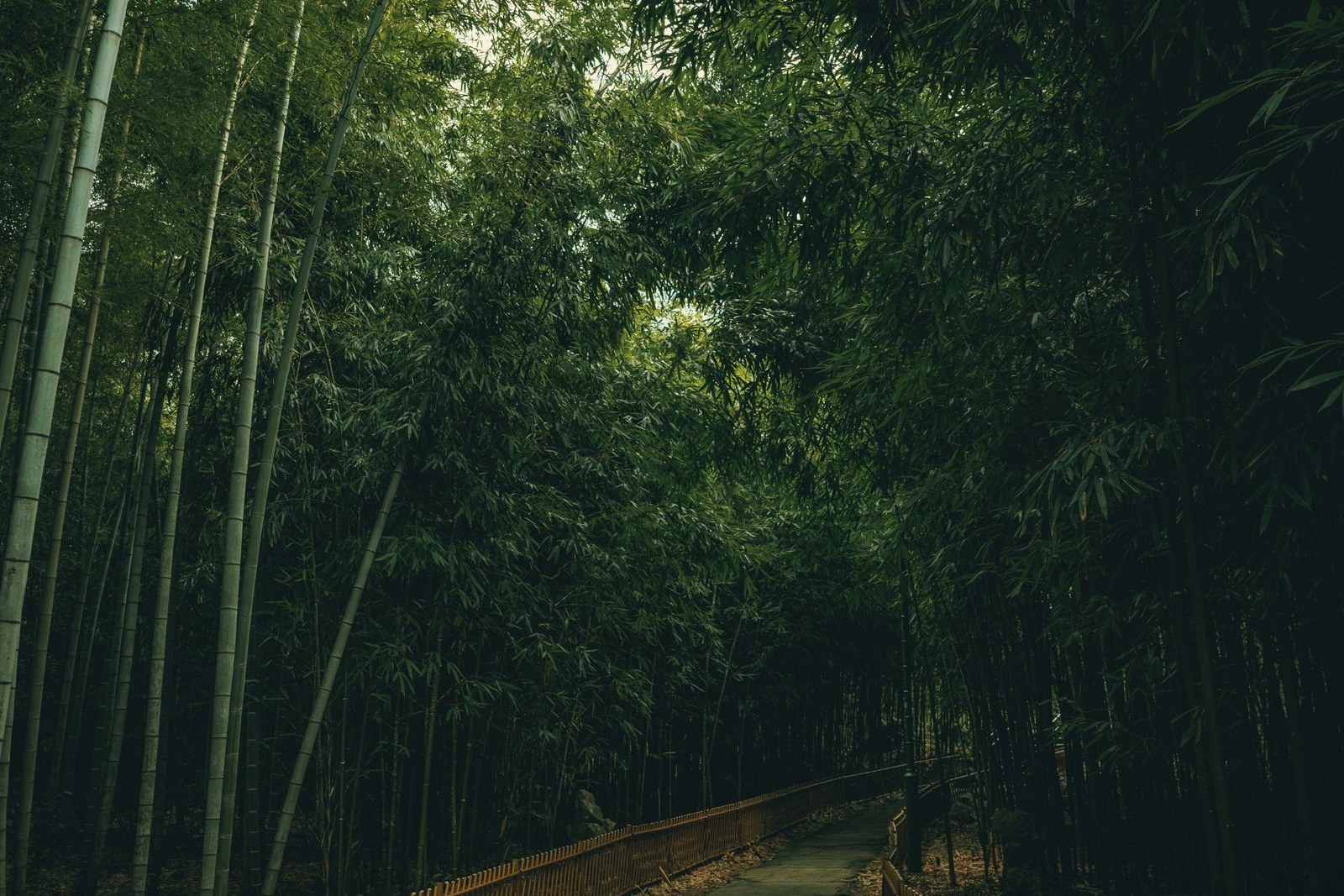
The place is a scenic area with the usual infrastructure, and the sensible way to take it is to walk rather than to ride. Paths are cut through the groves, some of them paved and some of them boardwalks over the steeper ground, and they climb to viewpoints from which the canopy rolls away to the next ridge. Inside the grove the light is green and filtered and the noise of the wind is constant, and the striking thing about a bamboo forest is how mechanical it sounds: thousands of stems tapping and creaking against each other, which is not like the sound of leaves at all. The river the hills are named for, the 桃花江 Táohuā Jiāng, runs along the foot of the range, and the county town carries the same name.
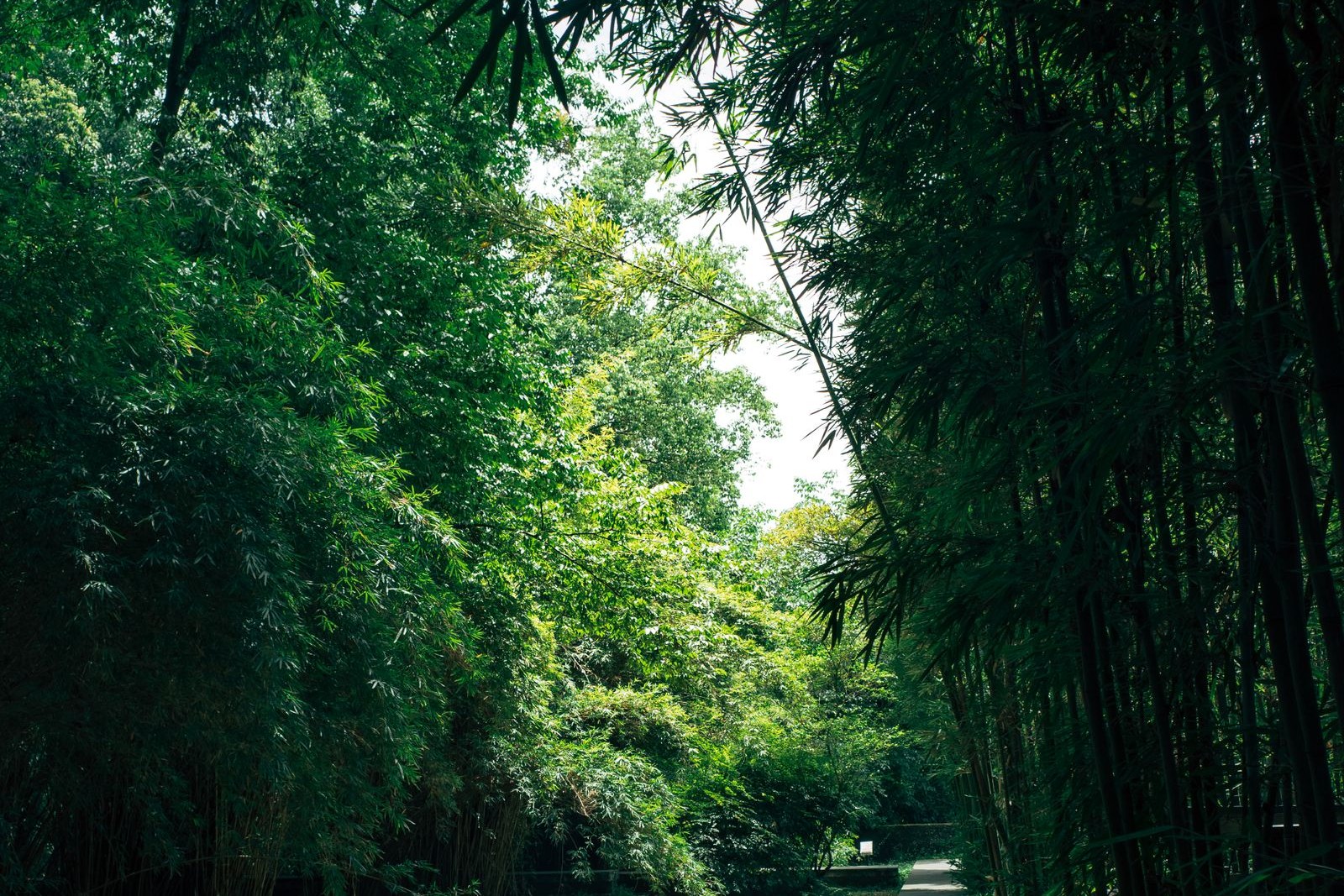
What There Is Besides the Bamboo
Bamboo country is a working landscape, and the interesting parts are the ones that show it. There are 农家乐 nóngjiāle farm restaurants along the edge of the grove serving 竹笋 zhúsǔn, bamboo shoots, in every form the season allows — stir-fried with cured pork, stewed with chicken, pickled, dried — and the spring shoot season is the time to come if food is the reason. There are workshops making bamboo baskets, mats and furniture, and shops selling 竹筒酒 zhútǒng jiǔ, liquor fermented inside a bamboo stem. The mountain also has a small 竹文化博物馆 zhú wénhuà bówùguǎn, a bamboo culture museum, a viewing tower, and a stretch of the old footpath up to 洪山竹海 Hóngshān zhúhǎi on the higher ridge. Allow three or four hours on foot and more if you eat.
Practicalities
Tickets. Admission to the scenic area is around ¥40 to ¥60, with the usual reductions for students, children and the elderly, and separate charges for the shuttle and the tower. Prices change, so check at the gate. The farm restaurants and the workshops outside the gate are free to visit.
Opening hours. Roughly 08:00 to 18:00, with the last entry an hour or so before closing. Early is better: the grove is cool in the morning and the light through the canopy is at its best, and the bamboo holds the heat badly in the middle of a summer day.
Closing day. Open every day of the year with no fixed closing day, though paths and the tower close for maintenance now and then and the area is very busy on spring weekends when the shoots are up and during 国庆 Guóqìng week.
Getting there. The scenic area is in 桃江县 Táojiāng Xiàn, about twenty kilometres from 益阳市 Yìyáng Shì and roughly an hour and a half from 长沙 Chángshā by road. Buses run from Yiyang to the county town, from which the grove is a short taxi ride, and there is parking at the gate. The nearest high-speed rail access is 益阳南站 Yìyáng Nán Zhàn.
flowcloud would say that a bamboo sea is the only forest that is really a crop, since every stem in it was planted to be cut in five years, and the people who own it have been harvesting the view for centuries without meaning to.
Getting there: arrive in the first hour after opening, walk the loop rather than taking the shuttle, and make for the high ridge viewpoint before the middle of the day. Eat at one of the farm restaurants at the foot of the grove and order the shoots whatever else is on the menu, buy bamboo work from a workshop rather than a kiosk, and if you come in April, come for the shoots rather than for the scenery.