
A poem written in about the year 421 invented this valley, and fifteen hundred years of visitors have been trying to stand in it. 陶渊明 Táo Yuānmíng’s 桃花源记 Táohuāyuán Jì — the Record of the Peach Blossom Spring — tells of a fisherman who follows a stream through a grove of blossoming peach trees, squeezes through a gap in a hill, and finds a village whose people fled the Qin wars and have lived in isolation ever since, unaware that dynasties have come and gone. They feed him, he leaves, he marks the way back, and the marks are lost. The poem is the founding text of the Chinese idea of the hidden paradise, and because it names 武陵 Wǔlíng — this part of Hunan — the site in 桃源县 Táoyuán Xiàn has the better part of the claim.
The scenic area covers about sixteen square kilometres on the 沅江 Yuánjiāng’s south bank and is divided into four parts. 桃花山 Táohuā Shān is the hill with the temples: a 渊明祠 Yuānmíng Cí, halls, and a collection of carved inscriptions including Tang and Song hands, plus the 方竹亭 Fāngzhú Tíng, the Square Bamboo Pavilion, whose stems really are square in cross-section if you feel them. 桃源山 Táoyuán Shān across the valley carries the 桃川万寿宫 Táochuān Wànshòu Gōng, a Taoist temple first built in the Jin. 秦溪 Qín Xī is the stream from the poem, now the route of an evening boat performance. And 五柳湖 Wǔliǔ Hú is the lake at the centre of the modern landscaping, named for Tao Yuanming’s own pen name, 五柳先生 Wǔliǔ Xiānshēng, Master Five Willows.
The anchor of the whole thing is 秦人村 Qínrén Cūn, the Village of the Qin People — a rebuilt hamlet with bamboo fences, a mill, a wine press and people in period clothing doing agricultural work in a slightly too-organised way. It is the most artificial part of the site and the most popular, which is the usual relationship. If you want the valley rather than the reconstruction, take the path up above the built area and keep going; the bamboo and the water are real and the crowds stop at the fence.
The evening performance on 秦溪 Qín Xī is genuinely unusual. The audience is seated on boats that move slowly along the stream while staged scenes from the poem — fishing, farming, a wedding, a banquet — are played on the banks at intervals, lit and amplified, with the actors sometimes on the water. It is spectacular and it is not subtle. It costs about ¥238 and must be booked; the local version, at a much lower price for residents, is one of the most popular nights out in the county.
Practicalities
Tickets. 桃花源 Táohuāyuán adult ¥128, student ¥64, concession ¥51. The 秦溪 Qín Xī boat performance is a separate ¥238 (¥158 for local residents at weekends). Combination tickets covering the valley and the show are sold at a small discount.
Opening hours. Roughly 08:00–17:30, with the performance in the evening on its own schedule. In the blossom season the site opens earlier and gets genuinely crowded between ten and two.
Closing day. No closing day; the scenic area is open every day of the year, including the Spring Festival, which is one of its busiest periods.
Getting there. About 40 kilometres and 45 minutes by car or taxi (¥100–150) from 常德 Chángdé city. 桃源站 Táoyuán Zhàn on the ordinary rail line is about 20 minutes from the gate. Day tours run from Changde and from 长沙 Chángshā; coming independently is straightforward and cheaper.
What People Get Wrong
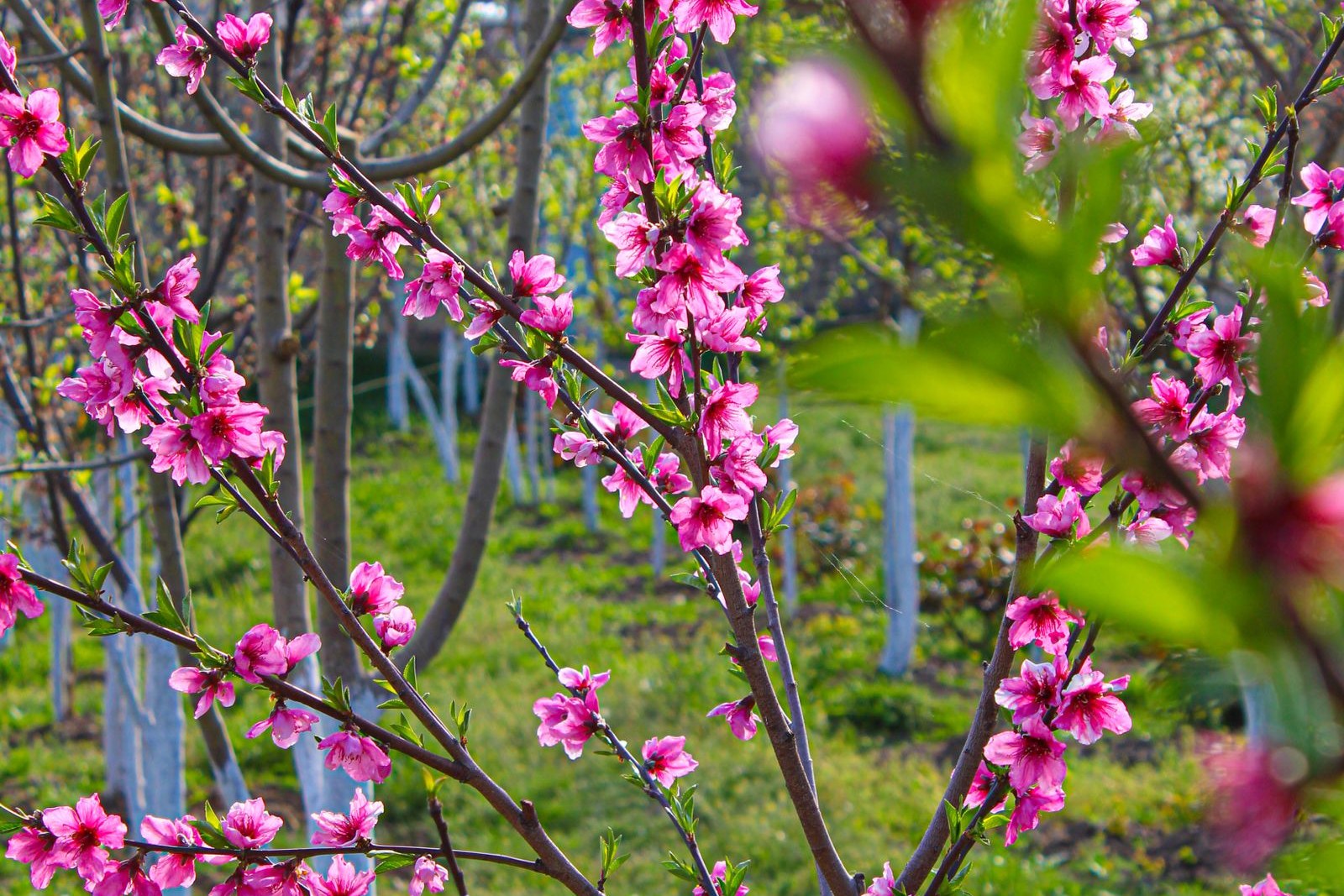
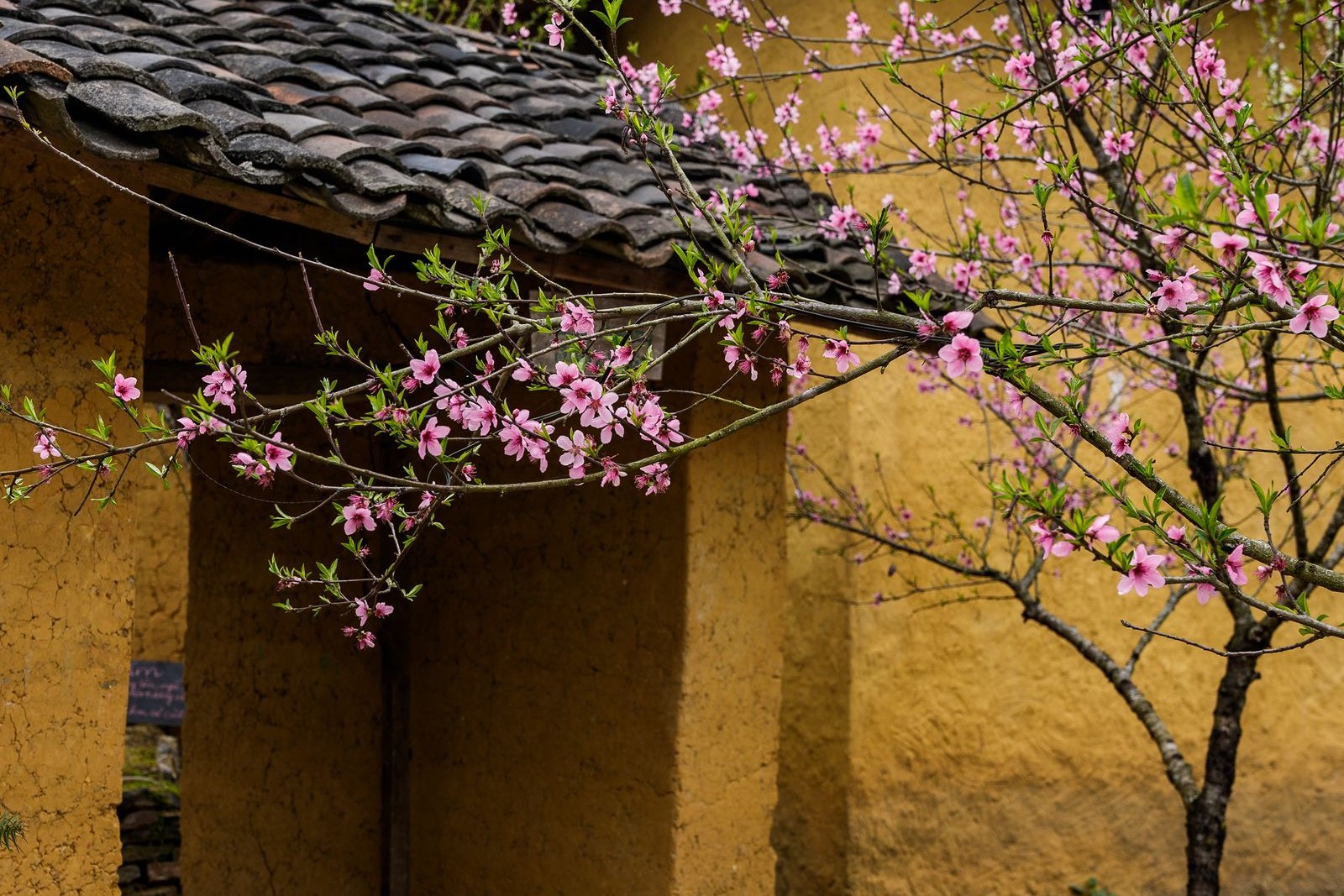
They come for the peach blossom, which lasts about ten days in late March and early April, and book nothing in advance, and then discover that both the valley and the boat show are full. Outside the blossom period the site is quiet, green, and much cheaper to enjoy — and the valley in late autumn, with the bamboo and the rice cut, is arguably better.
Getting there
By car from 常德 Chángdé or by train to 桃源 Táoyuán, then a taxi. One full day is right: the valley in the morning, lunch in the rebuilt town, the walk up behind the temples in the afternoon, the boat show at night. It pairs naturally with 柳叶湖 Liǔyè Hú, an hour away, for a two-day trip out of Changde.
flowcloud would say that the only piece of world literature whose entire plot is a man failing to find his way back to somewhere wonderful has ended up, entirely appropriately, as a valley where every path is now signposted and the signposts still do not get you there.
Getting there: 桃花源 (Táohuāyuán), 桃源县 (Táoyuán Xiàn), 常德市 (Chángdéshì), 湖南 (Húnán). Open daily 08:00–17:30, no closing day; adult entry ¥128, students ¥64, and the 秦溪 (Qín Xī) evening boat show ¥238. About 45 minutes and ¥100–150 by taxi from 常德 (Chángdé), or by train to 桃源 (Táoyuán) then a short cab. Book the show ahead in blossom season.