
The Campus at the Desert’s Edge: Tarim University and Its Long Experiment
大漠办大学,胡杨自成林 Dàmò bàn dàxué, húyáng zì chéng lín – A university raised in the great desert; poplars growing into a forest of their own
正文:塔里木大学 Tǎlǐmù Dàxué Tarim University is the reason Aral reads less like a garrison town than a campus with a city around it. Founded in 1958 by General Wang Zhen on bare river terrace – students built the first classrooms themselves from mud brick – it grew into the region’s working university: agronomy, water engineering, animal science and the desert-adapted specialties that the Tarim’s farms actually need. The gilded characters over the gate stone promise what the campus delivers, and the motto high on the main building – educate for the Party, cultivate talent for the nation – is painted across the skyline in letters visible from the ring road.
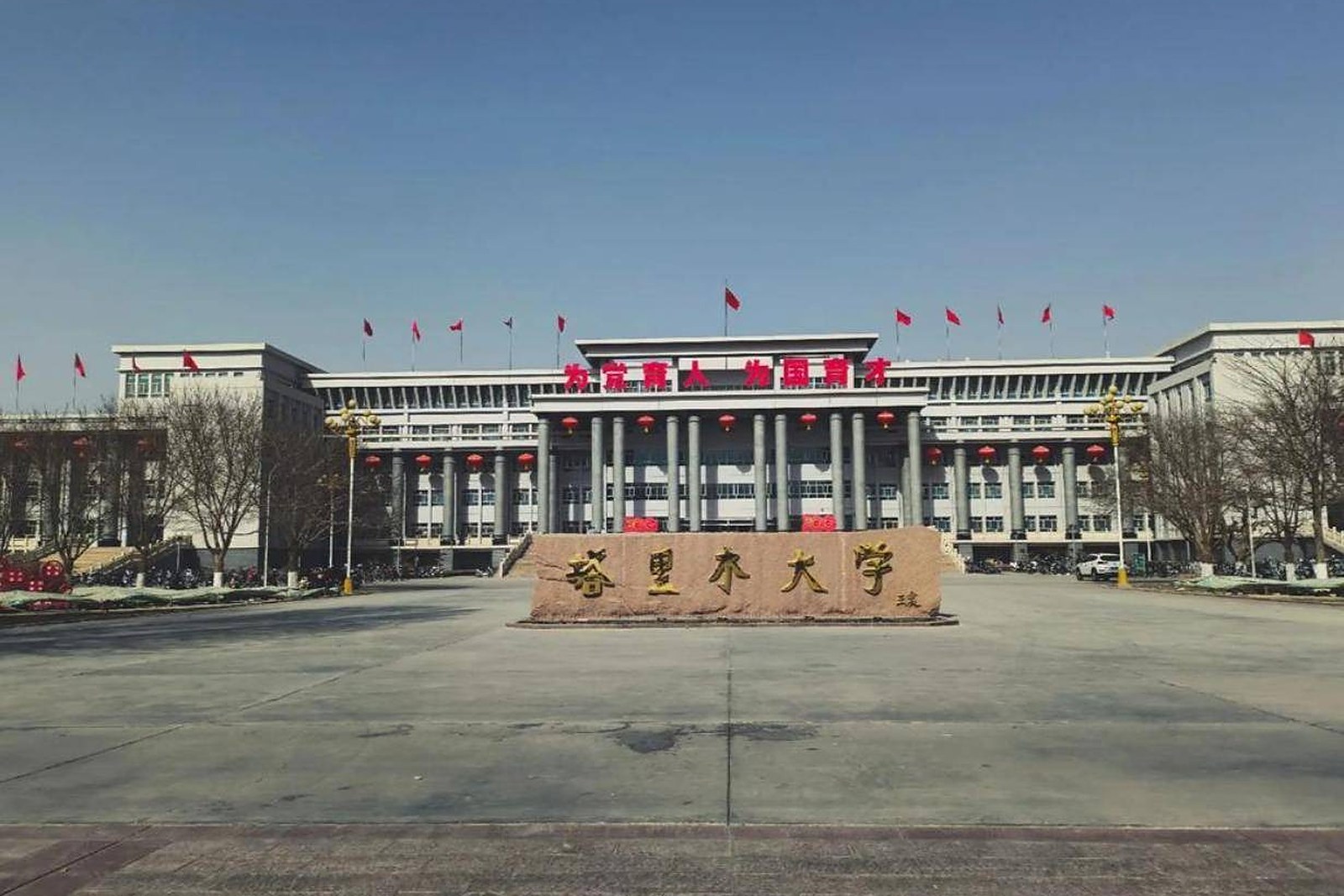
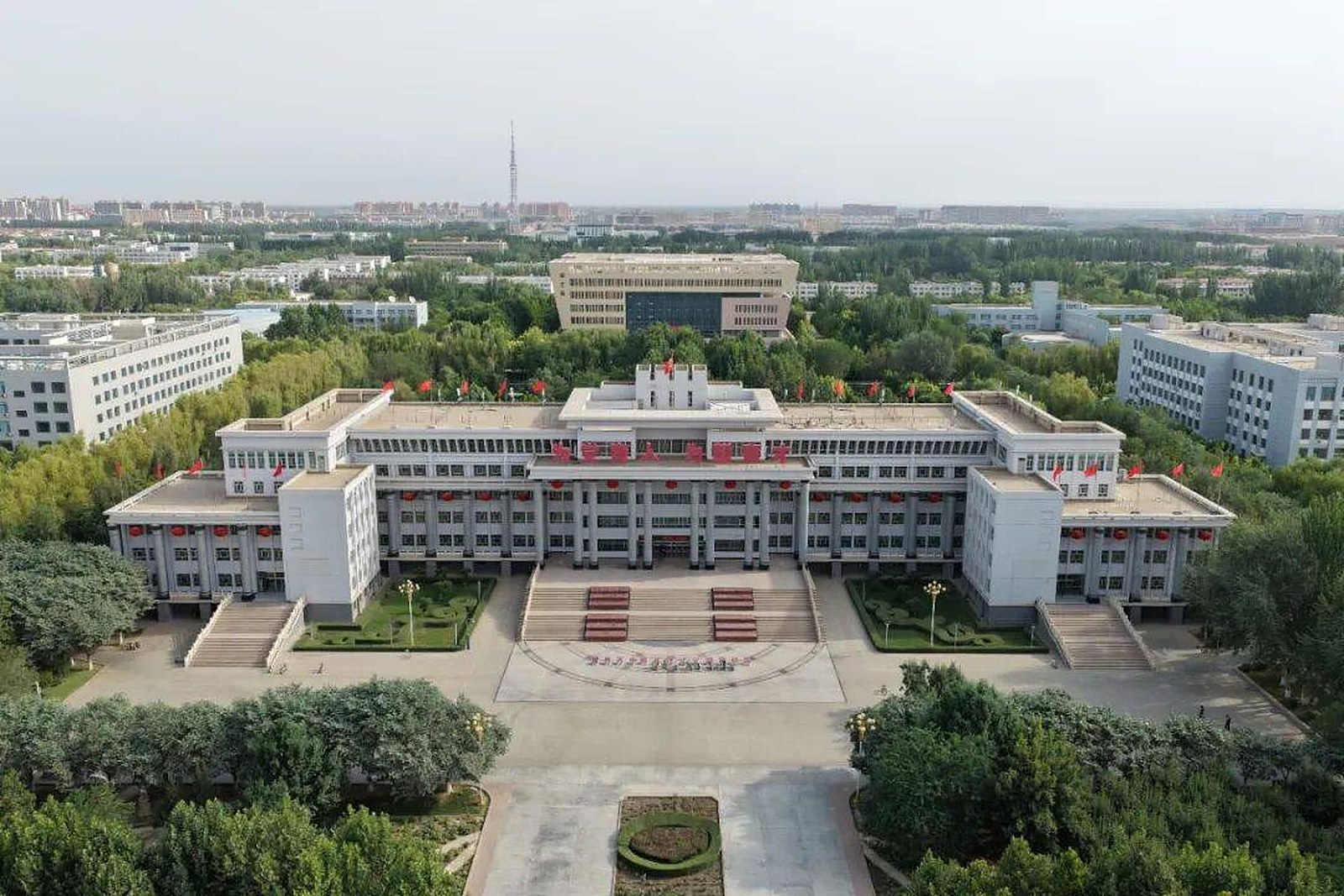
Walk the campus and the founding story stays legible. The main building keeps its 1950s bones under modern cladding, flanked by columned wings and red flags; the gate plaza carries the carved stone with the university’s name that every graduating class photographs; and the tree-shaded walks between teaching blocks run beneath poplars planted by hands that are now museum photographs. It is a campus where the landscape itself is the alumni record – shelterbelts, orchard trial plots and the arboretum of desert species all began as student work.
The university’s research identity is on open display. Experimental fields at the edge of the campus trial the cotton varieties and drip regimes that restructured the basin’s agriculture; the water-resources labs model the very canals that green the highway south; and the animal-science units run the breeding programs behind the region’s sheep flocks. Visitors with a technical interest can arrange lab and farm tours through the international office with a few days’ notice – the campus is used to delegations and explains itself well.
Student life follows the desert clock. Mornings fill the study lawns before the heat; the canteens serve Tarim-scale portions at oasis prices; and the sports fields run along the southern fence where the wind carries sand off the desert in spring. The campus museum – small, free and unhurried – keeps the founding photographs and the graduation lists of six decades, including the famous classes of the early years who studied by kerosene lamp between farm shifts.
For travellers the campus earns half a day. It is the most walkable green space in Aral, the architecture spans six decades of frontier building from mud brick to glass curtain-wall, and the contrast with the desert two kilometres south is the point: the university is the oasis’s engine room, and strolling it explains the surrounding farmland better than any viewing platform. Graduation week in late June fills the gate plaza with gowns and families – a good week to come, a hard week for hotel rooms.
Practicalities first. The campus is open to visitors at the main gate with a simple registration; the museum keeps weekday hours; and the gate street holds cafes, bookshops and cheap hotels serving the university crowd. Combine the visit with the memorial ten minutes north – the two institutions are one story told in brick and in glass.
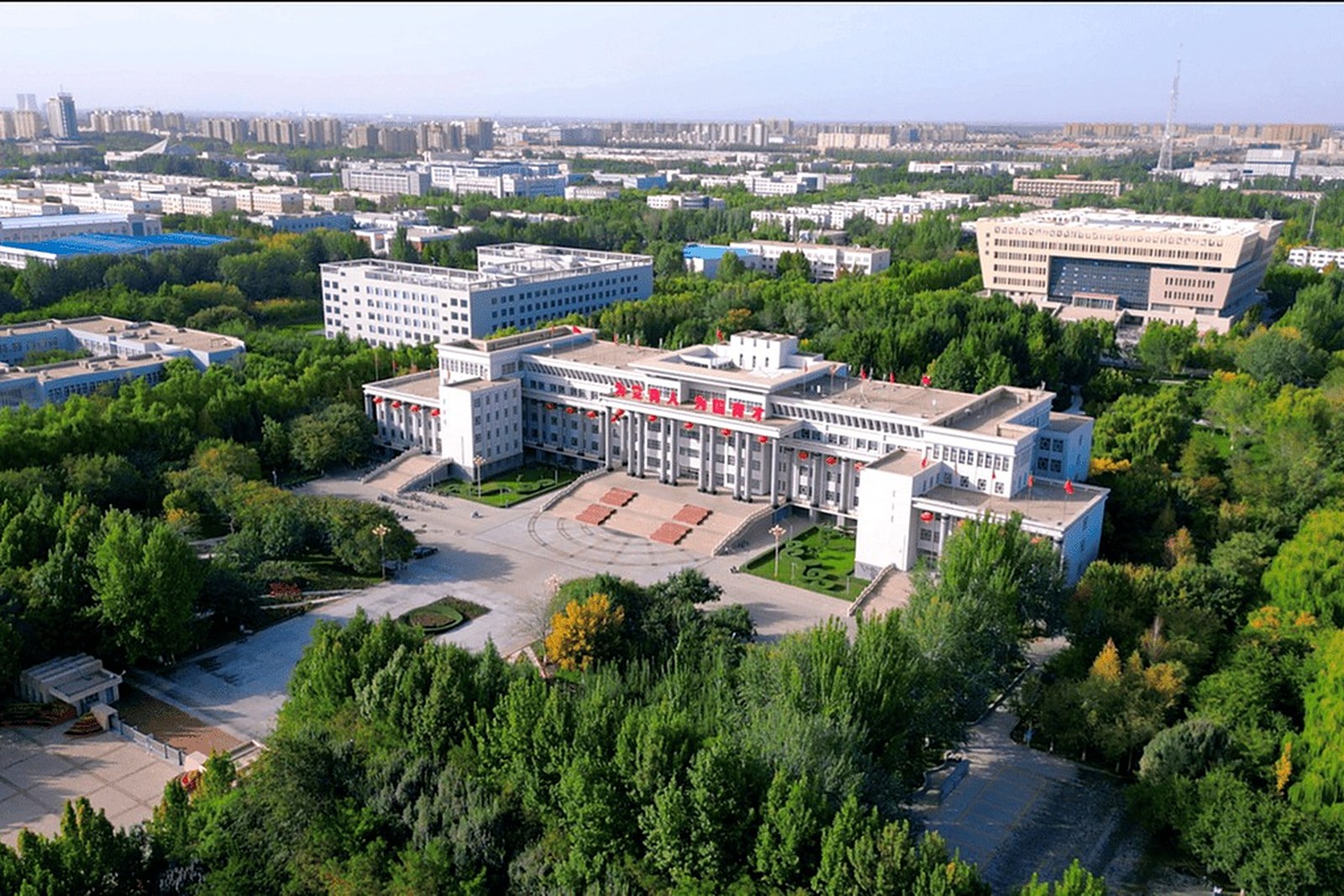
Widen the frame and Tarim University is Aral’s answer to its own geography: the desert did not retreat because the climate softened, it retreated because generations of graduates kept the canals running. The campus is that argument planted in poplars – and a restful, dignified place to understand it.
And that is the lasting impression: a university without walls in the sense that matters, where the experimental fields run to the horizon and the desert is the final examiner. The gilded gate characters say educate – the campus, quietly, says how.
Practicalities
Beyond the university, the same 阿拉尔市 Ālā’ěr Shì Aral City keeps more places worth the detour: 三五九旅纪念馆 Sānwǔjiǔ Lǚ Jìniànguǎn the 359 Brigade Memorial for the founding story, 睡胡杨谷 Shuì Húyáng Gǔ the Sleeping Huyang valley for the standing dead forest, 塔里木河大桥 Tǎlǐmù Hé Dàqiáo the Tarim River bridge for the autumn channels, or 千鸟湖湿地 Qiānniǎo Hú Shīdì Qianniao Lake wetland for the evening egrets – four more doors into the same 阿拉尔市 Ālā’ěr Shì Aral City. Once the campus is seen, our Aral food map fills the day.
Practicalities
Words and Names
flowcloud would say Tarim University is the desert’s own alma mater: poplars for alumni, canals for a thesis, and sixty years of graduates who took the exam that matters – keeping the oasis green – and passed. All checked November 2026.
Getting there: The campus sits on the city’s west side along the university avenue, walkable from central hotels in twenty minutes or a five-minute taxi ride. Gates welcome visitors by day, and the arboretum lanes are best in late afternoon. All checked November 2026.