
Tiananmen Square: Flag, Monument and Axis at the Heart of the Capital
旗随日出色初红,碑立中轴气自雄。Qí suí rì chū sè chū hóng, bēi lì zhōngzhóu qì zì xióng – The flag follows the rising sun, its colour new-turned red; the monument stands on the central axis, grand of itself.
天安门广场 Tiān’ānmén Guǎngchǎng Tiananmen Square is not a plaza with benches — it is, in plain terms, the zero point of Beijing: a vast paved expanse in central 东城区 Dōngchéng Qū Dongcheng running south from 天安门 Tiān’ānmén the Gate of Heavenly Peace to 正阳门 Zhèngyángmén Zhengyangmen at 前门 Qiánmén Qianmen, on the same central axis as the Forbidden City. It ranks among the largest city squares in the world — commonly sized around 440,000 square metres, room for hundreds of thousands of people (worth confirming the figure, which sources disagree on) — and its frame reads like a civic syllabus: 人民大会堂 Rénmín Dàhuìtáng the Great Hall of the People on the west, 中国国家博物馆 Zhōngguó Guójiā Bówùguǎn the National Museum of China on the east, and at the center the granite bulk of 人民英雄纪念碑 Rénmín Yīngxióng Jìniànbēi the Monument to the People’s Heroes.
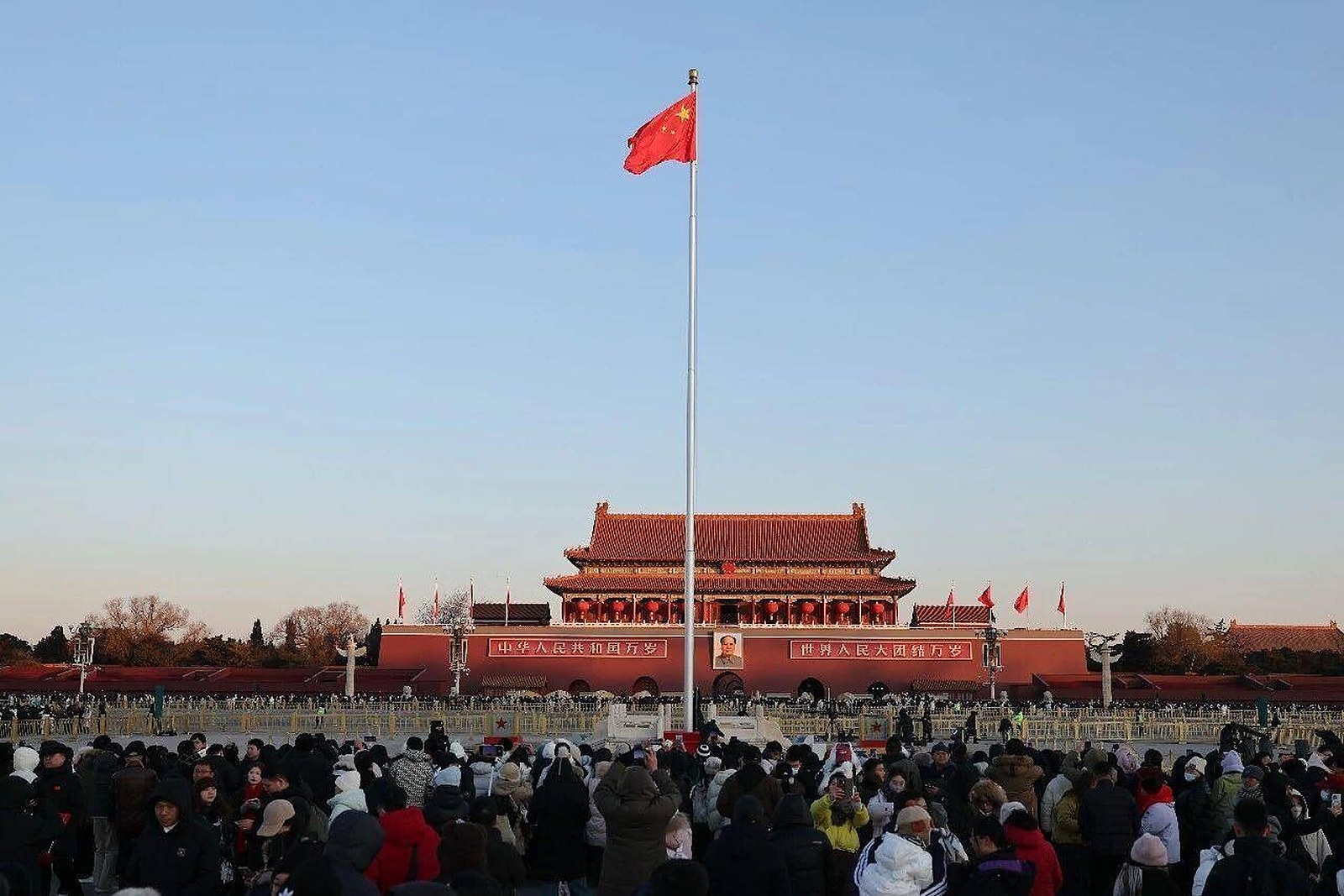
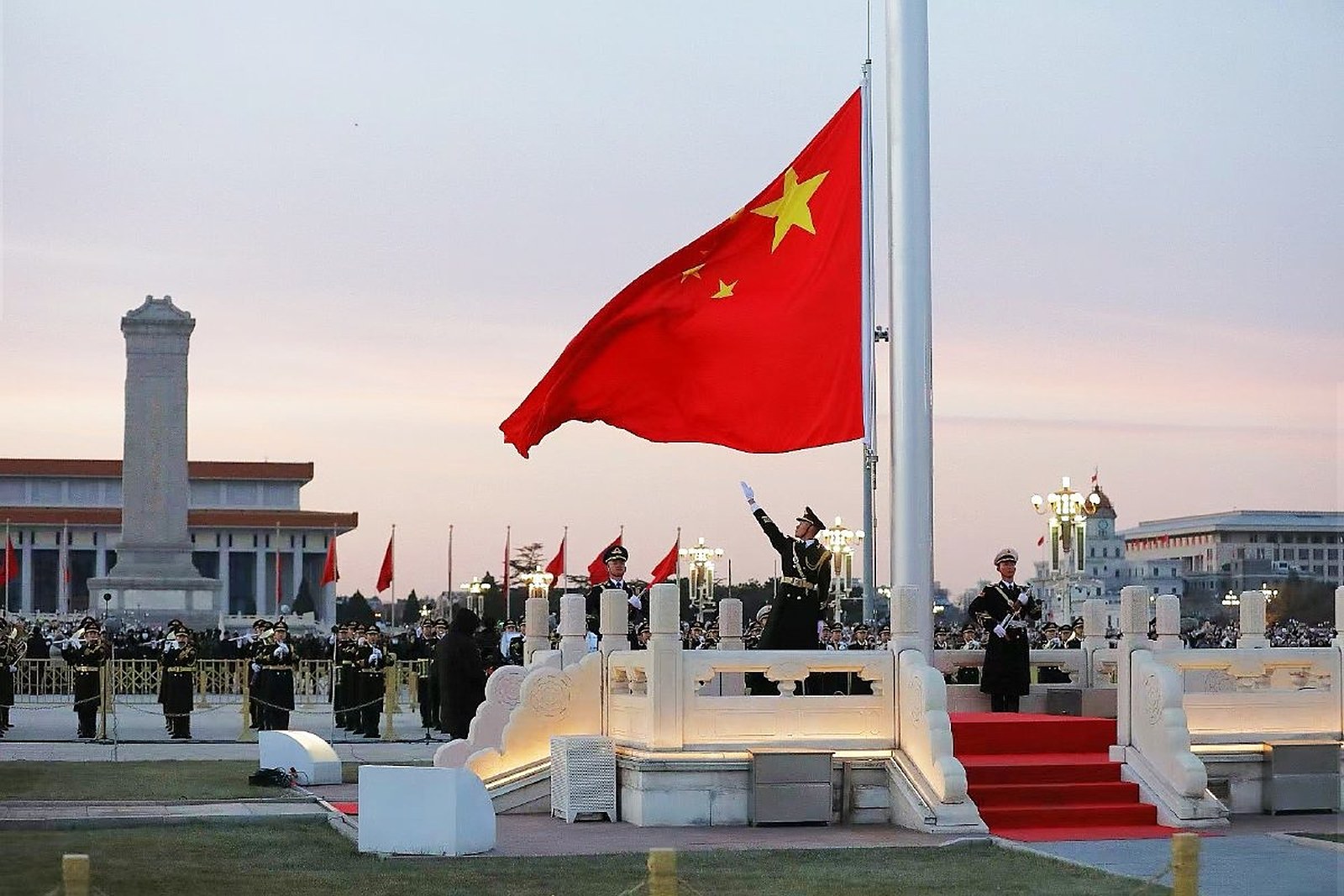
The ritual that runs the place is the flag. Each dawn, 升旗仪式 shēngqí yíshì the flag-raising ceremony brings the national flag up its pole in step with sunrise — the minute changes daily with the sun, so look up the published time for your date (worth confirming the day’s flag time, announced in advance) — and on holidays the pre-dawn queue starts blocks away. At the south end, 毛主席纪念堂 Máozhǔxí Jìniàntáng the Chairman Mao Memorial Hall opens only a few morning hours on selected days, with strict bag rules and no photography inside (worth confirming current days, hours and entry conditions). Security checkpoints ring the square and identification is part of the routine: Chinese visitors carry 身份证 shēnfènzhèng ID cards, and in recent years international visitors have been asked to present passports at the checkpoints (worth confirming the current requirement, which has been revised more than once).
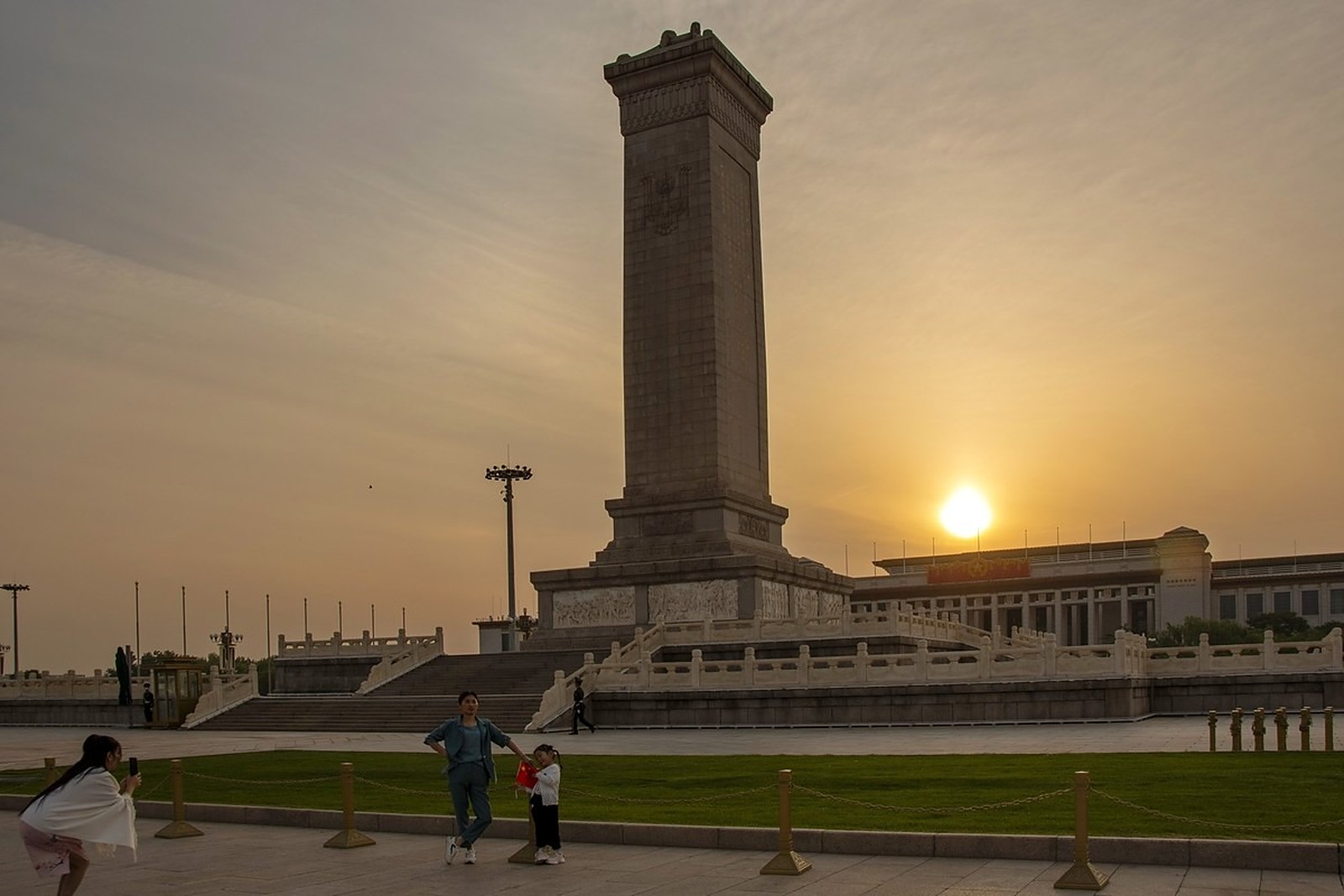
Call it honestly: a square that is more procedure than stroll, worth the procedure once. Access is the real planning problem — the nearest metro stations sometimes close temporarily around ceremonies and major events (worth confirming on the day), surface crossings funnel through checkpoints, and a reservation system for the square area has operated in recent years (worth confirming whether it applies to you and how to book). What repays the effort is the sequence: flag at first light, the monument and the National Museum’s bronzes afterward, then 正阳门 Zhèngyángmén and the rebuilt 前门 Qiánmén streets as the walk-off north. What gets oversold is midday in summer — the paving radiates, shade is a rumor, and every photograph fights the glare. The square reads best early, cool and near-empty, with the towers sharp against the sunrise side.
The self-aware postscript: I set a 4:40 alarm for a summer flag time, stood in a silent crowd thicker than a rush-hour platform, and the moment the flag crested the pole everyone dissolved toward breakfast — and that strange civic dawn was the best hour of my week in Beijing. Treat 天安门广场 Tiān’ānmén Guǎngchǎng as the front hall of the axis rather than a destination in itself: half an hour of flag, an hour of monument or museum, then on north under 天安门 Tiān’ānmén toward the palace and the hutongs. In compact 东城区 Dōngchéng Qū everything on this list sits a metro stop or a stroll apart, and all the distances here start from zero.
Practicalities
- Rating: ★★★☆☆ — one of the world’s largest city squares on Beijing’s central axis; the dawn flag ceremony and the flanking monuments repay the security friction once.
- Tickets: Free, but through checkpoints with ID — passports for international visitors in recent years — and a reservation system has applied in recent years (worth confirming current reservation, ID and checkpoint rules).
- Address: 天安门广场 Tiān’ānmén Guǎngchǎng, 东城区 Dōngchéng Qū, Beijing — on the central axis between 天安门 Tiān’ānmén and 正阳门 Zhèngyángmén / 前门 Qiánmén.
- Time needed: One to two hours for the square itself; add a pre-dawn start for the flag ceremony and a half day if you take in the National Museum.
Words and Names
天安门广场 Tiān’ānmén Guǎngchǎng Tiananmen Square · the vast central square of Beijing on the axis 升旗仪式 shēngqí yíshì flag-raising ceremony · the daily sunrise flag at the square’s heart 人民英雄纪念碑 Rénmín Yīngxióng Jìniànbēi Monument to the People’s Heroes · the granite obelisk at the center 毛主席纪念堂 Máozhǔxí Jìniàntáng Chairman Mao Memorial Hall · the limited-morning hall at the south end 人民大会堂 Rénmín Dàhuìtáng Great Hall of the People · the west flank of the square 正阳门 Zhèngyángmén Zhengyangmen · the old gate tower closing the square’s south
flowcloud would say that 天安门广场 Tiān’ānmén Guǎngchǎng is the capital’s zero point — one of the world’s largest city squares on 北京中轴线 Běijīng zhōngzhóuxiàn, 人民英雄纪念碑 Rénmín Yīngxióng Jìniànbēi at the center and a dawn 升旗仪式 shēngqí yíshì timed to the sunrise — and that the honest move is the flag at first light and the museum after, because the flag minute changes daily, 毛主席纪念堂 Máozhǔxí Jìniàntáng keeps short morning hours, and checkpoint, passport and reservation rules need verifying before you promise anyone the dawn (worth confirming all three). All checked October 2026.
Getting there: Tiananmen Square on the central axis, by Metro Line 1 to Tiananmen East or Tiananmen West, or Line 2 to Qianmen (worth confirming the same-morning station and crossing openings, plus whether the square reservation system applies to you); carry a passport for the checkpoints, and come at dawn for the flag-raising ceremony timed to sunrise — the minute is published in advance for each date. All checked October 2026.