
Where the Tiantai School Began: Temple Mountains of Tiantai
佛宗道源山水秀,一瀑石梁天下奇 Fózōng dàoyuán shānshuǐ xiù, yī pù Shíliáng tiānxià qí – Buddha school and Dao source in beautiful hills; one stone-bridge falls is a wonder under heaven
天台山 Tiāntái Shān Tiantai Mountain is the holy mountain that gave Chinese Buddhism one of its oldest native schools – the Tiantai school, founded by 智顗 Zhìyǐ Zhiyi in the sixth century around 国清寺 Guóqīng Sì Guoqing Temple, the great monastery that still keeps its Sui-dynasty charter at the foot of the range. The mountain runs 131 square kilometers of peaks, gorges and falls an hour’s drive from 台州市 Tāizhōu Shì Taizhou City, and its name checks read like a scripture index: 石梁飞瀑 Shíliáng Fēipù the Stone-Bridge Falls where a granite span crosses a 30-meter cataract, 华顶 Huádǐng the summit meadows that bloom a thousand-year sea of cloud rhododendrons each May, and 赤城山 Chìchéng Shān the red sandstone gate-hill that glows at every sunset. 徐霞客 Xú Xiákè Xu Xiake opened his Travels here in 1613 – the first mountain in the first diary of Chinese travel writing.
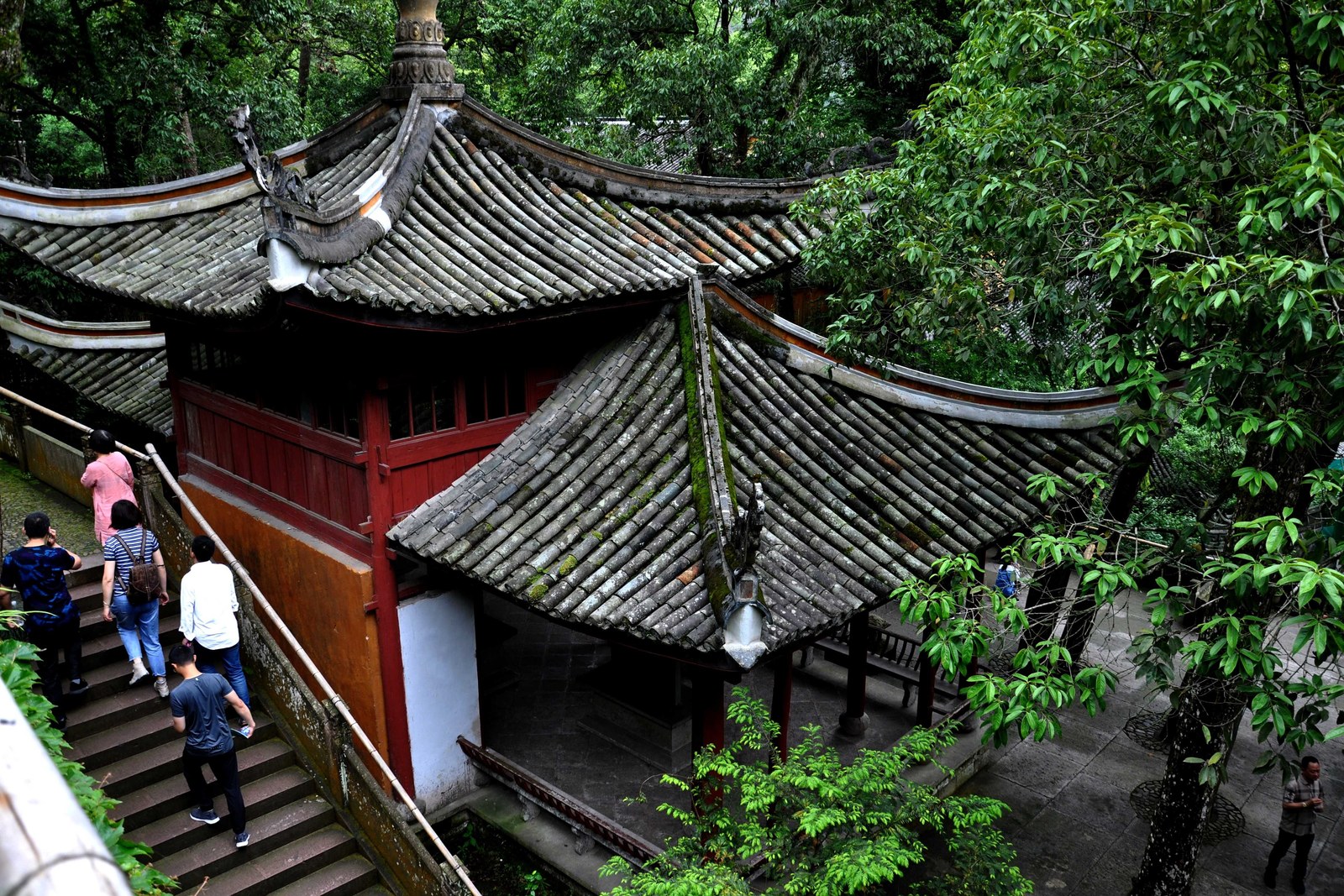
Guoqing Temple is the heart: founded 598, rebuilt on its Tang footprints, and entered the pilgrim way – past the 隋塔 Suí Tǎ pagoda leaning green with ivy across the valley, through the yellow walls and old camphors, into courtyards where monks still copy sutras by hand. The temple keeps a plum tree planted a thousand years ago that still flowers every winter, and the vegetarian refectory serves the temple’s own mushroom meals at noon.
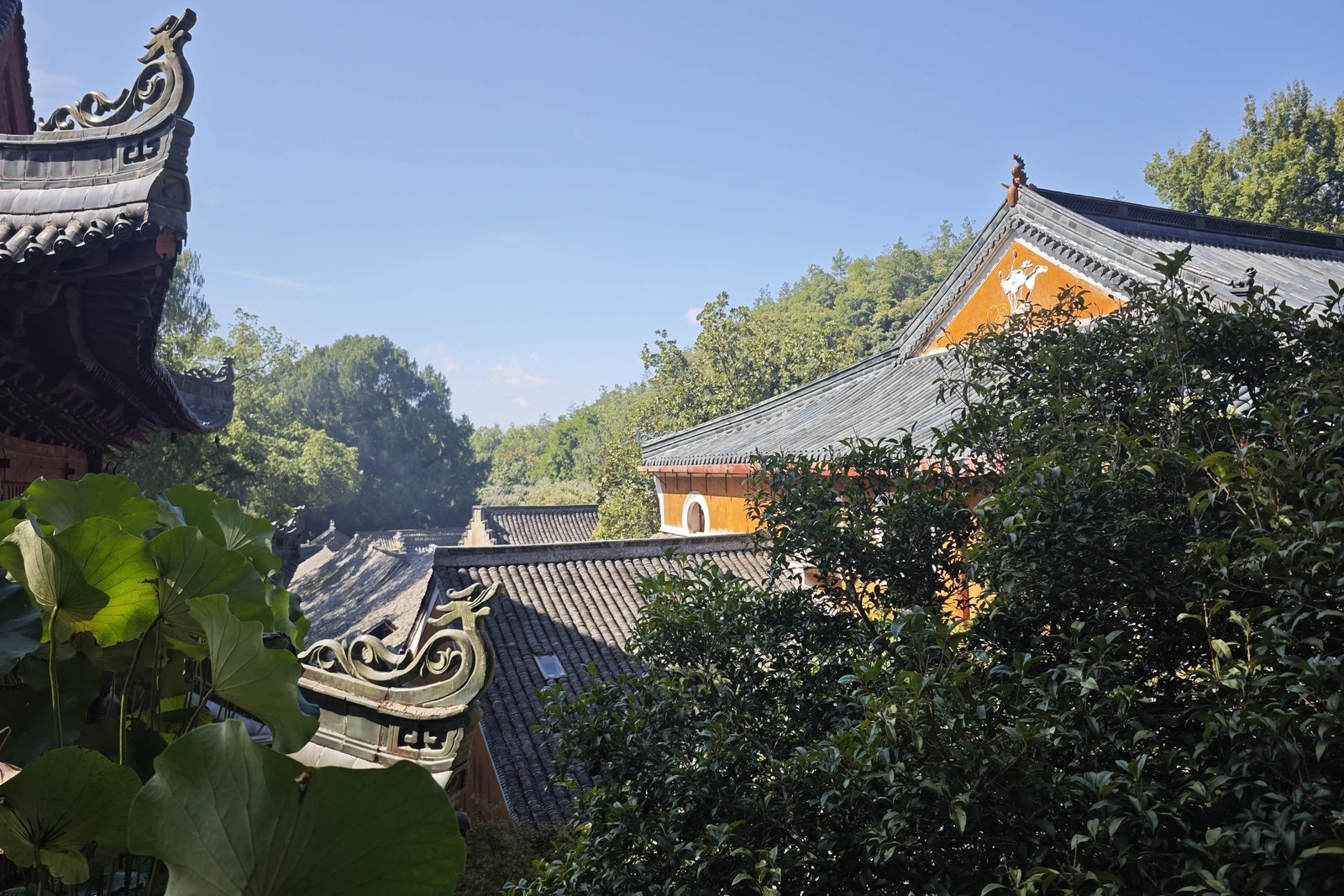
The falls are the wild half. Stone-Bridge Falls pours beneath a natural granite beam you can walk to within meters, watched from a Ming-era pavilion built for exactly that view; upstream the trail climbs through 方广寺 Fāngguǎng Sì Fangguang Temple’s compounds to quieter pools. On 华顶 Huading the road ends in rhododendron thickets and a stone marker for the peak – 1,098 meters, cold even in June, with a hotel and a sea of cloud at dawn for those who stay over.
Give the mountain two days: temple and pagoda on the first, falls and summit on the second, with the 琼台仙谷 Qióngtái Xiāngǔ Qiongtai gorge as the scenic closer. The visitor centers at each gate sell combined tickets, shuttle buses link the far gates, and the trail signs are bilingual – a rare courtesy on a mountain this old.
Practicalities
- Guoqing Temple is free with a small incense-ticket check; the falls, Huading and Qiongtai gorge each sell separate tickets or a combined pass.
- The temple opens earliest – go at 7:30 am before the tour buses, then drive or shuttle to the falls for the afternoon light.
- May brings the Huading rhododendron bloom and the year’s biggest crowds; winter offers the thousand-year plum in flower and empty trails.
- Wear real shoes: the falls path is stone and spray-slick, and the Huading summit trail climbs 40 minutes from the lot.
Words and Names
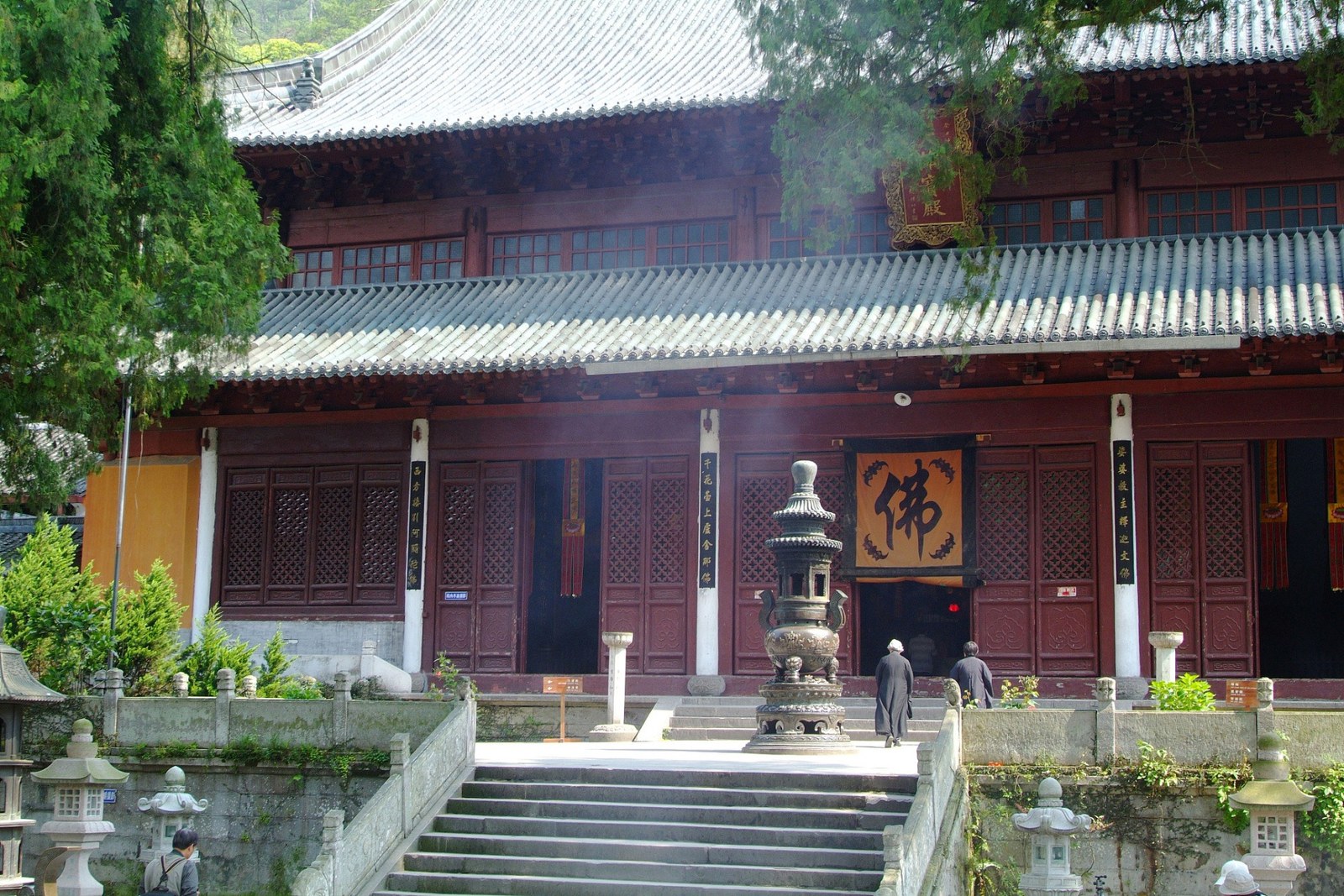
国清寺 Guóqīng Sì Guoqing Temple – “State-Purity Temple”, headquarters of the Tiantai school; 石梁 Shíliáng stone bridge, the granite span over the falls; 华顶 Huádǐng the Flower Summit, highest point of the range; 天台宗 Tiāntái Zōng the Tiantai school, China’s first homegrown Buddhist school; 徐霞客 Xú Xiákè Xu Xiake, the great Ming travel diarist who began here. Beyond the temple mountain, the same 台州市 Tāizhōu Shì Taizhou City keeps more places worth the detour: 神仙居 Shénxiānjū the rhyolite peaks of Xianju, 临海古城 Línhǎi Gǔchéng the Ming city wall at Linghai, 石塘渔村 Shítáng Yúcūn the granite fishing village of Wenling, or 蛇蟠岛 Shépān Dǎo the quarry caves of Sanmen Bay – four more doors into the same 台州市 Tāizhōu Shì Taizhou City. Once the sutras have had their quiet, our Taizhou food map fills the table.
flowcloud would say Tiantai is a mountain that reads: a school of philosophy in the pines, a diary that starts at its gate, and a falls that has been quoted by every poet who ever climbed past it – the trail is older than most nations and still swept. All checked November 2026.
Getting there: Tiantai Mountain opens through several gates – Guoqing Temple sits ten minutes by taxi from Tiantai high-speed station on the Hangzhou-Wenzhou line, the falls and Huading gates an hour’s drive apart, and the expressway puts the mountain about an hour from downtown Taizhou. All checked November 2026.