
Tianxin Pavilion
Almost nothing in central Changsha is old, and the reason is a single night in November 1938. The 文夕大火 — the Wenxi Fire, lit by the city’s own side as a scorched-earth measure and burned catastrophically out of control — destroyed the great majority of the old town. What you see in the centre today is a twentieth-century city with a few fragments left inside it.
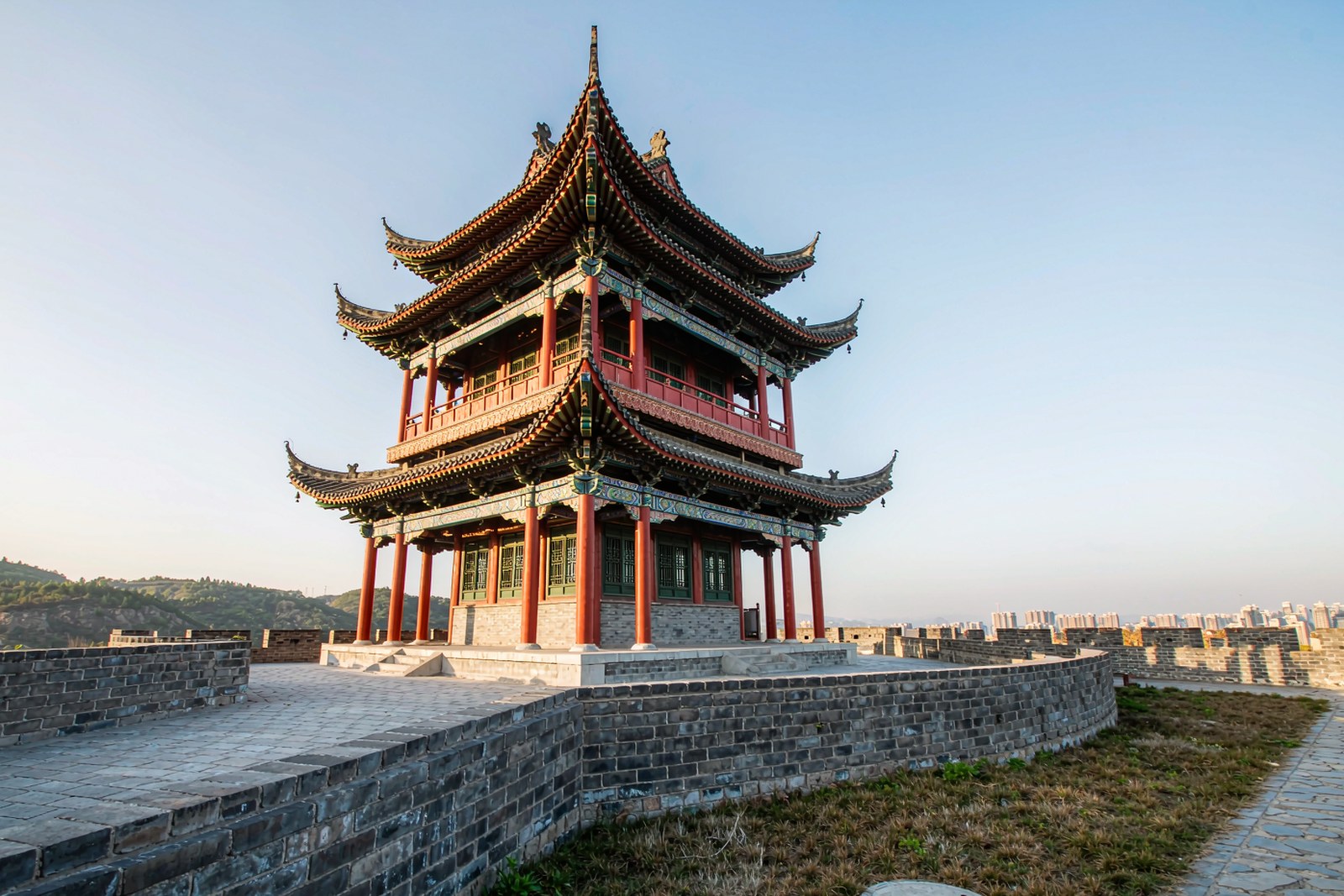
Two of those fragments are here, on a low hill in the south of the old city, and they are the reason to come.
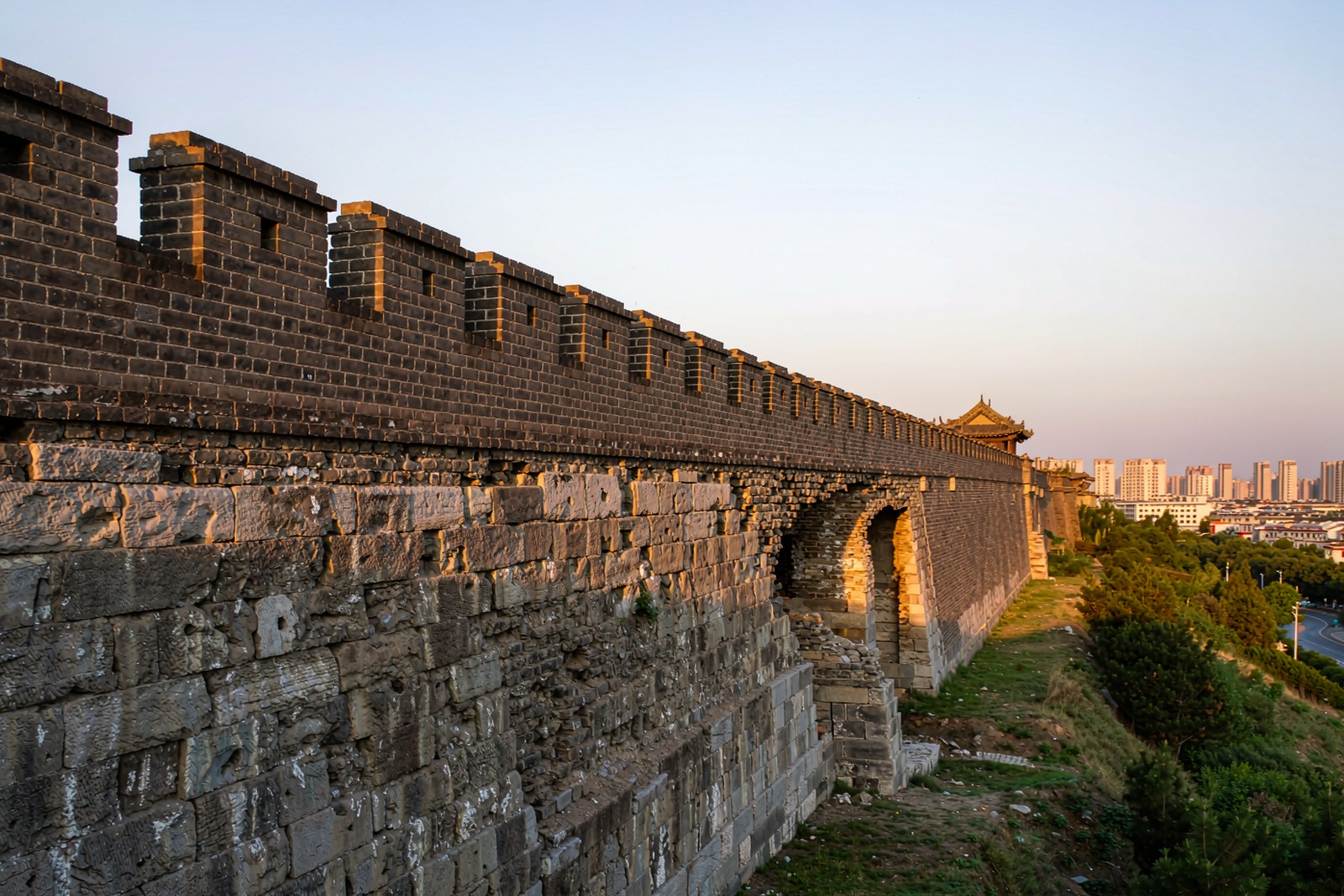
One is 天心阁 (Tianxin Pavilion), the pavilion on the skyline that has stood for the city since the Ming. The other is the thing it stands on: a stretch of granite city wall, 251 metres long, the only surviving piece of the fortifications that once ringed Changsha. You can put your hand on bricks laid in the Ming dynasty, and on the section where the wall was built up in stone and brick over a rammed-earth core that goes back to the Han.
A Pavilion That Keeps Being Rebuilt
天心阁 is old but not original, and the Chinese are refreshingly blunt about this. The pavilion is first recorded in the late Ming; in 1638 the prefect of Changsha added a 瓷城, a fortified outwork, and strengthened the tower; in 1746, in the Qianlong reign, it was rebuilt again. The hill it stands on has a longer memory still — the site has been a vantage point over the south of the city for a very long time, and it is the reason the neighbourhood below is called 城南, the south of the wall.
The version you will climb was rebuilt in 1983: three storeys, 846 square metres of floor, with the upturned eaves and vermilion beams of the classical southern style. 潇湘古阁,秦汉名城 — “the ancient pavilion of the Xiao and Xiang, the famous city of Qin and Han” — is the couplet the city uses for it, and it has been treated as the emblem of Changsha for centuries. The 1938 fire took the old one. What stands there now is a careful reconstruction on the original footprint, which is the most any Chinese city can normally claim.
The Wall, Which Is the Real Treasure
If you care about buildings, the wall is the more valuable object.
Changsha has been walled since the Western Han, when 吴芮 (Wu Rui), the first King of Changsha, laid out a city on the east bank of the Xiang in 202 BC. That wall grew over two millennia: rammed earth at the base, refaced in stone and brick in the Ming, repaired through the Qing. Then, in 1923, the city pulled it down — as almost every Chinese city did in the twentieth century — and sold the bricks. This segment is what was left.
What survives is 251 metres long, 13.4 metres high, and 6.1 metres wide across the top. Walk the parapet and you are walking on a wall built to carry soldiers, with the crenellations rebuilt to the original pattern; some of the bricks still carry Ming-era inscriptions — the marks of the kilns and the officials who were responsible for them, which is how imperial China enforced quality control on state building works.
Underneath the whole hill, incidentally, is one of the great ironies of the city: the wall’s own earth was found, on excavation, to contain Han-dynasty material. The hill is older than the wall on it, and both are older than the pavilion on top.
The Fire, and What the City Did With the Memory
天心阁’s most important modern function is as a memorial, and it is unusually honest about what it is memorialising.
The 崇烈塔, 崇烈门 and 崇烈亭 — a tower, a gate and a pavilion — stand together on the approach and commemorate the soldiers killed in the 长沙会战 (Battle of Changsha), the four engagements between 1939 and 1944 in which the city repeatedly held out against the Japanese army. The gate was built in 1946. It is a national-level memorial site, and on the wall you can still pick out the pockmarks of artillery.
Then, in the west park, stands the 警世钟 — the “warning bell” — which commemorates the 文夕大火. A city that burned itself down by accident and then had to fight four battles on the same ground has an unusually complicated relationship with its own history, and it has chosen to put both facts in the same small park and ring a bell about one of them.
The other oddities on the site follow from the same layering. There is a 红袍大将军 cannon emplacement, a relic of the Taiping army’s assault on Changsha in the 1850s; a 月城 (yuèchéng), the crescent-shaped barbican that guarded the gate and was used to garrison troops and site artillery; and a statue of Taiping soldiers in the lower park.
Climbing It
Buy a ticket and you can go up inside the pavilion. The climb is worth it less for the building than for the view: from the top of the south wall you look out over the ring road that now runs where the wall’s base was, across the city to 岳麓山 (Yuelu Mountain) and the Xiang River, and down into the tiled roofs of the old southern quarter. Inside, the 北拱 and 南屏 galleries have been fitted with digital displays that explain the city’s fortifications and history — a decent fifteen minutes if you want the context and have not read anything about the place.
A sensible circuit, entering by the north-east gate so that you do not double back, runs: 东北门 → 天心广场 → the 崇烈 memorial group → the Ming wall walk → the digital galleries → the pavilion itself → the 月城 barbican → the west park and the warning bell → the Taiping statue → the wall plaza → out. Ninety minutes to two hours, depending on how long you spend on the parapet.
Practicalities
Tickets. The park itself is free and always has been. The pavilion and the wall section are ticketed. The official prices are ¥30 for the day ticket (¥15 concession) and ¥58 for the night session (¥29 concession). Third-party ticketing platforms frequently list the day ticket at ¥28 — do not be confused by the difference; the official figures are the ones above, and the ¥28 listings are typically the night ticket sold through an agent. The day ticket covers the pavilion, the climb, the 古长沙 cultural displays, the light-and-projection show, the wall, the gun emplacement, the barbican, the blessing wall and the park landscape.
Do you need to book? No. This is not a reservation-only site like the museum. Buy at the gate or through the 夜游天心阁 mini-programme.
Opening hours. Day session 8:00–17:30 (8:00–17:00 in winter). Night session 18:00–22:00, sometimes listed as starting at 18:30.
One warning. Every Monday the pavilion and the wall section are closed for routine maintenance. The park’s public areas stay open, so you will not find the gates locked — you will find that the thing you came for is not available. Plan around it.
Getting there. Address: 天心区天心路 17 号. Metro line 1 to 南门口 (Nanmenkou) station, exits 1 or 2, then about ten minutes’ walk to the west entrance — this is the easiest route. From 黄兴广场 station it is roughly a kilometre. Buses stop at the 天心阁 stop directly outside.
Driving. Don’t. The area has almost no kerbside parking, the north-east gate has very few spaces, the main car park is by the west gate and fills on any decent day, and the streets around it are congested. If you must, the car park by the 简牍博物馆 (the bamboo-slip museum) nearby is the pragmatic choice, and it is a short walk from there.
Combine with: the 简牍博物馆 next door, which holds the Wu-dynasty bamboo slips found in the well at 走马楼 — one of the great archaeological finds of the 1990s and, oddly, one of the least visited good museums in the city. And 县正街, 高正街 and 都正街, the old lanes just north of here, where you can eat after.
The Night Version
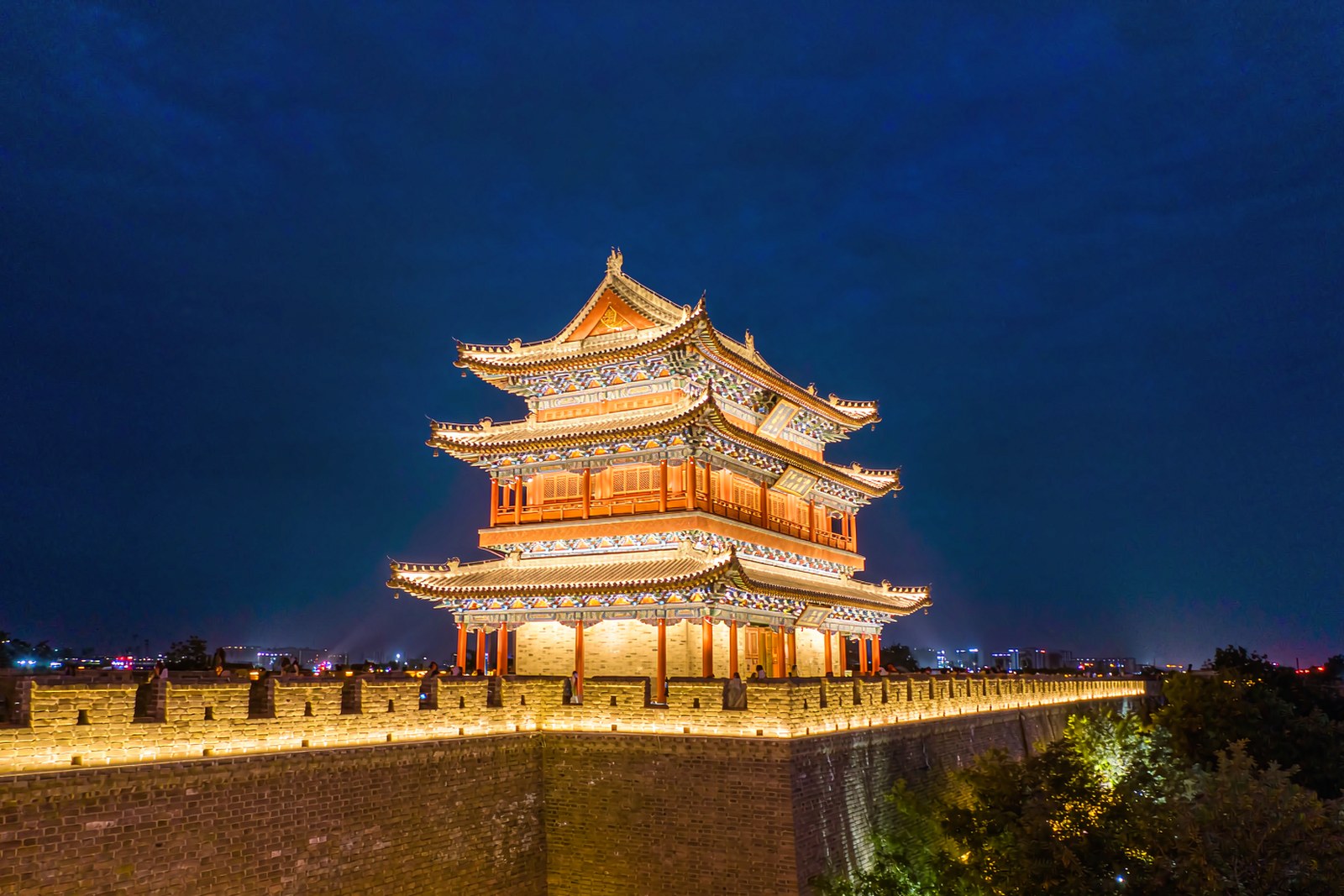
Since 2024 — the hundredth anniversary of the park — the city has run a 夜游天心阁, a lit night session. It is a different proposition: the pavilion picked out in lights, projections on the wall, the park at half the crowd. It costs roughly double the day ticket and it is the better experience if you have already seen the place in daylight, and probably not the right first visit if you have not.
flowcloud would say that a city which rebuilds its pavilion, keeps the wall, rings a bell for its own fire and puts a cannon from a different war on the same hill has understood something most places never manage — that history is not one story, and that the useful thing to do with a ruin is to stand on it and look at the river.
Getting there: 天心阁 (Tianxin Pavilion), 天心区天心路 17 号, Changsha. Metro line 1 to 南门口, exits 1–2, then ten minutes on foot. Park free; pavilion and wall ¥30 day / ¥58 night (concessions half). No booking needed. Closed for maintenance on Mondays in the pavilion and wall areas. Allow 90 minutes.