
The Oldest Library in China: Tianyi Pavilion of Ningbo
书藏四百五十年,一楼风雨护斯文 Shū cáng sì bǎi wǔshí nián, yī lóu fēngyǔ hù sīwén – The books have hidden here four hundred and fifty years; one tower of wind and rain keeps civilization safe
天一阁 Tiānyī Gé Tianyi Pavilion is the oldest private library surviving in China, founded in 1561 by 范钦 Fàn Zé Fan Qin, a Ming dynasty defense minister who retired to 宁波市 Níngbō Shì Ningbo City with thirty thousand volumes and a rule as famous as the collection: no candles in the stacks, no books out the gate. The two-story timber tower still stands in its garden compound of rockeries, ponds and camphor shade, and the surrounding museum quarter now holds the family’s genealogy halls, scholar studios and the brick lottery tablets that made the library’s fire code a legend. Half of Chinese book history passed through this gate – including the copies that star scholars smuggled out by note-taking.
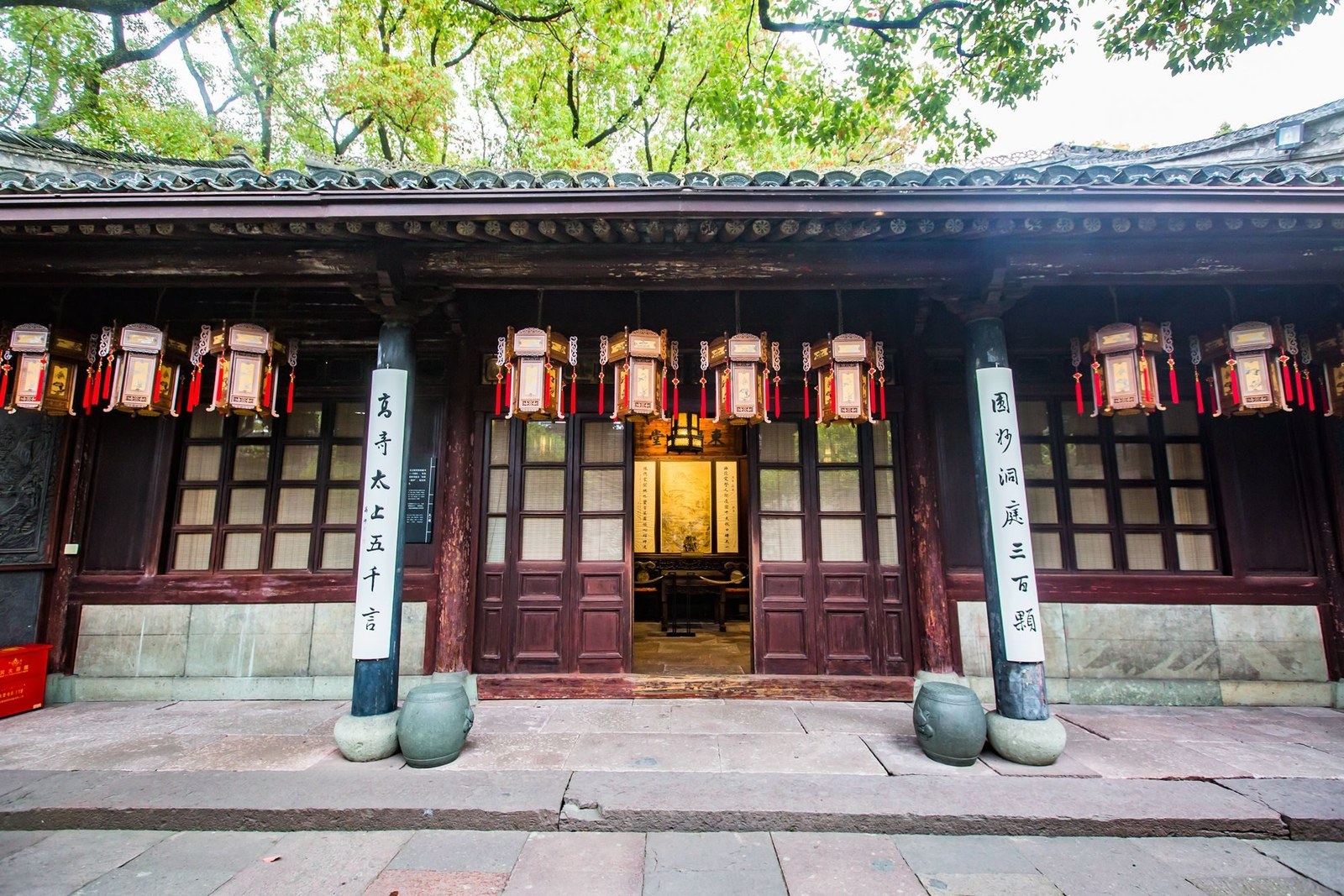
The core compound is the pilgrimage: the tower itself behind its pool (the water laid out per the hexagram for “heaven one generates water”, a fire-protection spell in landscape form), the 麻兰石 málán shí stone screens, and the mahjong room that claims the game’s modern form was codified here by the family’s chess-loving sons-in-law.
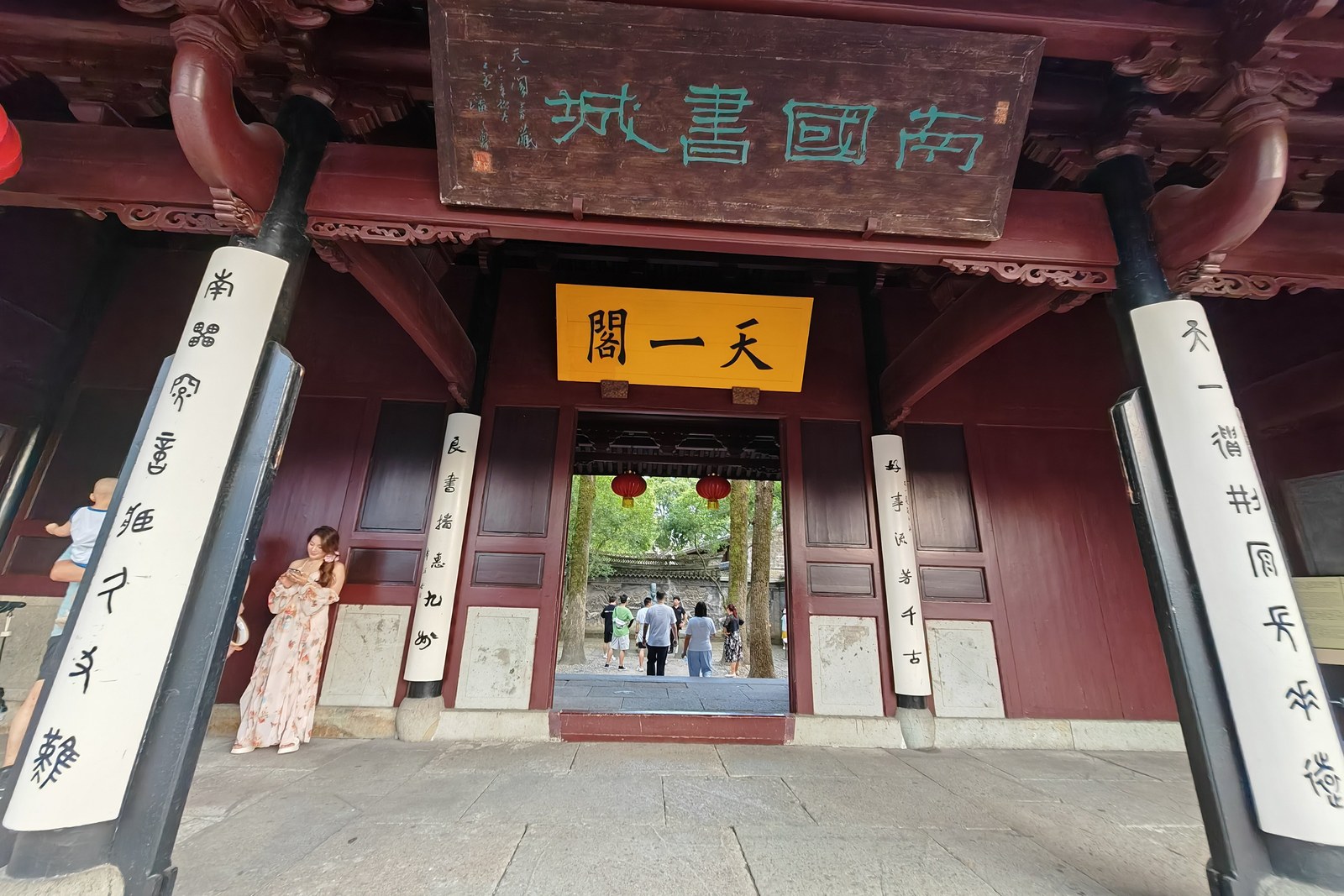
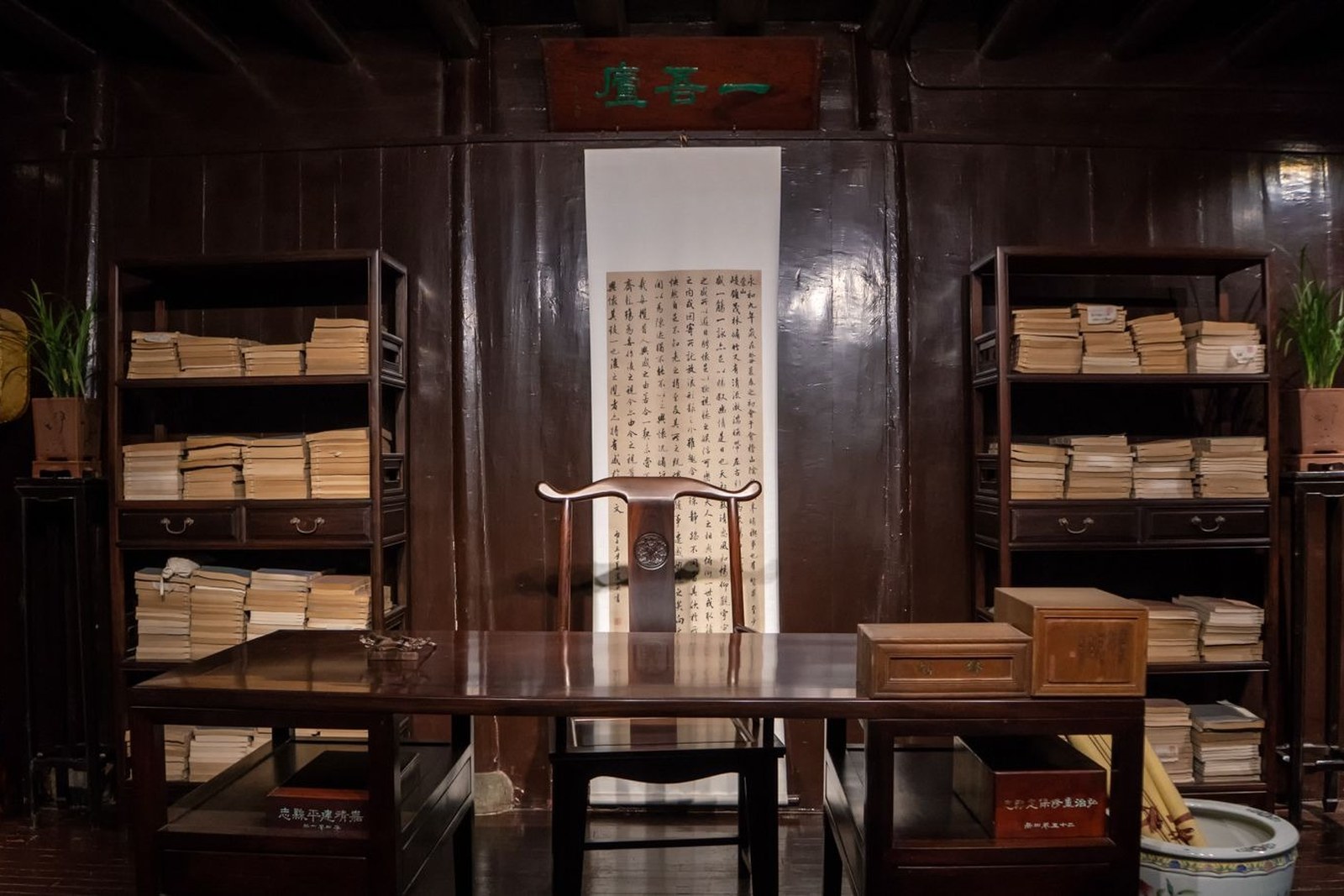
The library’s real fame is its genealogies and Ming-era local histories – the collections scholars traveled from Beijing to read, because Fan Qin’s rule that books never leave meant they were here when every other library burned. The display halls rotate the treasures: palm-leaf manuscripts, examination papers, and the maps that saved the emperor’s hydrologists a decade.
Give it a slow morning: garden first while the light is low, the tower rooms before the school groups, then the museum halls and the quiet corner courtyards where the family’s reading studios keep their desks facing the water. The tea house by the east wall pours the local wanglaoji-style brews, and the gift shop sells facsimile woodblock prints pulled on the premises.
Practicalities
- The museum sells timed tickets; Monday mornings close the stacks (open afternoons on Mondays only).
- The compound sits ten minutes’ walk from Tianyi Square metro station, in the heart of downtown Ningbo.
- Photography is fine in gardens and halls but not inside the book-stack rooms; tripods are ticket-office regulated.
- Spring and autumn are the walking seasons; the camphor shade makes even July bearable before ten.
Words and Names
天一阁 Tiānyī Gé Tianyi Pavilion – “Heaven One Pavilion”, after the water hexagram; 范钦 Fàn Zé Fan Qin, the founding collector; 藏书楼 cángshūlóu book-storing tower, the genre the pavilion defined; 麻兰石 málán shí the local stone of the compound’s screens. Beyond the library, the same 宁波市 Níngbō Shì Ningbo City keeps more places worth the detour: 溪口雪窦山 Xīkǒu Xuědòu Shān the falls and Buddha of Xikou, 东钱湖 Dōngqiánhú the big lake on the city’s edge, 老外滩 Lǎowàitān the riverside Bund quarter, or 前童古镇 Qiántóng Gǔzhèn the pebble-lane town of Ninghai – four more doors into the same 宁波市 Níngbō Shì Ningbo City. Once the stacks have had their silence, our Ningbo food map fills the table.
flowcloud would say Tianyi Pavilion is a family argument that won: no fire, no loans, no exceptions – four hundred fifty years later the rules still hold, and the books are still here, which is more than any empire that burned them can say. All checked November 2026.
Getting there: Tianyi Pavilion sits in downtown Ningbo ten minutes on foot from Tianyi Square metro station – the airport drive runs half an hour, and both rail stations lie twenty minutes away by metro. All checked November 2026.