
Kangxi’s Tower That Shook but Stood: Tianzun Pavilion
三百年楼擎故郡,一朝地震证工坚 Sān bǎi nián lóu qíng gù jùn, yī zhāo dìzhèn zhèng gōng jiān – A tower three hundred years holds up the old county; one earthquake proved the craft sound
天尊阁 Tiānzūn Gé rises three timber stories above Fengtai town in 天津市宁河区 Tiānjīn Shì Nínghé Qū Ninghe District – a Kangxi-era pavilion in the Ming dynasty’s timber idiom, seventeen meters of bracketed eaves that survived the 1976 Tangshan earthquake while the town around it fell. The national heritage list guards it now, and the county’s oldest wooden building doubles as its quietest: most days the courtyard holds more swallows than visitors.
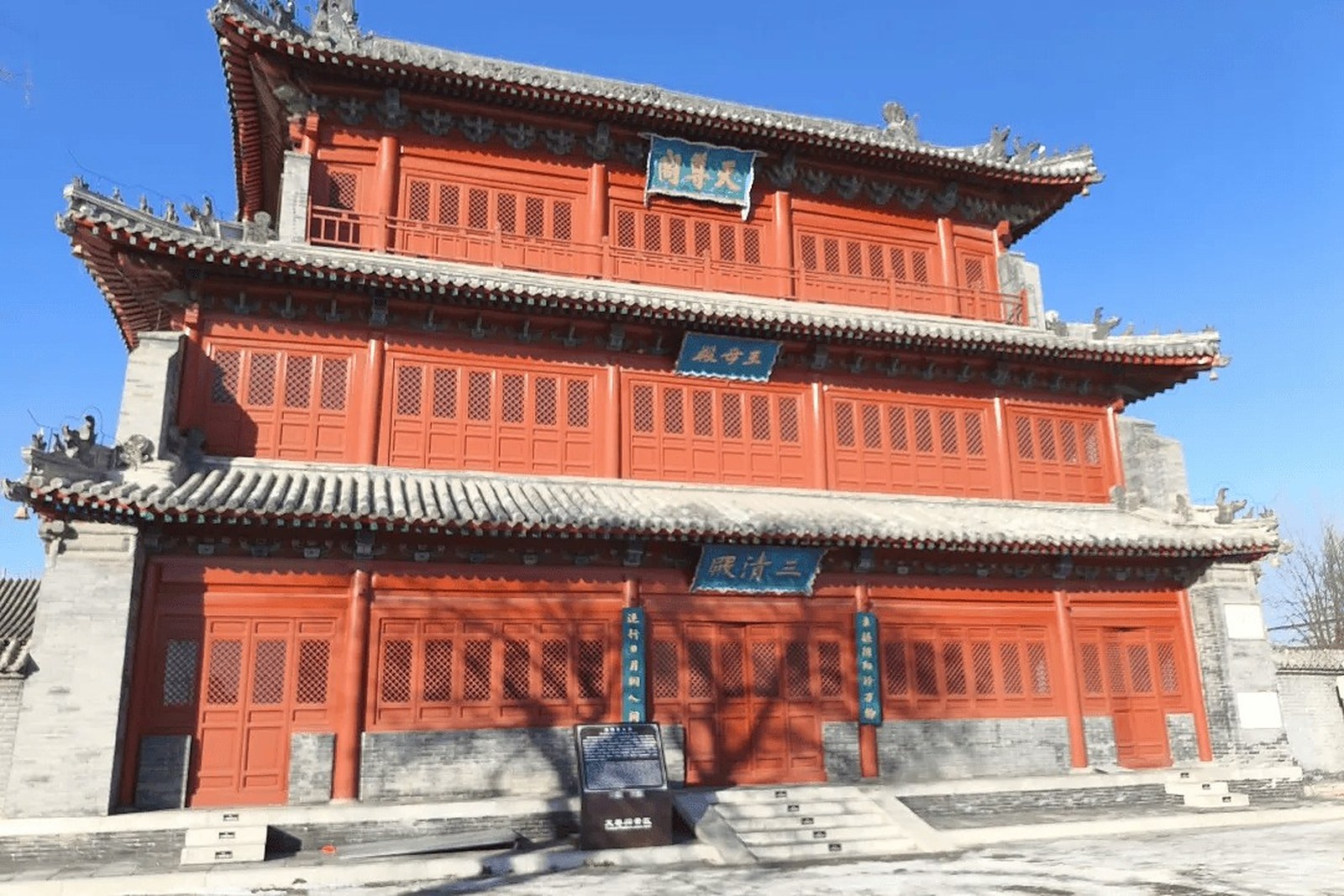
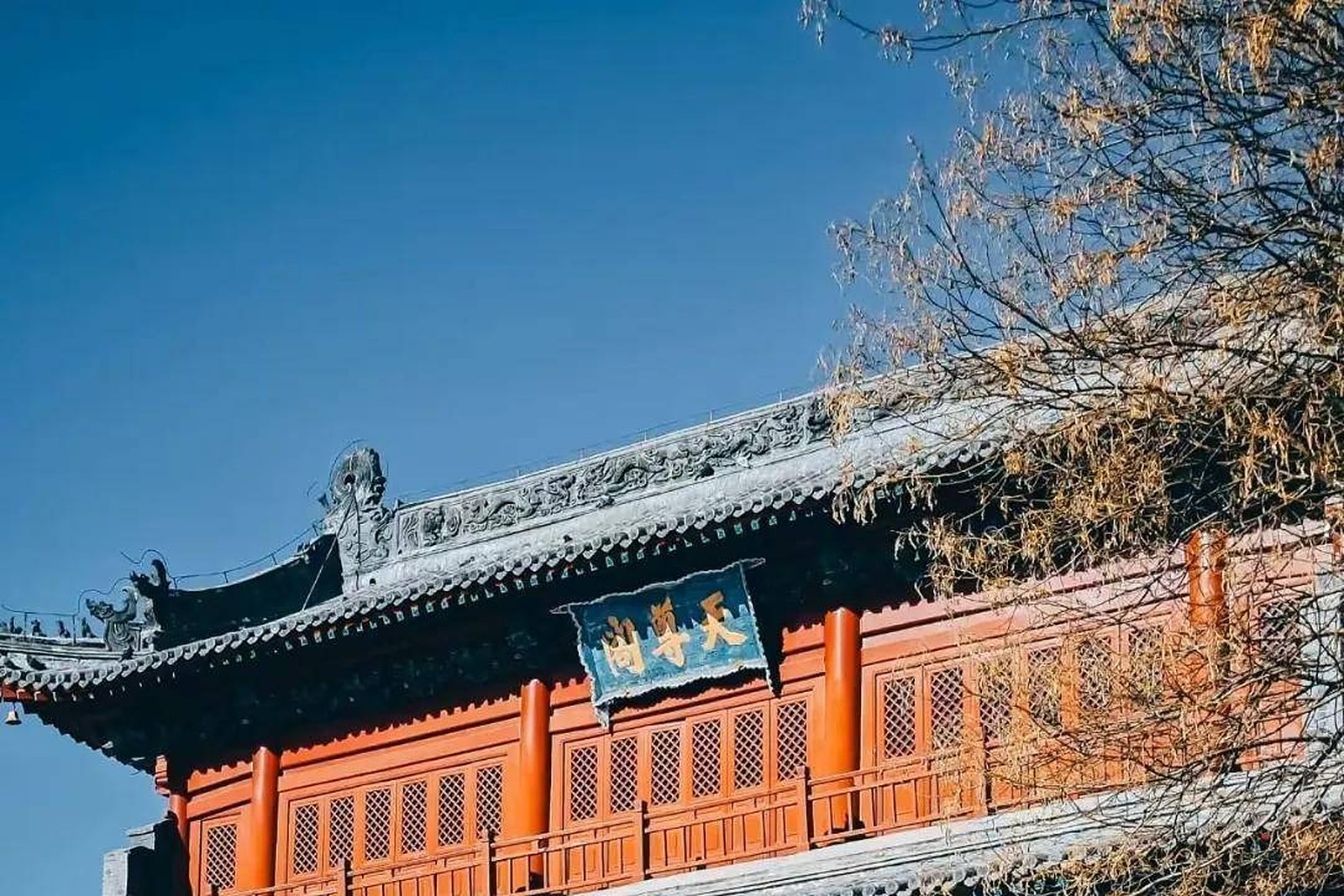
The structure is the sermon. Columns land on floating drum bases that let the frame slide in a quake, dougong brackets carry eaves that curve like boats, and the three roofs step back in the classic pavilion cadence – lower hall, middle terrace, top shrine to Yuanshi Tianzun. Read it from the courtyard corner and the engineering explains the survival better than any plaque.
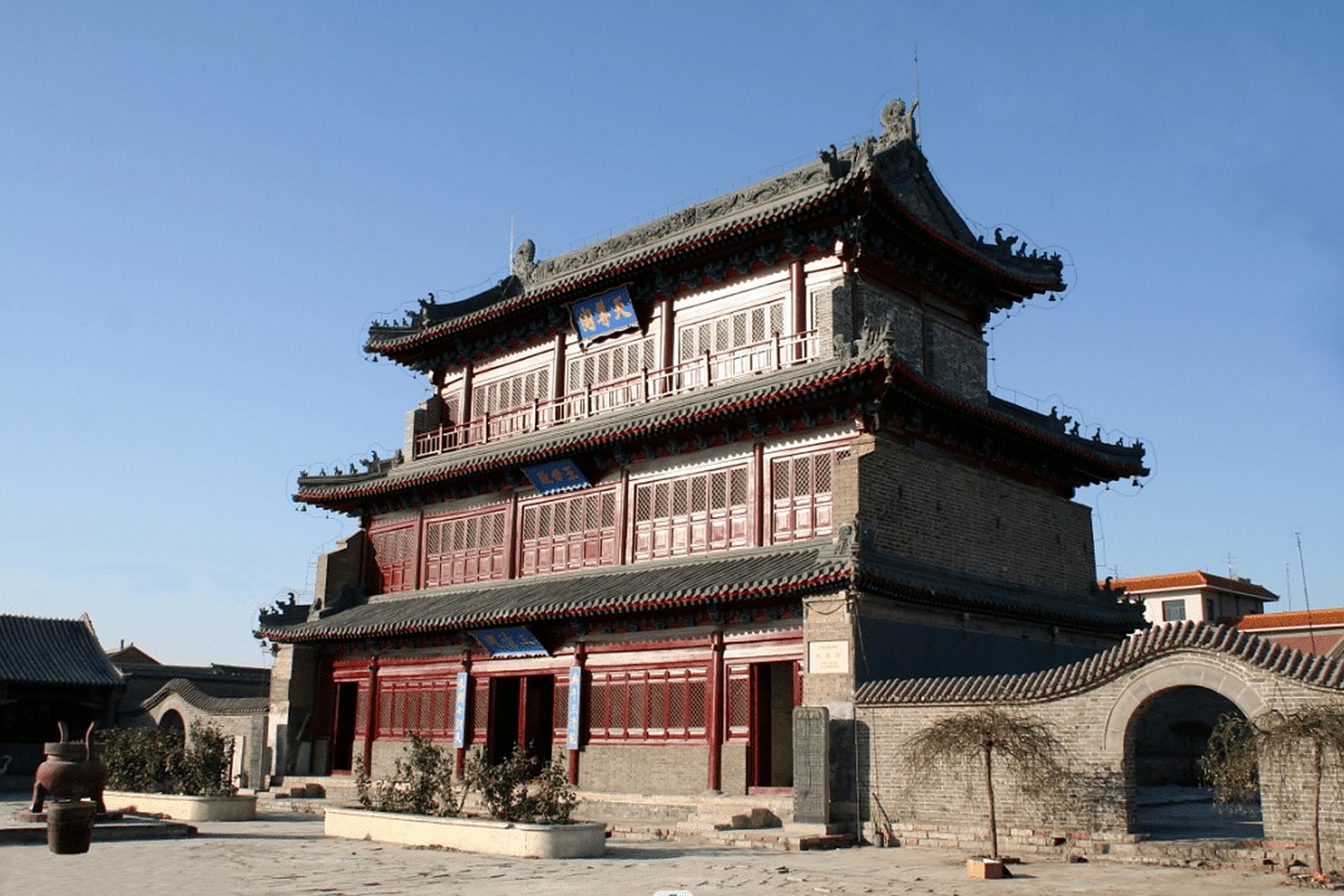
The town grew up around the tower. Fengtai was a salt-and-grain market town on the old coast road, the pavilion anchored its skyline, and the temple fair calendar filled the courtyard twice a year. The incense burner still works, the side halls keep their painted guardians, and the caretaker sweeps a floor that has been swept through twelve reigns and two republics.
Climb-ready visitors should mind the rules – the upper floors open by season and care, and the best photographs happen from the gate, where the whole silhouette stacks against a sky the plains keep wide. Pair the visit with Fengtai’s old street grid: the town’s grain-store facades and the pavilion’s eaves share the same weathered gray.
Practicalities
- The site is free; the caretaker opens the main hall mornings and early afternoons.
- Upper-floor access depends on preservation rounds – ask at the gate rather than assume.
- Pair the visit with Fengtai’s old street for the full Qing-market-town feel.
- Trains of the Tangshan line pass nearby; the pavilion courtyard is a five-minute walk from the bus stop.
Words and Names
天尊阁 Tiānzūn Gé the Tianzun Pavilion, named for the Daoist Celestial Worthy; 斗拱 dǒugǒng the interlocking brackets under the eaves; 康熙 Kāngxī the Kangxi reign, when the pavilion rose; 文物保护单位 wénwù bǎohù dānwèi the national heritage listing; 丰台镇 Fēngtái Zhèn Fengtai town, the pavilion’s home. Beyond the pavilion, the same 天津市宁河区 Tiānjīn Shì Nínghé Qū Ninghe District keeps more places worth the detour: 七里海国家湿地公园 Qīlǐhǎi Guójiā Shīdì Gōngyuán the great coastal wetland, 于方舟故居 Yú Fāngzhōu Gùjū the revolutionary’s home village, 芦台春创意文化产业园 Lútái Chūn Chuàngyì Wénhuà Chǎnyè Yuán the liquor-culture park, or 新天钢联合特钢工业旅游区 Xīn Tiāngāng Liánhé Tègāng Gōngyè Lǚyóu Qū the steel-works tour – four more doors into the same Ninghe District. Once the courtyard is behind you, our Ninghe food map fills the table.
flowcloud would say Tianzun Pavilion is engineering as a moral: a timber frame flexible enough to bend with the shakes, a town loyal enough to keep sweeping its floors. All checked November 2026.
Getting there: The pavilion stands in Fengtai town on Ninghe’s northeastern plain, reached by the provincial roads out of Lutai in about half an hour – village parking puts you at the courtyard gate, and the timber tower and its halls are the visit’s core. All checked November 2026.