
Where the Tide Draws Lines: Tiaozini’s Yellow Sea Flats
潮来万马卷银涛,潮去滩头红蓼高 Cháo lái wànmǎ juǎn yíntāo, cháo qù tāntóu hóngliǎo gāo – The tide comes like ten thousand horses rolling silver waves; the tide leaves red samphire high on the flats
正文:条子泥 Tiáozǐní Tiaozini is the Yellow Sea at its most exposed – a vast intertidal flat on Dongtai’s coast where the tide retreats for kilometres twice a day and the seabed becomes a floor of rippled sand, braided channels and crimson samphire marsh. The area is a core piece of the Yellow Sea-Bohai Gulf coastal wetlands inscribed as a World Heritage site in 2019, and it is one of the most important stopover feeding grounds on the East Asian-Australasian flyway: millions of shorebirds touch down here each migration, including the spoon-billed sandpiper, one of the world’s rarest waders. What visitors find is a landscape that rewrites itself with every tide – mudflat patterns called “tidal trees” branching across the sand, shells and crabs surfaced by the ebb, and observation platforms on the dike where the whole exchange plays out.
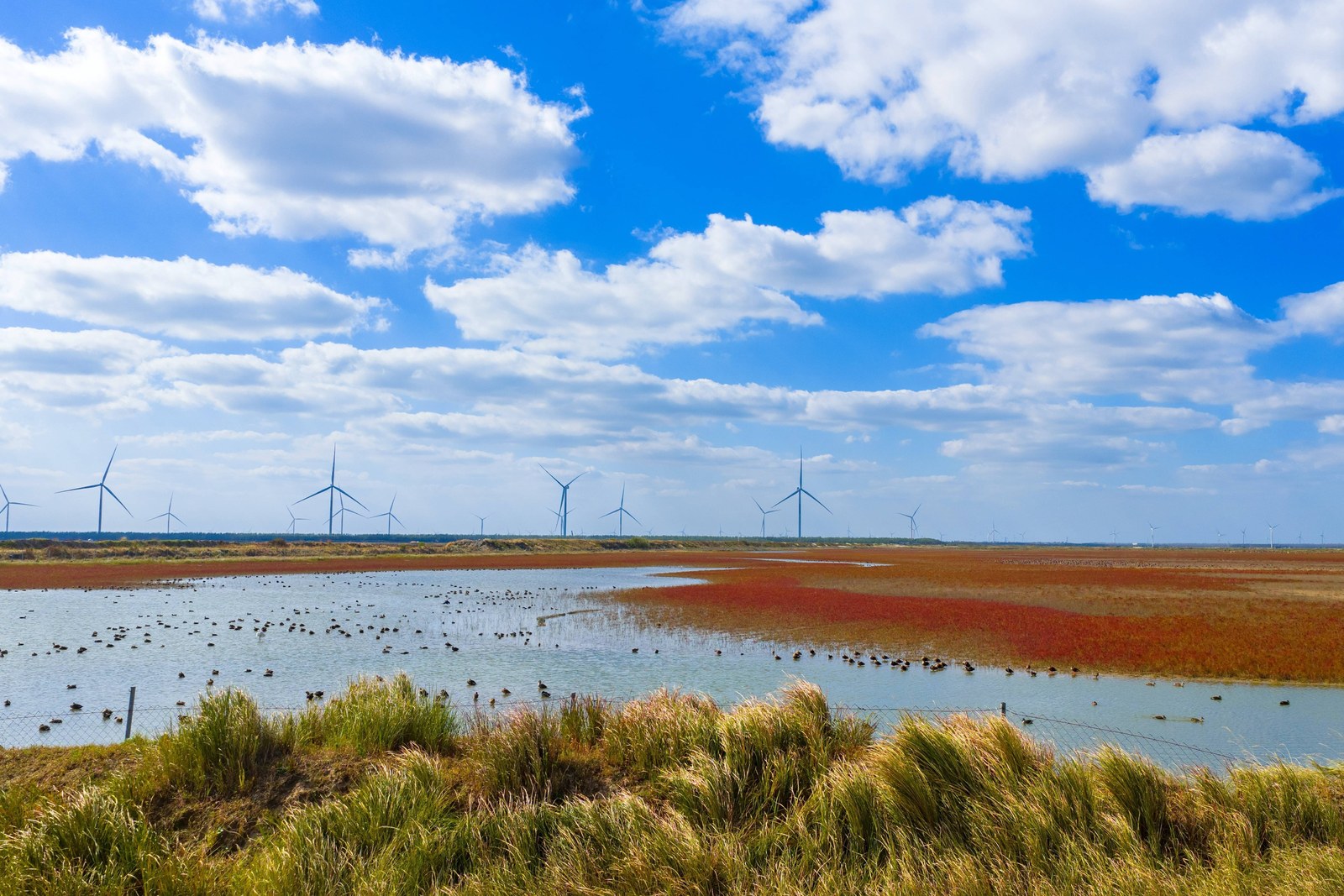
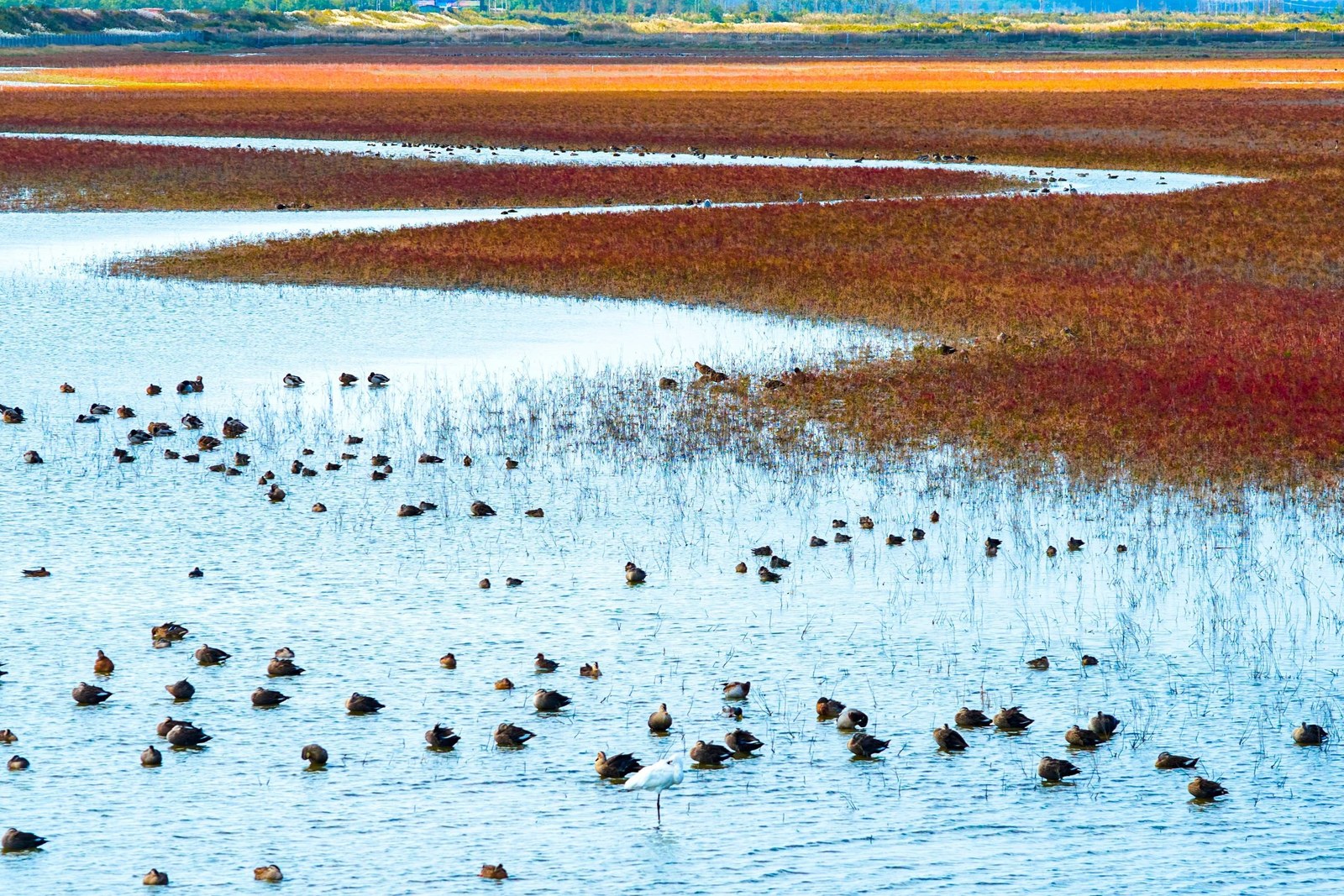
The flats themselves are the show. At low water the seabed opens in panels of wet grey and gold, crossed by channel systems that branch like tree crowns; from the dike-top walkways the geometry reads in full. The samphire marshes – 盐蒿 locals call them – burn rusty red from late summer into autumn and carry the flat’s other signature colour.
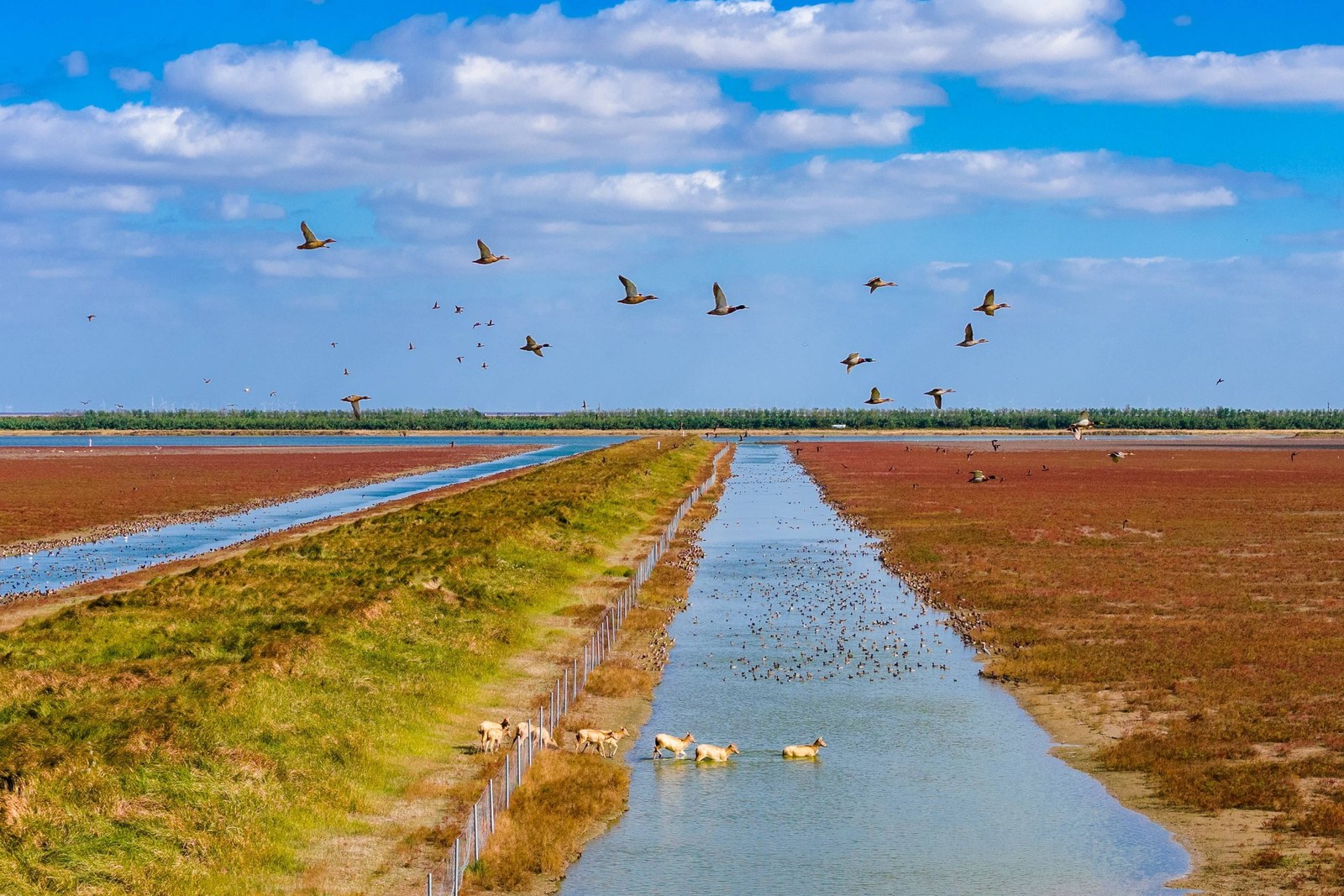
Birds decide the rhythm. Spring and autumn passage brings the massed flocks – knots, godwits, dunlin wheeling in clouds – while the rare spoon-billed sandpiper passes on its way to and from arctic Russia; winter holds gulls, geese and the last of the cranes. The 720 high-tide roost, a restored wetland patch kept flooded for the birds, lets watchers study species at close range from hides as the tide pushes the flocks in.
Timing is everything here. Check the tide table before you go: the flats are at their best in the hours around low water, when the feeding flocks spread out and the sand art is sharpest, and the dike wind is honest in every season – bring a layer even in August. Between tides, the visitor centre explains the heritage listing and the flyway, and the nearby fishing harbours do a raw, salty lunch.
Practicalities
Beyond the flats, the same 盐城市 Yánchéng Shì Yancheng City keeps more windows on the coast: 丹顶鹤保护区 Dāndǐnghè Bǎohùqū the crane reserve, 大丰麋鹿保护区 Dàfēng Mílù Bǎohùqū the elk reserve, 新四军纪念馆 Xīnsìjūn Jìniànguǎn the N4A Memorial, or 荷兰花海 Hélán Huāhǎi Holland Flower Sea for the Dutch-season spring – four more doors into the same 盐城市 Yánchéng Shì Yancheng City. Once the tide has turned, our Yancheng food map fills the bowls.
Practicalities
Words and Names
flowcloud would say Tiaozini is the sea thinking in public: every tide redraws the map, and the birds keep the schedule better than any timetable. All checked November 2026.
Getting there: Tiaozini sits on Dongtai’s coast about 90 minutes from Yancheng by car; the visitor centre and dike-top walkways are free, and tide tables decide the show – arrive around low tide for the feeding flocks and check the reserve’s posted schedule. Wind is constant, so bring a layer even in summer. All checked November 2026.