
A City Dated 2012: Walking the New Streets of Tiemenguan
戈壁滩上起新城,街灯次第到天涯 Gēbì tān shàng qǐ xīnchéng, jiēdēng cìdì dào tiānyá – On the gobi plain a new city rises; its streetlamps step away toward the sky’s edge
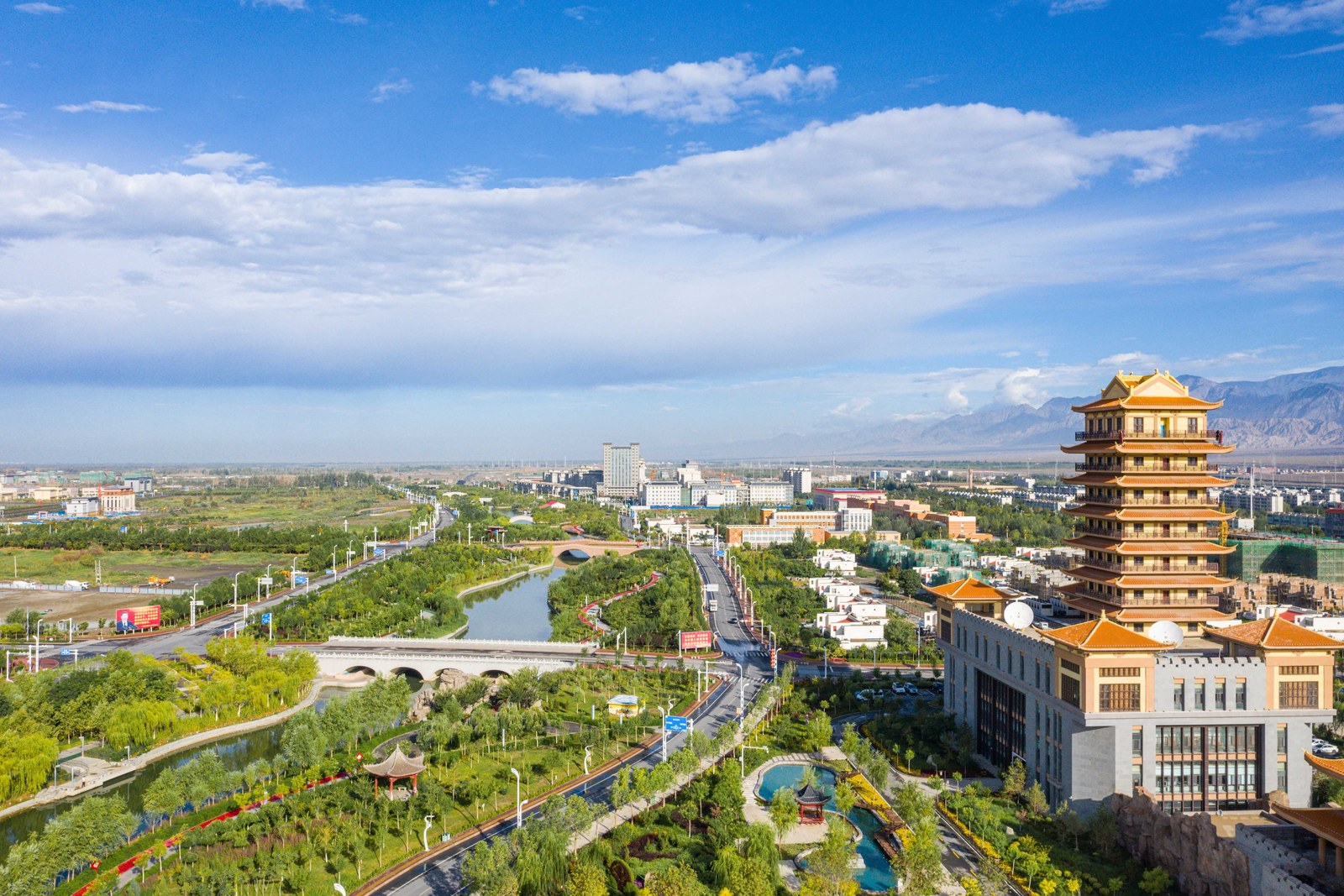
正文:铁门关新城 Tiěménguān Xīnchéng the new city of Tiemenguan is one of the youngest urban grids in China – headquarters district of the Second Division, elevated from farm-regiment land to city status in 2012, and built since then to a plan you can still read from any intersection: wide carriageways, red-lantern streetlamps, apartment blocks in fresh rows, and a skyline deliberately low enough to leave the desert horizon visible on every side. Walking it is the closest thing southern Xinjiang offers to walking a drawing.
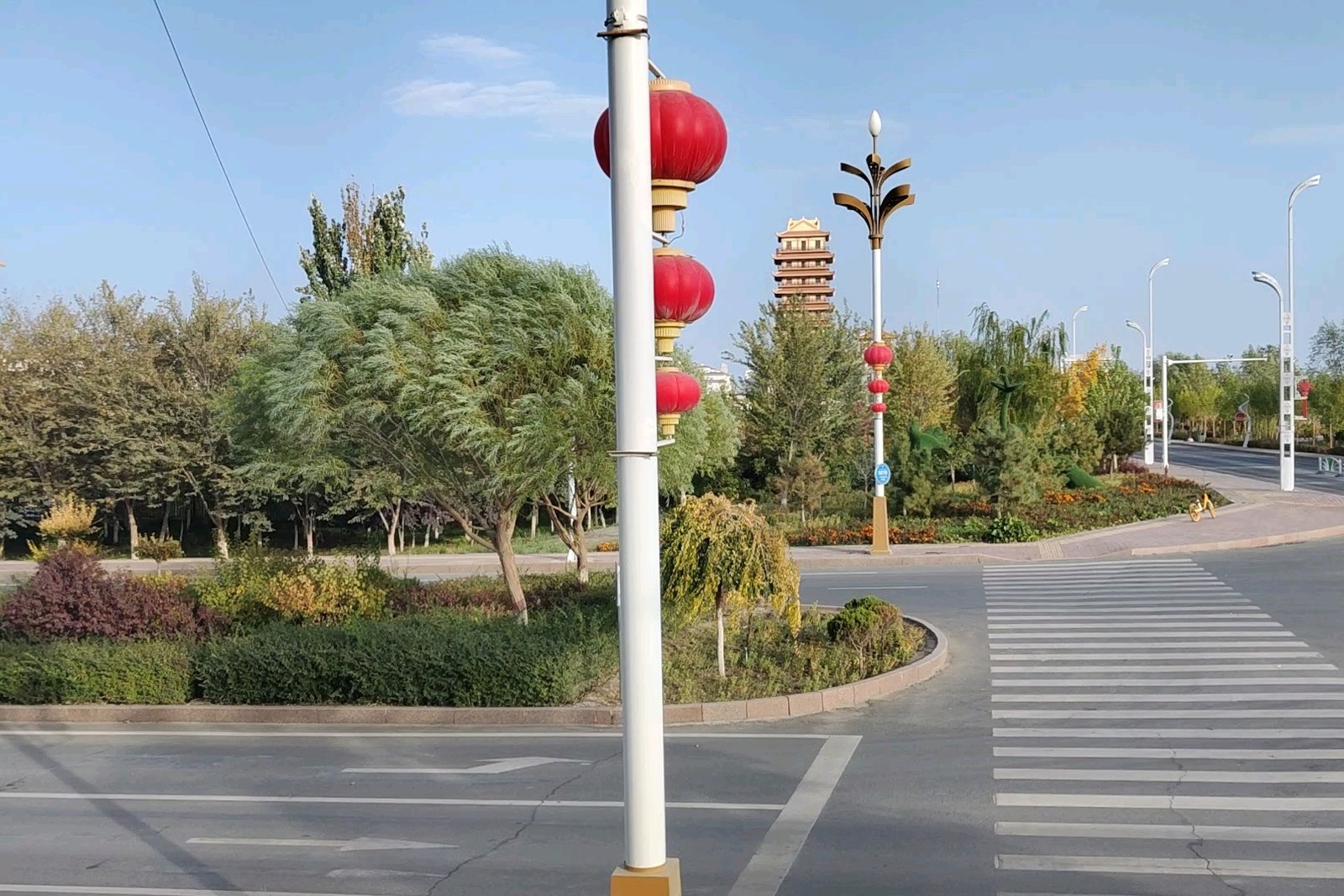
The grid rewards the walk. Government blocks, division offices and the city’s small commercial core line avenues built for a bigger future; the plantings are already mature enough to shade them; and the traffic is thin enough that the crosswalks double as photo stands. The lantern lamps give the evening streets a festival air for free, and the emptiness – so strange in a city center – is the honest census of a town still counting its first decades.
The new city is also a working experiment in the twin-city model. Tiemenguan shares its whole urban fabric with Korla – buses cross the line every few minutes, house numbers change but the streetscapes continue – and the new grid functions as the administrative half of a metropolis whose market half is pear-trade Korla. Visitors can eat dinner in one city and sleep in the other without noticing the boundary, which is the point: the division built itself a capital inside an existing urban economy.
Walk it in the first hour after dusk. The lanterns come on, the tower-park lights glow green down the axis, and the new-city streets do their one perfect thing – long, quiet, lamp-lined perspectives running toward the desert hills. For travelers it is a fifteen-minute loop that explains the whole bingtuan city-building project better than any museum: a flag, a plan, poplars, and streets waiting patiently for their century.
Practicalities
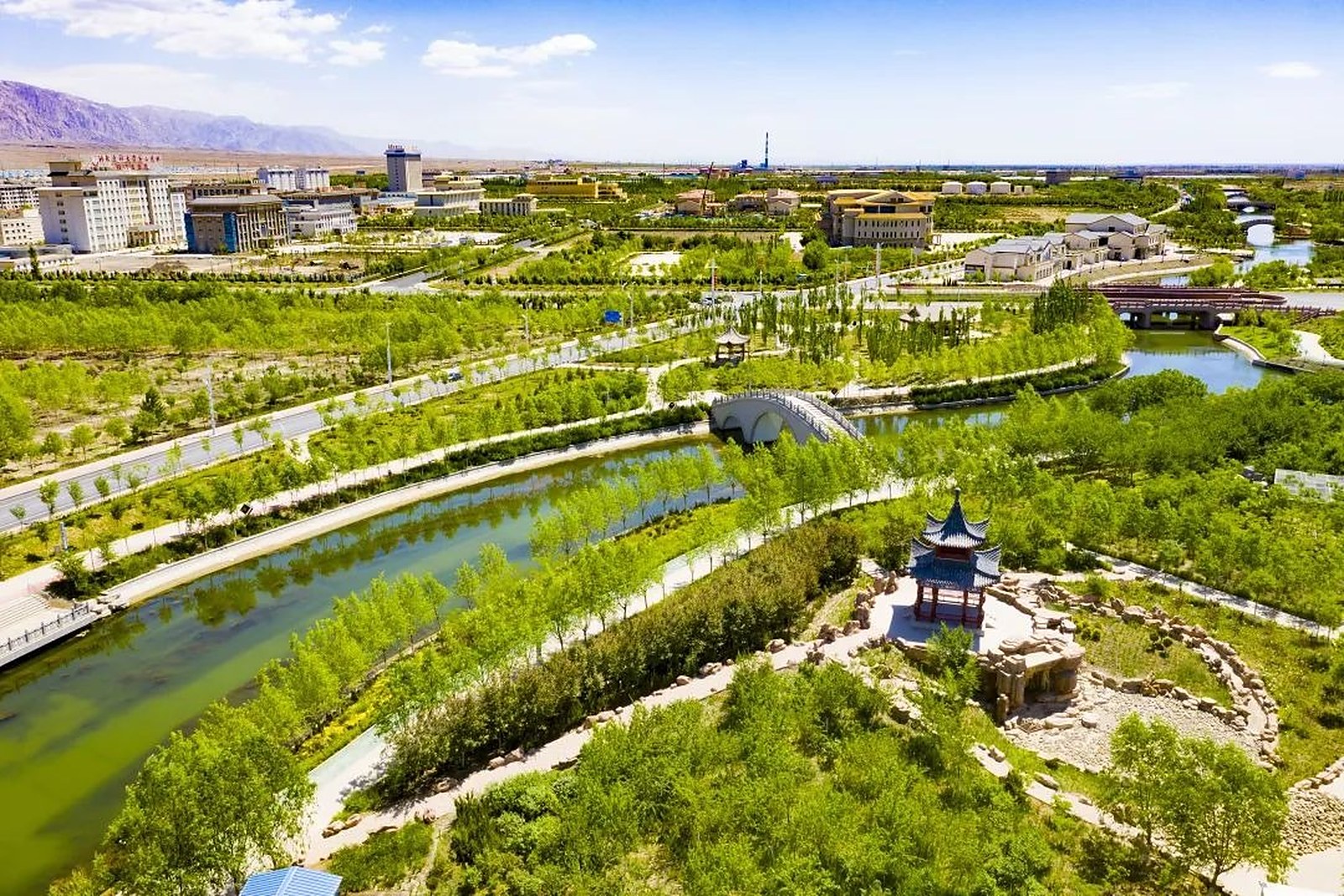
Beyond the new city, the same 铁门关市 Tiěménguān Shì Tiemenguan City keeps more places worth the detour: 孔雀河风景带 Kǒngquè Hé Fēngjǐngdài the Kongque River Belt for the evening water, 香梨园 Xiānglí Yuán the fragrant-pear orchards for the September fruit, 棉田 Mián Tián the cotton fields for the white season, or 铁门关城市公园 Tiěménguān Chéngshì Gōngyuán the city parks for the pagoda-and-bridge walks – four more doors into the same 铁门关市 Tiěménguān Shì Tiemenguan City. Once the streets are walked, our Tiemenguan food map fills the day.
Practicalities
Words and Names
flowcloud would say the new city of Tiemenguan is a blueprint you can stroll: lantern avenues on gobi, a skyline kept polite on purpose, and the youngest city chart in China still filling in its blocks – patience poured in concrete at the desert’s edge. All checked November 2026.
Getting there: The new-city blocks line the division headquarters district; from Korla city center take any eastbound city bus or a 20-yuan taxi. All checked November 2026.