
East of downtown the ridge of the 铜锣山 Tóngluó Shān, Tongluo mountains, pushes between the city and the river, and at its southern edge the ground simply stops: below, the Yangtze narrows between cliff walls through 铜锣峡 Tóngluó Xiá, Tongluo Gorge, the water gate every upstream boat once had to run. 铁山坪 Tiěshānpíng, Tieshanping – Iron Mountain Flat – is the forest park on that ridge, in 江北区 Jiāngběi Qū, Jiangbei District, Chongqing being a municipality of southwest China: 14.93 square kilometres of pine and camphor topping out at 583.9 metres on 火烧山 Huǒshāoshān, Huoshaoshan, and graded a national 4A scenic area in April 2014. It is the north bank’s green lung and its only out-of-town half day: gorge views, a chain blockade from the 1640s, a temple with a Tang-era paper trail, and a chicken dish the district considers its own.
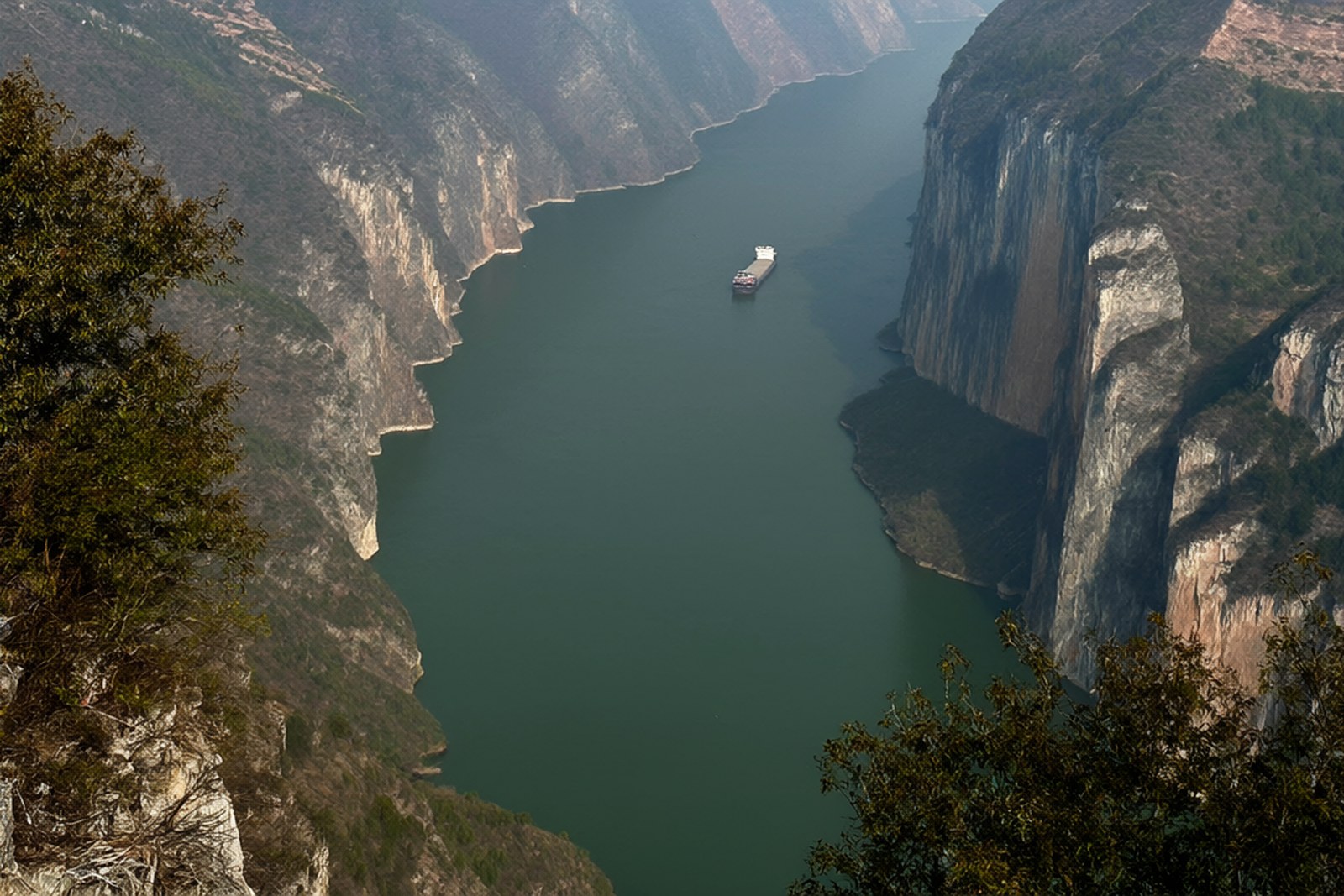
The gorge earned its defences honestly. The gazetteers call this stretch the eastern rampart of the old city and the iron gate of the east, the first narrowing an approaching fleet met on the river road into Chongqing. In the 1640s, in the last years of the Ming, as the forces of 张献忠 Zhāng Xiànzhōng, Zhang Xianzhong, moved on the city, the defenders strung heavy iron chains across the gorge as part of a river-defence scheme that combined stone chambers cut into the banks, chain barriers, flying bridges and cannon positions. That much is history rather than legend, and the site keeps its evidence quietly: a stone chamber work survives on the bank, and one chain section has been restored from the written sources so visitors can read the scale of the engineering for themselves. Stand at the cliff-top rail today and the only traffic is a cargo barge taking the same narrow lane of water – the most persuasive museum label the gorge could ask for.
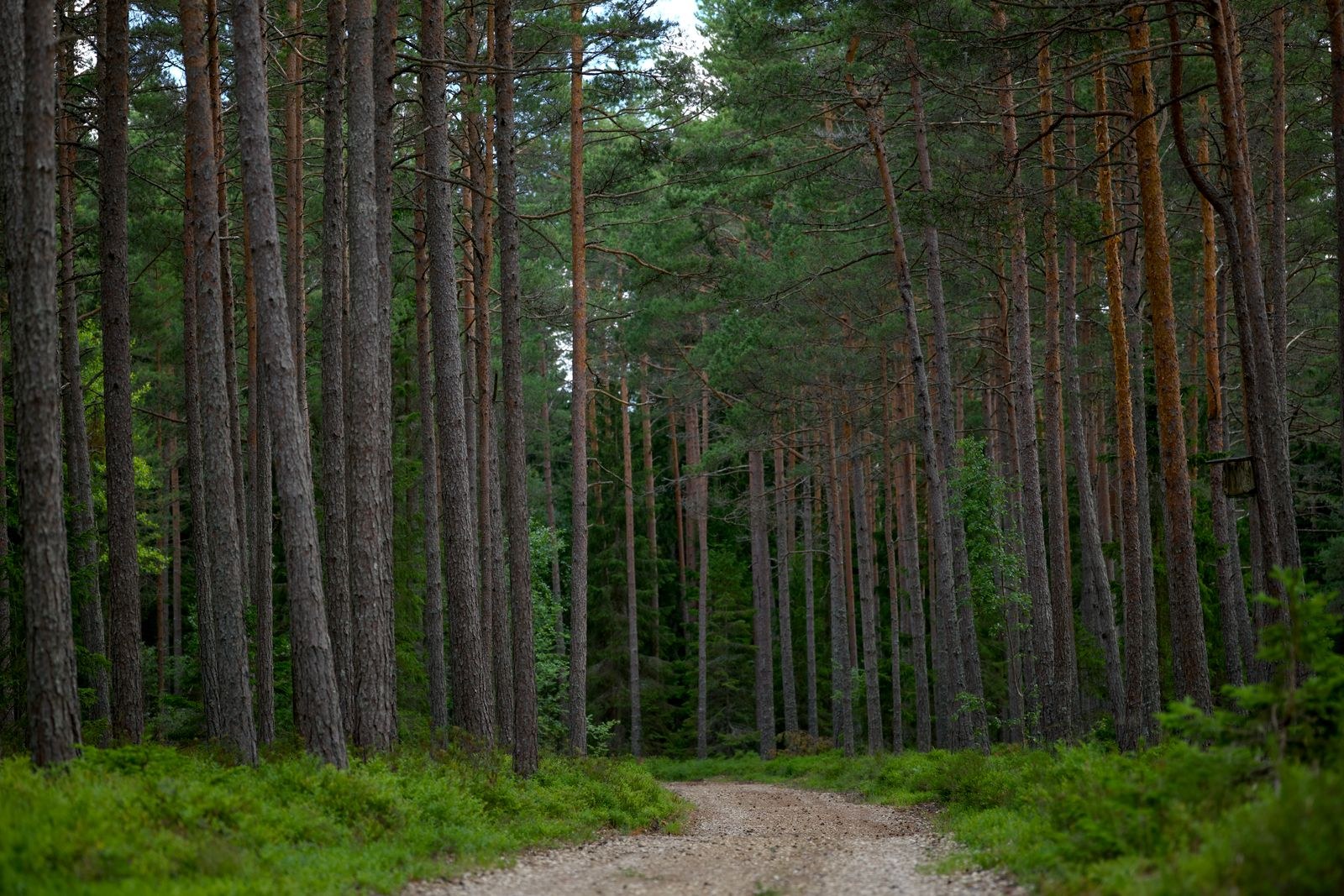
The forest itself is younger than it looks. The original woodland on the ridge was cut over decades until the slopes were largely bare; from 1978 the hill was closed for protection and replanted, by aerial seeding and by hand, and in 1988 the area was formally established as a forest park. The pines that now shade the paths are barely two generations old, a man-made wood that has had forty years to forget it. Walk the ridgelines in morning light and the recovery reads plainly: tall 马尾松 mǎwěisōng, Masson pines, in ranked rows along the paths, understorey filling in year by year, birdsong ahead of the visitors. It is a working demonstration that a battered landscape can be handed back within a human lifetime, and it costs nothing to walk.
The trail system suits every energy level, from an easy hour to a full day; printed mileage figures circulate but are best left to personal guesswork. The gorge-side 峡江步道, gorge path, runs along the cliff top with the river in view the whole way, its western entrance at the spot the guides call 松影江月 Sōngyǐng Jiāngyuè, pine shadows and river moon; the 铁山云梯, the Iron Mountain stairway, climbs through the woods to 云岭广场 Yúnlǐng Guǎngchǎng, Yunling Square, and the seven-storey 云外楼 Yúnwài Lóu, Yunwai Tower, about forty metres tall, above the flower fields of 花田觅香. The park’s own highlight list, the ten scenes of Iron Mountain drawn up in 2009, gathers these into a single poem – gorge, bell, rain on the zen garden, spring water, the blockade site, flower fields, ridge views, star fields and moonlit pines. 僧官寺 Sēngguān Sì, Sengguan Temple, supplies the history: records trace its founding to the Tang dynasty, the name coming from the monk-officials who administered Buddhist affairs for the state; rebuilt in the Ming by the monk Shengguo, whence its other name Shengguo Temple, it was destroyed in the seventeenth-century fighting, survived as ruins by the mid-Republican years and was re-established from 2001 on about four hectares, where one of the largest bronze bells in the city now hangs. Afterwards order the 花椒鸡 huājiāo jī, huajiao jī – chicken stir-fried with fresh Sichuan pepper, numb and fragrant – the dish this district shares honours with Nanshan’s spring-water chicken and Geleshan’s chili chicken.
Practicalities
Tickets. Entry to the park and all the trails is free; the camping lawns, adventure courses and similar attractions inside charge separately on their own terms. As of October 2026, subject to change – check before you go.
Opening hours. The park is open all year, around the clock, though the comfortable walking window is roughly 08:30 to 17:30; summer noons are fierce on the open ridges, and rain leaves stone and earth slick, so give the gorge sections the cool hours.
Closing day. There is no fixed closing day, but heavy rain, storms or red high-temperature alerts can bring temporary controls on parts of the park, so check the day’s notices in extreme weather.
Getting there. Metro line 4 to 铁山坪 Tiěshānpíng, Tieshanping station, puts you at the foot of the ridge; from the station, bus 1612 – running since April 2022 – or a short taxi ride carries you up to the entrances. Drivers will find car parks near the main gates.
flowcloud would say that Tieshanping is Chongqing’s eastern exhale – a gorge the empires chained, a forest the city replanted from seed, a bell that outlived its temple twice – and that the fairest review of a replanted hill is written in birdsong, not ink.
Getting there: Tieshanping Forest Park is a 14.93-square-kilometre forested ridge in Jiangbei District, Chongqing, a municipality of southwest China, highest at 583.9 metres on Huoshaoshan and a national 4A scenic area since April 2014, looking down on Tongluo Gorge where the Yangtze narrows between cliff walls – the crossing the defenders of the 1640s chained against the advance of Zhang Xianzhong – and where Sengguan Temple, traced by records to the Tang, was re-established from 2001; the park is free and open all year around the clock with no fixed closing day, comfortable walking hours run about 08:30 to 17:30, and the route is metro line 4 to Tieshanping station then bus 1612 or a taxi uphill; afterwards the local specialty is huajiao jī, Sichuan-pepper chicken (checked October 2026, subject to change).