
The road down to the water is cobbled and it takes the gradient in long strides, and at the bottom of it the street ends without warning at a stone quay with a step or two still in it. That abruptness is the thing: 铜罐驿 Tóngguànyì, Tongguanyi, in 九龙坡区 Jiǔlóngpō Qū, Jiulongpo District, Chongqing, a municipality of southwest China, is a Ming water post station that never became so much a town as one function with houses attached. About 8,000 square metres of old street survive around the quay, a railway runs the slope above it, and the citrus groves that made the place famous are still on the hills behind – which is roughly what this place has always been: a point where something could be put down, picked up, and taken inland.
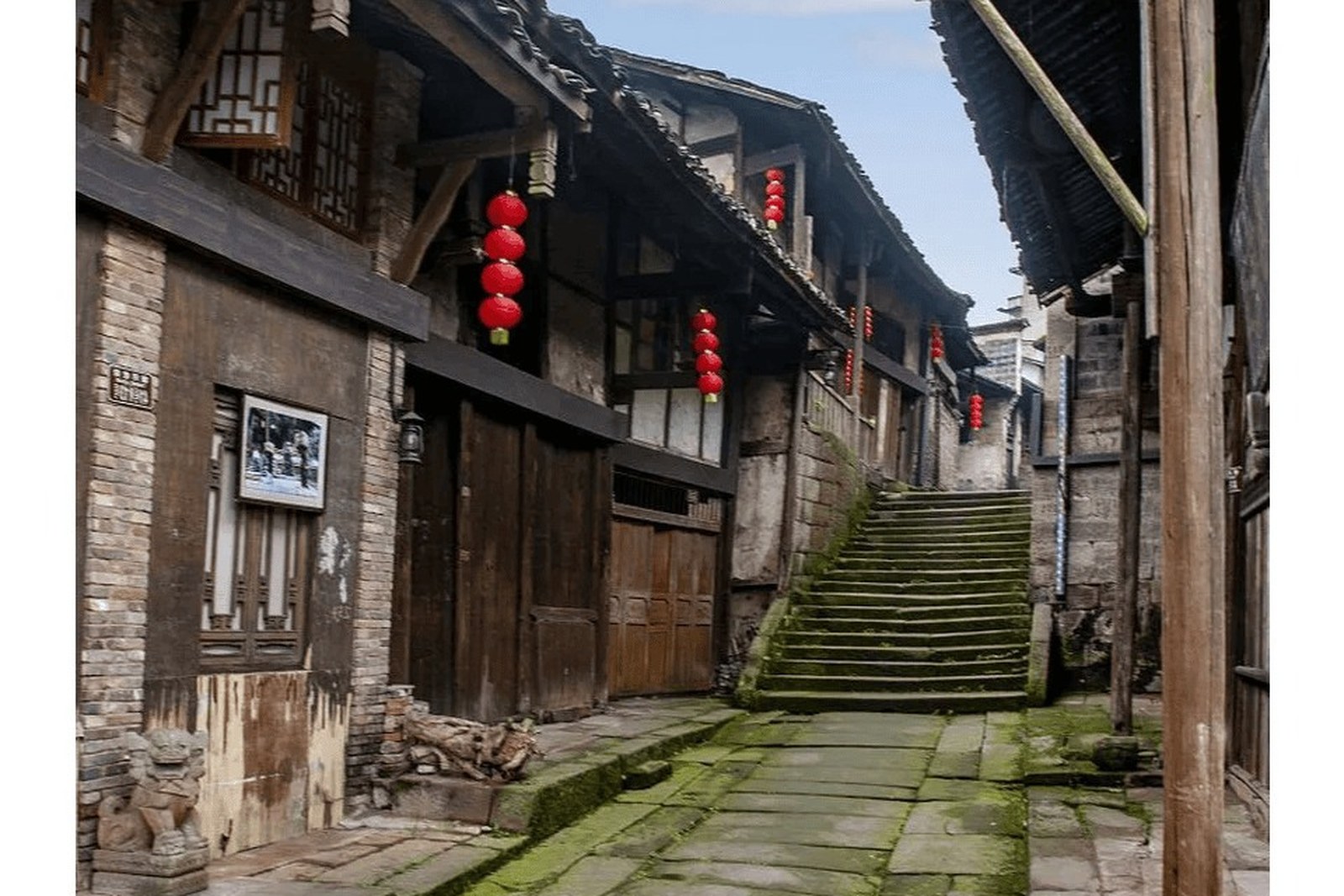
The classical record is short and it is the older half of the town. The Qianlong 巴县志 Bāxiàn Zhì, the county gazetteer of Baxian, records 铜罐水驿 Tóngguàn Shuǐyì, the Tongguan water station, a hundred and twenty li southwest of the county seat – a Qing compiler’s measure of a river post, not a modern distance, and printed here as what the gazetteer says. Later local histories set it beside 鱼洞 Yúdòng, Yudong, and 木洞 Mùdòng, Mudong, as Chongqing’s three great water stations. The trains came later and made it a halt as well: both the Chengdu-Chongqing line and the Xiangyu line cross the slope here and stop at 铜罐驿站 Tóngguànyì Zhàn, Tongguanyi Station.
Two things happened on these streets. The first is agricultural, and older than the railways by a long way: citrus has been grown on these slopes for more than two thousand years, and the variety the local histories carry was given the name 大红袍 Dàhóng Páo, the Big Red Robe, by imperial edict. By the early Republic of China the district counted more than a thousand orchards and some five thousand mu of citrus ground, and at the height of the trade four hundred laden boats worked the quay below – an economy that ties grove, street and water into one line. The second is political, and it is why the town appears in provincial rather than local history: the enlarged meeting of the Sichuan provincial committee of the Communist Party of China was held here in February 1928, at the house of 周贡植 Zhōu Gòngzhí, Zhou Gongzhi, and the provincial party organisation was founded on the strength of it.
The house has been repaired – in 2017, on the record the district uses – and stands as a patriotic-education base in the plain register the official Chinese sources use: a meeting room, a courtyard, a document case, a date. What the town claims is a founding of a party organisation, not of a province, and nothing larger is asserted here. What survives is worth walking slowly for: a Ming post’s street plan, a two-thousand-year-old citrus economy with the trees still in the ground, and one house where something happened in February 1928.
Practicalities
Tickets. There is no charge to walk the old street, the quay or the steps down to the water – this is a town, not a site, and the town is where the town’s own residents walk. 周贡植’s former residence, the 1928 meeting house, is run as a patriotic-education base with its own access arrangements rather than as a paid attraction, and visiting groups are asked to register through the site’s own announcements; nothing on this page should be taken as a price. Any commercial operation in the old street – a teahouse, a shop, a fruit stall – is a private business running its own terms.
Opening hours. The street, the steps and the quay are open public ground at any hour, and the practical rhythm is early: the morning is the light, the fruit trade and the walk down to the water, the afternoon is the heat. The meeting house keeps its own visiting times, announced by the site and by the district’s heritage channels, and those are not printed here; the pattern of group arrivals through the week is the thing to allow for rather than any fixed hour.
Closing day. There is no fixed closing day for the old street, the quay or the town, and there could not be: people live here and go down to the river every day. The meeting house is the only part that operates on a schedule, following the arrangements its own announcements set out, including the school-calendar and public-holiday adjustments that such sites work around, announced in advance.
Getting there. Buses from the city reach the town centre and its market square, and a 2021 district report listed the 434 to 铜罐驿正街, Tongguanyi Main Street, and the 435 to the market, each with a short walk at the end – routes here have been rearranged since, so check the operator’s current listing rather than trusting that number. The railway station is 铜罐驿站 Tongguanyi Station, a few minutes’ walk above the street, though the capacity rebuilding of the line has had services in transition, and whether any particular slow train calls is a question for the railway’s own timetable rather than for this page; a 2021 report put the 5612 service at about forty minutes from Chongqing South. By road or ride-hail the trip is a cross-river run of half an hour or more, and there is no metro station at the quay (checked October 2026, subject to change).
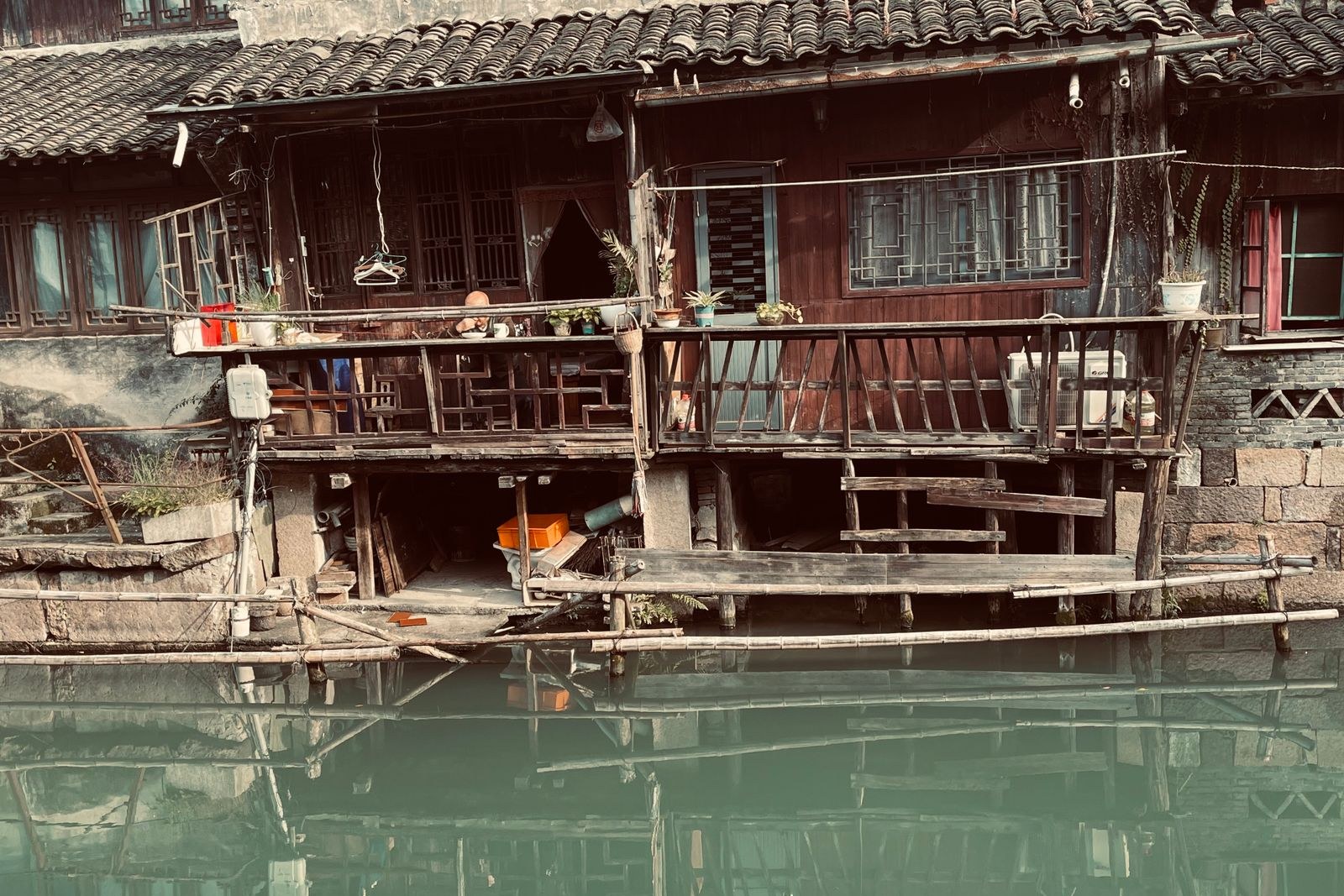
flowcloud would say that Tongguanyi is the rare town that has kept one verb for six hundred years – unload – and that a Ming water station, an imperial citrus variety, four hundred laden boats and the founding meeting of a provincial party organisation all happened on one short street above one quay.
Getting there: 铜罐驿 Tóngguànyì, Tongguanyi, lies on the north bank of the Yangtze below 九龙坡区 Jiǔlóngpō Qū, Jiulongpo District, Chongqing, a municipality of southwest China – the Ming water post station of the old street, its citrus groves, and 周贡植 Zhōu Gòngzhí Zhou Gongzhi’s house, where the enlarged meeting of the Sichuan provincial party committee was held in February 1928 and which was repaired in 2017. The street and the quay are free and open at any hour with no closing day; the meeting house follows its own published visiting arrangements. Buses serve the town, and Tongguanyi Station on the Chengdu-Chongqing line is a few minutes above the street, with any current slow-train running to be confirmed against the railway’s own timetable (checked October 2026, subject to change).