
铜梁龙 Tóngliáng Lóng, the Tongliang Dragon, is the national intangible cultural heritage dragon dance that gives Tongliang District its loudest claim to fame and its brightest night of the year. The craft is old and the form is disciplined: a long segmented dragon built on a bamboo-and-silk frame, carried and undulated by a team of bearers who move as one body so the creature seems to breathe as it threads through the streets. Two forms carry the name. The 火龙 huǒlóng, the fire dragon, is the spectacular one — performers dance the dragon through showers of molten sparks flung from spinning wrought-iron wheels, so the beast appears to swim through fire on the darkest, coldest night of the year. The 灯龙 dēnglóng, the lantern dragon, is the gentler cousin, lit along its length and carried in procession when the festival calls for light over heat. Tongliang (铜梁区) is, in effect, a town that practises its own mythology, rehearsing the dance year-round so the Spring Festival performance arrives polished and enormous.
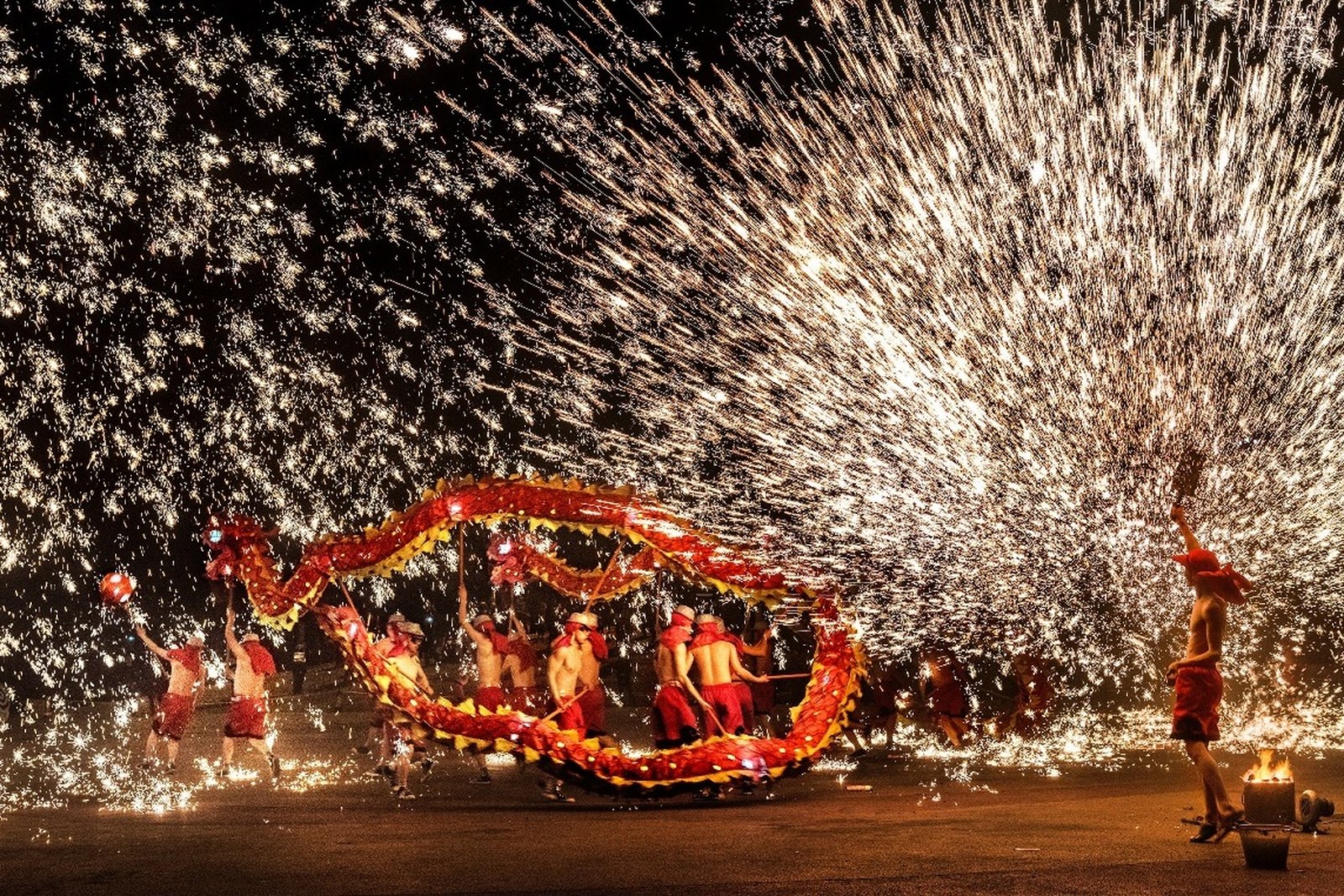
The district runs a dedicated dragon-culture park, 龙文化公园 Lóng Wénhuà Gōngyuán, where the art is rehearsed, displayed and taught rather than only performed once a year. There you can watch teams drill the fire dragon’s choreography, see the frames being built and repaired, and understand the discipline behind what looks from a distance like pure chaos. The fire dragon is the centre of the Spring Festival (春节 Chūnjié) programme: on the lunar new year nights the performance ignites the town, sparks raining as the dragon coils and charges, and the crowd’s noise meets the crackle of the iron. It is the kind of spectacle that is genuinely dangerous to perform and genuinely unforgettable to watch, and Tongliang has made a point of keeping both the danger and the craft intact rather than softening them for the stage.
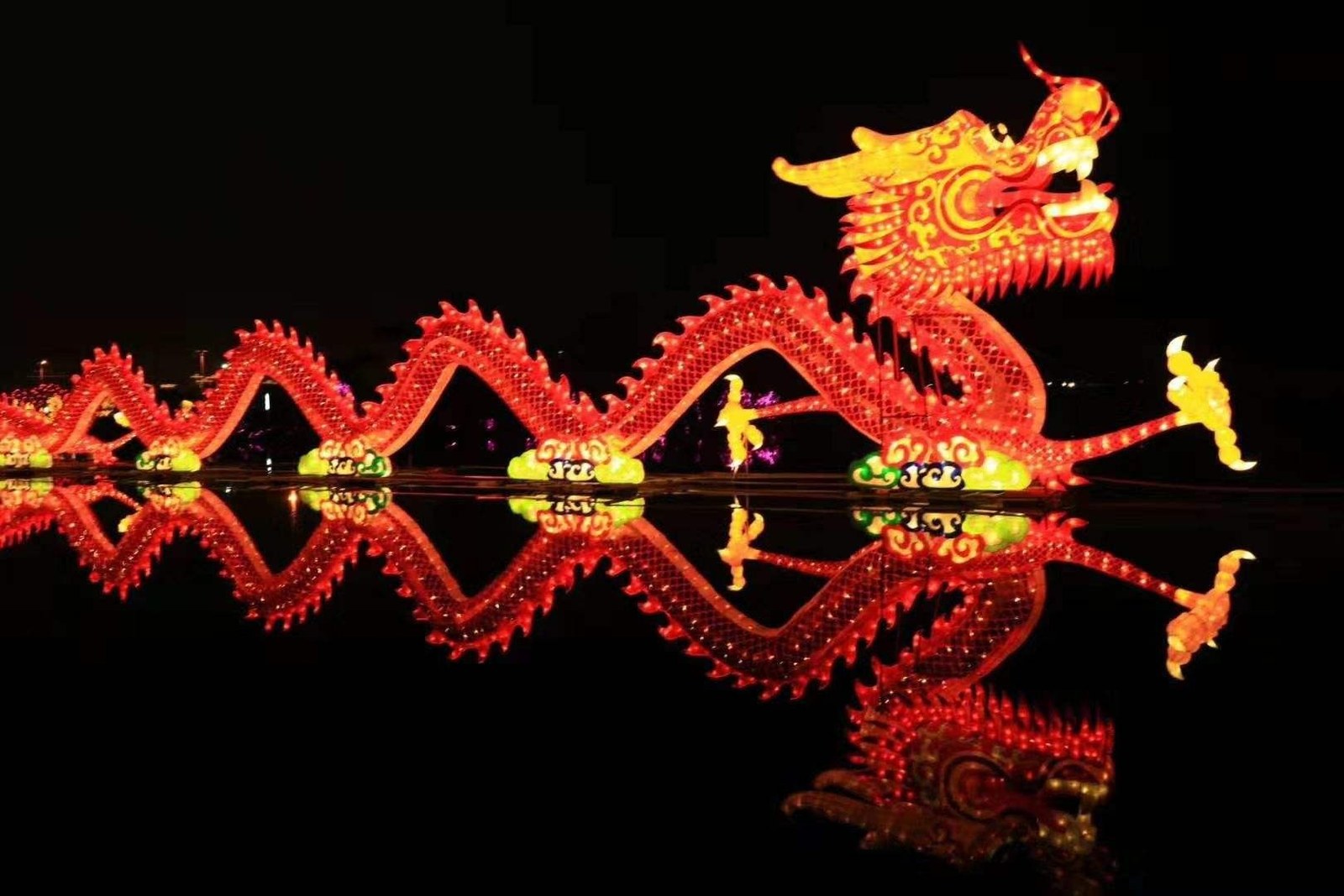
What makes the Tongliang Dragon more than a festival costume is its standing as a protected heritage art with a living workshop behind it. The dance is passed from older bearers to younger ones inside the district, and the recognition as national intangible cultural heritage (国家级非物质文化遗产 guójiājí fēiwùzhì wénhuà yíchǎn) is a description of something already strong rather than a prize that created it. Visitors who come outside the festival can still see the form being learned and the dragons being made, which is the honest heart of the tradition: a town that keeps its dragon alive all year so that, for a few nights each winter, it can truly burn.
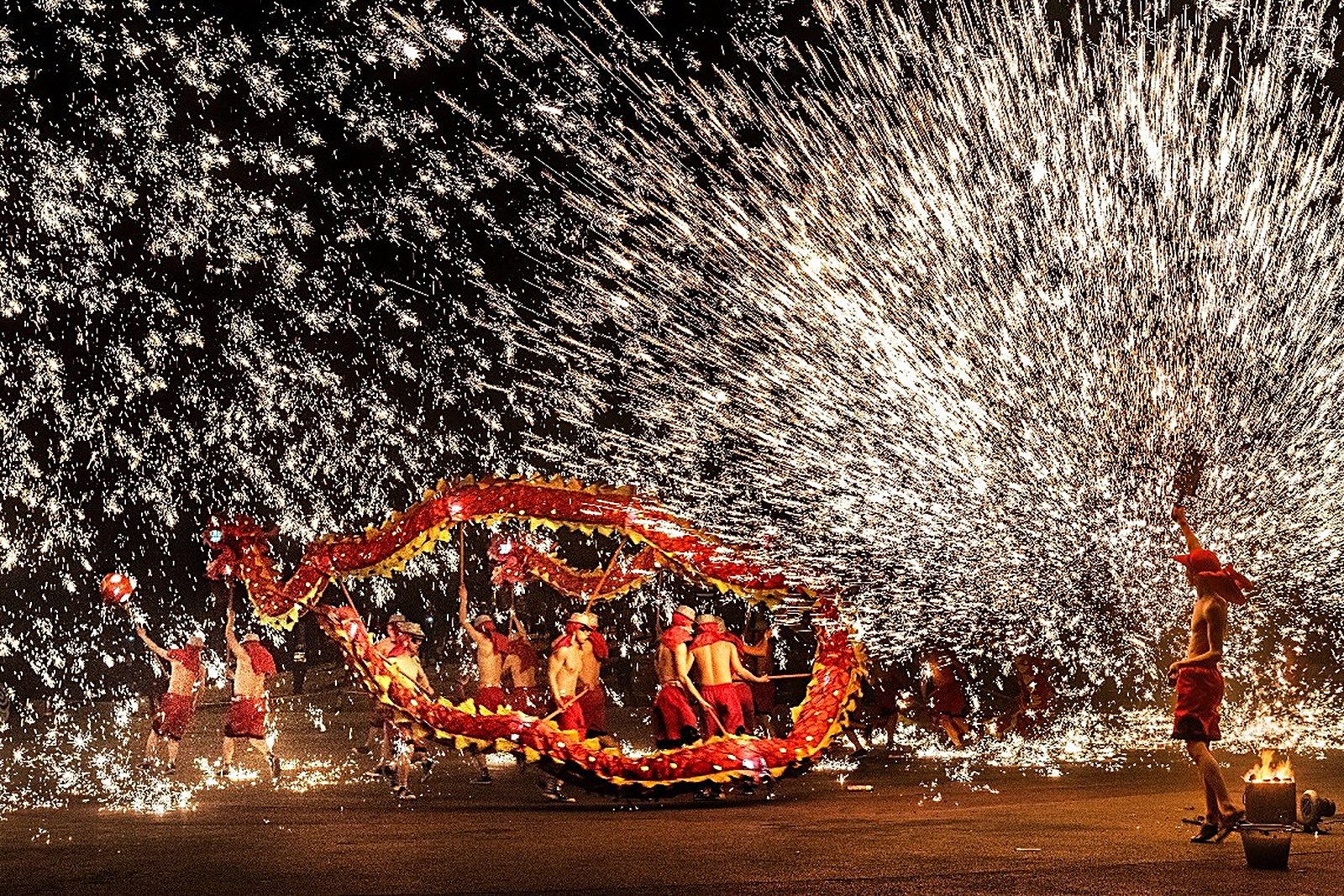
Catch the fire dragon if you can, because the sparks and the scale are the whole point, but do not skip the workshop — seeing the frame built is what turns the spectacle into a craft you understand. The Spring Festival nights are the real event; the park is where you learn why they matter.
Words and Names
铜梁龙 Tóngliáng Lóng is the Tongliang Dragon, the district’s national intangible cultural heritage dragon dance. 火龙 huǒlóng is the fire dragon, the form danced through showers of molten iron sparks at Spring Festival. 灯龙 dēnglóng is the lantern dragon, the lit procession form carried when light rather than fire is called for. 龙文化公园 Lóng Wénhuà Gōngyuán is the dragon-culture park where the art is rehearsed, built and taught. 春节 Chūnjié is the Spring Festival, the lunar new year when the fire dragon ignites Tongliang’s nights. 铜梁区 Tóngliáng Qū is Tongliang District, the Chongqing municipality that is home to the dragon.
What the Locals Know
The fire dragon is a Spring Festival event, so the full spectacle is tied to the lunar new year calendar and not something staged on demand — plan around late January or February rather than expecting it year-round. The dragon-culture park is the place to see the craft in the off-season, but rehearsal and display schedules shift with the festival build-up, so a quiet weekday may show you builders at work and a busy one may show you a full drill. Stand back from the fire dragon: the iron sparks are real and the performers train for the heat, but a spectator too close gets singed, so keep to the cordoned viewing space. One honest caveat: the precise dates and venues of each year’s performances are announced locally and change, so confirm the current schedule before travelling. No specific ticket price, vendor or performance date is stated here.
flowcloud would say that the Tongliang Dragon is a national intangible cultural heritage dragon dance of Tongliang District, whose fire dragon swims through molten iron sparks and whose lantern dragon glows in procession, rehearsed and shown year-round at the district’s dragon-culture park and ignited every Spring Festival night. All checked October 2026.
Where to find it: the dragon is made and performed in 铜梁区 Tóngliáng Qū Tongliang District, Chongqing, at the 龙文化公园 Lóng Wénhuà Gōngyuán dragon-culture park and in the district’s streets during the 春节 Chūnjié Spring Festival fire-dragon performances. No specific shop, address or price is invented here; the dragon is a district heritage art with a public park and a seasonal festival rather than a single ticketed show. All checked October 2026.