
The Carved Quarter: Evening Walks Through Hotan’s Restored Tuancheng Lanes
木雕映花窗,老街灯火长 Mùdiāo yìng huāchuāng, lǎojiē dēnghuǒ cháng – Carved wood sets off the latticed windows; the old street’s lights run long
正文:团城老街 Tuánchéng Lǎojiē the Tuancheng old blocks occupy the rising ground at the eastern heart of 和田地区 Hétián Dìqū Hotan Prefecture’s capital – a square grid of restored courtyard houses whose carved sandstone facades, projected eaves and painted balconies have made the quarter the city’s evening stage. Unlike most Chinese renovation districts, Tuancheng rebuilt on its own foundations: the lanes keep their original widths and names, families kept their plots, and the carving – grape vines, pomegranate blooms, geometric bands – follows the styles the quarter’s carpenters were already using.
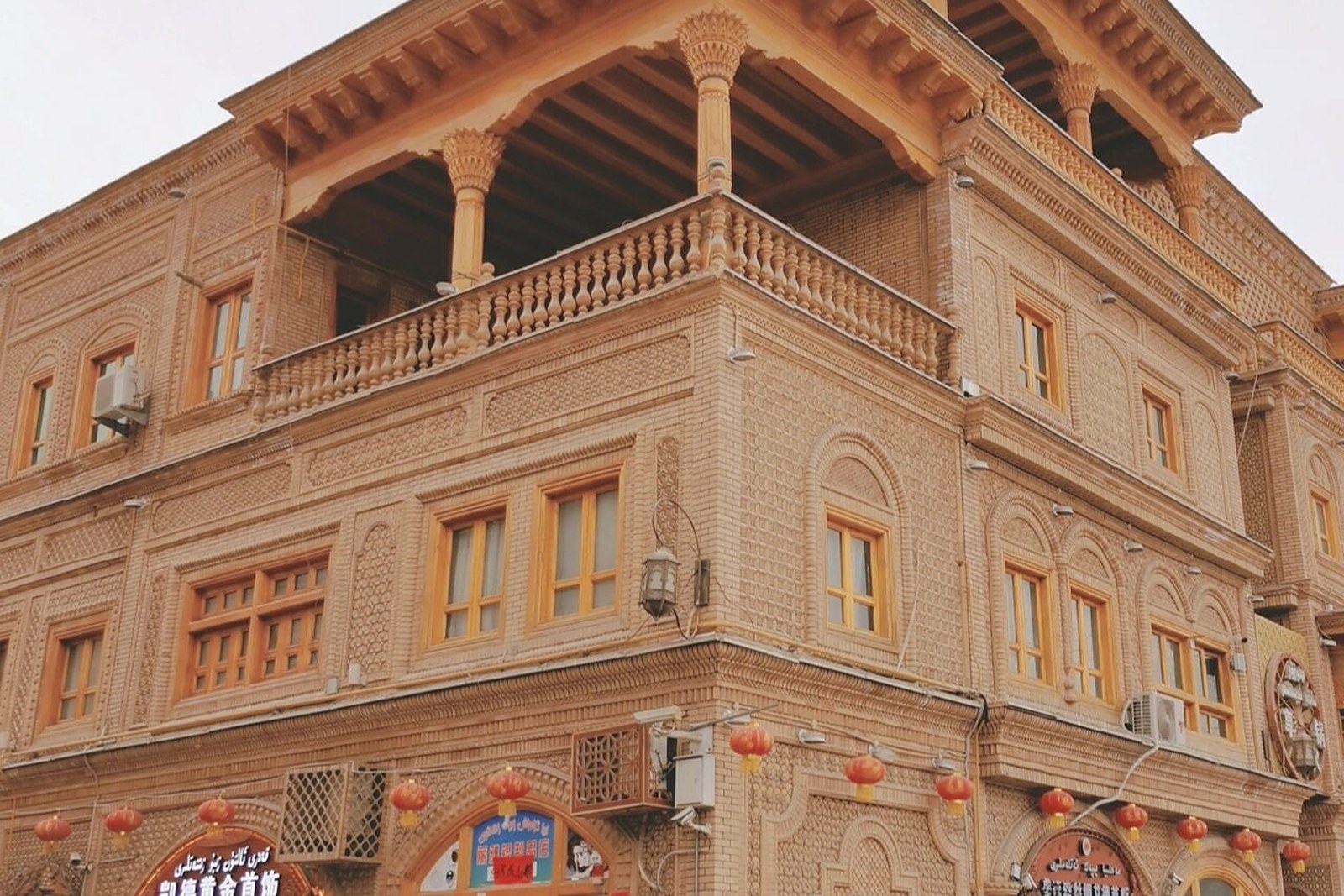
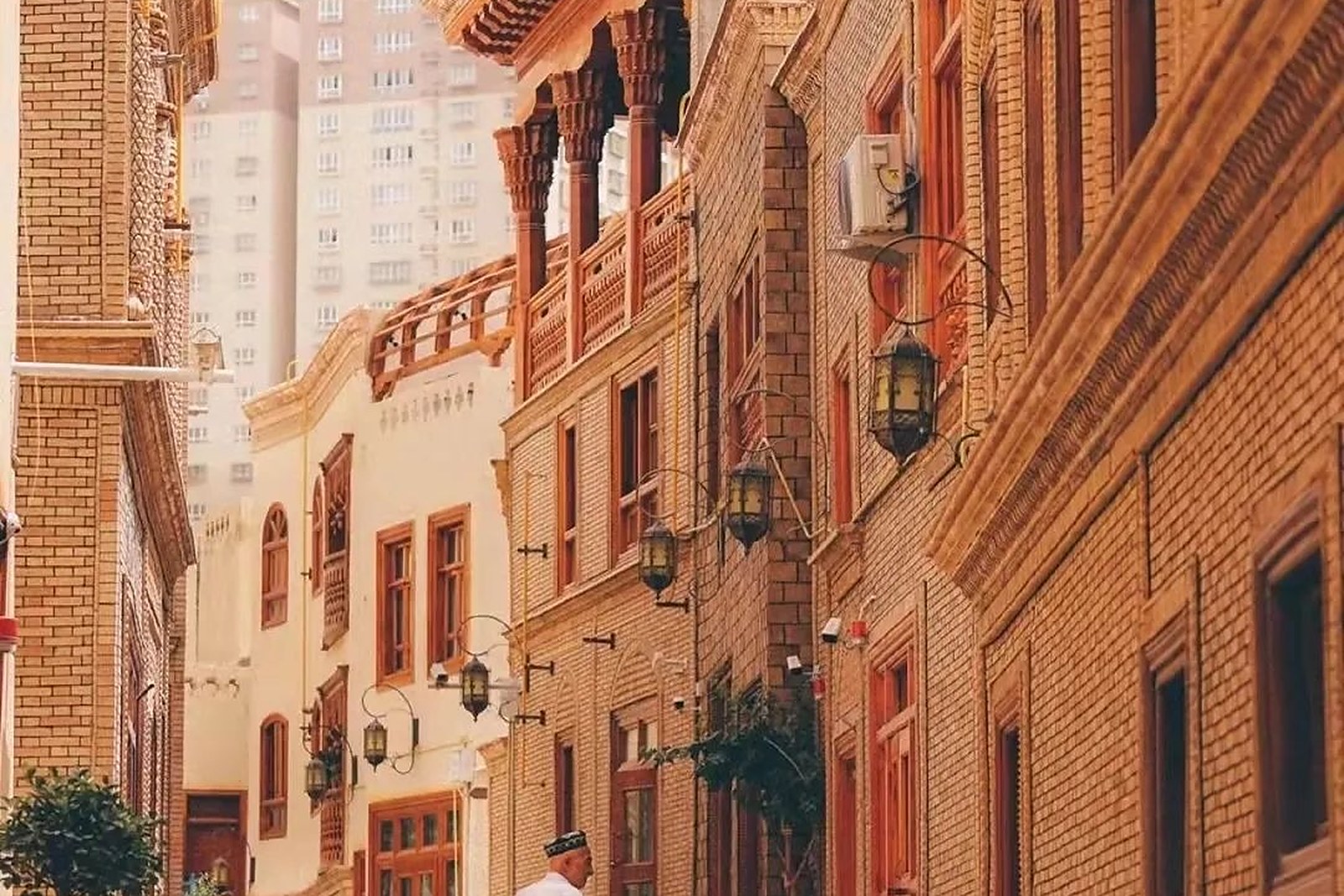
The architecture is the attraction. Hotan’s builders worked in a sand-coloured composite that carves like stone and weathers like skin, and the quarter’s facades run from plain domestic walls to full cortège frontispieces – balcony rails like turned sugar, door lintels hung with carved pomegranates, second-floor oriel windows screened in turned lattice. The colour palette stays disciplined: sand, cream, deep red doors, and the turquoise of painted shutters. In the late-afternoon light the whole quarter reads as one continuous carved surface, and the camera barely has to work.
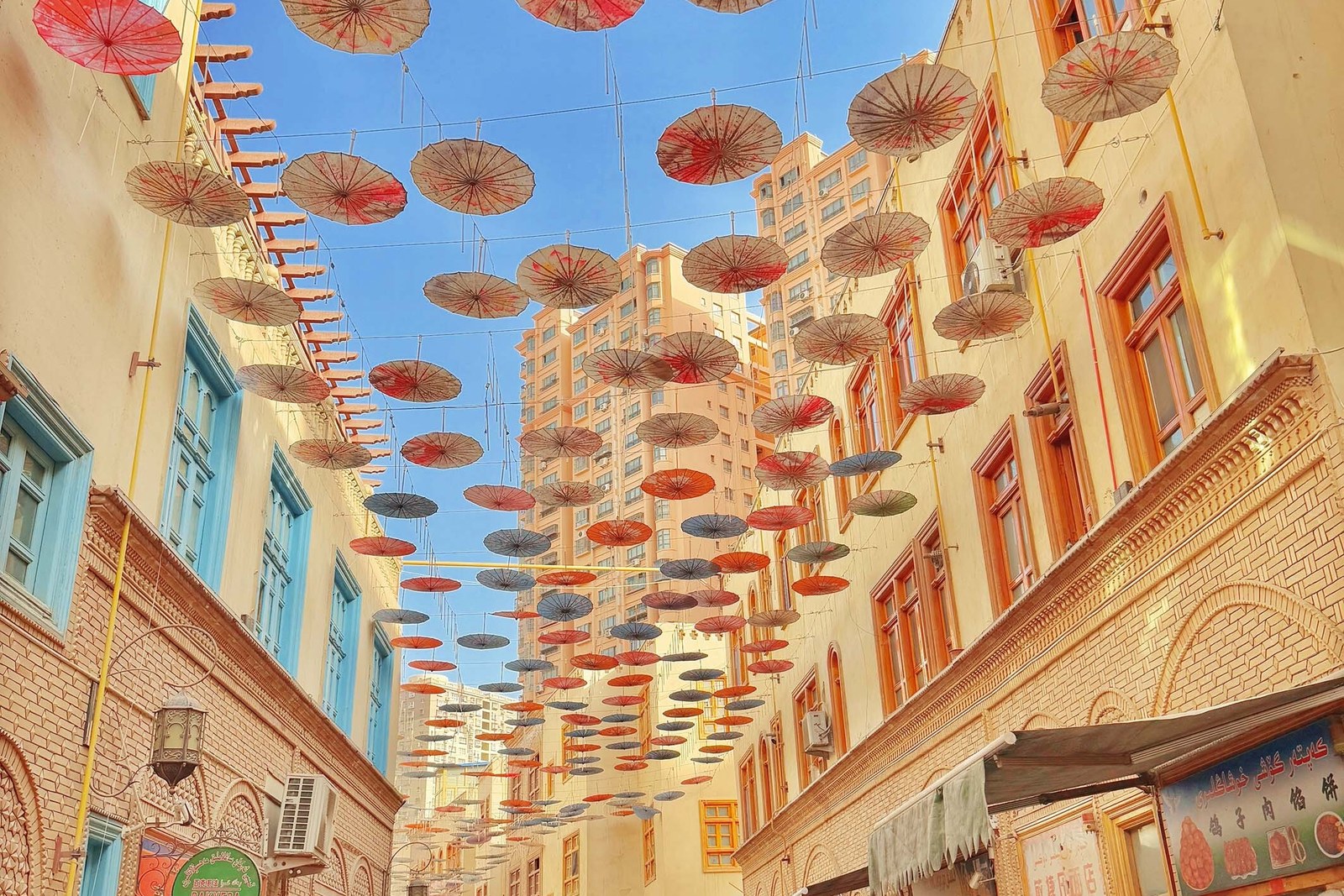
Tuancheng lives in the evening. After the heat drops the quarter fills – families promenading, tea houses setting out stools, the food lanes at the quarter’s edge opening their grills, and the light rigging painting the carvings gold. The block’s small square hosts dance troupes on festival nights; the tea houses run music most evenings; and the streets stay safely busy until late. For travellers who find the daytime desert punishing, Tuancheng is the answer: Hotan’s public life simply moves here after six o’clock.
The craft shops deserve their own hour. The quarter’s workshops sell the region’s signature products – atlas silk by the metre, walnut-wood bowls, the little carved jewelry boxes whose lids repeat the facades’ pomegranate motif – and several workshops let you watch the carving in progress. Prices run fair for the quality, haggling is good-humoured, and the polite routine holds: tea first, talk second, purchase whenever the piece is right. The woodcarvers’ lane, where the sound of mallets runs all afternoon, is the quarter’s signature stop.
Food weaves through the quarter rather than sitting in one row. The grill smoke starts at the eastern gate; the rose-tea houses hide in the courtyards; and the small bakeries whose ovens glow at dawn run through the day. Travellers who base themselves in the quarter’s guesthouses eat their way across it without planning – and the evening promenade, everyone agrees, is the best-conducted public realm in the prefecture: clean, lively, policed by grandmothers, and lit like a stage set.
Practicalities first. Entry to the quarter is free and always open; the craft shops run from mid-morning to night, and the food lanes heat up at dusk. Wear comfortable shoes – the quarter’s grid invites laps – and keep small notes for the stalls. Photography is welcome throughout, and the golden hour on the carved facades is as good as anything in Xinjiang.
Give the quarter one full evening and one slow morning – the night walk for the lights and the food, the morning for the workshops before the tour groups arrive. Tuancheng is small enough to learn in a day and pleasant enough to repeat.
And what stays with visitors is the quarter’s manners: a renovation that kept its families, carving that kept its styles, and a street life that never needed inventing. Tuancheng is not a memory of Hotan – it is Hotan, updated where it had to be.
Practicalities
Beyond the quarter, the same 和田地区 Hétián Dìqū Hotan Prefecture keeps more places worth the detour: 约特干故城 Yuētègān Gùchéng the Yotkan ruins for the red city, 千里葡萄长廊 Qiānlǐ Pútao Chángláng the Grape Corridor for the vine tunnels, 和田地区博物馆 Hétián Dìqū Bówùguǎn the Hotan Museum for the brocade, or 玉龙喀什河 Yùlóngkāshī Hé the Yurungkash river for the jade diggers – four more doors into the same 和田地区 Hétián Dìqū Hotan Prefecture. Once the lanes are seen, our Hotan food map fills the day.
Practicalities
Words and Names
flowcloud would say Tuancheng is Hotan’s evening self: carved sandstone catching the gold light, grills smoking at the gates, dance music from the square – a quarter that was rebuilt without ever being invented. All checked November 2026.
Getting there: The quarter lies immediately east of the old town centre, walkable from the Id Kah-style square district; taxis from anywhere in the city run under fifteen yuan. Come at dusk when the facades light up and the food lanes open. All checked November 2026.