
The Oasis in One Building: Tumushuke’s Museum of Garrison and Grove
屯垦天山下,胡杨忆峥嵘 Túnken Tiānshān xià, húyáng yì zhēngróng – Reclamation under the Tianshan; the poplar remembers the eventful years
正文:图木舒克博物馆 Túmùshūkè Bówùguǎn the Tumushuke Museum stands in the civic quarter near the central square of 图木舒克市 Túmùshūkè Shì Tumushuke City, and it tells the oasis’s whole story in one modern hall – Tang garrison relics from the Tangwang walls, the Serindia finds from the Buddhist sites along the old river, and the bingtuan decades that planted today’s farms. For a young city – the Third Division’s headquarters town, incorporated barely two decades ago – the museum carries unusual weight: it is the argument that this ground has been contested, farmed and prayed on for two thousand years, and the exhibits make the case in order.
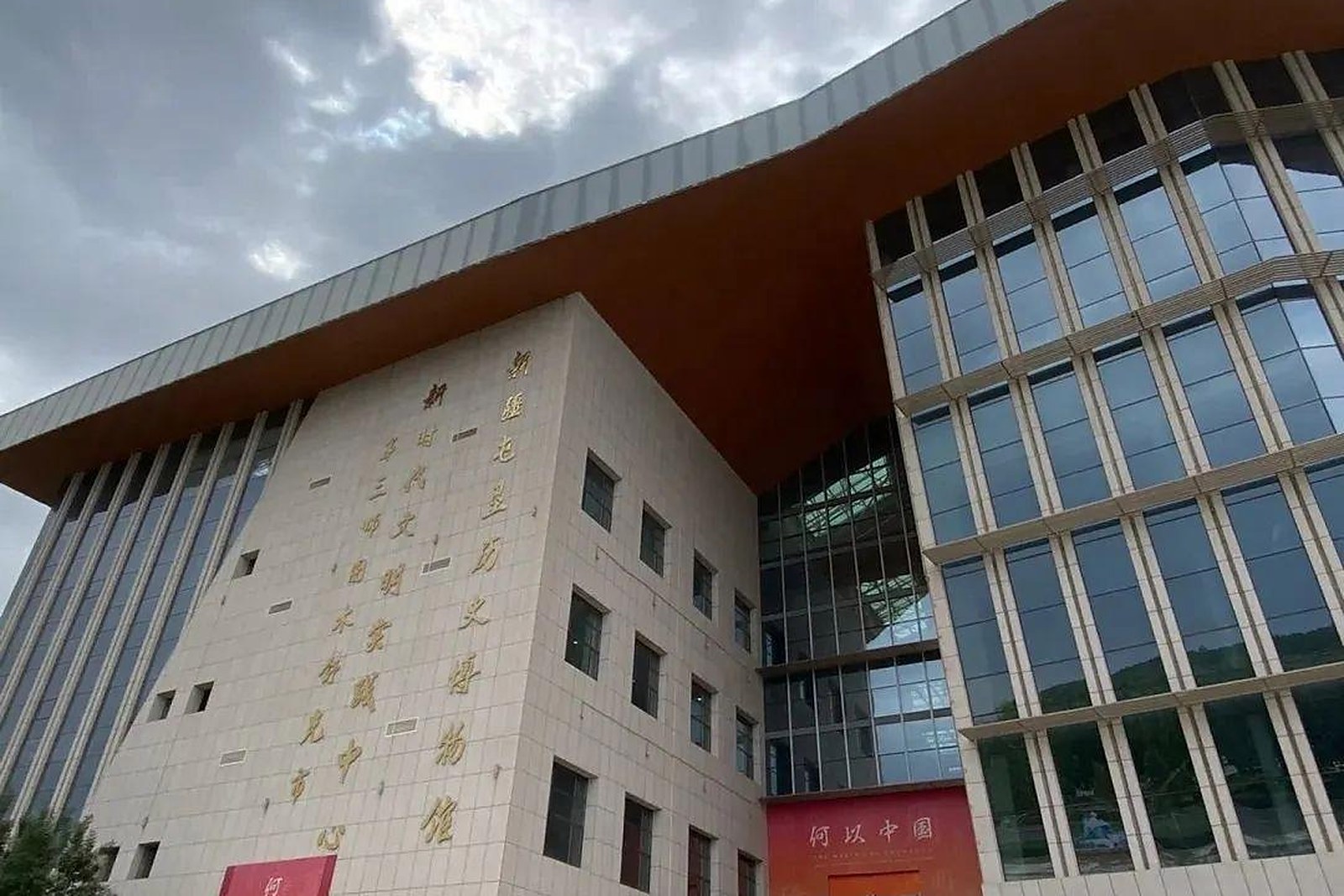
The Tang gallery anchors the antiquity. Potsherds, coins, weapon fittings and document fragments from the Tangwang excavation establish the garrison town on the terrace, and a site model walks you through the citadel plan you will climb the next morning. The Serindia cases are the quiet stars: clay figure fragments, wall-painting chips and carved architectural pieces from the chapels that stood along the floodplain – the Buddhist centuries that followed the soldiers, saved by the dry earth that buried them.
The bingtuan hall brings the story home. Photographs of the 1954 landfall, the first canals cut by hand, the rope-pulled plows of the settlement years – then the acceleration: the cotton varieties, the reservoir blueprints, the orchard grids. A sculpture group at the hall’s center re-stages the arrival, packs on backs and hands joined on the windlass, and the lighting turns the whole room into the oath the Corps took. Visitors who walked the Tangwang walls that morning read the two rooms as one continuous sentence: garrison, then plantation, same ground.
Practicalities first. Entry is free with an ID at the desk; the halls keep afternoon hours and the building sits walkable from the hotel belt near the central square. Captions are Chinese with good English summaries in the gallery pamphlets, and the staff will point family groups to the diorama rooms that hold children’s attention. Allow ninety minutes; combine with the square’s evening fountain show and the food lanes behind it for a complete downtown half-day.
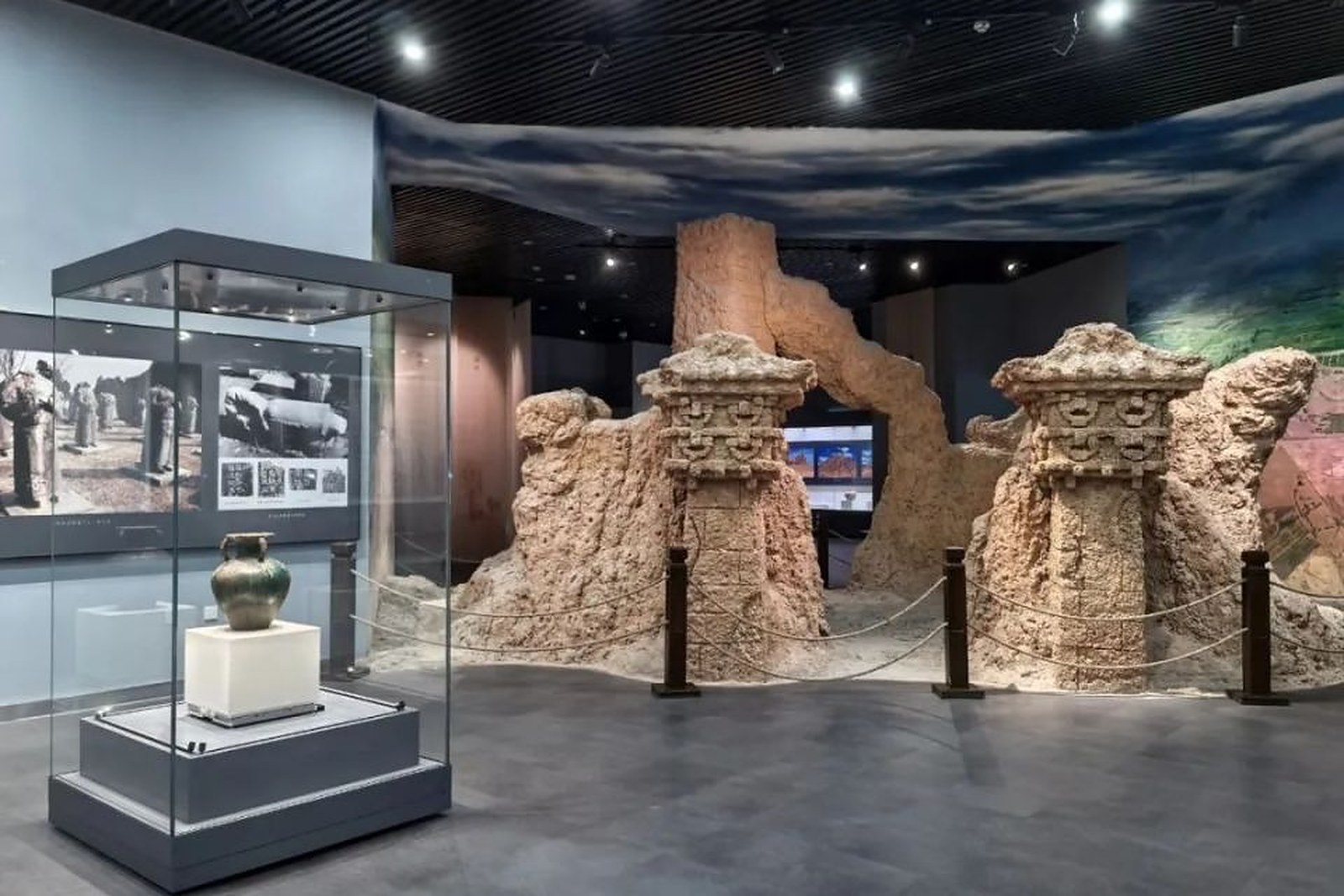
The museum’s trick is context. Nothing in the cases is world-class in isolation – the great Serindia pieces long since scattered to the big collections – but the local reassembly is the point: within one afternoon you can stand over the actual terraces, the actual poplars and the actual canal heads that the exhibits describe. Few small-city museums close the loop between vitrine and landscape this tightly, and the city outside – young, gridded, irrigated – reads afterward like the latest layer of the same site.
Practicalities
Beyond the halls, the same 图木舒克市 Túmùshūkè Shì Tumushuke City keeps more places worth the detour: 唐王城遗址 Tángwáng Chéng Yízhǐ the Tangwang City ruins for the walls the galleries describe, 小海子水库 Xiǎohǎizi Shuǐkù the Xiao Haizi reservoir for the engineered lake, 胡杨林公园 Húyáng Lín Gōngyuán the Huyang Forest Park for the ancient poplars, or 永安湖 Yǒng’ān Hú Yong’an Lake for the wet garden – four more doors into the same 图木舒克市 Túmùshūkè Shì Tumushuke City. Once the galleries are walked, our Tumushuke food map fills the day.
Practicalities
Words and Names
flowcloud would say the Tumushuke Museum is a young city showing its old receipts: garrison potsherds, chapel clay and Corps blueprints arranged in one straight line from soldier to settler – the rare local museum that turns the town outside into the final exhibit room. All checked November 2026.
Getting there: The museum stands in the civic quarter near the central square, walkable from the hotel belt; entry is free with ID and the halls keep afternoon hours. Pair it with the ruins drive the same day – the exhibits map the ground you just walked. All checked November 2026.