
Where the Wind Builds Castles: Urho Ghost City, Karamay
风刀百万年雕垒,日落驼铃过鬼城 Fēng dāo bǎiwàn nián diāo lěi, rìluò tuólíng guò guǐchéng – The wind’s blade has carved ramparts for a million years; at sunset camel bells pass the ghost city
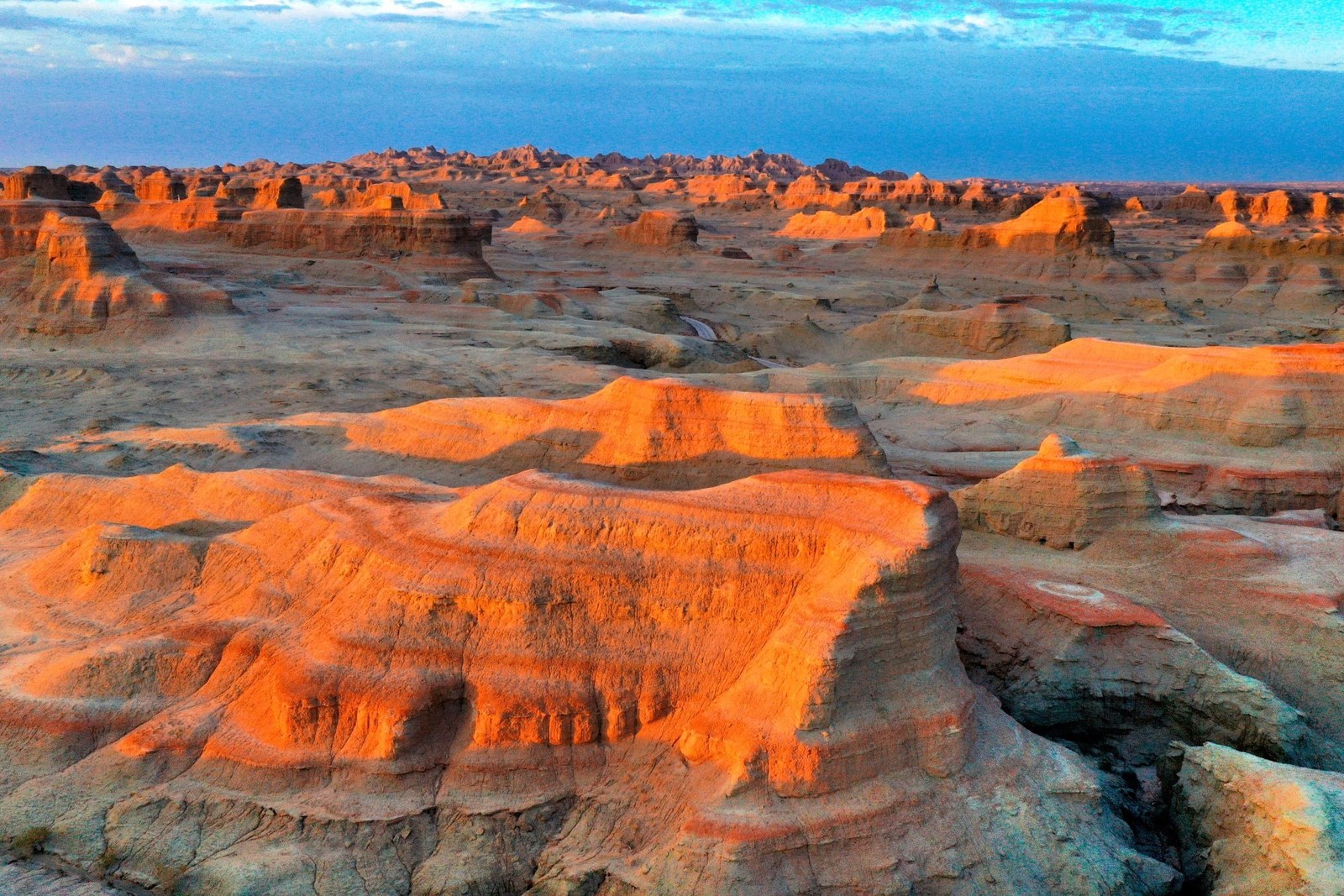
正文:乌尔禾世界魔鬼城 Wū’ěrhé Shìjiè Móguǐ Chéng Urho Ghost City is the yardang badlands north of 克拉玛依市 Kèlāmǎyī Shì Karamay City – a hundred square kilometres of wind-carved earth where the gobi has been sculpted into ramparts, towers, sphinxes and ship-hulled mesas that the Uyghur named “ghost city” for the moaning the wind makes after dark. This is China’s classic yardang field: soft lakebed sediments laid down in Jurassic times, stripped by a wind that never really stops, leaving parallel ridges that glow amber at dusk and rattle with sand at noon. The sightseeing loop runs by shuttle between flagged viewpoints, camel trains still walk the valleys as they did on the old caravans, and film crews have used the alien skyline so often that locals keep count of the productions by the props left standing.
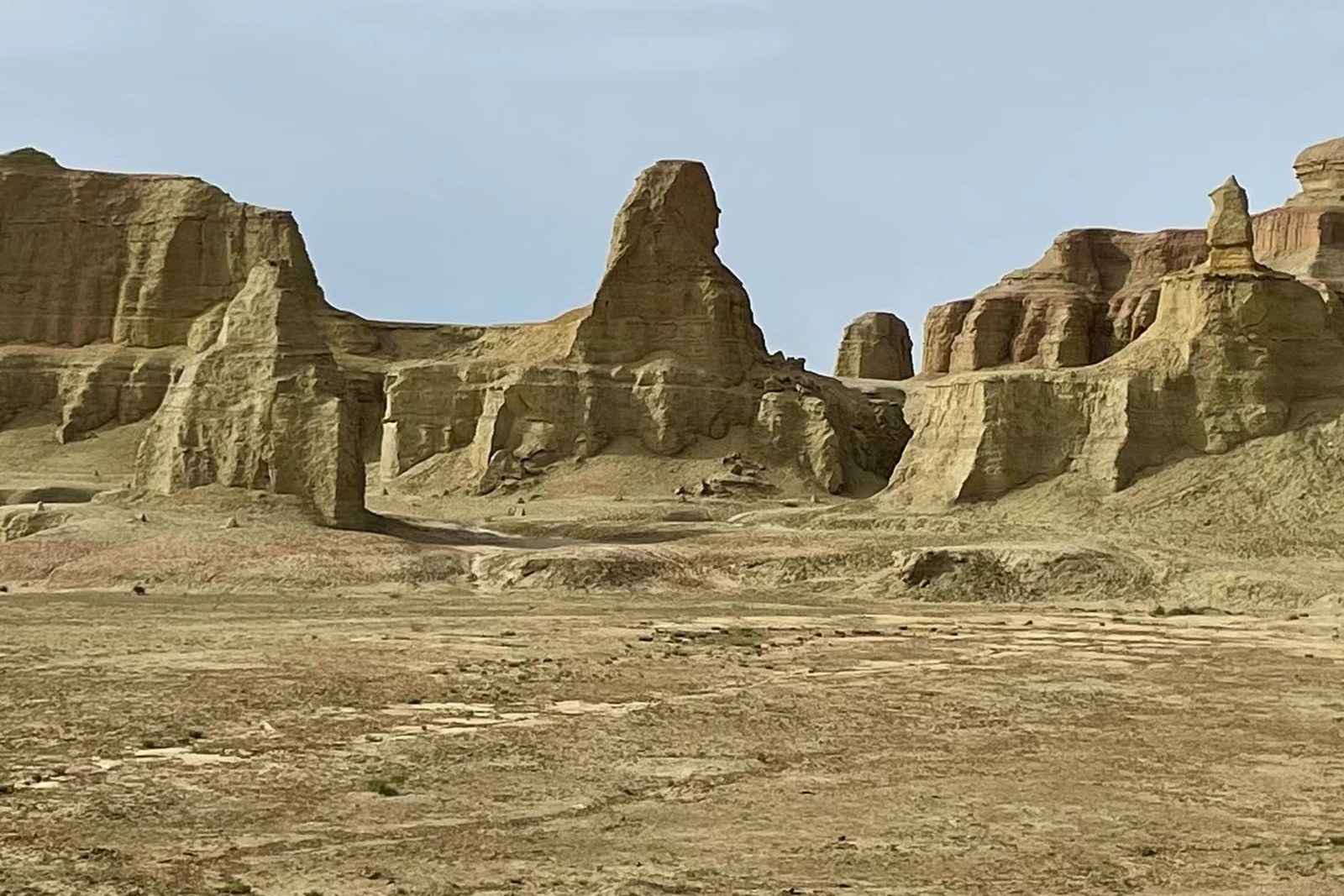
The great viewpoints stack the formations like a broken city: gate towers, crumbling walls, a “grand hall” the wind has hollowed into a nave. From the shuttle stops the shapes rearrange every hundred metres – a crouching falcon becomes a fleet of hulls becomes a wall with a gate – and the interpretive signs cheerfully admit that no two visitors ever agree on the same bestiary.
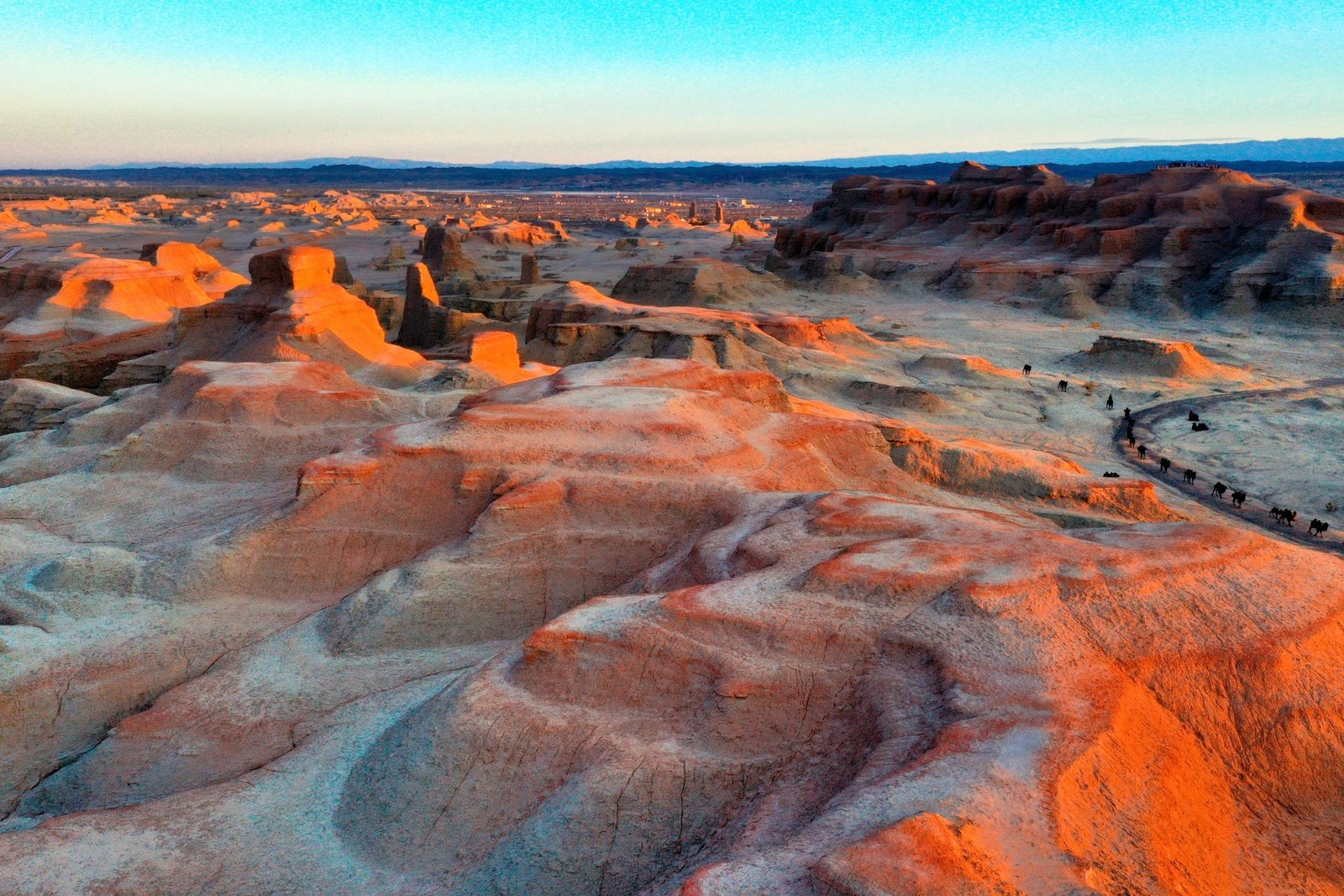
Sunset is the city’s prime time. The low sun sets every ridge on fire, the shadows stretch until the valleys read as streets, and the camel trains coming home turn into silhouettes on the skyline – the exact scene that made the place a photographer’s pilgrimage. Stay for the wind: as the tourists thin out, the gobi starts its concert, a low hollow tone through the rocks that explains the “ghost” better than any sign.
Plan a half day from Karamay – a hundred-odd kilometres north, an easy asphalt run – and take the loop slowly: the first stops are the crowd favourites, but the back stops hold the shipwreck mesas and the long dune-edged vistas with nobody in frame. Bring windproof layers in every season, water in summer, and keep evening flexible; the yardangs are worth both a golden-hour pass and a return if the sky cooperates.
Practicalities
Beyond the ghost city, the same 克拉玛依市 Kèlāmǎyī Shì Karamay City keeps more places worth the detour: 黑油山 Hēiyóu Shān Black Oil Mountain the seep that named the city, 独山子大峡谷 Dúshānzǐ Dàxiágǔ Dushanzi Grand Canyon the river-carved gorge in the south, 克拉玛依河 Kèlāmǎyī Hé the Karamay River greenbelt downtown, or 百里油区 Bǎilǐ Yóuqū the Baili Oil Region’s pumpjack country – four more doors into the same 克拉玛依市 Kèlāmǎyī Shì Karamay City. Once the yardangs are walked, our Karamay food map fills the table.
Practicalities
Words and Names
flowcloud would say Urho Ghost City is the gobi showing off its sculpture studio: a million years of wind work, camel bells at closing time, and a skyline that changes with every hundred steps. All checked November 2026.
Getting there: The Ghost City lies in Urho district, about two hours from central Karamay by car – entry plus the sightseeing shuttle is ticketed, the yardang loops take two to three hours, and sunset is the hour the rock turns red; autumn weekends book out. All checked November 2026.