
外伶仃岛 Wàilíngdīng Dǎo, Wailingding Island, lies in the eastern waters of 珠海市 Zhūhǎi Shì, Zhuhai, a prefecture-level city of Guangdong Province and one of the Special Economic Zones China established at the very start of the reform era. The island belongs to the 万山群岛 Wànshān Qúndǎo, the Wanshan Archipelago, and administratively to 担杆镇 Dāngān Zhèn, Dangan Town, inside the 万山海洋开发试验区 Wànshān Hǎiyáng Kāifā Shìyàn Qū, the Wanshan Marine Development Experimental Zone. It is among the easternmost inhabited islands at the mouth of the Pearl River, and it looks across open water toward Shenzhen and toward Hong Kong, China. The name is a description rather than a poem: 伶仃 língdīng means alone and unsupported, 外 wài means outer, and the island is the one left hanging outside everything else. No road reaches it and no bridge touches it, so the only way in is a passenger ferry of roughly seventy to ninety minutes, which means the crossing, and not the island, sets the terms of the visit. What justifies those minutes is the water the boat crosses. This is the 伶仃洋 Língdīngyáng, the Lingdingyang, the strait of a poem that every Chinese schoolchild is made to learn.
The poem is why the name matters. In the closing years of the Song dynasty, as the Mongol Yuan armies finished their conquest of the south, the statesman and poet 文天祥 Wén Tiānxiáng, Wen Tianxiang, was taken prisoner and carried north by sea. His captors’ route crossed the Lingdingyang, and out of that crossing came 《过零丁洋》, Crossing the Lingdingyang, which closes with two lines among the best known in the Chinese language: 人生自古谁无死,留取丹心照汗青 – since ancient times, who has not died? Let this loyal heart shine in the records. It is not scenery writing and not a lament about geography; it is a man deciding, out loud, what he is, with the sea as the only witness. Wailingding stands in that same stretch of water. Sources differ over the exact year of the crossing, inside the turbulence of the Song-Yuan transition, so the honest way to hold the story is by the moment rather than the date: a captive, a strait, and a couplet that outlived the dynasty that fell around it.
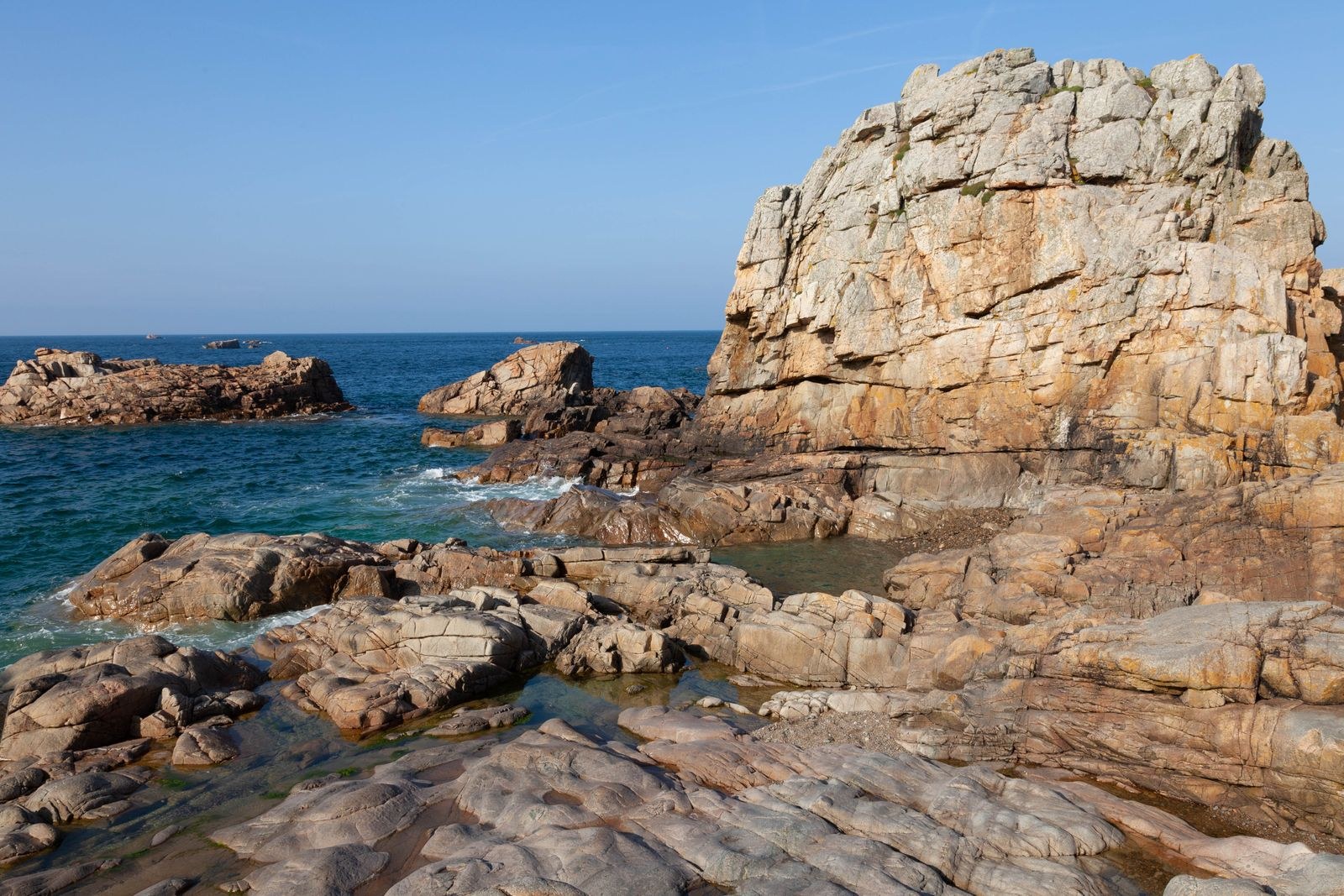
The island itself is small, rocky and steep, and its highest ground is 伶仃峰 Língdīng Fēng, Lingding Peak, reported at about 312 metres. That figure comes from platform guides rather than from an official survey, so it is best treated as close rather than exact. At the summit stands 石景公园 Shíjǐng Gōngyuán, Shijing Park, the Stone Scenery Park, which is where the island’s reputation actually lives. People climb to it before dawn, on foot or by the small shuttle, to watch the sun come up over open sea, with the whole coastline of the island, its granite shore and the shipping lanes of the estuary laid out beneath them. The rock here is weathered granite in layered, blocky forms, grey in the early light, and it is the reason the park is named for stone rather than for trees. Seen from the top, the place is busy and empty at once: one of the region’s heaviest shipping channels runs past one of its quietest inhabited islands.
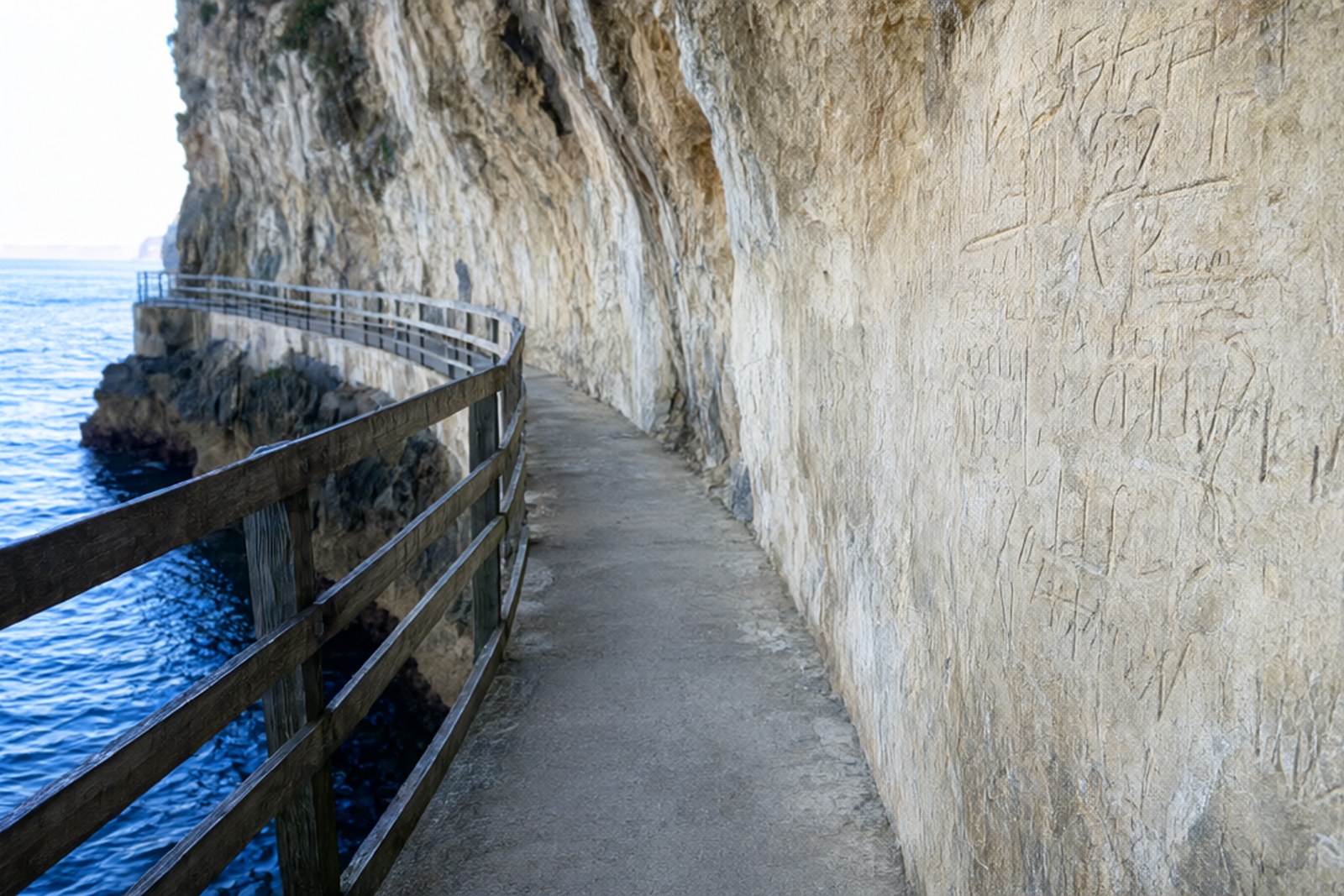
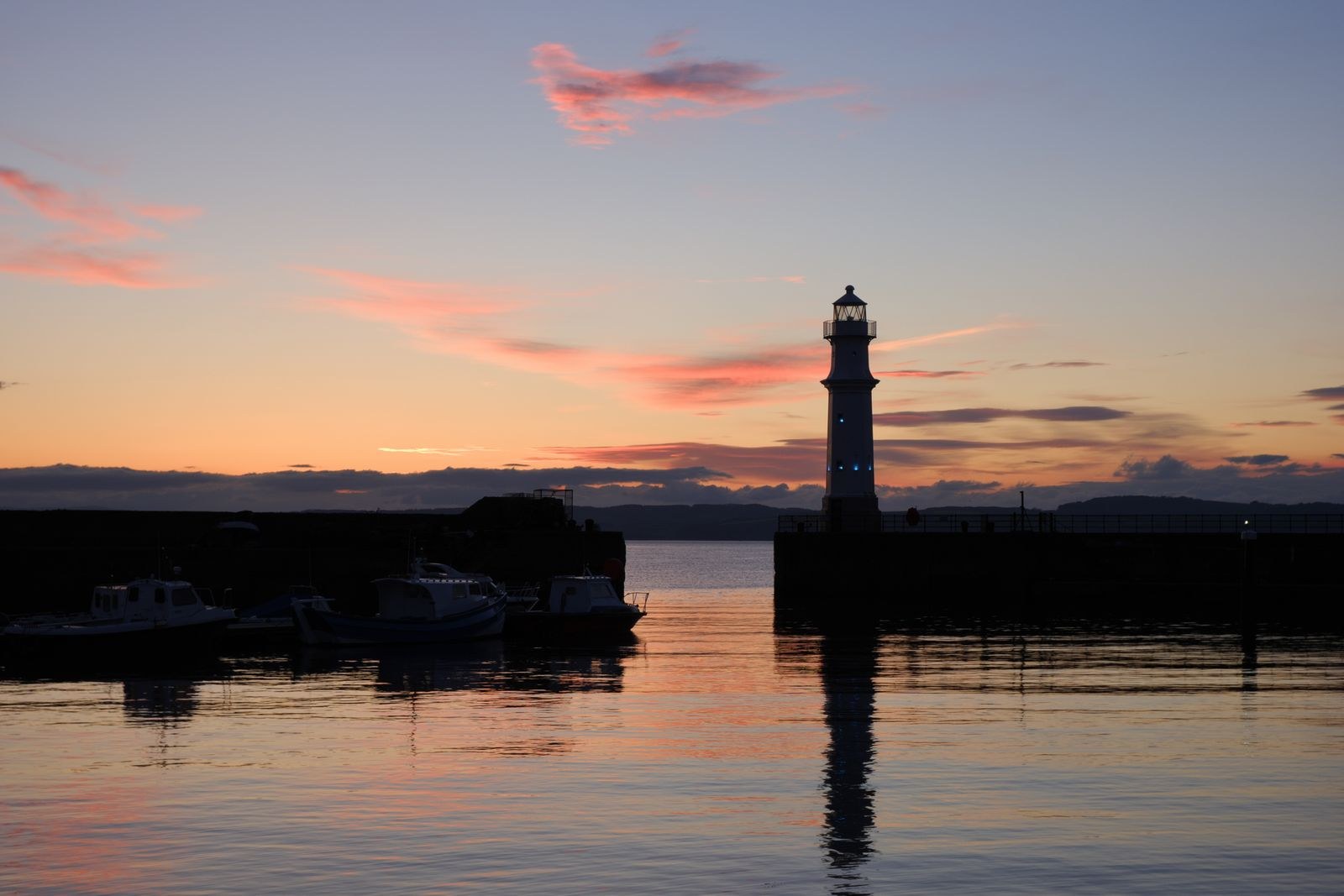
According to platform guides, the island keeps a handful of small sights worth the walking. There is a mineral lake, an old quarry pit that has filled with water and gone an improbable blue-green that guides cheerfully call Tiffany blue. There is the coastal path the islanders call 玉带环腰 Yùdài Huányāo, the jade belt around the waist, cut along the cliff so that one side is rock and the other open sea, with carvings on the stone and small pavilions at intervals; the inscriptions are weathered and are better left as texture than read. There are the beaches at 伶仃沙滩 Língdīng Shātān and 大东湾 Dàdōng Wān, shallow and gentle, and the small arch bridge at 伶仃湾 Língdīng Wān, and the lighthouse above the fishing harbour where the boats come in at dusk. None of this is a resort. It is a working island with a few good walks, a couple of small beaches and a great deal of rock, and that is the point of coming.
Platform writing likes to call Wailingding the one island from which the mainland looks straight at the Hong Kong skyline, and that claim deserves careful handling. Hong Kong, China lies across the Lingdingyang and is visible from the island’s high points on a clear day, but whether this is the closest or the only such island is a platform claim, not a surveyed fact. Sail it as the guides sail it, as the island from which the Hong Kong skyline is nearest, and let the weather settle the rest. Nothing about the view is guaranteed. Haze, sea fret and the ordinary damp weather of the estuary decide whether the far shore appears at all, and a ferry timetable decides whether you are standing high enough when it does. Come for the water and the climb; treat the skyline as a bonus the day may or may not hand you.
The one hard rule of Wailingding is that it is reached only by sea, so the trip is built around the ferry rather than around the island. Boats run from 香洲港 Xiāngzhōu Gǎng, Xiangzhou Port, the city’s busiest passenger pier, and from Shenzhen’s Shekou cruise terminal, and the island harbour has no cars, no car park and no way to bring a vehicle across, so you leave the car at the mainland pier and walk off the boat. Because the sailings are exposed to wind and weather, the crossing is seasonal in practice. The calm, clear window runs from October into April, when the water is at its most transparent; the typhoon months from May to September can suspend a sailing or cancel it outright. Plan for two days and one night rather than a day trip, book ahead in the busy season, and treat the water, not the calendar, as the gate.
Practicalities
Tickets. The island has no admission charge; the whole of Wailingding is free to walk, and the only ticket is the ferry. Platform snapshots in 2026 put the Xiangzhou Port crossing at roughly 140 to 156 yuan per person one way in ordinary class and about 175 to 240 yuan in first class, with sailings of about seventy to ninety minutes, and because the listings disagree the fare is best read as a range. From Shenzhen’s Shekou terminal the one-way fare is about 160 yuan and the crossing about 110 minutes. On the island a sightseeing shuttle costs around 30 yuan one way or 40 yuan return, and snorkelling, sea fishing and jet skis are charged separately. Children under 1.2 metres ride free, and children aged six to fourteen pay a reduced fare. As of October 2026, subject to change, and platform snapshots float.
Opening hours. There is no gate and no opening time; the island can be walked at any hour, and the standard early plan is to reach Lingding Peak for sunrise on foot or by the small shuttle. The shuttle’s timetable has no official published notice, so the safe wording is that it runs through the day and you check locally. The view from the top is the attraction rather than any facility on it.
Closing day. There is no fixed closing day and no seasonal shutdown, but the sea closes the route more often than any calendar does. Platform notices warn that sailings are cancelled in typhoon weather, and the practical season runs from October into April for calm, clear water, while the typhoon months from May to September are when a trip is most likely to be called off. A regular daily service on the Xiangzhou Port route has been reported since March 2026, but the timetable is still the thing to confirm before you travel.
Getting there. The only way in is by boat. From 香洲港 Xiāngzhōu Gǎng, Xiangzhou Port, the taxi ride from Zhuhai Station is about twenty minutes; reported departures run at roughly 08:40 and 14:20 out and about 11:20 and 16:50 back, with extra sailings on holidays, and the port’s official WeChat account handles real-name bookings, so reserve three days or more ahead at weekends. The alternative is Shenzhen’s Shekou terminal. Vehicles stay on the mainland, and the Xiangzhou Port car park is charged by the half hour with a cap over twenty-four hours.
flowcloud would say that Wailingding is the island at the end of the poem, a place you reach by seventy or ninety minutes of open water and not by a road, and that a shore which only a boat can touch has kept, in exchange for the trouble, the busiest shipping lane in the region all to itself.
Getting there: Wailingding Island is the outermost inhabited isle of the Wanshan Archipelago, administratively in Dangan Town, Xiangzhou District, Zhuhai, Guangdong, and is reached only by sea, from Xiangzhou Port or from Shenzhen’s Shekou terminal, about seventy to ninety minutes, with no admission charge and the ferry as the only ticket; Lingding Peak at about 312 metres and Shijing Park are the summit walk, the island faces Hong Kong, China across the Lingdingyang, the best window runs from October into April while the typhoon months from May to September can suspend sailings, there is no fixed closing day, and the reported fares are 2026 platform snapshots of roughly 140 to 156 yuan one way in ordinary class, subject to change (checked October 2026).