
万绿湖 Wàn lǜ hú, the Lake of Ten Thousand Greens, is the reservoir behind the 新丰江 Xīn fēng jiāng dam in 东源县 Dōngyuán xiàn, 河源市 Héyuán shì, and the name is not marketing: it is a body of water so reliably green, in every season and from every angle, that the county renamed it for the colour. It covers three hundred and seventy square kilometres, holds close to fourteen billion cubic metres, and carries more than three hundred wooded islands on it, and it is the largest artificial lake in Guangdong and the seventh-largest reservoir in China. Since December 2024 it has been rated a 5A scenic area, the top grade the country awards. The visit is a boat, and the boat is the point.
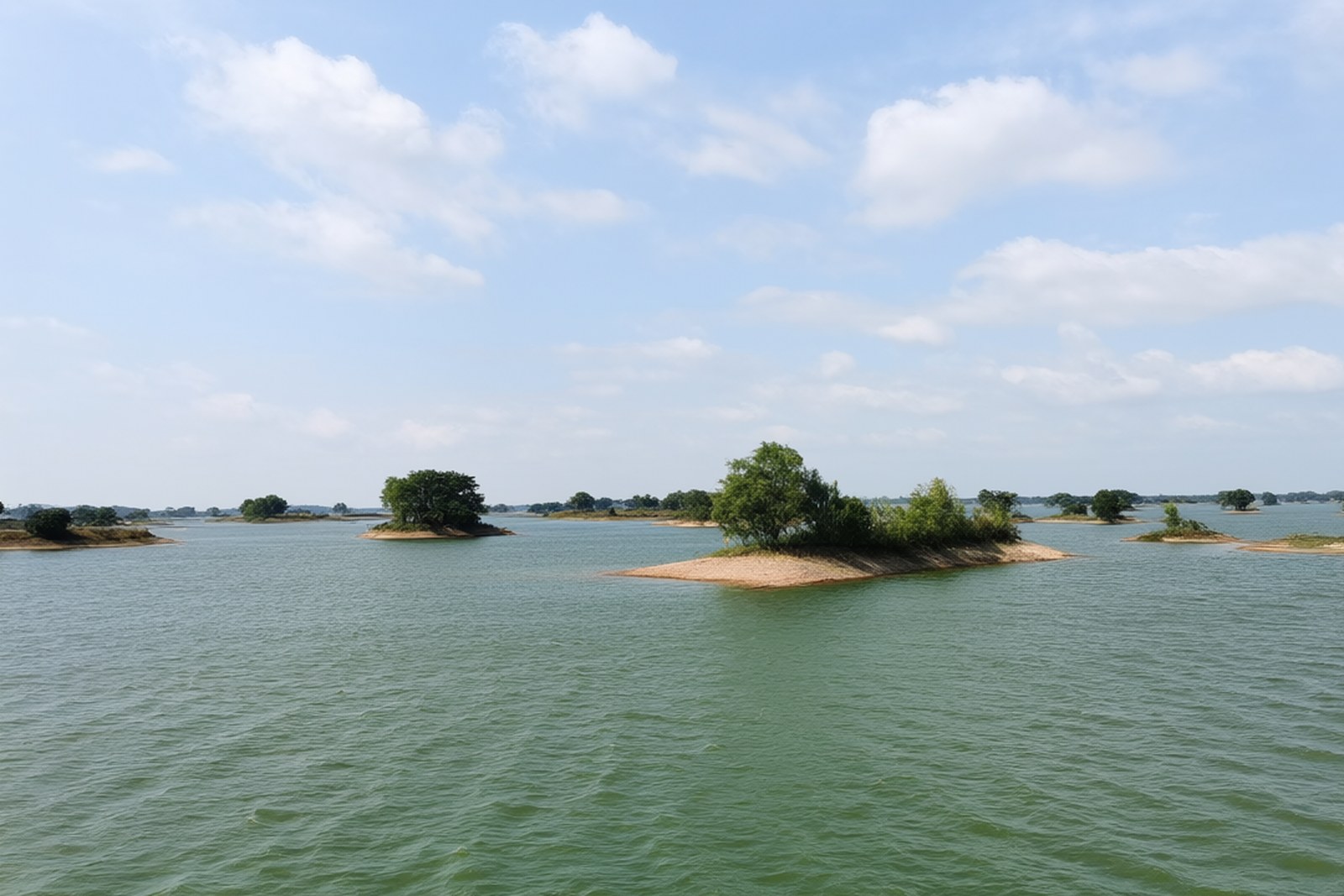
The lake is a man-made thing, and understanding how it was made is most of the pleasure of looking at it. The 新丰江 was dammed just above 河源 in 1958, and the water rose up the valley until it drowned the fields, the lanes and the villages that were in the way, leaving the higher ground standing as islands and the hill ridges as peninsulas. What was a river valley of farms is now an archipelago of about three hundred and sixty wooded tops, and the shape of the old valley is still legible in the way the islands line up. The dam was built for flood control, power and water supply, and the last of those three has become the most important: the reservoir discharges into the 东江 Dōng jiāng, and the 东江 is where 深圳, 东莞 and most of 中国香港 draw their fresh water.
The water is therefore guarded, and the guarding is why it looks the way it does. 万绿湖 holds the highest surface-water grade the standards define, clean enough to drink as it comes out of the lake, and its temperature sits between nineteen and twenty-three degrees the year round. The counties on its shores have turned away a long list of industrial projects to keep it that way, the catchment is managed as a forest park, a wetland park and a provincial reserve at once, and the result is a lake where the 桃花水母 táo huā shuǐ mǔ, a small and exceptionally fussy freshwater jellyfish, is found. In practice this means the woods come down to the water everywhere, the shoreline is unbuilt, and the green of the lake is the green of a forest reflected in water that holds nothing in suspension.
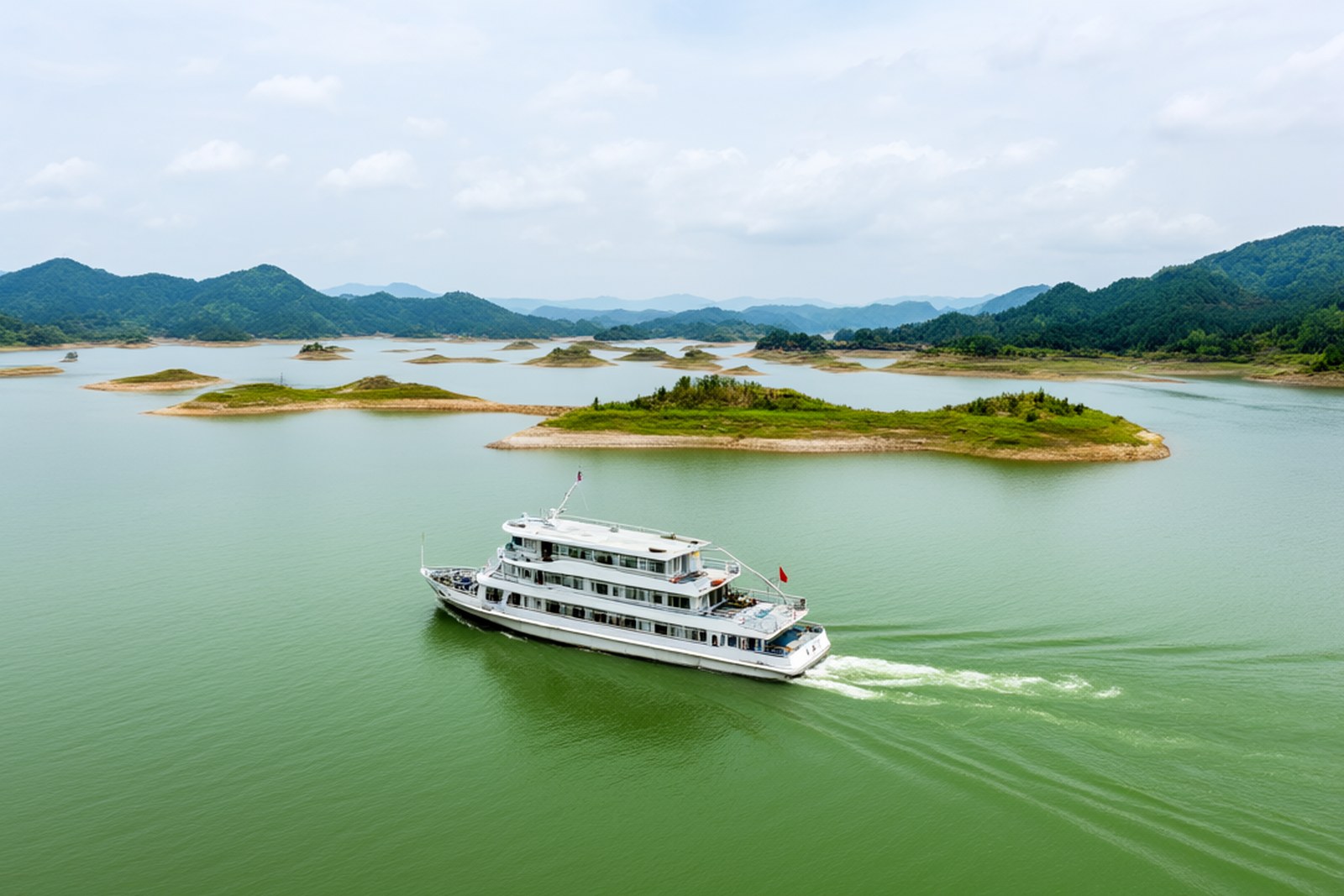
The boats leave from the 旅游码头 lǚ yóu mǎ tóu at 新港镇 Xīngǎng zhèn, and the routes take in different sets of islands. 水月湾 Shuǐ yuè wān, the Water Moon Bay, is a swimming and watersports area where the lake’s protected status allows the activity; 龙凤岛 Lóng fèng dǎo, Dragon and Phoenix Island, is the largest of the stops, with walks and viewpoints; and 镜花缘 Jìng huā yuán takes its name from 李汝珍 Lǐ Rǔzhēn’s Qing novel about the land of the hundred flower fairies, and has been laid out with the gardens and the pavilions the name asks for. The 客家风情街 and its small museum are at the pier, and there is a 客家 culture hall on the lake itself. For anyone who wants to be on the water rather than on it, there are kayak and paddleboard sessions from the shore, and further north the 万绿谷 Wàn lǜ gǔ area runs a zipline and a rafting course over the water.
The lake is also unusual in being at its best in the cool months. From November to February the sky is clearer, the light is flatter and the crowds are gone, and the boat is a quiet thing with twenty people on it rather than two hundred; in the summer the haze takes the far islands away and the pier queue is long. Autumn and winter also give the best of the drive up, because 万绿湖 is only about ten kilometres from the centre of 河源 and yet two hundred kilometres from 广州 and a hundred and eighty from 深圳, so from either city it is a three-hour run for a landscape that looks nothing like either. Pair it with 苏家围 Sū jiā wéi, the walled village of 苏东坡’s descendants twenty-six kilometres down the 东江, and with the 龟峰塔 and the dinosaur museum in the city, and the upper 东江 fills three days without straining.
Practicalities
Tickets. There is no general admission as such; you buy the gate ticket and the boat route together. Route 1, the standard circuit, runs about ¥175 to ¥198 for an adult, ¥125 for a child, and ¥135 for a visitor of sixty to sixty-four, while those of sixty-five and over are exempt from the gate but still pay the boat fare of about ¥55. 镜花缘 is a separate ¥35, the 客家文化馆 ¥30, the 万绿谷 ¥23, and a paddleboard or kayak session about ¥168.
Opening hours. The scenic area runs 09:00 to 16:00 all year, with the summer opening half an hour earlier. The boats are the constraint and they do not run late, so the useful rule is to be at the pier by noon; the last departures in the afternoon are short ones.
Getting there. The pier is at 港中路 Gǎngzhōng lù, 新港镇, 东源县, about fifteen kilometres north-east of the centre of 河源. From 河源东站 Héyuán dōng zhàn on the 赣深 high-speed line the taxi takes about forty minutes, and from the city centre twenty.
Closing day. There is no weekly closing day; the area is open every day of the year apart from the days when a typhoon or heavy rain closes the water, which is announced at the pier. The two quietest months are December and January, and the busiest are the October week and the summer school holidays.
flowcloud would say that a county which drowned its own valley to give a great city water, and then guarded the result so strictly that the lake became the greenest thing in the province by accident, has produced one of the few landscapes where the beauty and the usefulness are the same fact.
Getting there: the 万绿湖旅游码头 is at 新港镇, 东源县, 河源市, about twenty minutes by road from the centre of 河源 and forty from 河源东站 on the 赣深 line; be at the pier by noon, since the boats stop running in the afternoon.