
On the seaward side of 威远岛 Wēiyuǎn dǎo in Humen, the 威远炮台 Wēiyuǎn pàotái – Weiyuan Fort – lies against the water exactly where a fort should: hugging the beach below Nanshan hill, square across the main channel of the Pearl River estuary, crescent-shaped, 360 metres from horn to horn, 6.2 metres high and 7.6 metres thick. East of it, within the same visit, stands the Sea Battle Museum, and together the two make up the Weiyuan Island half of a single national heritage listing.
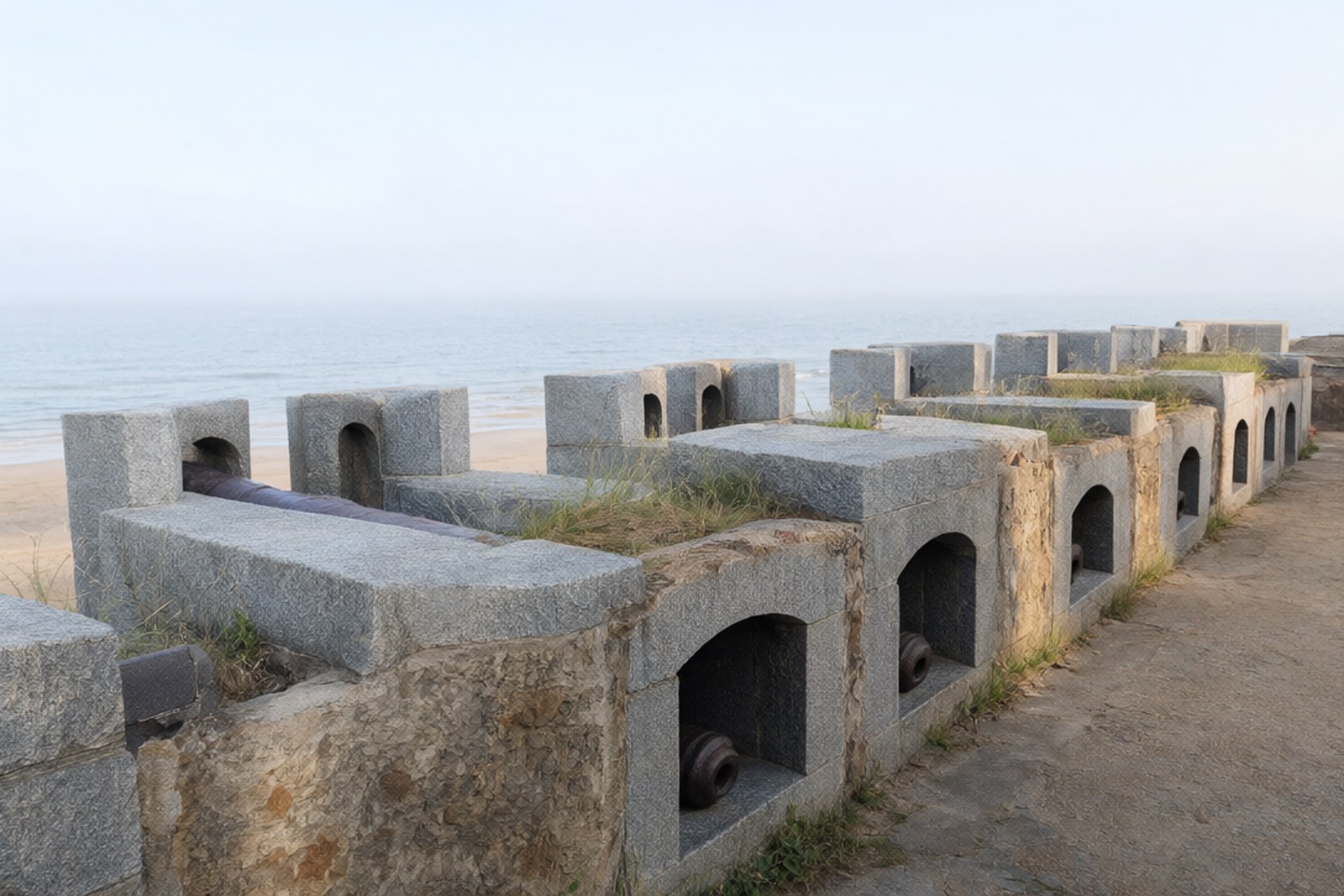
The fort’s story is a relay of rebuilds. It began as the Kangxi-era Nanshan battery; in 1835 关天培 Guān Tiānpéi, the admiral of the Guangdong water forces, rebuilt and renamed it as the anchor of the estuary’s second line of defence, arranged in a wedge with the Zhenyuan and Jingyuan batteries, its crossing fire knitted together with two chains stretched across the river – the “gold lock and bronze gate” the Qing documents boast of. In the battle of 26 February 1841, Guan Tianpei died at his post fighting hand to hand as the positions fell one by one; the fort was destroyed, rebuilt in 1843, destroyed again by the British in 1856, and repaired in 1882 under Viceroy Zhang Shusheng – the fabric you walk through today. In 1982 it entered the national heritage list together with the opium-destruction pools across the water, under one State Council number.
Walk the fort and the numbers are legible on the ground: originally forty arched, roofed gun positions along the curve plus four open emplacements on the deck, with a two-metre open gallery behind the gun chambers and firing slits in the parapet; inside stood an officers’ hall, three shrine rooms, twelve barracks, a powder magazine and its own landing stage. That is the original count – the fort you visit today shows about twenty-six surviving chambers, so read the two figures as then and now. It is counted among the best-preserved old coastal forts in China, and the gun ports frame the water like a row of picture windows aimed at the shipping lane.
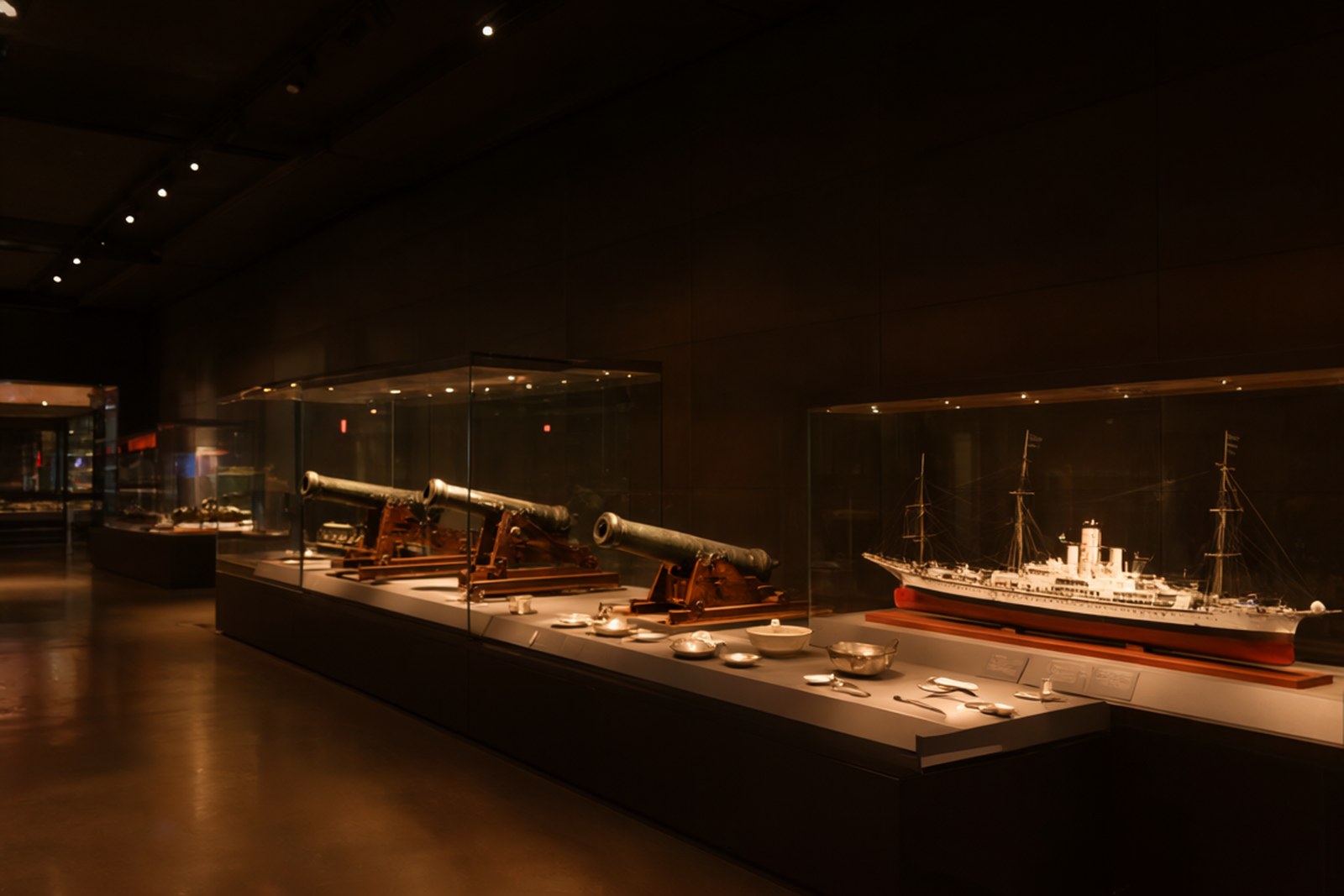
The Sea Battle Museum, opened in December 1999, is the modern half: a display building of 4,967 square metres holding 1,860 relics in the permanent exhibition “The Opium Wars”, which runs from the two worlds before the war through both wars to their consequences. The show was upgraded in 2016 and took a national top-ten exhibition award for the renovation; in its first four years it drew nearly twelve million visitors. Beyond the glass, the director Xie Jin filmed scenes of his 1990s opium-war epic here, using the fort itself as his set.
The pairing makes its own itinerary: the exhibition first for context, then the fort on foot, along the crescent gallery with the sea on one side – and, across the water, the Humen suspension bridge stepping over the estuary, the modern crossing sharing every photograph with the 1830s battery, the single most photogenic juxtaposition in the delta. The wider island keeps more batteries of the same system – Jingyuan, Zhenyuan and the hill positions among them – all inside the free-entry area the fort administration publishes. Budget an hour and a half to two hours for the museum and forty minutes to an hour for the fort; then, if the day allows, carry on to the pool-side halls of the same administration across the water for the full Humen modern-history circuit.
Practicalities
Tickets. Free, on the same real-name reservation system as the whole Opium War Museum complex – the Sea Battle Museum and Weiyuan Fort share one booking and one QR code. The Weiyuan area caps daily entries at 38,430. Checked October 2026, subject to change.
Opening hours. 08:30 to 17:30 on ordinary days with last entry 17:00; in the 2026 summer season (13 July to 31 August) 08:30 to 18:00; on statutory holidays 08:00 to 17:30.
Closing day. The exhibition building closes on Tuesdays for maintenance, except on public holidays, while the fort grounds keep no separate closing day and stay open. Mind the split across this heritage site: the memorial halls at the opium pools close on Mondays, the Sea Battle Museum’s hall closes on Tuesdays – the two sides of the estuary deliberately rest on different days, and the open-air forts stay open throughout.
Getting there. From Humen high-speed rail station about thirty minutes by bus or taxi; bus 16 reaches the Sea Battle Museum, buses 2 and 9 or the L1 tourist line reach the Weiyuan fort side, and the island’s Huandao Road links the two on foot once you are there. The free heritage shuttle that served the island in 2025 holiday periods called at the Weiyuan Sea Battle Museum stop – recheck current operation before relying on it.
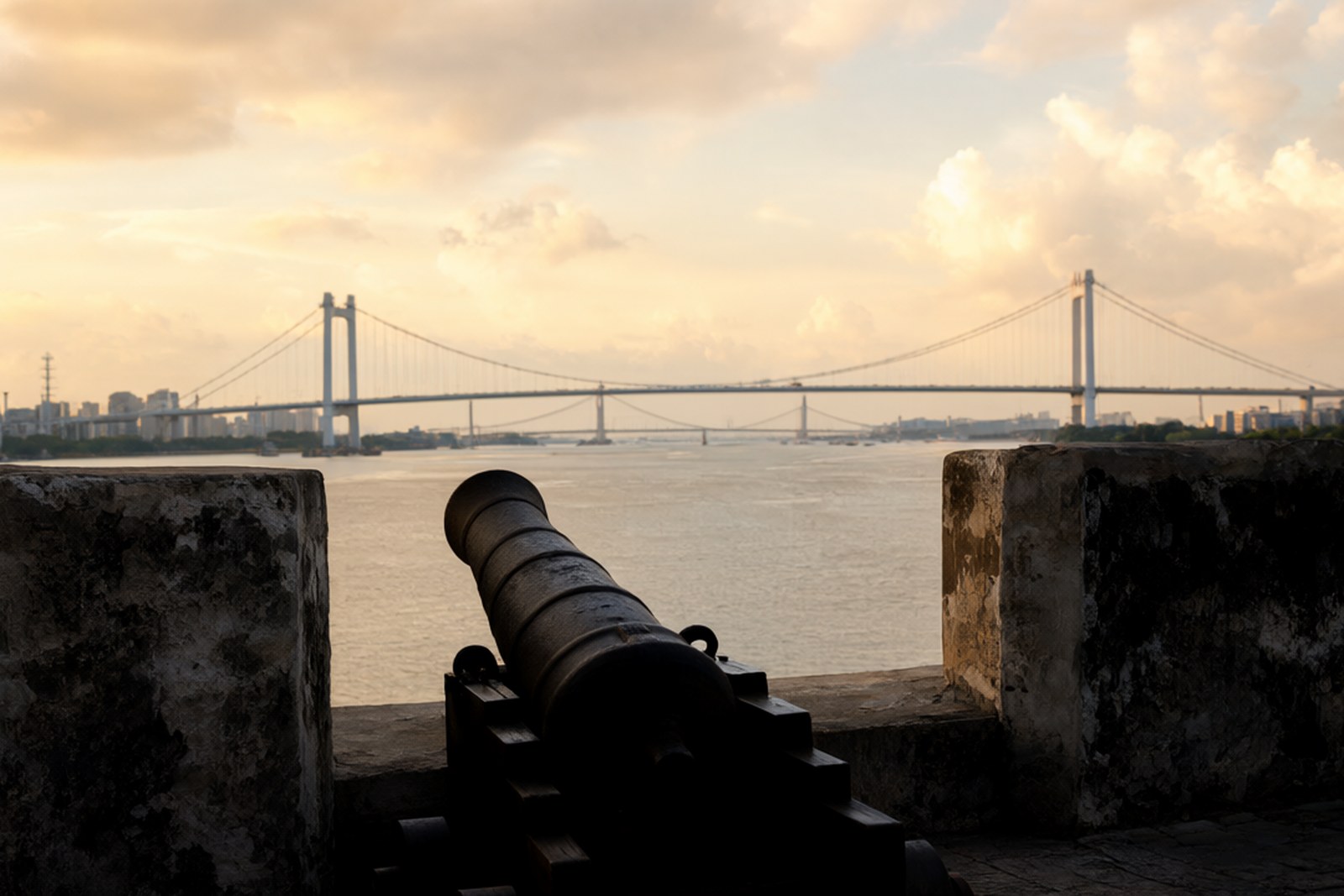
flowcloud would say that Weiyuan Fort keeps three centuries in one glance – a Kangxi footprint, a Daoguang cannon line, a modern bridge overhead – and that the honest way to read it is in two numbers nobody argues about: 360 metres of stone that failed in 1841, and 1,860 objects in a free museum that explain why.
Getting there: 威远炮台 Wēiyuǎn pàotái and the Sea Battle Museum stand on 威远岛 Wēiyuǎn dǎo, Humen, Dongguan, Guangdong, about thirty minutes from Humen high-speed rail station, with bus 16 to the museum and buses 2, 9 or L1 to the fort; entry is free with a single shared real-name booking for both, daily entries capped at 38,430 (checked October 2026, subject to change); hours 08:30-17:30 with last entry 17:00, the exhibition building closed on Tuesdays except holidays while the fort grounds stay open.