
文峰古街 Wénfēng Gǔjiē, Wenfeng Ancient Street, runs along the riverfront of the district seat of 合川区 Héchuān Qū, Hechuan District, and its head is marked by the district’s most photogenic object: 文峰塔 Wénfēng Tǎ, the Wenfeng Pagoda, nine storeys of Qing grey brick raised to pin the river spirits and mark the harbour for boats working three rivers. The street below it is the seat’s riverside quarter – arcade buildings rebuilt along the old footprint, tea houses and snack counters, lantern strings over the stones and the river path running beneath the terrace walls – and the confluence works the water behind it all. This page is the tower, the street, and the easiest half-day in the district.
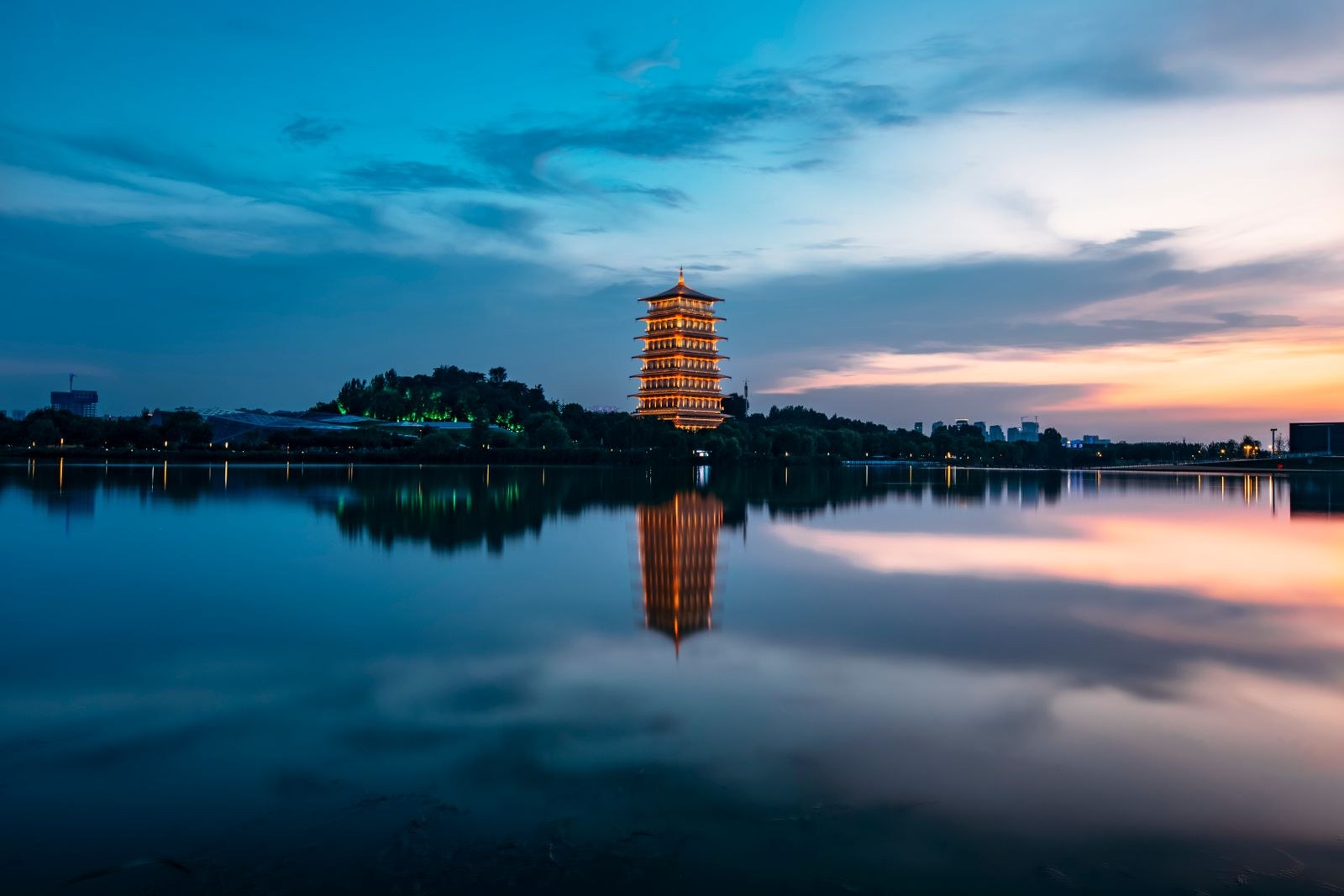
The pagoda is a river instrument as much as a building. Qing builders raised its nine storeys where the three rivers meet to pin the river spirits at a confluence that made and unmade fortunes, and to give the harbour a mark a boatman could pick out from mid-river; the grey brick has watched the water ever since. The climb is the pagoda’s whole argument: from the upper storeys the whole geography reads at once – the green 嘉陵江 Jiālíng Jiāng Jialing and the grey 涪江 Fú Jiāng Fu braiding past the city point, the joined river running south below the town – the view the district is named for, stacked vertically in one tower.
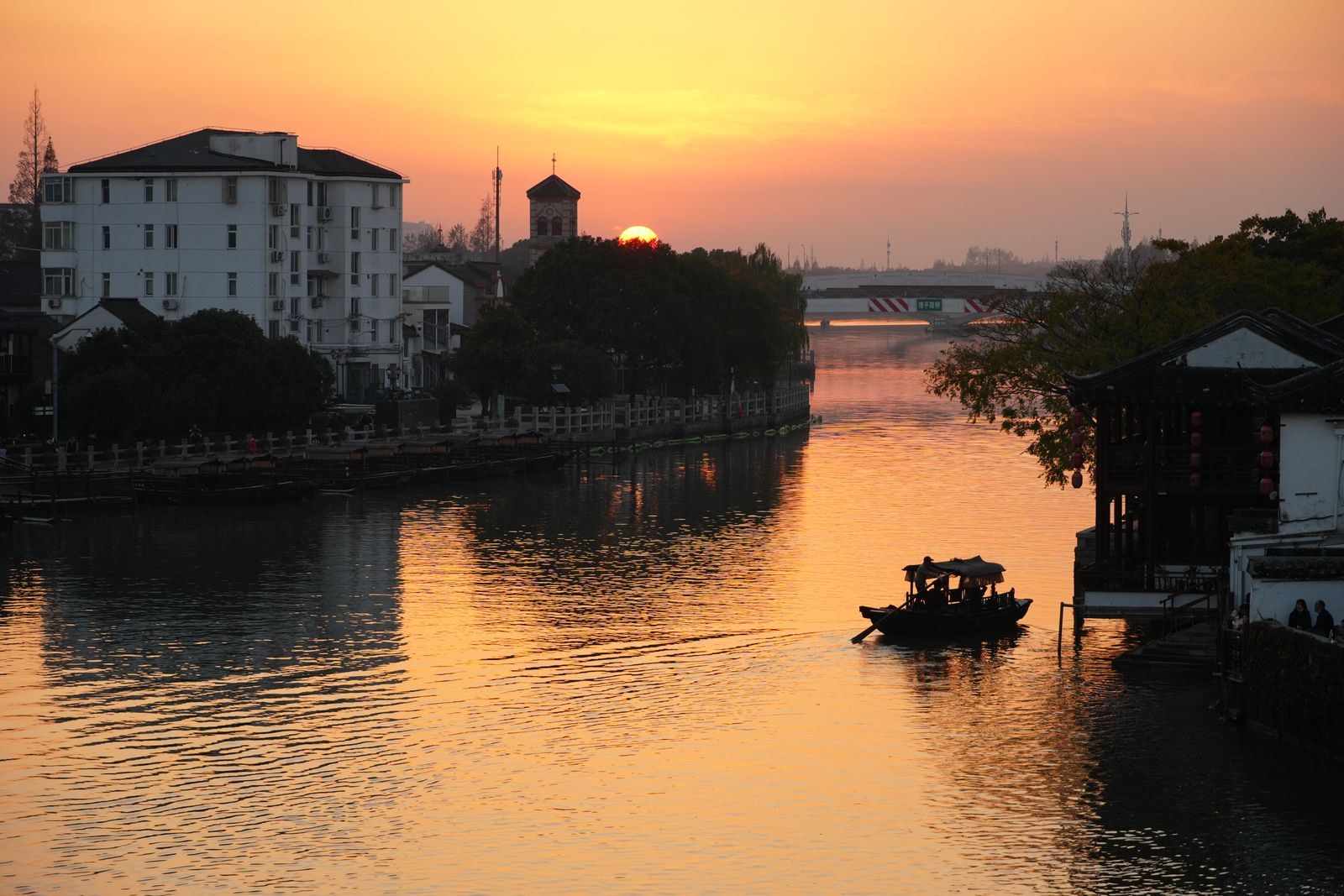
The street is the quarter’s living half. The arcade buildings stand rebuilt along the old riverfront footprint – the honest word is rebuilt, and the page keeps it – with tea houses and snack counters under the arcades, lantern strings over the stones after dark, and the river path running out beneath the terrace walls where the confluence ferries still work the water. The street asks nothing of a visitor except pace: a bowl of the district’s thick rice noodles, a tea house seat, the pagoda at the head and the river at the foot, and the evening lamps taking over from the sun.
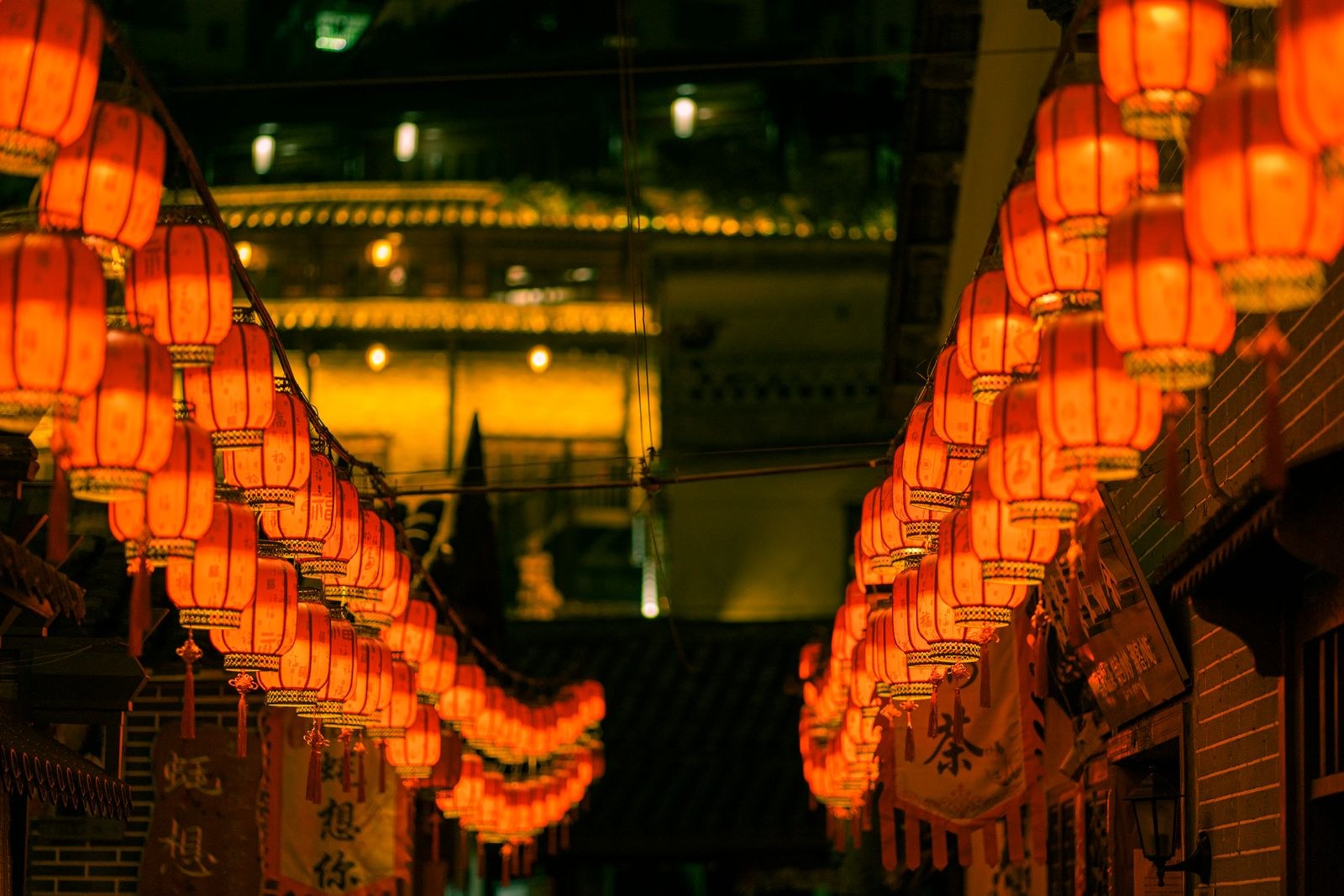
The half-day writes itself, which is the street’s gift to the district’s itinerary. Bus in, climb the pagoda, walk the street, take the river path, done – and it pairs the way the district pairs: the fortress in the morning and the pagoda street at dusk, the lake day ended with tea and lanterns on the riverfront, or the confluence hour taken from the terrace with the tower in the foreground. Evening is the street’s best card: the lanterns take the water, the pagoda goes gold against the last light, and the ferries run their late crossings under the lamps.
What the record supports is the nine-storey Qing brick pagoda, its river-pin and harbour-mark purposes, the arcade street rebuilt along the old footprint, the tea houses and counters, the river path and the ferries below the terraces; what it does not support is any climb ticket figure, any posted hours table or any original-fabric claim for the arcade buildings, and none is invented here. The street is free to walk and the page keeps it that way on paper too.
Words and Names
文峰古街 Wénfēng Gǔjiē, Wenfeng Ancient Street, on the riverfront of the district seat of 合川区 Héchuān Qū, Hechuan District, headed by 文峰塔 Wénfēng Tǎ: nine storeys of Qing grey brick raised to pin the river spirits and mark the harbour where three rivers meet. The street is arcade buildings rebuilt along the old footprint – tea houses, snack counters, lantern strings after dark – with the river path running beneath the terrace walls and the confluence ferries working the water below. No climb figure, hours table or original-fabric claim is on the record consulted, and none is invented here; the street itself is free public ground.
What the Locals Know
The local knowledge is the two ends of the day. The morning belongs to the noodle counters before the day visitors reach the pagoda – the locals eat early and climb early, and the top storey in the first light takes the whole confluence in one clear look. The dusk belongs to the lanterns: the locals sit the tea house terraces while the lamps come on and the river goes dark behind them, which is the street’s own theatre and costs the price of the tea. What the record does not carry is any counter-by-counter recommendation, and the page declines one – the nose finds the noodle stall, and the pagoda finds the view.
Practicalities
Tickets: The street is free public ground – lanes, river path and terrace walls – and no street ticket is on the record consulted. The pagoda climb takes its own entry where posted, and no figure for it survives in the record consulted; the page declines the number rather than inventing one, and leaves the door price to the door.
Opening hours: The street runs all day and into the night as a lived-in riverside quarter, and the pagoda keeps daylight hours as the working norm – the climb is a daylit stair, and the confluence view wants the sun still on the water. No posted hours table is on the record consulted; the honest clock is the lanterns’, which settle the street’s best hour at dusk.
Closing day: None posted – a riverfront quarter does not close its weeks, and no published rest day is on the record consulted for street or pagoda. The only calendar the street respects is the weather’s: a wet evening empties the lanterns and sends the tea houses indoors, which is a rearranged visit rather than a lost one.
Getting there: The street stands on the riverfront of the district seat of 合川区 Héchuān Qū, Hechuan District – the seat is reached from Chongqing by road and by the high-speed rail that runs to the metropolitan core every half hour, with the district’s own buses working the routes out of the seat; no street-level timetable or fare is on the record consulted, so none is invented here.
flowcloud would say that Wenfeng Ancient Street is the district’s easiest half-day – nine storeys of Qing brick at its head, raised to pin the river spirits where three rivers meet, an arcade street rebuilt along the old footprint below it and the ferries working the water under the terraces – and that the correct visit is a dusk one, because the lanterns take the water and the pagoda goes gold over the braid the district is named for. All checked October 2026.