
Dome over the Rails: Tianjin West Station
穹顶飞虹连九域,百年站房话沧桑 Qióngdǐng fēihóng lián jiǔyù, bǎinián zhànfáng huà cāngsāng – A flying-rainbow dome joins the nine regions; the hundred-year station house tells its changes
天津西站 Tiānjīn Xīzhàn Tianjin West Station is 天津市红桥区 Tiānjīn Shì Hóngqiáo Qū Hongqiao District’s great gateway – a arched-dome terminal of glass and white steel riding over platforms that reach Beijing in half an hour, with the red-brick German station house of 1909 standing at its elbow as a memento of the津浦铁路 Jīnpǔ Tiělù Jinpu Railway’s opening years. The pairing is the district’s best architectural argument: a city that builds its future beside its archive.
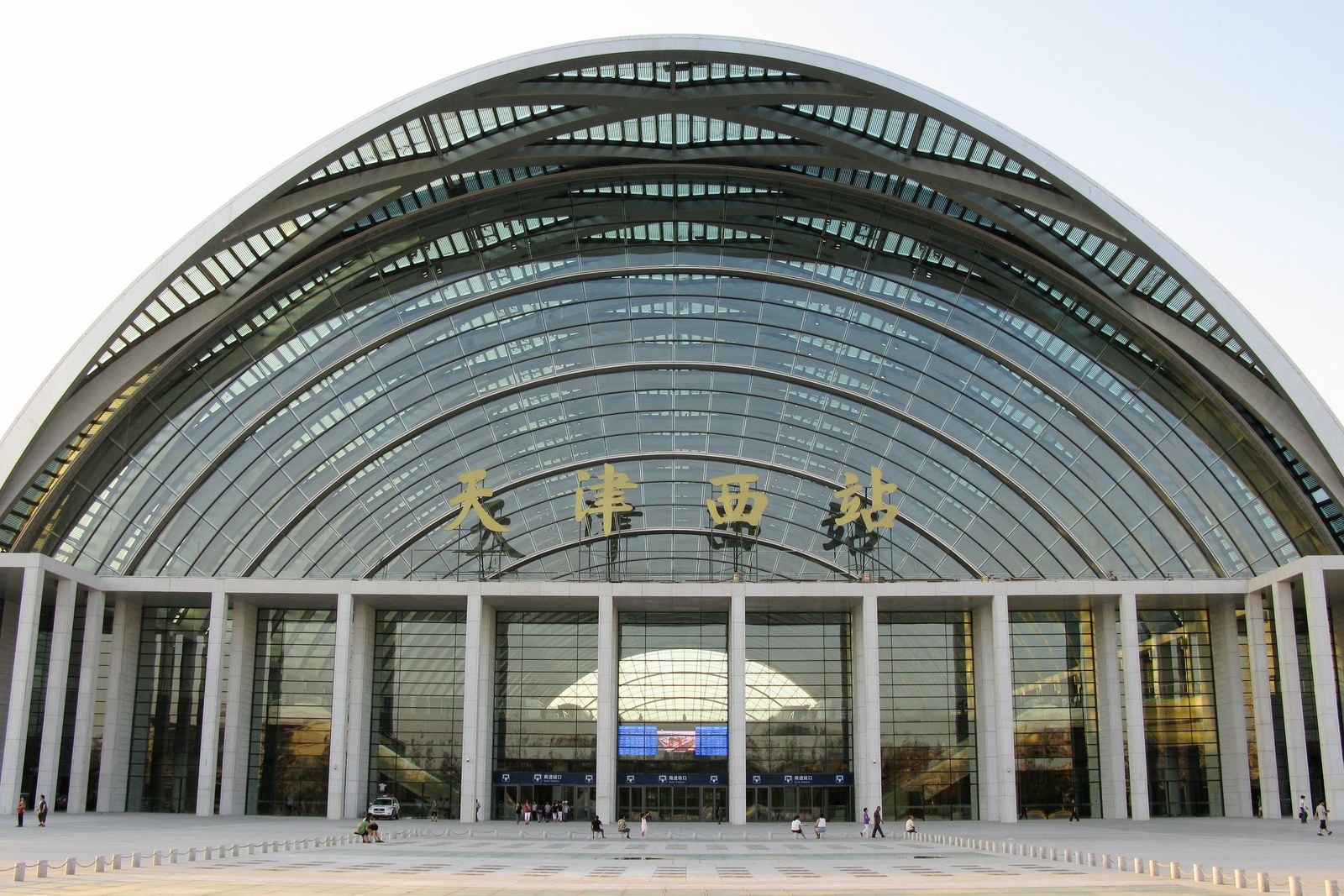
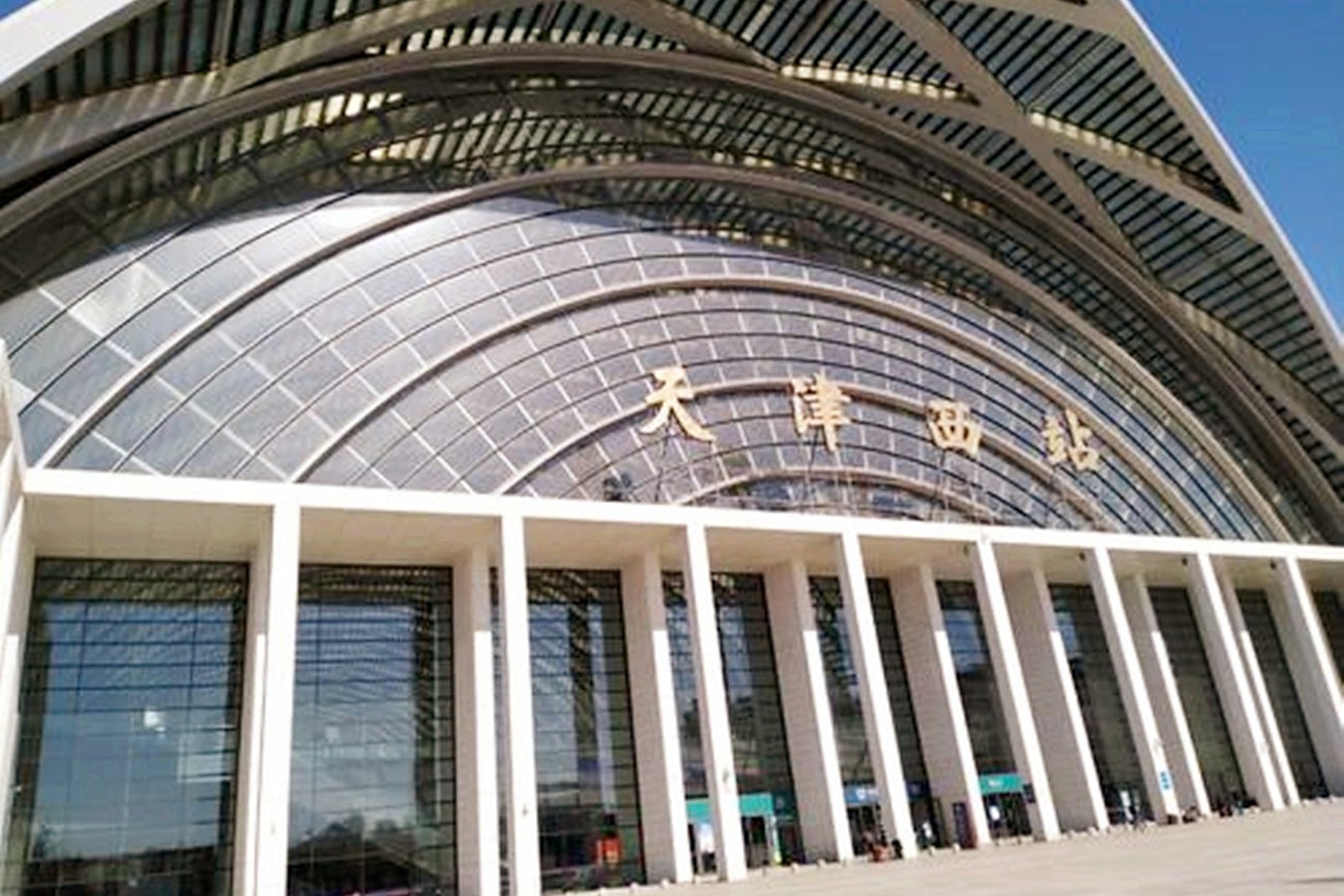
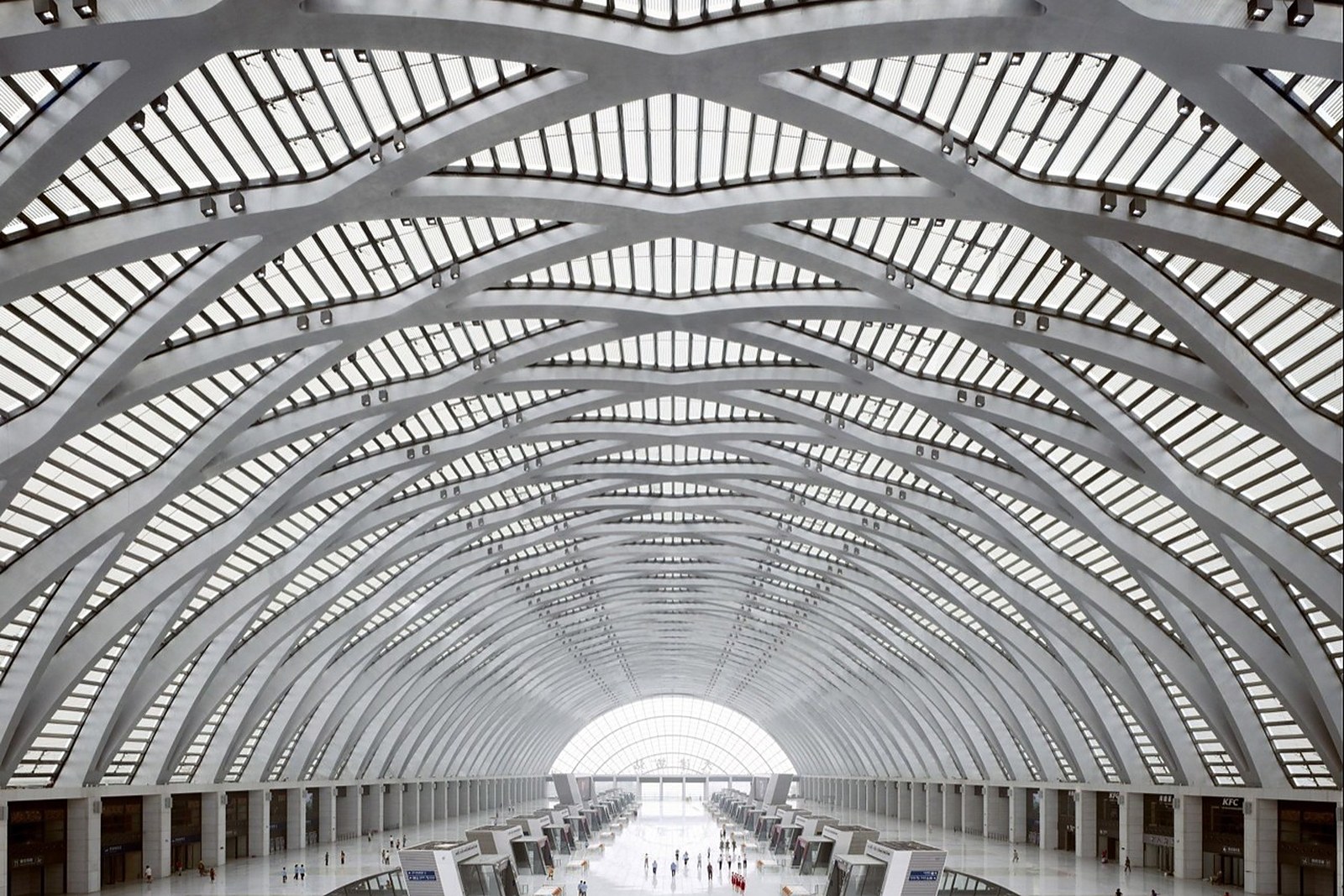
The new hall is the show. The white lattice dome throws a clean grid of light across the concourse, the arched roof runs the platform length like a laid rainbow, and the sightlines from the north plaza make the whole facade photograph as one sweep. Trains slide out under the vault toward 京沪 Jīng-Hù corridor cities, and the hall’s acoustics keep the rush oddly calm.
The old house keeps the counterpoint. Red brick with granite dressings, a steep German roofline, and the rebuilt waiting room that now serves as a railway heritage display – the 1909 station fronted Tianjin’s first mainline era and survived two wars of coordinates. It stands close enough to the new dome that one photograph can hold both, and the contrast rarely fails.
Travel practically: the station runs high-speed services on the Beijing-Shanghai line and intercity routes north, the metro (Line 1 and Line 4) stitches it into the whole city, and the taxi rank queues move fastest outside morning peaks. For visitors the station itself is the sight – arrive forty minutes early, walk the concourse under the dome, and cross to the old house for the brick half of the story.
Practicalities
- The concourse is ticketed access; the plaza and old station house exterior are open.
- Metro Lines 1 and 4 serve the station directly; taxis queue on the north apron.
- The German station house (1909) faces the plaza’s south side – photograph both domes together.
- Pair it with 三岔河口 Sānchà Hékǒu two stops east on Line 1 for the river half of the district.
Words and Names
天津西站 Tiānjīn Xīzhàn Tianjin West Station; 穹顶 qióngdǐng the lattice dome; 津浦铁路 Jīnpǔ Tiělù the Jinpu Railway of 1912; 老站房 lǎo zhànfáng the 1909 German station house; 京沪 Jīng-Hù the Beijing-Shanghai corridor. Beyond the station, the same 天津市红桥区 Tiānjīn Shì Hóngqiáo Qū Hongqiao District keeps more places worth the detour: 平津战役纪念馆 Píngjīn Zhànyì Jìniànguǎn the Pingjin Campaign Memorial, 西沽公园 Xīgū Gōngyuán Xigu Park, 估衣街 Gūyī Jiē Guyi Street, or 三岔河口 Sānchà Hékǒu the Sancha Estuary – four more doors into the same Hongqiao District. Once the dome has had its hour, our Hongqiao food map fills the table.
flowcloud would say the West Station is the district’s handshake with distance: a dome that throws noon light over the platforms, and a red-brick elder telling the trains what they once were. All checked November 2026.
Getting there: The station fronts the plaza at the end of Xizhan Qianjie – Metro Lines 1 and 4 both exit into the hall, and the dome signs itself from the bridge approach. All checked November 2026.