
The White Jade River: Digging for Fortune in the Yurungkash Gravel
白玉出昆冈,河床万人寻 Báiyù chū Kūngāng, héchuáng wànrén xún – White jade comes down from the Kunlun; ten thousand search the riverbed
正文:玉龙喀什河 Yùlóngkāshī Hé the Yurungkash river runs along the eastern edge of 和田地区 Hétián Dìqū Hotan Prefecture’s capital, carrying its famous load of jade pebbles down from the Kunlun glaciers – and for as long as records exist, people have stood in its braided shallows hunting the white stone that made Khotan’s name. The Yurungkash means “white jade river” in Uyghur, and the name is literal: nearly every celebrated white jade in China’s imperial collections was rolled and rounded somewhere in this gravel. The diggers are still here – families with nets, men with sieves, teams with pumps – and the banks hold the bazaars where finds are weighed, argued over and priced by the gram.
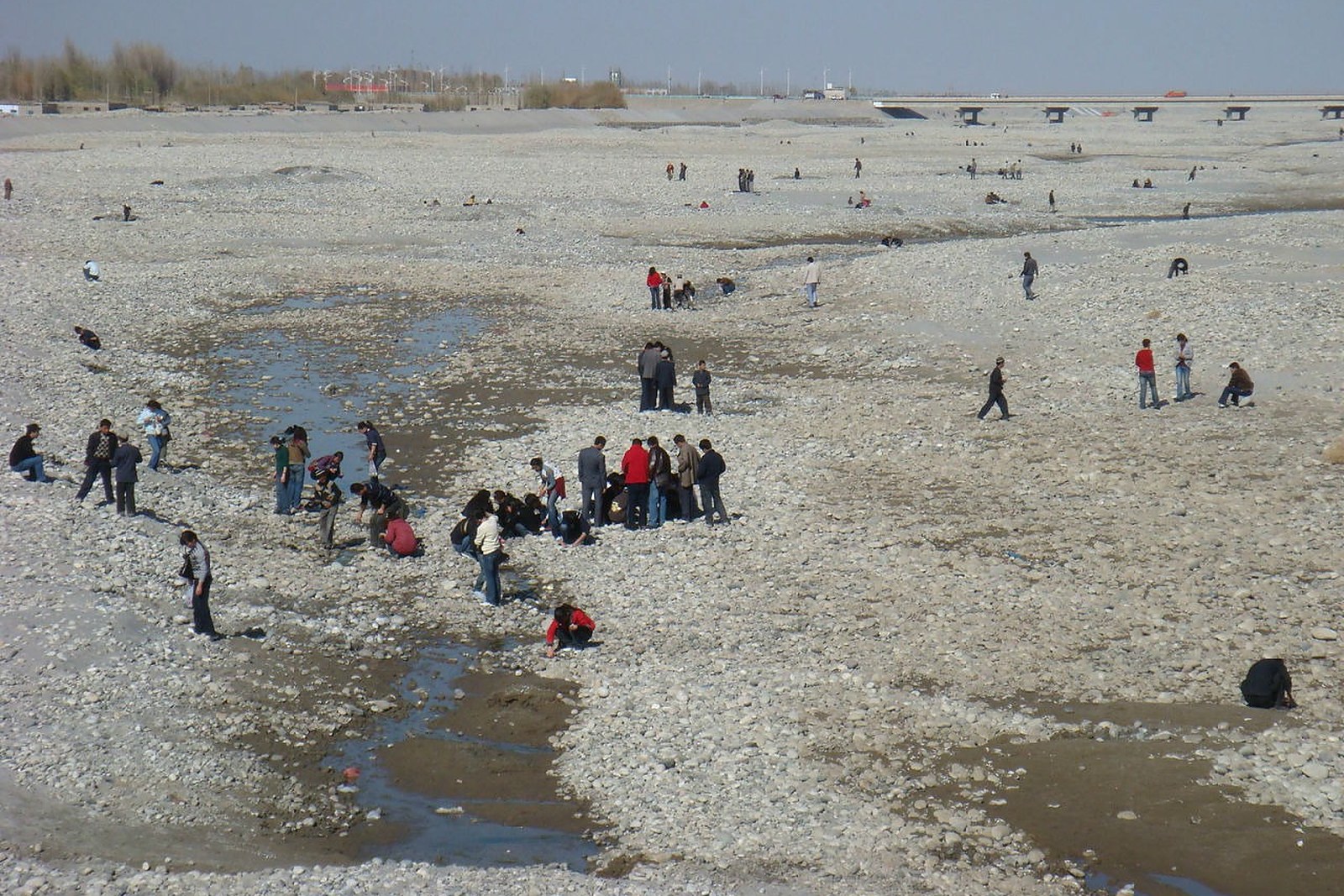
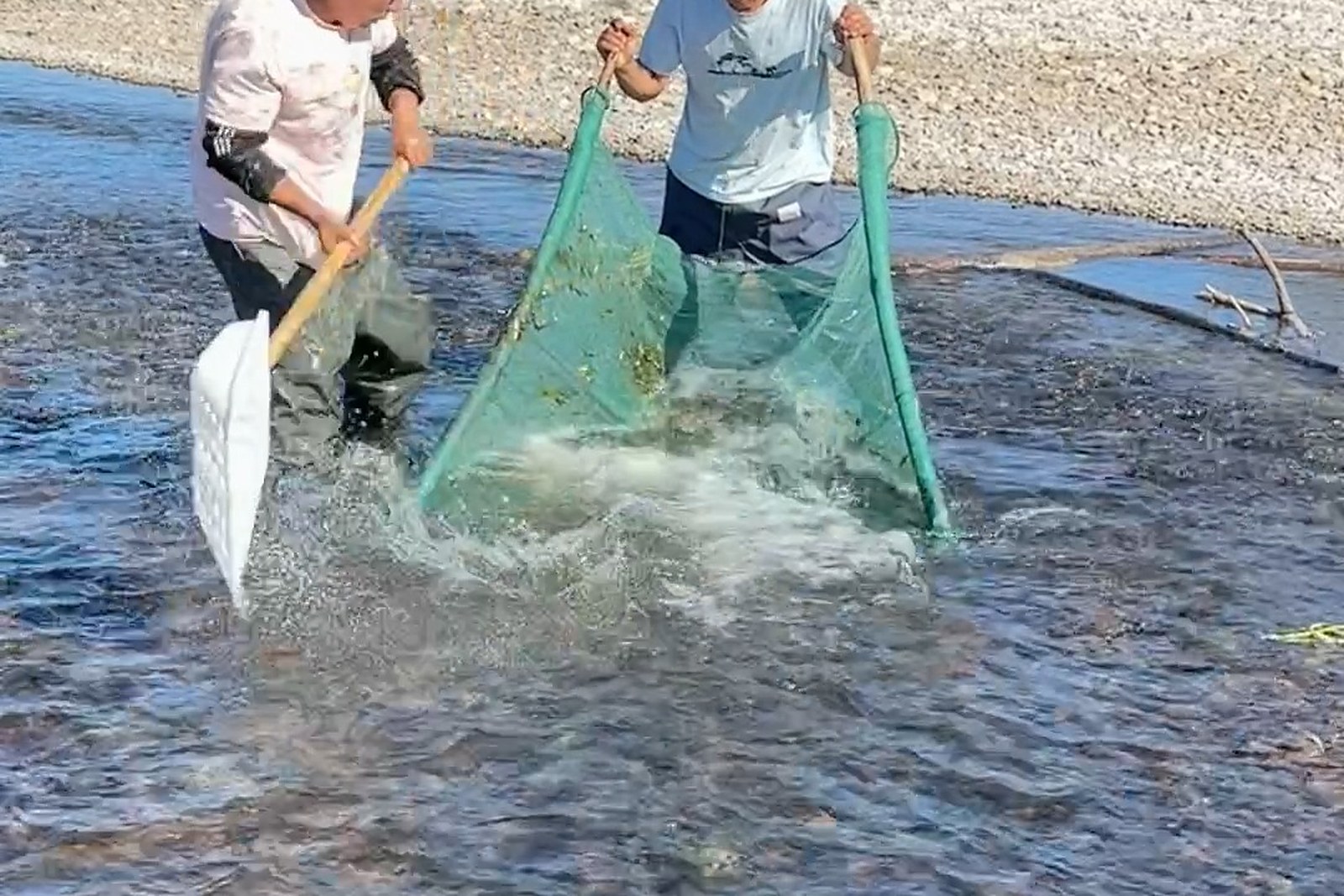
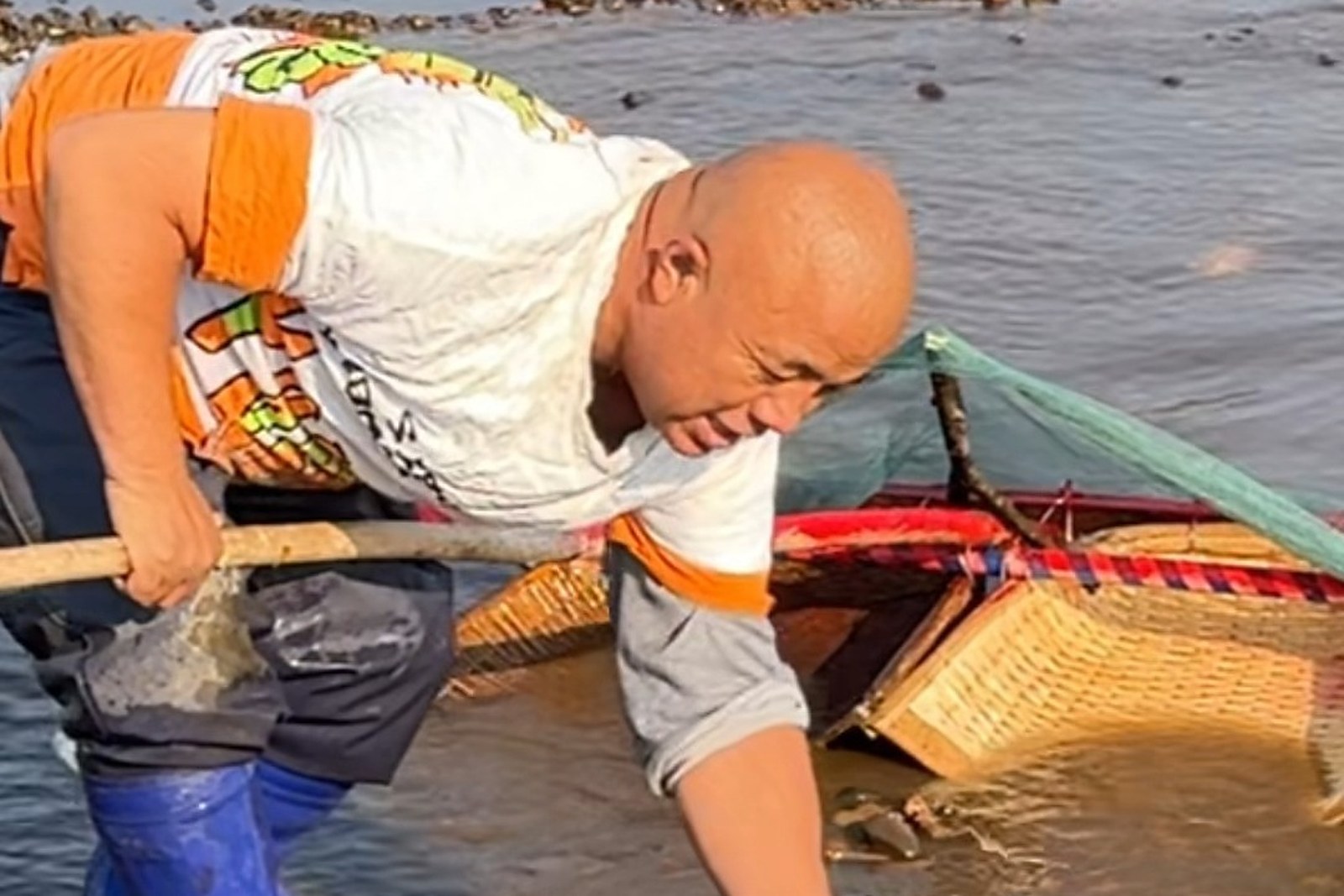
The mechanics of the hunt are simple and ancient. Jade weathers out of the mountain veins, floods roll it downstream, and the river’s grinders polish each pebble over millennia – the famous “seed” jade, round and skin-smooth, needs no cutting to show its worth. Diggers wade the shallows with long-handled nets, feeling for the heft that distinguishes jade from the river’s billion other stones; serious teams work the deeper bars with sieves and winches; and the autumn low-water season, when the river retreats to its channels, is the whole city’s open season.
The scale has moderated with the times. Machinery dredging – the free-for-all of the 2000s, when excavators stripped whole bars – is now restricted to licensed blocks, and the river’s protected reach limits digging to hand tools in the city stretch. The result is a scene visitors can walk into safely: hundreds of waders in the shallows on a weekend, the slap of sieves, the hopeful huddles around each find, and the pragmatic economics of a lottery everyone can enter for the price of a net.
The jade bazaar beside the river road is the second act. Every morning the diggers’ finds come to the stalls – pebbles laid out on trays, bigger pieces held to the sun, prices opening at the price of a meal and rising to the price of a car. The trade runs on expertise and on nerve: buyers test hardness, weight and the whiteness under the skin; sellers describe the mountain their stone came from; and the honest rule everyone repeats is that the river no longer gives up treasures easily – the great finds now come from old collections, deeper gravels or sheer luck.
For visitors the ritual is participation, not purchase. Wading in with a rented net costs pocket money; an hour of hunting produces nothing at all, or a pebble worth keeping as a story; and the bazaar’s stalls sell river-polished stones of every colour for the price of a coffee. The jade carve-up – which colour is best, why the skin matters, how the old masters read a stone by its weight – is the best free seminar on the Silk Road, delivered by people whose families have traded here for generations.
Practicalities first. The banks are reached from any bridge in ten minutes by taxi; wear shoes that can wade, keep valuables off the gravel, and take the local advice on where digging is permitted – the protected reaches are marked and the fines are real. The Sunday jade market on the river road opens early; the evening light on the water is the photographer’s hour; and the city’s jade shops will value anything you find for free, with commentary.
Combine the river with the museum’s jade floor and the trade makes a closed loop: dug here, graded there, worn everywhere. Few cities anywhere let travellers stand in the exact water that produced their treasures.
And the river’s gift to the visitor is hope itself: an ordinary city river that might, on any afternoon, give up the stone of the decade – and a bank full of people who believe it, one sieve at a time.
Practicalities
Beyond the river, the same 和田地区 Hétián Dìqū Hotan Prefecture keeps more places worth the detour: 约特干故城 Yuētègān Gùchéng the Yotkan ruins for the red city, 千里葡萄长廊 Qiānlǐ Pútao Chángláng the Grape Corridor for the shade, 和田地区博物馆 Hétián Dìqū Bówùguǎn the Hotan Museum for the brocade, or 团城老街 Tuánchéng Lǎojiē the Tuancheng old blocks for the carved lanes – four more doors into the same 和田地区 Hétián Dìqū Hotan Prefecture. Once the river is seen, our Hotan food map fills the day.
Practicalities
Words and Names
flowcloud would say the Yurungkash is the city’s standing lottery: a gravel river that made an empire’s jewellery, still sifted every weekend by families with nets – one stone, one life, and the whole bank hoping. All checked November 2026.
Getting there: The river runs along the city’s east side; the digging grounds begin where the bridges cross toward the desert edge. Any taxi reaches the banks in ten minutes, and the Sunday jade bazaar beside the river road opens early. All checked November 2026.