
武冈市 Wǔgāng shì is the second city of 邵阳市 Shàoyáng shì, an hour and a half to the south-west on the road out to 城步 and 绥宁, and it has something no other county town in the southern half of the province has: a wall built entirely of dressed stone. A Chinese city wall is normally a rammed-earth core with a brick or stone skin over it, and it falls when the core is mined or the skin is breached. 武冈城墙 Wǔgāng chéng qiáng has no core to mine. It is laid up in blocks of grey limestone a metre and more across, inside and out, joined with a mortar of plant ash, tung oil and lime and packed between with rubble, and it has stood seven-day sieges by armies that took everything else in their path. Fourteen hundred and fifty metres of it survive, with four of its thirteen gates, in the middle of a working town whose old name was 都梁 Dū liáng.
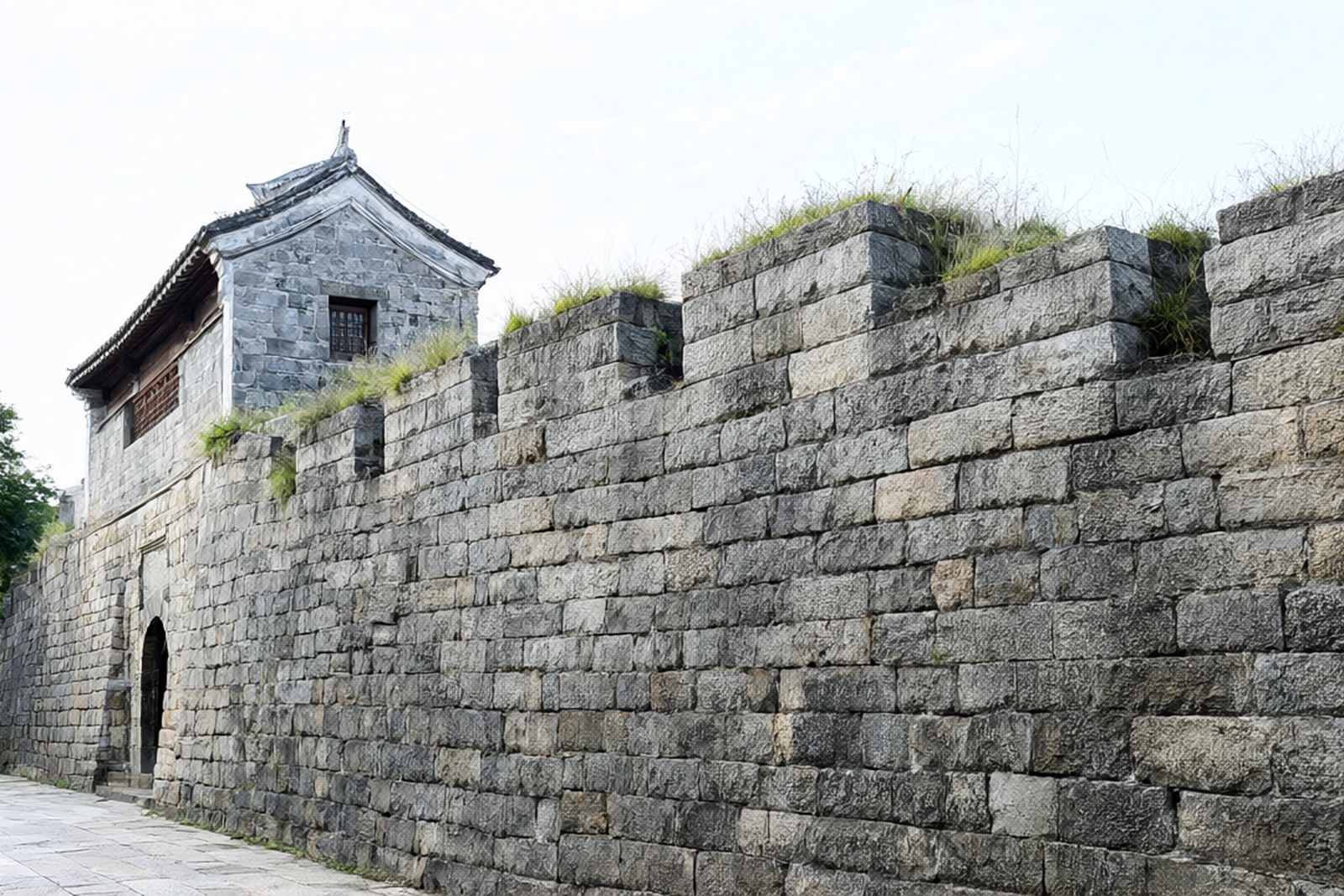
The wall is older than its present form. A rampart was first thrown up here in 151, when the Han emperor sent a general against the mountain peoples of the south, and the county prefecture of 都梁 had been created two and a half centuries earlier, in 124 BC, when 汉武帝 gave the title of Marquis of Duling to a son of the King of Changsha. The Song built in rammed earth, the Yuan left the ramparts wrecked, and the shape that survives is Ming. In 1371 the 江阴侯 吴良 Wú Liáng – the same engineer-builder who was later put in charge of the Ming imperial tombs – cut stone in the surrounding hills and rebuilt the inner town in it, with four gates to the four directions. In 1548 a Ming prince, 朱誉荣 Zhū Yùróng, added the small royal town, and in 1567 the prefectural vice-administrator and the magistrate extended the outer city. The finished circuit ran five thousand eight hundred and seventy-four metres, six to six and a half metres high and two and a half thick at the top, carrying seven hundred and sixty battle sheds, thirteen gate towers, fifty-four gun emplacements and forty-three guard posts, and it is the reason the local saying runs that 宝庆 has the lions and 东安 the pagoda but 武冈 has the wall that beats the world.
What the wall is famous for is what it refused to do. On 18 April 1859 the Taiping general 赖裕新 Lài Yùxīn, detached by 石达开 on his way to attack 宝庆, came up from 新宁 with thirty thousand men, put scaling ladders against the wall that same night and besieged it for seven days and seven nights without getting in; he withdrew and went to join the siege of 宝庆, which also failed. In October the following year a second Taiping force of ten thousand under 朱衣点 Zhū Yīdiǎn tried again and again spent seven days battering the same wall to no effect. The magistrate then raised eighteen thousand taels from the county, spent a year rebuilding and adding one great gun emplacement on the north face and fifty-two smaller ones on the north-east, and issued a design that other walled towns are said to have asked for copies of. The pattern held. A Guangxi warlord besieged the town for seven days in 1926 and gave up; the 红七军 under 邓小平 Dèng Xiǎopíng, 张云逸 Zhāng Yúnyì and 李明瑞 Lǐ Míngruì surrounded it for seven days in December 1930 and were within a day of taking it when relief troops and two aircraft arrived from Changsha; and in April 1945, in the last campaign of the war, a Japanese force of three thousand spent three days trying to storm it, sent in a hundred and fifty men with satchel charges on their backs to blow the wall open, made only a small breach, and had it plugged with sandbags before they could send a second group in. The photographs of that assault hang in the war museum at 芷江.
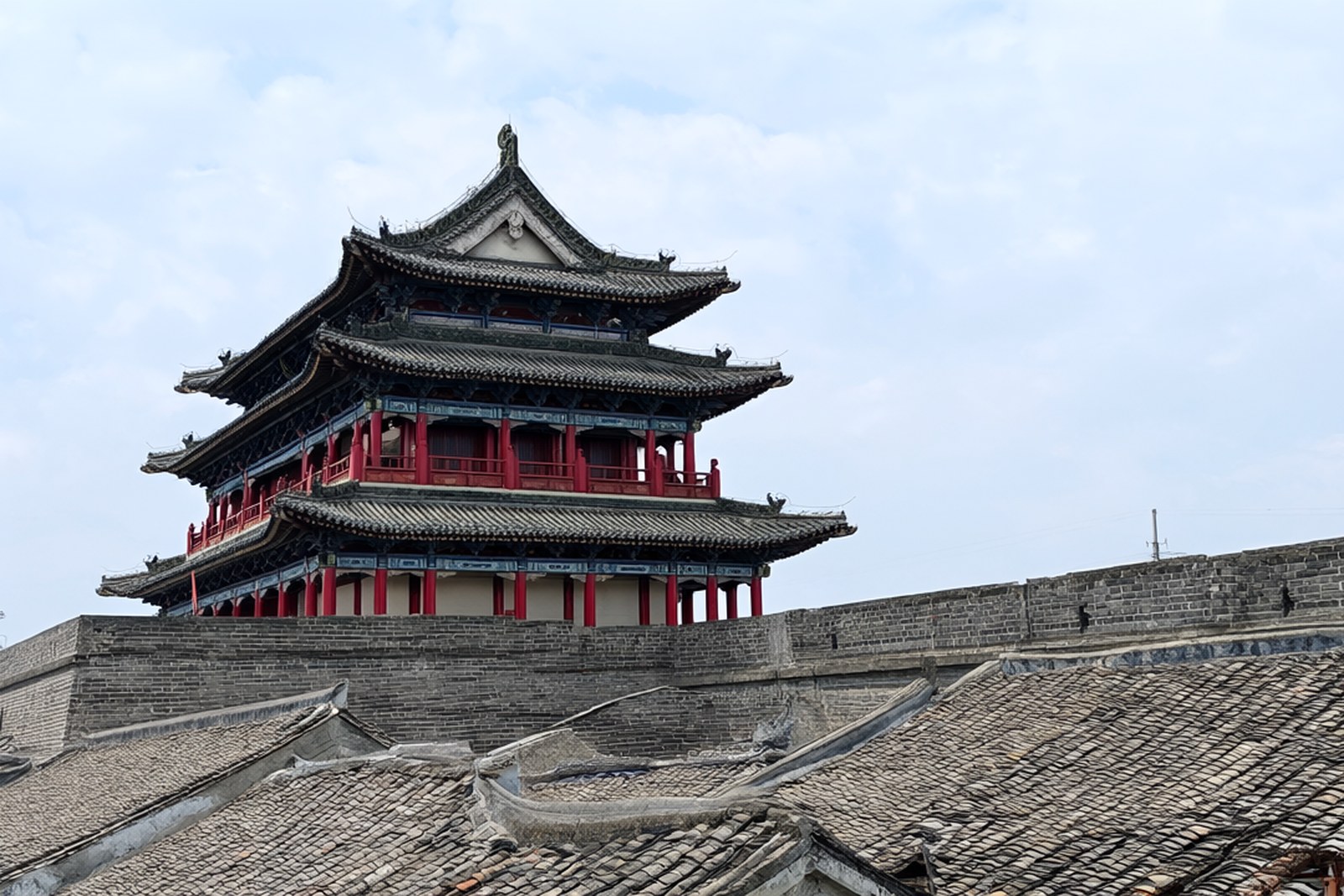
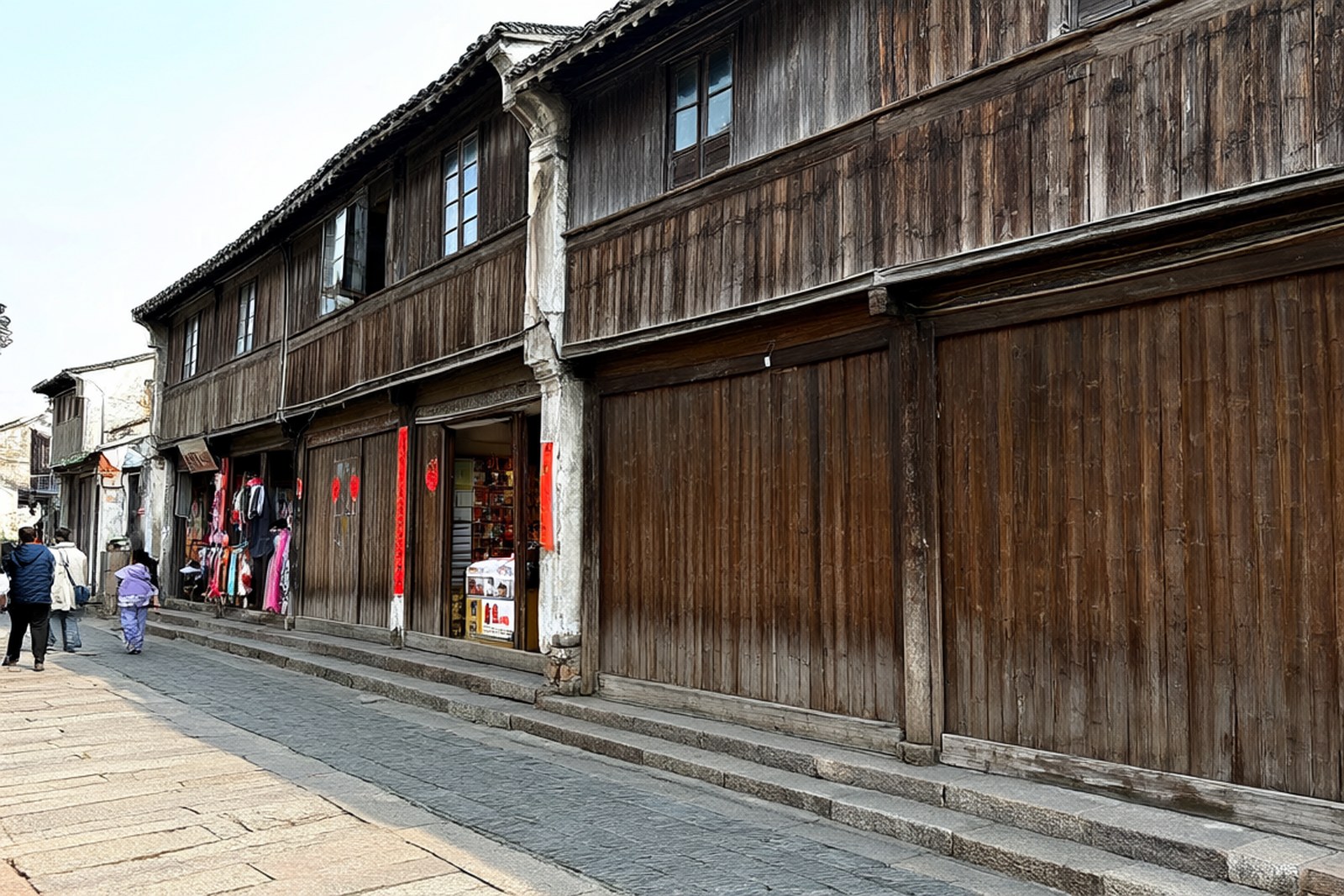
Inside the wall the town is a real one and not a restoration. The 宣风楼 Xuān fēng lóu stands on top of the 济川门, the south gate, rebuilt in 1994 in the Song manner after its own old plans, with carved windows, a bronze bell and yellow glazed tiles under a board inscribed with the four characters 宣风雪霁 in the hand of the Southern Song emperor 宋理宗 Sòng Lǐzōng, for whom it was an ancestral town. Behind it the 武冈文庙 Wǔgāng Wén miào, the Confucian temple, occupies a site first used as a school by 陶侃 Táo Kǎn, the Jin governor and great-grandfather of the poet 陶渊明, with a ginkgo outside said to have been planted by him seventeen hundred years ago, and a main hall that 文天祥 Wén Tiānxiáng himself called the finest in the whole of 都梁. 西直街, the old north-south axis, is the commercial street, with 木货街, 和合街, the 穿城河 canal and the 太平门 rebuilt around it, and the 凌云塔, the tower the county says looks like a brush of blue cloud, stands off to the north-east. 法相岩, a karst hill with caves and inscriptions, is a provincial scenic area, and 云山国家森林公园 rises five kilometres south of the town: seventy-one peaks, the highest at thirteen hundred and seventy-two metres, a summer average of twenty-three degrees, the sixty-ninth Daoist blessed place in the country, and a forest park with a glass walkway and a charge of about forty-five yuan.
The town eats well and is proud of it. 武冈卤菜 is written up elsewhere on this site, and it is worth knowing before you arrive that it is a different thing from the Sichuan or Cantonese braise: it is called the herbal school, laced with a score of medicinal roots and coloured with caramel, and the two things to order are the bean curd and the copper goose. The goose, once counted with 宁乡 pigs and 洞庭 lotus seed as one of the three treasures of Hunan, is braised in thirty-odd herbs; the noodles are made fresh on the spot and finished by scalding them three times, once in water, once in bone broth and once in the fried topping, which is the local rule for 武冈米粉. The 米花, the puffed rice cake stamped red on one side and white on the other, is the traditional gift, and there is a couplet about the bean curd of 法新, the rice of 鱼塘 and the 米花 of 扶冲 having gone to the imperial court. The writers came too: 柳宗元 wrote a 武冈铭, 王昌龄 left the poem that every guidebook quotes, and 郦道元, 韩愈, 欧阳修 and 黄庭坚 all passed through. It is a good place for a half day of wall and a long lunch.
Practicalities
Tickets. The wall, the gates, 西直街, 木货街 and the temple are free and open. 云山国家森林公园 charges from about ¥45 and the glass walkway is included in the park ticket; the 中山堂, the old 黄埔军校第二分校 building of 1938, takes a small charge.
Opening hours. The old town is streets rather than a gate, so it is open all day; the wall and the gates are lit at night. The temple keeps roughly 08:00 to 17:30, and the park at 云山 keeps daylight hours and closes earlier in winter. Allow half a day for the town and a full one if you add the mountain.
Getting there. 武冈 has an airport of its own, 邵阳武冈机场 Wǔgāng jī chǎng, with flights from 长沙 and a few other cities, and no railway. The nearest station is 洞口站 Dòng kǒu zhàn on the 怀邵衡 line, about an hour away by road. By car 武冈 is an hour and a half from 邵阳市, two hours from 城步, an hour and a half from 绥宁 and about three hours from 桂林. The old town is small enough to walk, and the gates are a few minutes apart.
Closing day. There is no closing day. The temple and the park at 云山 are open every day of the year, with occasional closures after heavy snow on the mountain, and the town’s own festival day is the second day of the second lunar month.
flowcloud would say that a wall which has no earth in it, and which turned back Taiping armies, a warlord, the Red Army and a Japanese storm party in the space of eighty-six years, has made a better argument for good masonry than any inscription could.
Getting there: the wall and the gates of 武冈市 are in the middle of the old town on and around 西直街, and the 宣风楼 stands above the 济川门; the town is an hour and a half by road from 邵阳市 and about an hour from 洞口站 on the 怀邵衡 line.