
Yǐn yán: Lín yuán shí lǐ, cǎo chǎng wàn qǐng; hǎi bá yī qiān jiǔ bǎi mǐ. — Ten li of forest park, ten thousand qing of grassland; altitude one thousand nine hundred metres.
Fairy Mountain (仙女山, Xiānnǚshān) is a national forest park on the north bank of the Wujiang, some 200 kilometres from central Chongqing, and the other half of the Wulong World Heritage story — where the Three Bridges go down, Fairy Mountain goes up. The park covers roughly 330,000 mu of forest (about 22,000 hectares) with more than 100,000 mu of natural grassland on the heights; the average elevation is 1,900 metres and the main peak reaches 2,033 metres. The annual mean temperature is 10.2 °C, which in a Chongqing summer is the entire sales pitch.
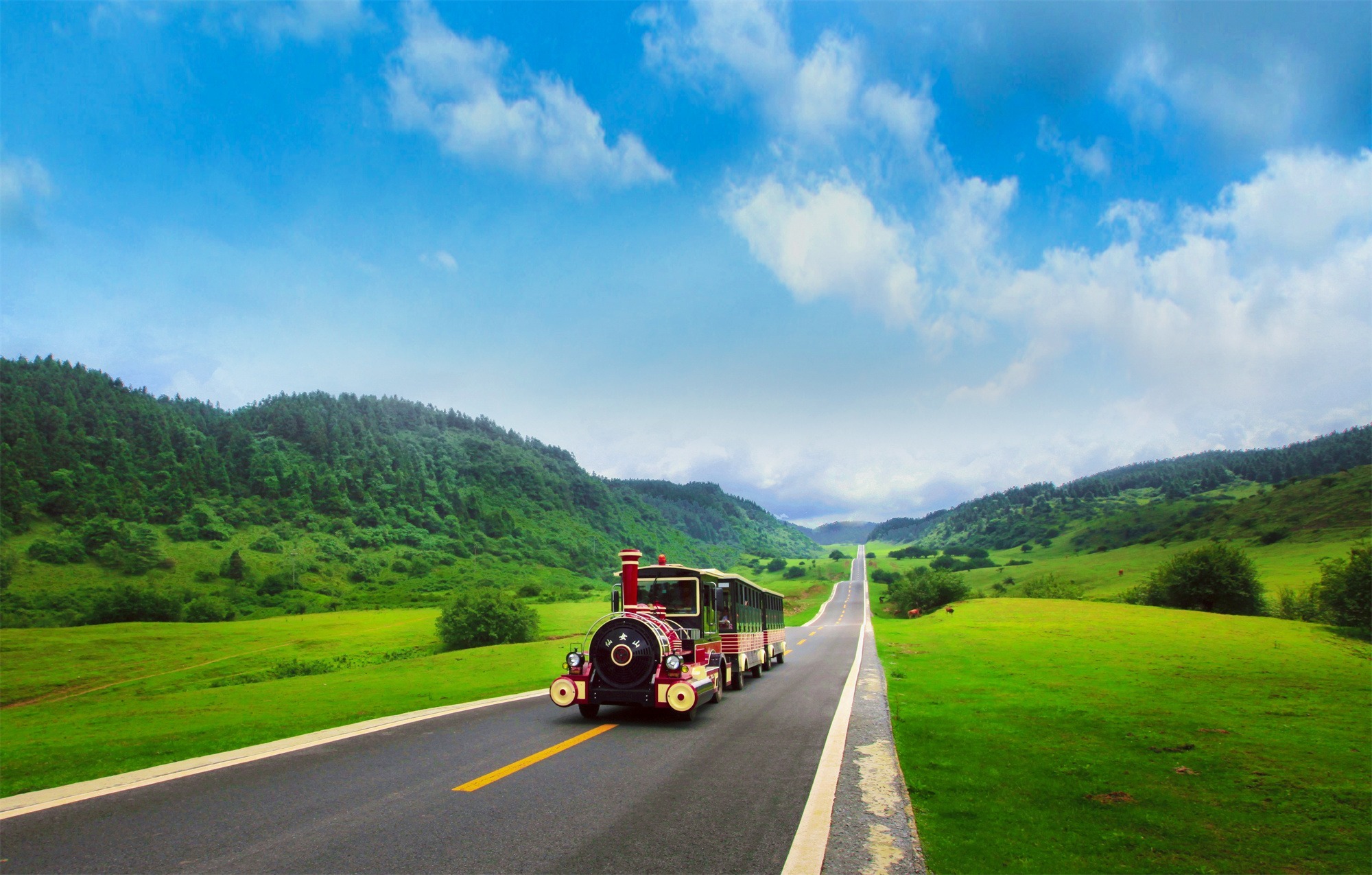
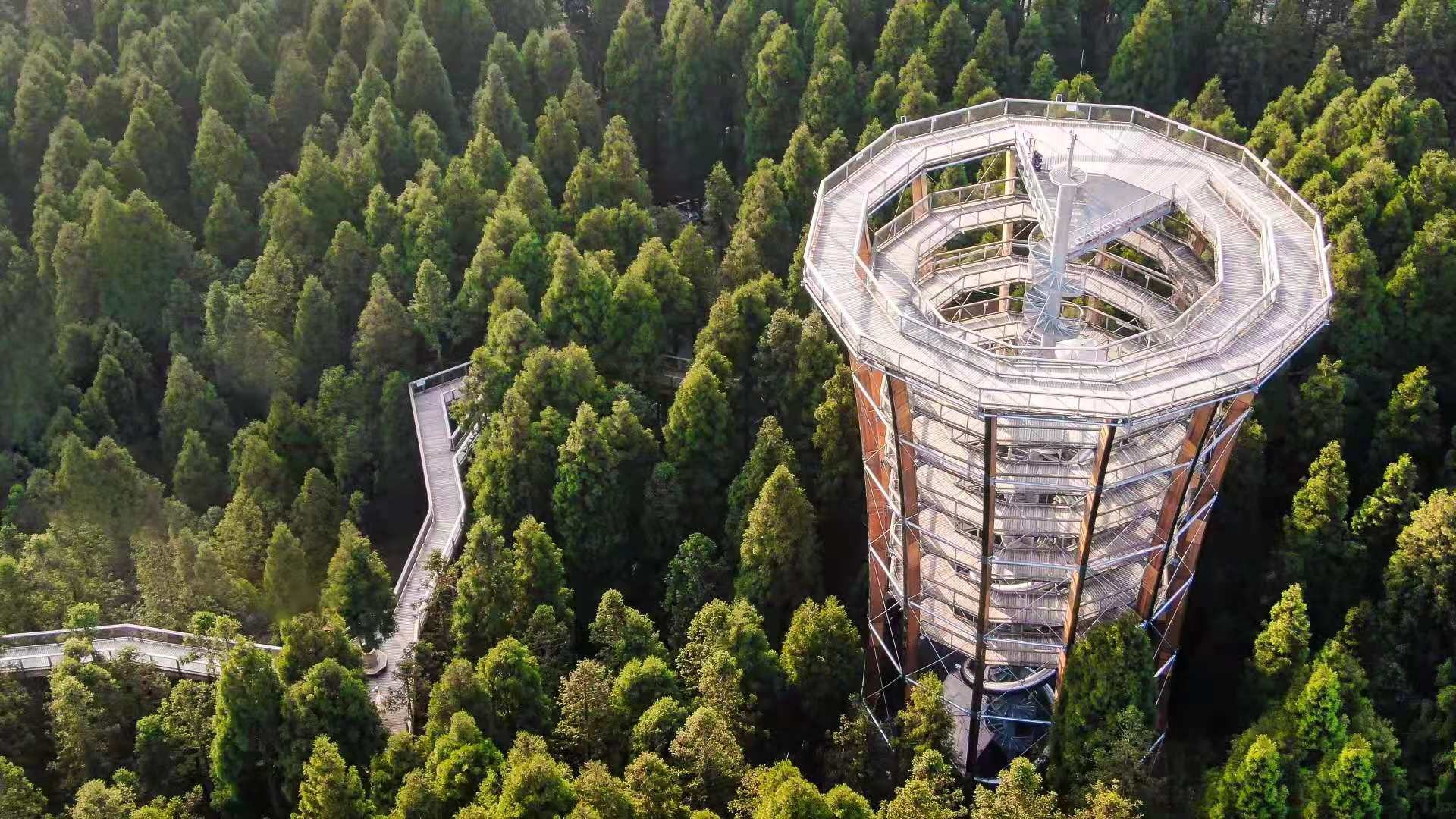
The park’s signature is the high meadow — a stretch of rolling grass plateau inside the forest belt that looks transplanted from Inner Mongolia. A small sightseeing train circles the grassland in summer, and the forest canopy walkway (树顶漫步, the “Forest Eye”) runs above the slopes for those who want the view from the trees rather than the ground.
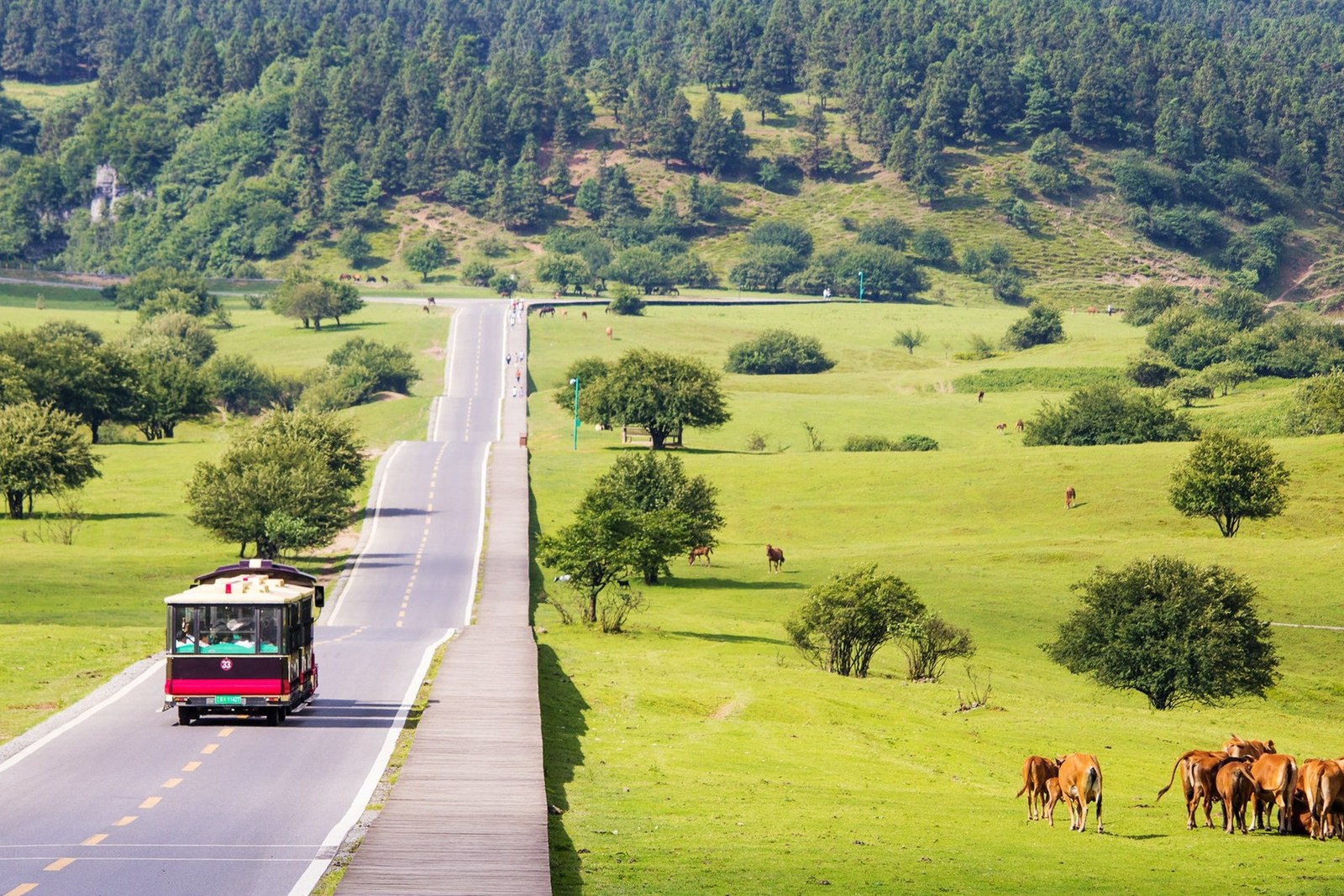
The Wulong plateau sits at the southern edge of the Chongqing basin’s mountainous frame; Fairy Mountain is the high shoulder of that frame, where the fault uplift of the Dalou Mountains left a broad upland instead of a ridge. Grassland persists on the plateau top because the soil there stays waterlogged and cold — forest cannot take hold, so grass does. The result is a genuinely unusual landscape for the subtropical south: grazing cattle on a plateau with fog coming through the pines.
Chongqing people treat Fairy Mountain as the summer answer to the furnace city — July and August nights need a thin blanket, and the local beef and lamb hotpot in Xiannvshan town exists because nobody wants to eat cold river fish at 1,900 metres. The park is also the standard base for the Three Bridges and Longshui Gorge: stay on the mountain, day-trip down to the arches. In autumn the grassland turns the colour of dry grass and the crowds vanish with the heat.
flowcloud would say that if Chongqing has a summer conscience, it lives at 1,900 metres on Fairy Mountain, where the city’s furnace heat is a rumour you no longer believe.
Practicalities
- Rating: 5A, part of the Wulong Karst World Natural Heritage (5A grading June 2011)
- Tickets: 50 yuan in both peak and off-season seasons (旺/淡 同价 per the official listing)
- Forest Eye canopy walk: 69 yuan
- Getting there: long-distance bus from Chongqing to Wulong, then local bus or taxi up to Xiannvshan town and the park gate; the road climb is long and switchbacked (checked October 2026, subject to change)
- Time needed: half a day on the mountain; add the canopy walk for another hour
Words and Names
仙女山 Xiānnǚshān — Fairy Mountain, the forest-and-grassland plateau · 树顶漫步 Shùdǐng Mànbù — the treetop walkway, marketed as the Forest Eye · 乌江 Wūjiāng — the Wujiang, the river on whose north bank the park sits · 武隆喀斯特 Wǔlóng Kāshítí — the Wulong Karst World Heritage property · 大娄山 Dàlóushān — the Dalou Mountains, the fault uplift that raised the Wulong plateau