
Wusongkou Cruise Port: One of Asia’s Busiest International Cruise Home Ports, Where Giant Ocean Liners Berth at a Three-Section Terminal beside the Great Confluence of the Yangtze and Huangpu Rivers at Baoyang Road 1 in Baoshan District, Shanghai
巨轮启碇通四海,两江交汇纳千帆。Jùlún qǐdìng tōng sìhǎi, liǎng jiāng jiāohuì nà qiānfān – Great liners lift anchor for the four seas; where two rivers meet, a thousand sails are gathered in.
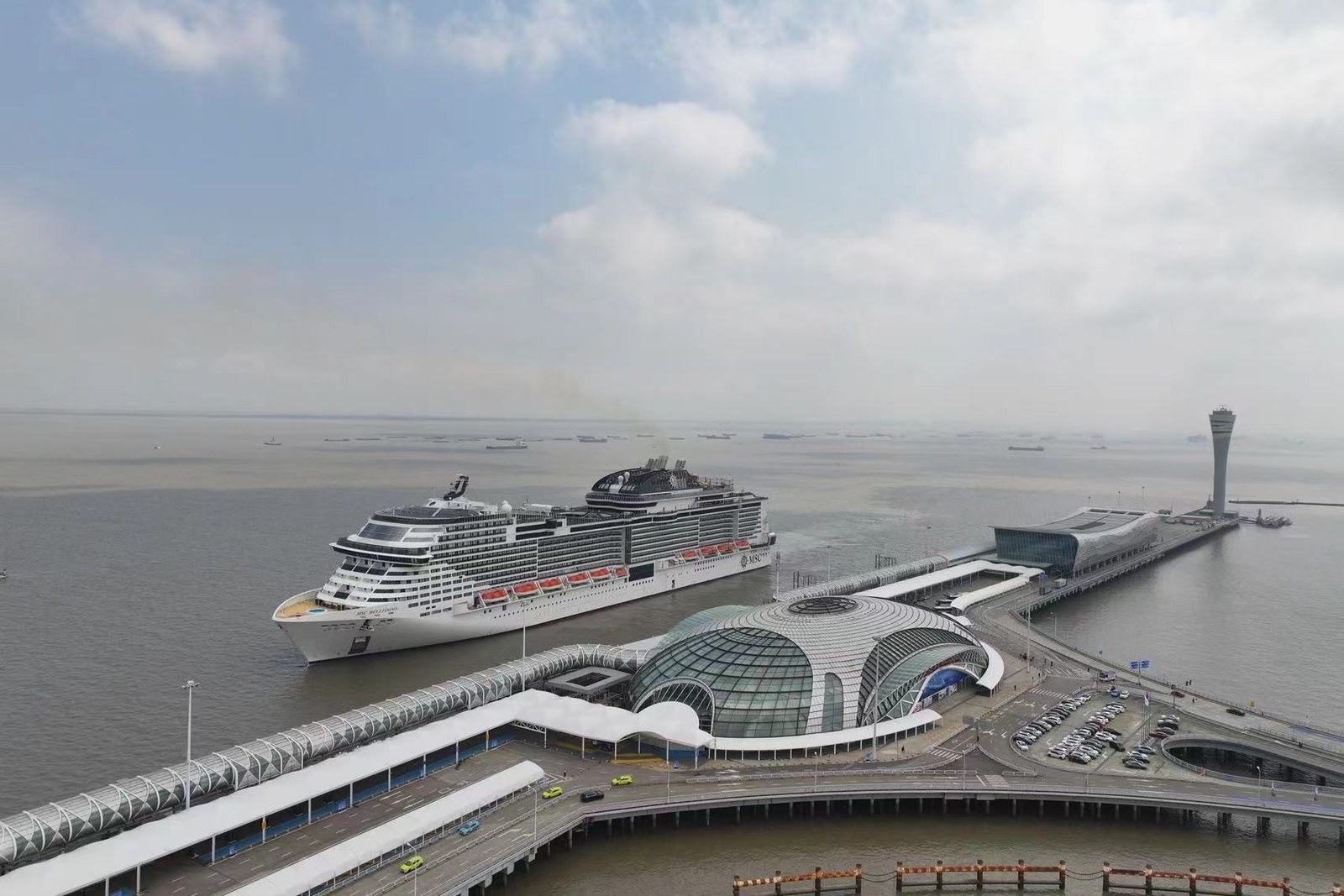
吴淞口国际邮轮港 Wúsōngkǒu Guójì Yóulún Gǎng Wusongkou Cruise Port is not a ferry pier that occasionally hosts big ships — it is, plainly put, one of the busiest international cruise home ports in Asia: the port occupies its waterfront ground at 宝杨路 Bǎoyáng Lù Baoyang Road 1, on the confluence where the 黄浦江 Huángpǔ Jiāng Huangpu River pours into the 长江 Cháng Jiāng Yangtze River, the watery front door through which the whole Yangtze delta answers to the sea. The scale of the operation explains itself at first sight: the 三段式客运码头 sānduànshì kèyùn mǎtóu three-section passenger terminal accommodates 巨型邮轮 jùxíng yóulún giant cruise ships moored bow to stern along the confluence, while the terminal halls process thousands of passengers between ship, taxi and metro in a single sailing day. What you actually visit is a working international gateway with a grandstand seat on river traffic, ocean tonnage and one of the great river meetings in China.
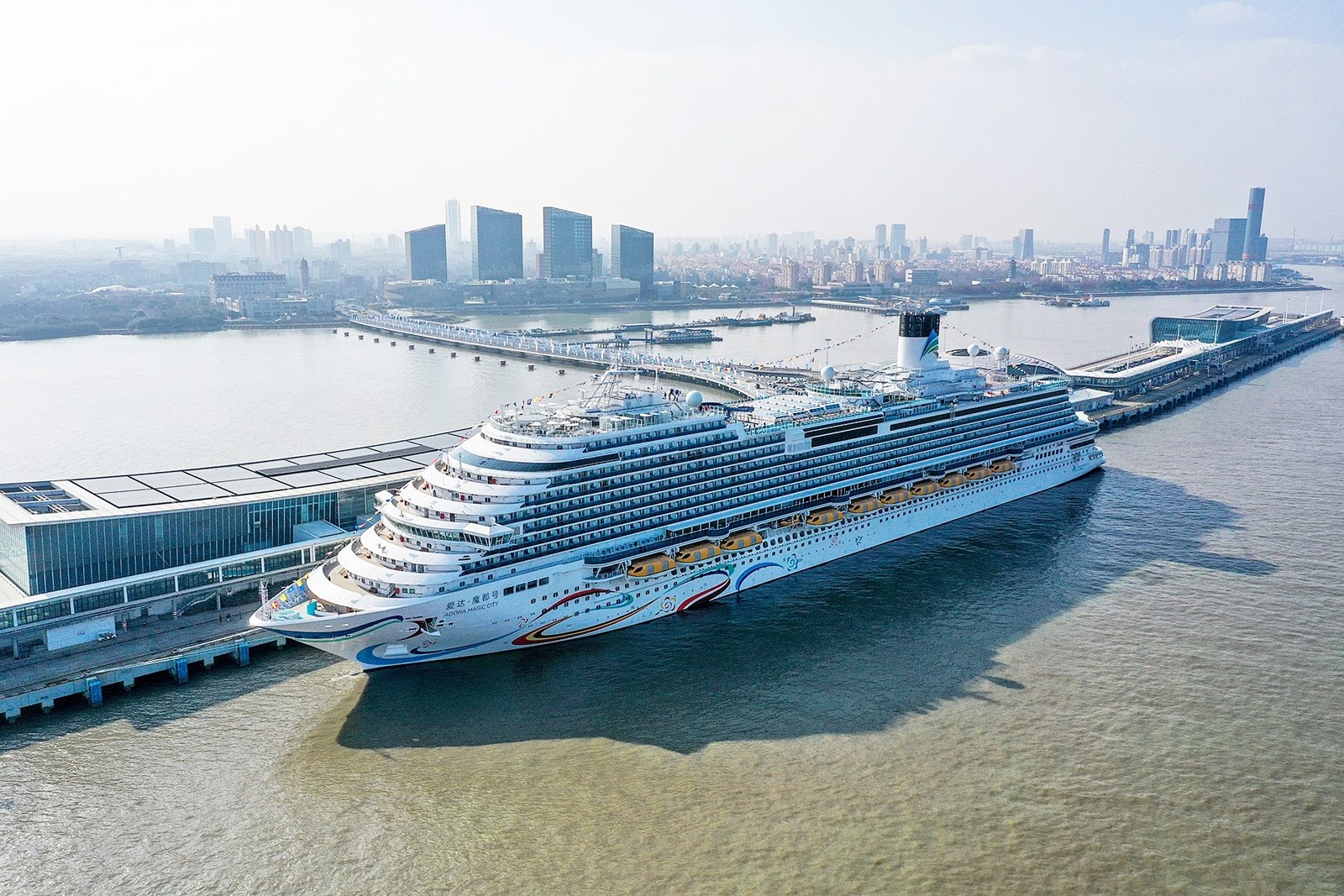
Call it honestly: the terminal itself is a working security zone, and shore visitors enjoy the harbour from outside it — from the riverside walks and viewing stretches around the port mouth where berthing giants can be watched nose-in against the confluence (worth confirming the details for current public access arrangements and the cruise schedule, if a ship in port is the photograph you want), and 宝杨路站 Bǎoyáng Lù Zhàn Baoyang Road station on Metro Line 3 sets you down for the short shuttle or taxi hop to the waterfront. The honest warning is rhythm: the port lives by sailing days, and when no ship is in, the quays go quiet and the drama moves entirely to the water and the sky. Come at early morning if you can, for the 江面日出 jiāngmiàn rìchū river sunrise climbs straight up the Yangtze channel and the water runs gold before the day’s traffic thickens; evening brings lit hulls and the day’s last arrivals. Give the shoreline an hour or two, and longer if you stay for a departure.
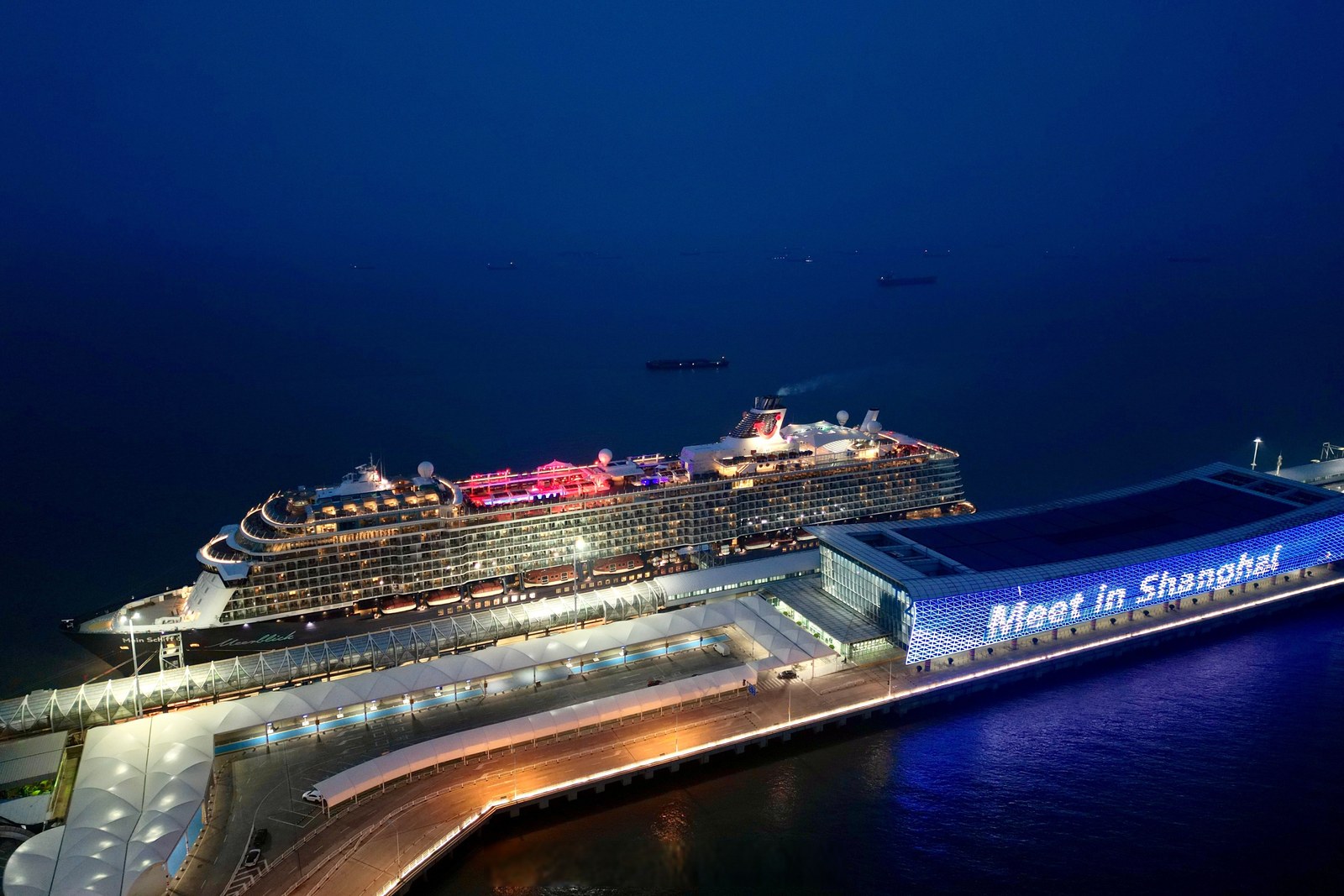
The honest star is the confluence itself — the wide, restless water where the Huangpu gives itself to the Yangtze, freighters, tugs and cruise ships threading a channel that has served the river mouth for centuries, and the sight of a full-sized cruise ship swinging to its berth remains a spectacle no downtown waterfront can stage. What gets oversold is the word “destination”: travellers arriving expecting a ticketed attraction with decks and exhibits find a transport hub with a handsome riverfront instead, and the pleasure is self-assembled — a walk, a bench, a timetable (worth confirming the details for any public viewing platforms or terminal tours currently on offer). What repays the effort is the neighbourhood: the reed beds and fort lawns of 炮台湾湿地森林公园 Pàotáiwān Shīdì Sēnlín Gōngyuán Paotaiwan Wetland Forest Park lie directly beside the harbour, so a morning of ships pairs naturally with an afternoon of wetlands, and the riverside route between the two keeps the confluence in view the whole way. Come for the layering of the place: water, then ships, then the green shoreline beside them.
The self-aware postscript: I was watching a departure from the riverside railing one clear morning when a retired river pilot out with his thermos volunteered the local view. “Visitors photograph the ships and go home,” he said, nodding at the channel, “but I come for the water itself — two rivers shaking hands, and every ship that ever left Shanghai for the world passed this exact corner first”. That is the visit in miniature. From the bank, with a hull sliding seaward down the gold channel, the whole idea of the port reads in one frame — a city saying farewell at its own front door. 吴淞口国际邮轮港 Wúsōngkǒu Guójì Yóulún Gǎng suits whoever treats it as a grandstand on China’s greatest river meeting first and a cruise terminal second, and disappoints anyone expecting a theme-park waterfront with rides, food streets and a turnstile at the gate. Nearly everything else on this Baoshan list lies within a short ride: the fort lawns and quarry garden of 炮台湾湿地森林公园 Pàotáiwān Shīdì Sēnlín Gōngyuán wait just next door, the furnace glow of the 上海玻璃博物馆 Shànghǎi Bōli Bówùguǎn Shanghai Museum of Glass burns at 长江西路 Chángjiāng Xī Lù Changjiang West Road 685, the Nordic spires of 美兰湖 Měilán Hú Meilan Lake stand north on Metro Line 7, and the cherry lawns of 顾村公园 Gūcūn Gōngyuán Gucun Park open at 沪太路 Hùtài Lù Hutai Road 4788 — all inside the same 宝山区 Bǎoshān Qū Baoshan District whose seaward gate this port keeps.
Practicalities
- Rating: ★★★★☆ — a grandstand seat on the Yangtze–Huangpu confluence with Asia-scale cruise traffic; check the sailing schedule, and come early for a sunrise over the channel.
- Tickets: Free to watch from the public riverside stretches around the port (worth confirming the details for current access arrangements and any terminal tours).
- Address: 吴淞口国际邮轮港 Wúsōngkǒu Guójì Yóulún Gǎng, 宝杨路 Bǎoyáng Lù Baoyang Road 1, 宝山区 Bǎoshān Qū Baoshan District, Shanghai — from Baoyang Road station on Metro Line 3 plus a short shuttle or taxi hop.
- Time needed: One to two hours of shoreline watching; half a morning if you wait for a departure or arrival.
Words and Names
吴淞口国际邮轮港 Wúsōngkǒu Guójì Yóulún Gǎng Wusongkou Cruise Port · 宝杨路 Bǎoyáng Lù Baoyang Road 1, the port address · 长江 Cháng Jiāng the Yangtze River · 黄浦江 Huángpǔ Jiāng the Huangpu River, joining the Yangtze here · 三段式客运码头 sānduànshì kèyùn mǎtóu three-section passenger terminal · 巨型邮轮 jùxíng yóulún giant cruise ships · 国际邮轮母港 guójì yóulún mǔgǎng international cruise home port · 江面日出 jiāngmiàn rìchū the river sunrise over the confluence · 宝杨路站 Bǎoyáng Lù Zhàn Baoyang Road station · 宝山区 Bǎoshān Qū Baoshan District
flowcloud would say that 吴淞口国际邮轮港 Wúsōngkǒu Guójì Yóulún Gǎng is the city keeping its oldest front door in working order — a three-section passenger terminal at 宝杨路 Bǎoyáng Lù Baoyang Road 1 on the confluence of the 长江 Cháng Jiāng Yangtze and 黄浦江 Huángpǔ Jiāng Huangpu rivers in 宝山区 Bǎoshān Qū Baoshan District, among the busiest international cruise home ports in Asia, where 巨型邮轮 jùxíng yóulún giant ships berth in view of the reed beds and fort lawns of next-door 炮台湾湿地森林公园 Pàotáiwān Shīdì Sēnlín Gōngyuán (worth confirming the details for the sailing schedule and public access before you set out) — and that the honest move is an early-morning riverside walk reached through 宝杨路站 Bǎoyáng Lù Zhàn Baoyang Road station on Metro Line 3, because the ticketed-attraction expectation is the poster half and the working quays, the gold channel at 江面日出 jiāngmiàn rìchū river sunrise and the two rivers shaking hands are the real half, and the harbour repays whoever comes to watch the water rather than queue for a ride. All checked October 2026.
Getting there: Metro Line 3 to 宝杨路 Bǎoyáng Lù Baoyang Road station, then a short taxi to the cruise terminal at 宝杨路 Bǎoyáng Lù Baoyang Road 1 (worth confirming the details for sailing-day access controls, which the port posts weekly); the breakwater views open over the confluence of the Yangtze and the Huangpu. All checked October 2026.